After Bern and Lucerne: Basel questions fox hunting
A motion before the Basel Grand Council calls for a scientific review of fox hunting, pointing to the canton of Geneva, which has managed without hobby hunting for more than fifty years.
In the two Basels, 679 red foxes were killed in the 2024 hunting year, 676 of them in the rural canton.
Across Switzerland, around 20,000 of these predators were killed in the same period. Basta cantonal councillor Brigitta Gerber has submitted a written enquiry on the matter and is calling for a review of the "scientific evidence base" on fox hunting. Her suspicion: if the public were aware of this evidence, hobby hunting of foxes on its current scale would hardly find support.
The Office for Forest and Wildlife of both Basels does not wish to pre-empt the ongoing political process, but points out that a large proportion of the animals are killed because of disease. It is precisely this argument that lies at the heart of the dispute. The canton of Lucerne, the only Swiss canton that keeps disease statistics on foxes, recorded only 39 diseased foxes out of 2,217 animals killed in the 2018/19 hunting year, i.e. 1.76 per cent. Just under 98 per cent were healthy and were disposed of at the taxpayers' expense.
What research on fox hunting shows
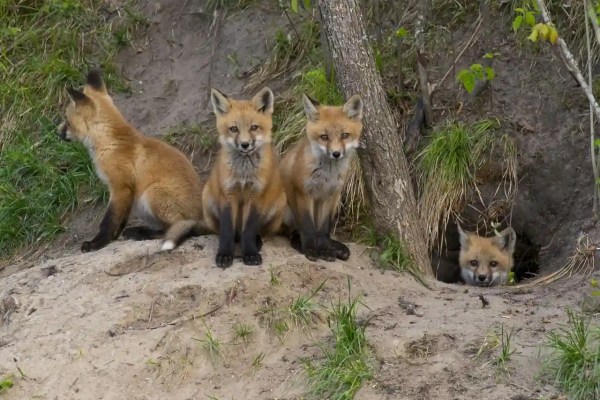
For more than thirty years, at least 18 wildlife biology studies have demonstrated that fox hunting neither permanently reduces populations nor contains diseases. Vacated territories are immediately occupied by immigration, and hunted populations respond with higher birth rates. In the Bavarian National Park, where foxes are not hunted, the litter size is around 1.7 cubs per vixen; in intensively hunted territories it is about three times higher. Even the killing of three quarters of a population is offset again the following year. This self-regulation is documented in detail in a dedicated dossier.
The health argument does not stand up to scrutiny either. Rabies was eradicated in Switzerland with vaccine baits, not with the rifle. In the case of the fox tapeworm, a four-year study in the Nancy area showed the opposite of what was expected: despite a 35 per cent increase in hunting pressure, the population did not shrink, and the infestation rate in the test area rose from 40 to 55 per cent. Deworming baits, on the other hand, are considered effective; in the Bavarian district of Starnberg they reduced the risk of infection by 97 to 99 per cent. In addition, a fox eats thousands of mice each year, the most important hosts for ticks. Those who decimate the mouse hunter tend to increase the risk of Lyme disease and TBE.
Geneva and Luxembourg provide proof in practice
The canton of Geneva abolished militia hunting by popular vote in 1974. Since then, professional game wardens have regulated wildlife populations; in the most recent season, not a single fox was shot for recreational pleasure. The entire wildlife management programme costs around one million francs per year — roughly a cup of coffee per inhabitant. Biodiversity has increased since 1974, ungulate populations are stable, and game damage has remained at the long-term average level of comparable cantons with hobby hunting. This is precisely what Gerber points to as well: «Geneva has been conducting outstanding and successful wildlife management for over 40 years.»
Luxembourg has protected the fox year-round since 2015. No population explosion occurred; on the contrary, the infection rate with the fox tapeworm dropped significantly. In the Swiss National Park, all hunting has been prohibited since 1914, without any species becoming extinct. The often-heard argument that the Geneva model is a one-off that cannot be transferred elsewhere cannot be sustained in light of these findings.
Part of a Switzerland-wide wave
The Basel initiative does not stand alone. Both Basels belong to the territorial hunting cantons, where hunting associations lease their hunting grounds. Parallel to the inquiry in the Grand Council, a petition from Lucerne lawyer Pascal Wolf is before the Basel-Landschaft government; he has submitted similar initiatives in more than twelve cantons. The office of both Basels has announced a statement for June 2026.
Elsewhere, the authorities’ response is sobering. The Bernese cantonal government rejected, on 6 May 2026, a cross-party motion that sought to trial a scientifically supervised suspension of fox hunting. The matter will now be decided by the Grand Council, presumably during the autumn session 2026. In the canton of Lucerne, the responsible commission dismissed Wolf’s petition without a hearing. The question Gerber raises in Basel therefore remains as current as it is unanswered: does fox hunting actually fulfil the purposes ascribed to it?