
Regulate recreational hunters, not predators
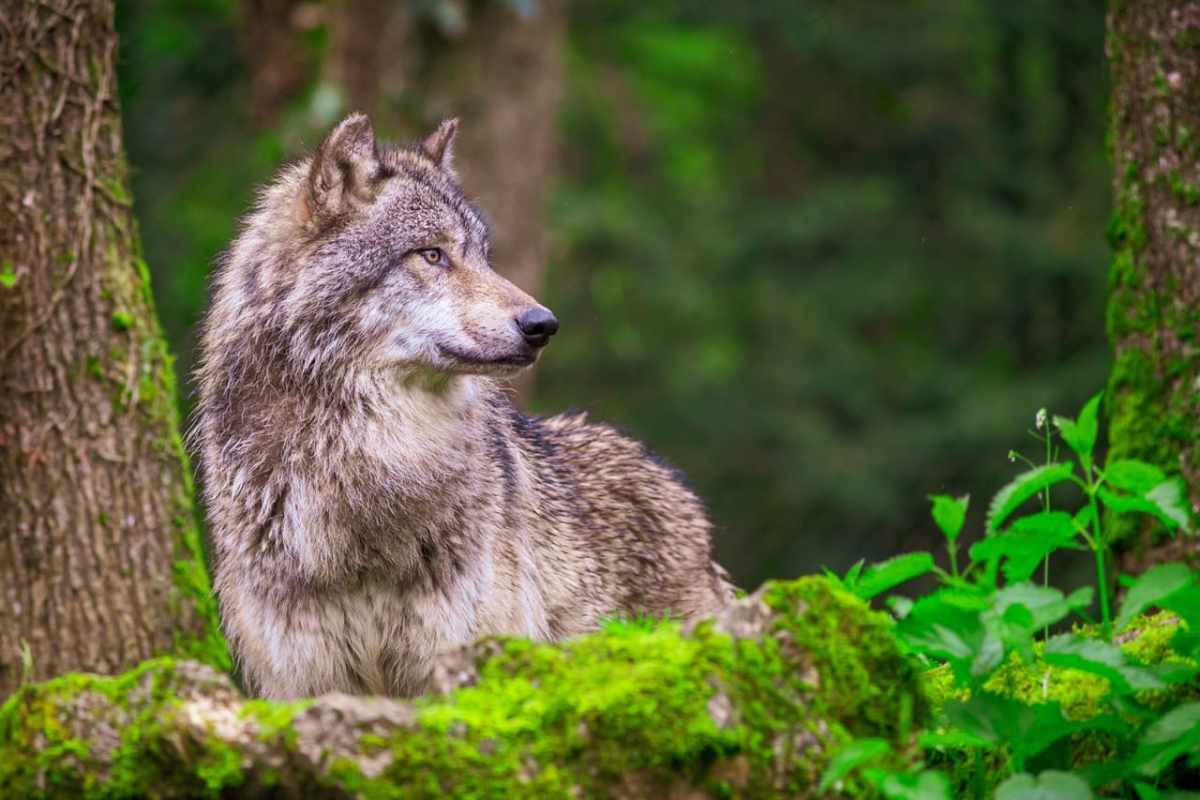
Recreational hunting has legitimized itself for generations with the promise of controlling wildlife populations, while as an industry it remains effectively uncontrolled and eliminates the very predators that would take on this task ecologically — without a license, without pay, and without a trophy.
In Switzerland, around 30,000 recreational hunters kill more than 130,000 wild animals per year, largely self-governed, with hunting supervisory bodies that are institutionally intertwined with the recreational hunting community.
At the same time, these same associations demand the shooting of wolves, lynx and foxes, which as predators provide an ecological regulatory function that no recreational hunting can replace. This dossier reframes the question: it is not the wolf, the lynx and the fox that need to be regulated, but rather those 30,000 armed private individuals who, in the name of population control, maintain a system that operates without structural oversight.
What awaits you here
- Oversight vacuum: Who controls the recreational hunters? Self-supervision, missing statistics and institutional conflicts of interest.
- Predators as ecological regulators: What wolves, lynx and foxes accomplish — and why recreational hunting fights precisely that.
- Reversing the burden of proof: Whose population really needs to be controlled by whom.
- Self-regulation: the scientific evidence: What the Swiss National Park, Geneva and Yellowstone show.
- Legal structures: What the JSG, TSchG and cantonal law permit — and what they do not.
- What would need to change: Concrete demands for regulating recreational hunting and protecting predators.
- Argumentation guide: Responses to the most common claims of the hunting lobby on the predator question.
- Quick links: Articles, dossiers and studies.
Oversight vacuum: Who controls the recreational hunters?
The simple answer is uncomfortable: no one who is not themselves part of the system. In many cantons, the cantonal hunting inspectorates are institutionally intertwined with the recreational hunters; auxiliary game wardens are often themselves recreational hunters; and national statistics on hunting-related crime do not exist. While Germany systematically records hunting poaching in its crime statistics, Switzerland has no corresponding survey — neither at federal level nor comprehensively at cantonal level.
The few available data points nevertheless paint a picture: in 2015, the hunting inspectorate of the canton of Graubünden alone registered 1,298 reports and fines against recreational hunters. Valais records 5 to 10 documented poaching cases per year, Graubünden estimates 10 to 20. An industry whose self-control fails so comprehensively would, in any other safety-relevant area, long since have been placed under an external supervisory authority. Not in recreational hunting.
The supervisory structure has no independent complaints office, no mandatory reporting chain for mis-shootings, no central database, and no automatic license revocation upon conviction. What the public understands as "controlled hunting" is in reality a self-administration model in which recreational hunters mostly oversee recreational hunters.
Read more: Poaching and hunting crime in Switzerland and Argument for professional gamekeepers
Predators as ecological regulators
Wolves, lynx, foxes, and bears fulfill functions that cannot be reproduced in any hobby-hunting system. They select sick and weak animals, keep ungulate populations on the move, prevent local overgrazing, and thereby ensure the dynamic alternation between browsing pressure and recovery that makes healthy forest regeneration possible in the first place. The scientific literature on the trophic cascade, documented among other places in Yellowstone National Park following the return of the wolf from 1995 onward, is unambiguous: predators shape entire landscapes.
In Switzerland, the same effect can be observed in the Swiss National Park since 1914 and in the canton of Geneva since 1974. Both hunting-free areas refute the lobby's claim that without recreational hunting the wildlife order would collapse. The reality: populations stabilize at an ecologically sustainable level, browsing damage decreases in regions where predators are present, and wild animals become more active during the day because the constant stress caused by armed leisure users disappears.
It is precisely this regulating function that recreational hunters systematically combat. The fox is shot tens of thousands of times without scientific justification, without a closed season, and without a quota. Wolves are released for shooting after every chain of livestock kills, and lynx fall victim to poaching hotspots such as the Valais, documented in double-digit numbers. Since February 2025, the beaver may be shot throughout Switzerland upon cantonal request. Recreational hunting produces the very ecological deficit it claims to remedy.
Read more: Wolves in Switzerland and Self-regulation of wildlife populations: scientific evidence
The reversal of the burden of proof
The central rhetorical operation of the hunting lobby consists of dumping the burden of proof onto wildlife. Wolves must "justify themselves," foxes are deemed "too numerous," beavers disrupt "management." Yet no one asks the symmetrical question: shouldn't 30,000 recreational hunters also have to justify themselves for engaging in a violence-prone leisure activity that shoots thousands of animals every year, lets them die in agony, produces trophies, and is in no measurable sense ecologically necessary?
The quantitative ratios are unambiguous: recreational hunters kill more than 130,000 wild animals every year. Wolves in Switzerland kill a low four-digit number of wild animals per year, a fraction of what recreational hunters shoot, and they do so without ammunition residues, without traffic accidents, and without state subsidies. Anyone who takes the "population regulation" argument seriously would have to allocate quotas to recreational hunting, document it, control it, and reduce it to the scientifically justified minimum — exactly as hunting associations demand for predators.
More on this: Is recreational hunting necessary in Switzerland? and Why recreational hunting fails as population control
Self-regulation: the scientific evidence
Even JagdSchweiz, the umbrella organization of Swiss recreational hunters, publicly stated on August 29, 2011: "Wildlife populations fundamentally regulate themselves, even in our cultivated landscape." The central self-legitimation of recreational hunting has thus been refuted in writing by its own association. Population biology research has confirmed this for decades: hunted populations respond with compensatory reproduction, birth rates rise, social structures are destabilized. Recreational hunting produces part of those very populations it claims to regulate.
In the canton of Geneva, brown hares number 17.7 animals per 100 hectares; in the canton of Zurich, 1.0. Geneva maintains around 100 red deer and 330 roe deer in stable populations. Three full-time positions replace what more than 400 recreational hunters used to do before 1974. The Swiss National Park has documented species diversity without recreational hunting for over 100 years. Luxembourg, Yellowstone, and Słowiński National Park in Poland provide additional comparative findings from hunting-free areas.
More on this: How does Geneva's hunting ban work? and Geneva and the hunting ban
Legal structures
The Federal Hunting Act (JSG) does not require any canton to permit recreational hunting. The cantons are free to decide whether armed civilians may kill wild animals. Geneva said no in 1974; all 25 other cantons say yes, under two different systems: licensed hunting (Patentjagd) in 65 percent of the cantons, territorial hunting (Revierjagd) in the rest. Both systems operate on the same self-supervision logic.
Article 4 of the Animal Welfare Act (TSchG) prohibits inflicting unjustified pain, suffering, or harm on an animal. Fox hunting has no scientifically recognized regulatory necessity, no closed season, no quota. It directly contradicts the Animal Welfare Act, but in practice cannot be brought to court because the supervisory bodies are entangled with the hunting lobby. The European Court of Human Rights ruled in a landmark decision that hunting on private land without the owner's consent need not be tolerated. The Swiss practice, in which recreational hunters may walk armed across other people's land, is an outlier in Europe.
More on this: Hunting and human rights and Hunting ban Switzerland
What needs to change
- Independent hunting supervision outside the hunting administration: Oversight of recreational hunting must not lie with bodies that are personally or institutionally intertwined with hunting associations. A cantonal supervisory authority with an animal welfare and scientific mandate is overdue.
- National poaching and hunting accident statistics: The federal government and cantons should publish complete annual data on kills, mistaken kills, reports, fines, woundings, and follow-up searches. Without a data foundation, there can be no evidence-based policy.
- Automatic license revocation upon conviction: In the event of conviction for hunting, animal welfare, or weapons offenses, the hunting license must be revoked, mandatorily and uniformly across cantons, without discretion by the hunting authority.
- DNA database for poached predators: Establishment of a forensic DNA database modeled on criminal prosecution, operated independently of the hunting administration.
- Whistleblower protection and external reporting office: Anonymous reporting systems for suspected poaching should go directly to the public prosecutor's office, not through cantonal hunting inspectorates.
- Restore protected status for predators: Wolf, lynx, bear, beaver, and fox should be returned to the scientifically grounded minimum protection regime. The 2025 revision of the JSG, which further weakens protected status, must be corrected at federal political level.
- Binding cull planning with mandatory ecological justification: Every cull requires scientific justification. Blanket culls without quotas, especially of foxes, will be abolished.
- System change to the gamekeeper model following the Geneva example: Cantons gradually replace recreational hunting with state-employed, professionally trained gamekeepers with clear mandates, external oversight and transparent reporting.
Line of argument
"Wolves, lynx and foxes have to be regulated." Self-regulation has been empirically proven for over 100 years in the Swiss National Park and for 50 years in the Canton of Geneva. Where predators live undisturbed, populations stabilize without intervention. The need for regulation is an invention of recreational hunting, not of ecology.
"But recreational hunters are strictly controlled." Oversight is largely carried out by bodies whose personnel are intertwined with the recreational hunting community. National statistics on hunting-related crime are lacking. The Canton of Graubünden alone reported over 1,298 charges and fines against recreational hunters in 2015. That is not control, but self-administration.
"Without fox hunting the population will explode." The fox population regulates itself through food supply and disease. Rabies was defeated by vaccine baits, not by fox hunting. Hunting has been shown to increase the spread of the fox tapeworm because social structures are destroyed.
"Predators eat our game." Predators are not competitors but a prerequisite for healthy wildlife populations. They select sick animals, prevent browsing damage and stabilize social structures. What recreational hunters lament as competition is an ecological function.
"If predators are enough, why are gamekeepers needed in Geneva?" Gamekeepers intervene where predators are absent or decimated and where human-animal conflicts demand concrete action. Ideally, their task is reduced to monitoring, research and conflict management. Recreational hunting is no substitute for this — it is the opposite.
"Recreational hunting is an old tradition." Slavery and trophy hunting in the colonies were also old traditions. The age of a practice is not an ethical argument. The question is whether a privilege is legitimate in the 21st century if no ecological, economic or ethical justification exists any longer.
"Without recreational hunting there will be wildlife damage." Wildlife damage is primarily caused by hunting pressure, which drives wild animals into the forest and into the night. Where predators are present and recreational hunting is absent, browsing damage decreases. Geneva data and international studies show this consistently.
Quick links
Articles on Wild beim Wild
- Arguments against recreational hunters
- Arguments in favor of game wardens
- Initiative demands "Game wardens instead of hunters"
- Why recreational hunting fails as population control
- Studies on the impact of hunting on wildlife
- Is recreational hunting necessary in Switzerland?
- Model texts for hunting-critical motions in cantonal parliaments
Related dossiers
- Arguments in favor of professional game wardens
- Geneva and the hunting ban
- Self-regulation of wildlife populations: Scientific evidence
- Poaching and hunting crime in Switzerland
- Wolf in Switzerland
- Hunting myths: 12 claims you should critically examine
- Hunting and human rights
- Hunting ban Switzerland
- Introduction to hunting criticism
Our standards
The question of who is regulated is a question of power. As long as Switzerland accepts that an armed leisure lobby organizes its own oversight while simultaneously decimating the predators that would ecologically fulfill its function, the debate is skewed. The reversal is factually, legally, and ethically necessary: wolves, lynx, foxes, and beavers regulate themselves and contribute to regulation. Recreational hunters do not regulate themselves and must therefore be regulated externally, through independent oversight, transparent statistics, automatic sanctions, and in the long term through the transition to professional wildlife management based on the Geneva model. This dossier is continuously updated whenever new studies, statistics, or political developments require it.
More on this topic: In the dossier overview section we bundle fact checks, analyses, and background reports on Swiss recreational hunting.
Sources
- Federal Act on Hunting and the Protection of Wild Mammals and Birds (JSG, SR 922.0)
- Animal Welfare Act (TSchG, SR 455), in particular Art. 4
- JagdSchweiz, statement of 29.08.2011 on the self-regulation of wildlife populations
- Federal Office for the Environment (FOEN): Federal hunting statistics
- KORA Foundation: Loss data for wolf and lynx
- Pro Natura: Documentation "Who kills the lynx?"
- Prof. Raphaël Arlettaz, University of Bern: Study on lynx poaching in Valais (2020)
- Swiss Animal Protection STS: Investigations into mistaken shootings
- Tierwelt: Investigation "Urgently sought: Figures on poaching" (2016)
- SRF: "Poaching in Switzerland: The Allure of Illegal Trophy Hunting" (2021)
- Canton of Geneva, Direction générale de l'agriculture et de la nature: Report "Un canton sans chasse 2014–2017"
- Yellowstone National Park Service: Studies on the trophic cascade following the return of the wolf (1995ff.)
- Swiss National Park: Long-term scientific documentation since 1914
- IG Wild beim Wild: Dossiers "Argumentarium for Professional Wildlife Rangers", "Geneva and the Hunting Ban", "Poaching and Hunting Crime in Switzerland", "Self-Regulation of Wildlife Populations"