Bow and arrow on wildlife: hobby hunting lobby demands a return to the Middle Ages
In Germany, the hobby hunting lobby is putting pressure on politicians: bow hunting of wild animals, banned since 1977, is to be legalized. The arguments sound modern, but the reality is archaic: arrow shots without shock effect, injury rates of over 50 percent, and animals that die in agony over the course of days. This isn't about animal welfare — it's about the thrill sought by a small, loud lobby.
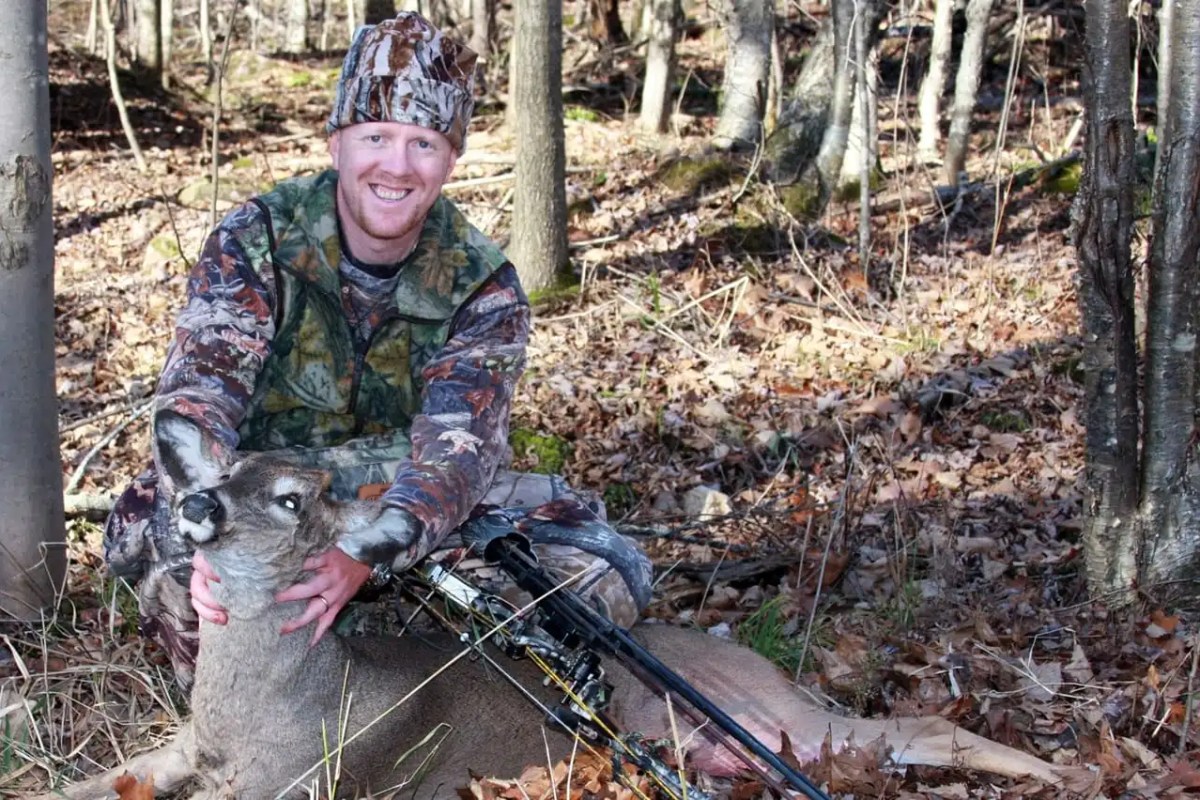
At the Dortmund “Jagd & Hund” trade fair, the German Bow Hunting Association (DBJV) presents itself with confidence.
President Jan Riedel wants to see hobby hunting with bow and arrow — banned in Germany in the wild since 1977 — permitted again. His selling points: “razor-sharp” arrow tips, supposedly comparable killing effectiveness to the rifle, and a “particularly intense experience of nature.” The death of an animal as experiential education for adults.
What tends to get left out of the debate: Riedel himself goes hobby hunting with a bow in France. The DBJV president isn't promoting the method by coincidence — he's doing so as someone who would like to pursue his own hobby without having to buy a ticket abroad. This isn't a factual debate; it's lobbying in camouflage.
The scientific evidence: animal suffering instead of animal welfare
The research is unambiguous, yet the hobby hunting lobby consistently ignores it. A PETA review of around two dozen studies from the United States shows: 54 percent of animals shot with bow and arrow are not killed instantly. Wounded animals can suffer agonizing deaths over the course of days, often while fleeing, often never to be found again.
A University of Oklahoma study documented in a bow hunt on 22 white-tailed deer that 50 percent of the animals were merely wounded and initially could not be recovered. The arrow does not forgive the slightest inaccuracy in aim and often results in pass-through shots without guaranteed killing effect.
James Brückner of the German Animal Welfare Federation also makes it clear: "Due to the lack of shock effect, the lethal impact of an arrow falls significantly short of that of a rifle cartridge." This is precisely the crucial point that the bow hunting lobby seeks to gloss over with marketing terms like "broadheads" and "modern compound bows." An arrow cuts; it does not shock. A wounded deer, a wounded fox, a wounded wild boar flees and only dies when blood loss eventually leads to collapse. "Less than ten seconds until death," as Riedel claims, applies under laboratory conditions, not in the field.
Even Sven Herzog, head of the Chair of Wildlife Ecology at TU Dresden and anything but a critic of hobby hunting, frankly admits: "A poor archer can cause even more animal suffering than a poor shooter with a firearm and its high effectiveness."
The Camouflage Argument: "Animal Welfare" as an Advertising Slogan
Particularly cynical is the rhetorical sleight of hand by the hobby hunting lobby, which markets bow hunting of all things as "animal-welfare compliant." A method in which more than half of the animals are not immediately dead is suddenly supposed to be better than the rifle because the arrow is quieter and the "nature experience" more intense. This is exactly the same argumentative logic that has been used in recent years to make other ethically questionable practices socially acceptable: one's own interests are packaged in the vocabulary of the opposing side.
Anyone who seriously had animal welfare in mind would have to ask whether hobby hunting in its current form is necessary at all. Science has provided a clear answer for years: predators such as wolf, lynx, and bear regulate wildlife populations without human firepower — free of charge and ecologically sound. Instead, a lobby wants to return to bow and arrow because the rifle has become too clean, too unspectacular, too lacking in "authenticity" for their taste. That is not modernization; it is re-staging.
Creeping Legalization: How the Taboo Falls
The push in Germany does not come out of nowhere. As early as 2019, the Brandenburg Environment Ministry granted a special permit for bow hunting of wild boar in Stahnsdorf and Kleinmachnow. Even back then, PETA feared that the pilot project was intended to set a precedent for re-legalizing the archaic hunting method nationwide. Exactly this pattern is now repeating itself: a small foot in the door is justified with "inner-city wild boar problems" and then systematically widened.
In Switzerland too, the Swiss Bowhunters Association has been trying for years to push through legalization. Even the Jagd Schweiz association recently launched a questionnaire on bowhunting. The international lobby works in a coordinated manner; the German push is part of a Europe-wide strategy. In Russia, hunting with bow and arrow was authorized in 2019, in order to enhance the country's "image as a hunting power." In Zimbabwe, trophy hunting of Cape buffalo and lions with bow and arrow is even permitted; the most prominent victim was the lion Cecil in 2015, who was only released from his suffering after a day.
The legal gray area in Germany
What many do not know: at the federal level in Germany, there is no general ban on bowhunting at all. Section 19(1) No. 1 of the Federal Hunting Act only prohibits arrows for cloven-hoofed game, wolves (from April 2026) and seals. Small game such as fox, hare, raccoon or raccoon dog is not covered. Under Section 19(2) of the Federal Hunting Act, the federal states may extend the ban, which around half of the federal states have done in their state hunting laws. In the remaining states, a legal gray area exists, and the hobby hunting lobby intends to exploit this loophole in a targeted manner.
Added to this is the "bowhunting license" promoted by the DBJV, an internal association certification with no statutory basis. This is not a mark of quality, but a self-legitimization by those associations that have an economic interest in legalization.
The weakness of the lobby's arguments
Riedel's claim that an arrow is "comparable to a rifle shot with lead ammunition" shifts the argument to a remarkable level. Lead ammunition has been sharply criticized for years because of its risk of poisoning predators such as golden eagles and bearded vultures. Anyone who justifies bowhunting by saying it is no worse than an already problematic type of ammunition is arguing at the lowest conceivable level. A medical procedure does not become better just because it is no worse than another bad procedure.
The popular "urban hunter" argument also doesn't hold up. The idea of using arrows in residential areas against wild boar isn't safer — it merely shifts the problem. Wild boar in settlements are a consequence of unsecured trash bins, fed animals and unnatural landscape design. Anyone who shows up with a bow here is treating symptoms with the wrong tool.
A no must remain a no
Reauthorizing bow hunting of wildlife would be a regression to a time when game was caught because people had to eat it. Today, most hobby hunters don't eat their game out of necessity, but out of identity. Bow hunting is therefore not technical progress, but a cultural staging in which the "authentic" act of killing becomes an end in itself.
Anyone seriously committed to protecting wildlife does not end the ban on bow hunting but tightens hobby hunting overall: ban lead ammunition, stop the persecution of predators, strengthen professional wildlife wardens following the Geneva model. Instead, politicians are debating whether animals should once again be allowed to bleed to death from arrows, because a small lobby wants a "more intense nature experience." This debate should end with two letters: No.