University of Bern: Lynx population density in Valais insufficient
A survey by the University of Bern reveals: The population density of the lynx in Valais has been exceptionally low over the past five winters. The reasons are to be investigated further. More on the lynx in Switzerland.

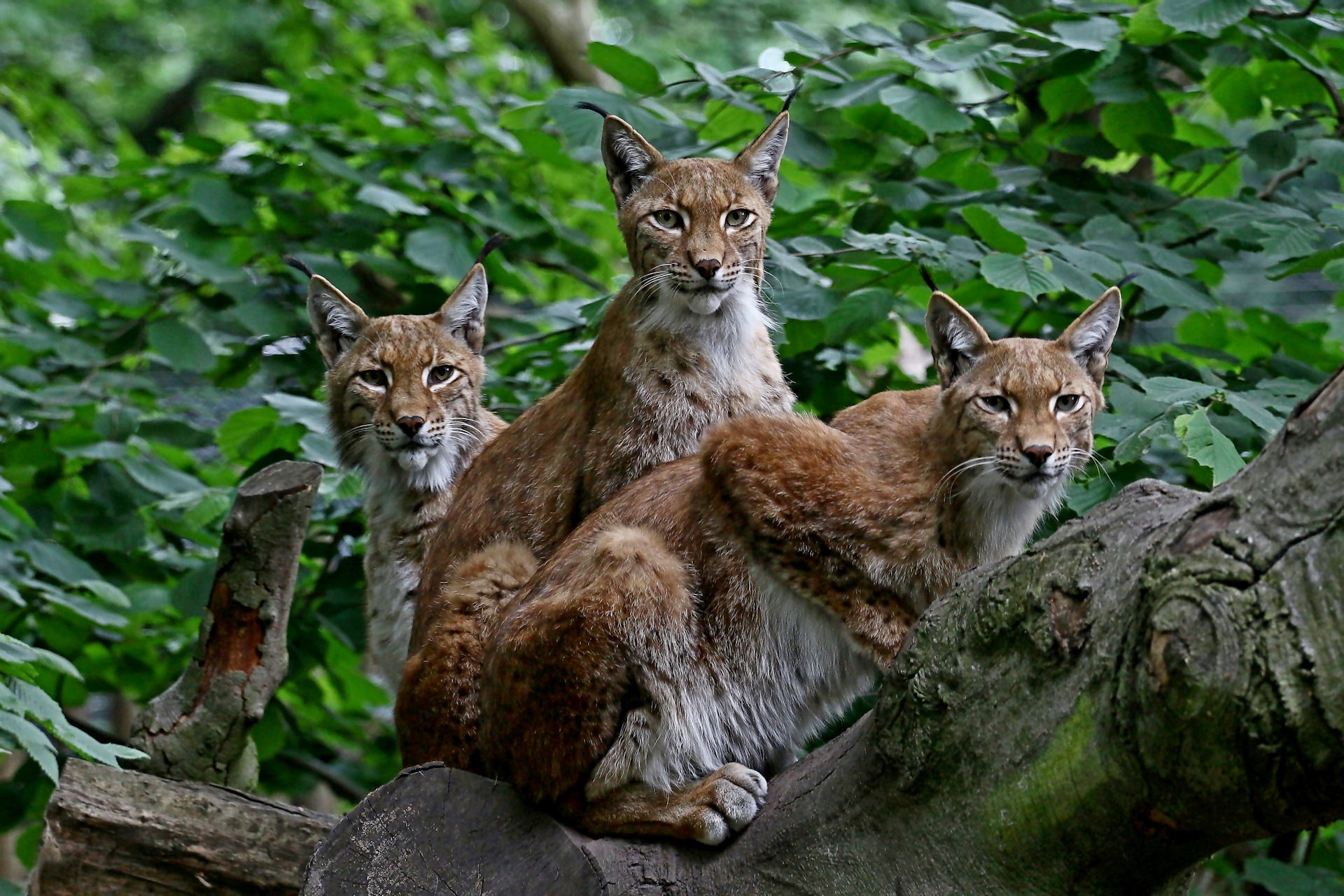
A survey by the University of Bern found that the population density of the lynx in the canton of Valais has been extraordinarily low over the past five winters.
This applies both in comparison with other parts of the Swiss Alps and with earlier surveys from the 1980s in the canton of Valais. Further investigations are now intended to identify the reasons for this finding. The researchers suspect poaching as the most likely cause.
In the mid-19th century, the lynx was exterminated in Switzerland. In addition to the increasing deforestation, it was particularly affected by excessive hunting — as was the case almost everywhere in Europe. Only in remote regions was it able to survive in small populations. It was not until 1971 that it was reintroduced here, by order of the Federal Council.
Since then, the population has developed remarkably well. According to information from the Federal Office for the Environment, around 300 lynx roam the country’s forests. The lynx feels particularly at home in the northwestern Alps and in the Jura (see infographic). Europe’s largest wild cat is protected and may not be hunted.
Distribution range of the Eurasian lynx in Switzerland, as of 2018

For a few decades now, predators have been recolonizing the Swiss Alpine region, having previously been eradicated there by human persecution. This return has not been without consequences. Not least because of the threat that lynx and wolf can pose to livestock such as sheep, there is a divided relationship with these predators. The first to return was the lynx in the 1970s. In 2012, researchers from the Institute of Ecology and Evolution at the University of Bern initiated a project to investigate the spatiotemporal dynamics of wolf and lynx in relation to their prey species such as red deer, chamois, and roe deer.
University of Bern: Systematic Track Surveys and Camera Traps
The return of the wolf and lynx over the course of the last century was made possible primarily by the steady increase in their natural prey — that is, wild ungulates. Today it is often forgotten that populations of chamois and roe deer in Switzerland had shrunk to very small remnant populations around a hundred years ago, while the ibex and red deer had disappeared entirely. It was only in the second half of the last century that this situation changed in a lasting way, thanks to targeted conservation initiatives. With wild animal populations having risen significantly, the Alps once again became an attractive habitat for predators.
In order to better understand the influence of predators on their natural prey, the University of Bern initiated a comprehensive research project in the Valais Alps in 2012. This endeavor was supported in particular by the Federal Office for the Environment (FOEN). Data collection was carried out through systematic track surveys of wildlife in the snow during the winter half-year (November to March), along 218 transects each 1 km in length, distributed across the entire canton of Valais. In parallel, around 100 camera traps were set up in the same area to provide additional observations.
Rare Sightings of Lynx
The analysis of data collected over the past five winters yielded a surprising finding: observations of lynx were exceptionally rare in the target area. The mean population densities determined by researchers from the University of Bern amounted to just 0.32 lynx per 100 km² of potentially habitable territory across the entire canton. This is significantly lower than in comparable regions of the Swiss Alps (1.4 to 2 lynx/100 km²) or the Jura (up to 3.6 lynx/100 km²). Over the entire study period, only 15 distinct individuals were recorded.
The majority of these were observed in the northwest of the canton, near the thriving lynx populations of the western Pre-Alps (cantons of Vaud and Fribourg). South of the Rhône, however — particularly in the Chablais region south of Lake Geneva, as well as in the Hérens, Anniviers, and Turtmann valleys and in the Goms — the lynx is an exceedingly rare sight. «This is all the more astonishing given that as recently as the 1980s, a far higher lynx density had been recorded in the area between Nendaz and Brig», says Prof. Raphael Arlettaz, the study's lead researcher. Some 58 percent of the canton of Valais can be considered potentially favorable habitat for lynx. Projecting the figures from other Swiss Alpine regions onto Valais, one would expect a population of between 35 and 53 lynx. «We are currently far from reaching such a density», says Arlettaz. The study has now been published in the scientific journal «Bulletin de la Murithienne».
University of Bern: Poaching as a cause?
In the next step, the researchers aim to determine why the lynx population density in Valais is not higher: Is the monitoring design using camera traps not efficient enough for an accurate population assessment? Or are the prey animal populations (roe deer and chamois) in Valais at a considerably lower level than in the rest of the Alpine region? And what role does poaching — reported in various local media headlines — play in explaining the persistently low lynx numbers in the canton of Valais?
Raphaël Arlettaz already has a suspicion: «While caution is still warranted before drawing definitive conclusions, our latest unpublished analyses suggest that poaching — possibly practiced for decades — may be the decisive factor. Unfortunately, the relevant boastful statements made by certain individuals, which some media outlets were eager to report, have only recently begun to be taken seriously by the responsible authorities..»
Indeed, cases of poaching — and in recent years, rumors — have repeatedly caused a stir in the largest Alpine canton of western Switzerland. There were even hunters who publicly boasted of wanting to put an end to the lynx. The most notorious of them was Lini Paccolat. Rifle in hand, he proudly told «L'Illustré» in 2013 that he had set snares in the mountains and caught at least ten lynxes. By then he was no longer active himself, but he had friends “who were taking care of it”, said the then 90-year-old. Conservation organizations filed charges against him; the public prosecutor's office later dropped the case.