Val Russein: 82 sheep plunged to their deaths, office finds no indication of a wolf
In the Surselva, 82 sheep plunged to their deaths over a rock face. The Grisons Office for Hunting and Fishing found no indication of a wolf, yet calls for regulation have nonetheless followed.
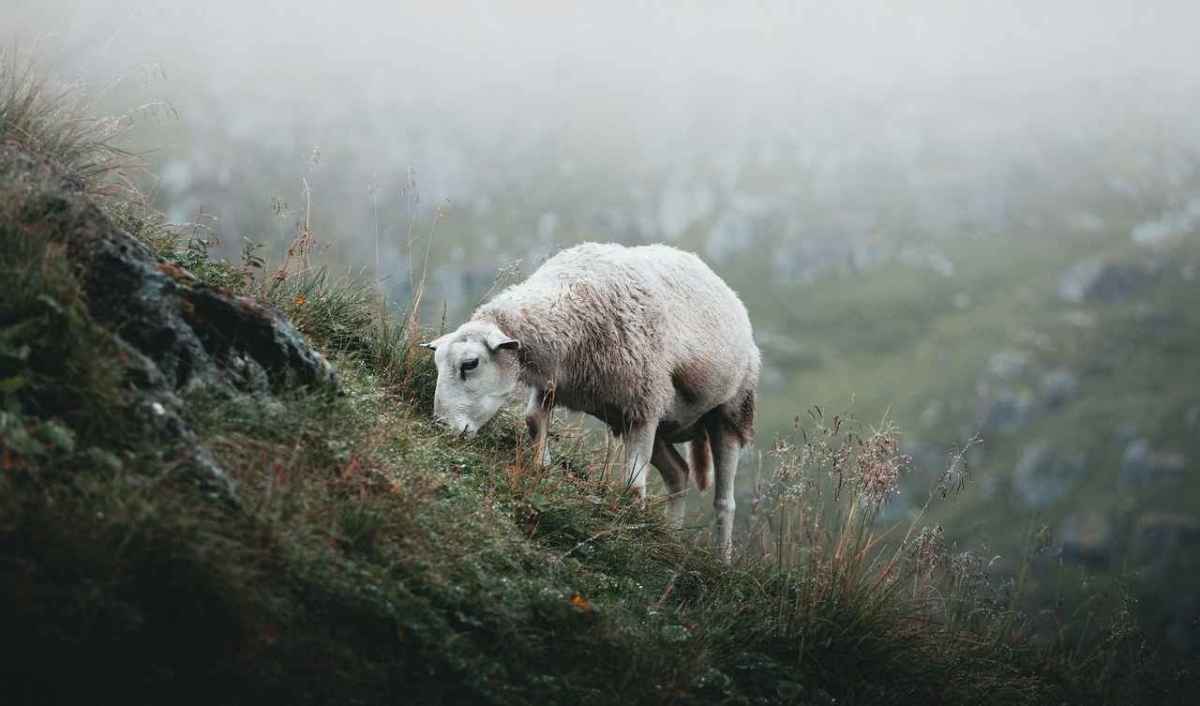
Symbolic image: sheep on a steep slope in the fog. Photo: André Mašek / Unsplash
On 11 September 2026, a shepherdess discovered numerous dead sheep below a rock face in the Val Russein, a side valley of the Surselva at the foot of the Tödi.
82 sheep died, as the «Südostschweiz» reported on 2 October. 62 of them belonged to sheep farmer Marcus Berther from Segnas, the remaining two to other farmers from the region.
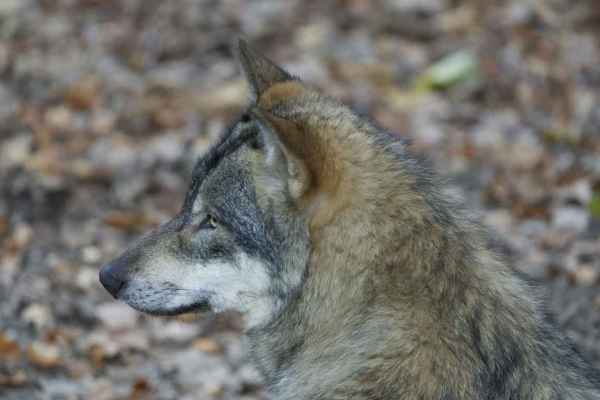
In the region, the suspect was quickly identified: the wolf. To this day, however, this has not been proven. The responsible authority has investigated the case and arrived at a different finding.
What is known about the fall
According to previous reports, the sheep had probably already been lying at the foot of the rock face for around two days when they were found. Dense fog had severely restricted visibility in the high valley for several days beforehand. Berther assumes that the herd panicked and followed a lead animal over the edge. According to his own statement, he cannot say what triggered the panic: a wolf, free-roaming dogs, or some other event.
What is certain is what was not found. According to Berther, no wolf bite marks were visible on any of the sheep; DNA samples are still being analysed. To protect his herd, he relies on electric fences, which, in his words, are difficult to install securely in the rocky terrain of the Val Russein. According to him, livestock guardian dogs are not always deployed.
The office finds no indication of a wolf
Adrian Arquint, co-head of the Grisons Office for Hunting and Fishing, confirmed the case on 2 October to the news agency Keystone-SDA. The wildlife wardens were on site to assess the dead sheep. Their finding: «We found no evidence of wolf involvement.»
This does not rule out a wolf with absolute certainty. However, the on-site investigation found nothing pointing to one. This finding carries weight because it comes from the authority that orders and carries out wolf kills in the canton, and from a department head who is himself a recreational hunter.
A fall that killed more sheep than all wolf kills combined up to the end of August
The scale becomes clear from the official statistics. The «Wolf Management Monitoring» of the department records, as of 31 August 2026, for the entire year and the whole canton, 73 sheep and goats as well as five head of large livestock killed by wolves. In the Val Russein, 82 sheep died in a single incident. A fall with no evidence of wolf involvement thus cost more sheep their lives than all wolf kills in Grisons from January to August combined. The comparison sets a single incident against canton-wide damage statistics – and that is precisely what makes the scale visible.
Compared with the previous season, the registered wolf kills so far are also lower than last year: by the end of July there were 30 livestock instead of 68, and in August a further 44 sheep and goats were added, compared with 105 in August 2025. Whether this will develop into a lasting trend cannot be said before the end of the alpine grazing season; the department itself considers statements about the whole year premature. We have documented elsewhere that wolves are responsible for only a small proportion of sheep losses anyway, with most sheep dying from disease, parasites and husbandry conditions, as we have documented here.
Regulation has long been underway in the territory of the Stagias pack
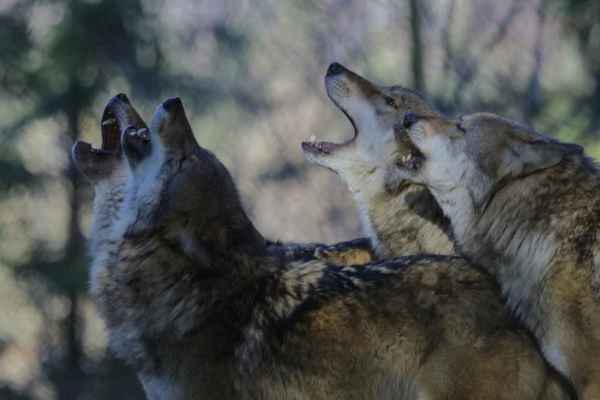
Nevertheless, Berther draws one conclusion from the accident: «There are wolves here, and we have to regulate them.» That is exactly what is already happening. The Val Russein lies within the municipalities of Disentis/Mustér and Sumvitg. According to the department, the home range of the Stagias pack extends across the municipalities of Tujetsch, Disentis/Mustér and Medel (Lucmagn).
On 30 August, the wildlife wardens confirmed four pups for this pack. On 31 August, the kill order for two young animals followed. The department's directive on wolf kills during the high hunt already noted, as of 2 September, that the kill quota for Stagias had been reached. That was about a week before the sheep fell to their deaths in the Val Russein.
Canton-wide, the directive lists 19 kill perimeters as of 22 September, 18 for packs and one for a lone wolf. In the Surselva region, besides Stagias, the Valgronda and Frisal packs are also affected. By the end of August, the authorised kills totalled 42 according to monitoring, including the complete removal of the Calderas pack. They are carried out not only by the wildlife wardens, but during the high hunt also by specially authorised recreational hunters. KORA, the monitoring body commissioned by the federal government, itself notes that direct evidence for the claimed protective effect is scarce.We have examined this here, the background to Swiss wolf policy is covered in the dossier «Wolf in Switzerland».
Context: the argument about scrub encroachment
Berther warns that without sheep, the Alps would become overgrown with scrub, biodiversity would shrink and the risk of natural hazards would increase. It is not that simple: Too many sheep are harming biodiversity, and agricultural use also takes its toll on the alpine meadows agricultural use also takes its toll on the alpine meadows.
The case above all illustrates the risks of alpine summer grazing in steep terrain that is difficult to oversee in fog. According to reports, the dead sheep were discovered on 11 September and may already have been lying below the rock face for around two days by that point. Even on a shepherded alp, monitoring is difficult under such conditions. Our dossier on herd protection shows what herd protection can achieve and where it fails dossier on herd protection.
Comment: the wolf need not even have been there
The «Südostschweiz» itself noted in a comment that in such cases the wolf becomes a screen for projection, and that neither bite marks nor any other evidence point to it. That is correct, and it deserves recognition. All the more remarkable, then, that the same newspaper highlights precisely the quote about regulation on its front page.
That is the pattern. There is no bite, no finding by the wildlife wardens, and no indication from the authority. Yet the conclusion is still: regulate. The wolf need not even have been present to serve as justification for further kills.
The presumed time of the fall falls within the first block of the Grisons high hunt from 3 to 13 September. These days, thousands of recreational hunters are out in the mountains in the canton. That proves no connection. Whether people in the terrain, dogs, a thunderstorm, falling rocks or a wild animal startled the herd, nobody knows, and so far there is no evidence for any trigger. But it shows how quickly the debate has narrowed to the wolf, while nobody asks about other disturbances. We document the incidents of the current season in the ticker on the Graubünden hunting season 2026/27.
82 non-human animals are dead, and the loss hits the keepers hard. Precisely for this reason, the cause deserves careful review rather than a reflex response. The fall shows that sheep on alpine pastures are exposed to considerable risks even without wolves. If a single event kills more sheep than wolves have killed across the entire canton in eight months, then dealing with fall-prone terrain, fog and supervision belongs in this review. Responsibility for summer-pastured sheep lies with the people who bring them to the alp, with or without wolves.
Whoever derives further kills from an incident without proof of wolf involvement shifts the debate from the unresolved cause to a political demand. He provides the justification for a wolf hunt, for which the canton maintains 19 kill perimeters according to the directive (as of 22 September), and in whose enforcement specially authorised recreational hunters are also involved during the high hunt. The Office for Hunting and Fishing should publish the results of the DNA analysis as soon as they are available. And the media should report the authority's findings as prominently as they previously reported the suspicion.
Sources: «Südostschweiz», report of 2 October 2026 as well as front page and commentary on the case; Keystone-SDA, reports of 4 August and 2 October 2026; watson.ch, 2 October 2026; Office for Hunting and Fishing Grisons, «Monitoring Wolf Management» (as of 31 August 2026), media release on proactive regulation of 28 August 2026, directives on the enforcement of wolf kills within the framework of the Grisons high hunt 2026 (as of 22 September 2026), quarterly report 4/2024 on the roaming area of the Stagias pack, as well as hunting dates 2026.
More on the subject of recreational hunting: In our dossiers on recreational hunting gather fact-checks, analyses and background reports. The scientific evidence is presented in the overview Studies on the Effects of Recreational Hunting.
The position of IG Wild beim Wild: IG Wild beim Wild rejects recreational hunting. Our model is the canton of Geneva, which has managed without recreational hunting since 1974: without hunting seasons, without hunting dogs, without driven hunts, without high seats, without the animal cruelty and crime that go hand in hand with hunting season elsewhere. What has worked there for over fifty years disproves every position paper by JagdSchweiz. An association that bases its policy on claims it refutes in its own documents is not a professional organisation, but a factory for misinformation.

All articles are written by IG Wild beim Wild as well as by external co-authors. Research, structuring and editorial processes may be supported by AI-assisted tools.
Support our work
With your donation you help protect animals and give their voice a hearing.
Donate now →