Giant liver fluke in France for the first time: a parasite that came to Europe with game animals
In the Sologne, the wildlife disease surveillance network has detected the American giant liver fluke in France for the first time. The parasite came to Europe in the 19th century with imported game animals.
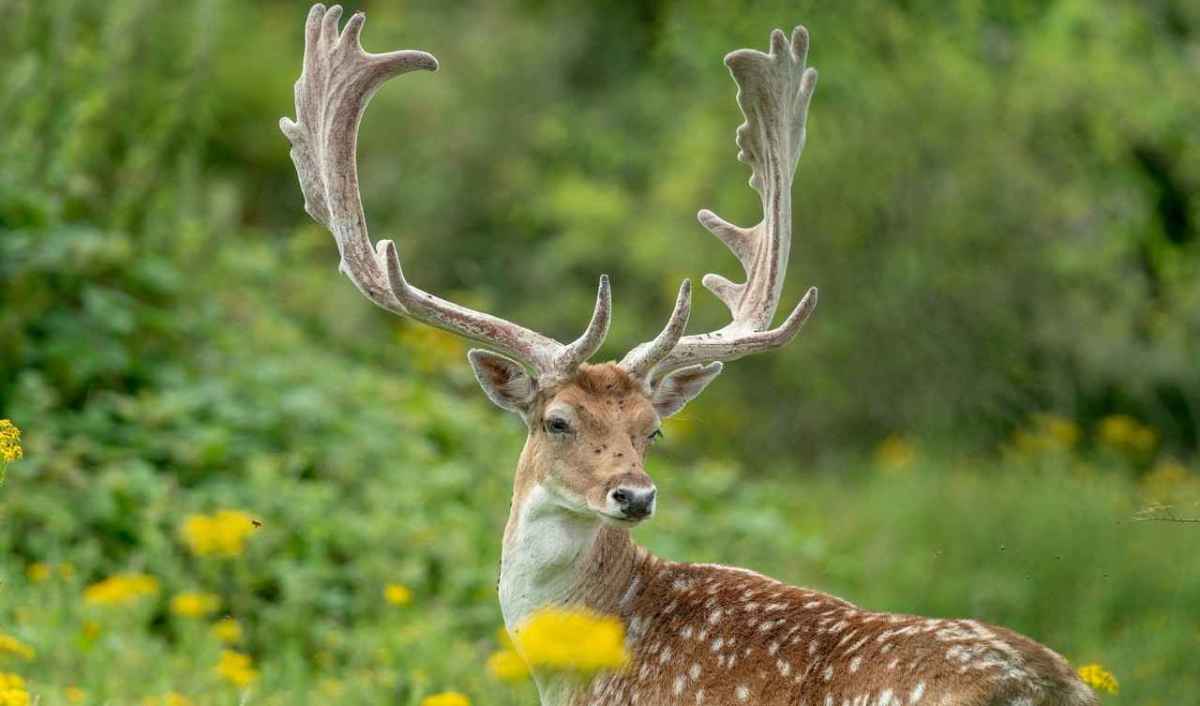
Fallow deer. Photo: Bob Brewer / Unsplash
«Fair Game Straight from the Factory»
Several large flukes were found in the liver of a fallow deer in the Sologne, south of Orléans. On 16 October 2026, the French Office for Biodiversity (OFB) reported the first detection of Fascioloides magna, the American giant liver fluke, in France.
What the OFB reports
The parasite was discovered by SAGIR, the network for monitoring wildlife diseases. The fluke grows to an average length of about five centimetres, an exceptional size for a parasite. According to the OFB, initial investigations suggest that it has already established itself among the deer of the Sologne.
The giant liver fluke needs two hosts. First it multiplies in freshwater snails, then it infects cervids, in Europe mainly red deer, fallow deer and roe deer. In deer, infection leads to weight loss, poorer antler development and a disrupted rut. According to the OFB, roe deer and fallow deer are most severely affected, with the highest mortality. For sheep, goats and mouflon, infection can be fatal. The parasite is harmless to humans.
The OFB does not know how it reached France. It can spread via infected deer, which excrete eggs in their droppings, and via bodies of water.
Probably brought to Europe with game animals
The history of the parasite in Europe, by contrast, is well documented. It was first described in 1875 in Italy, after a mass die-off of red deer in the royal hunting park of La Mandria near Turin. The veterinarian Roberto Bassi suspected that the fluke had been introduced with wapiti imported from the USA in 1865. The Bavarian State Institute of Forestry (LWF) likewise assumes that the parasite arrived in Europe in the second half of the 19th century with imports of wild animals for enclosure breeding.
Today there are three stable populations in Europe: near Turin, in the Czech Republic and south-west Poland, and in the Danube floodplain forests. In the Czech Republic the fluke was first detected in fallow deer in 1930; by the 1960s, 70 to 80 per cent of red deer there were infested. In 2019 it was found for the first time in the Bavarian Forest National Park, and in 2025 for the first time in Slovenia.
A study from the Bohemian Forest shows how strongly hunting installations promote its spread. In winter 2021/22 the parasite was detectable in 9 of 16 red deer winter enclosures, and in one enclosure in 78 per cent of the faecal samples. Large amounts of dung in a small area and water in which the snails live offer ideal conditions. Medication administered at feeding sites in the Šumava National Park over several years showed no lasting effect. The treatment was discontinued.
In La Mandria Park itself, a study published in 2026 in the journal «Veterinary Sciences» found genetic material of the fluke in 9.2 per cent of the snails examined. Outside the park, there was no detection in either wild animals or snails. The researchers attribute this to environmental conditions outside the park that are apparently unsuitable. They also documented, however, that deer occasionally cross the park boundary, and they recommend further monitoring and reinforced barriers.
The Sologne: France's region of hunting enclosures
The fact that the find comes from the Sologne makes it all the more explosive. The region is known for its fenced hunting estates; in France this is referred to as «solognisation». A legislative proposal from the National Assembly put the figure at around 5,000 kilometres of fencing in 2021. Drawing on surveys by the former wildlife authority ONCFS, he put the number of hunting enclosures at around 1,300, holding a total of 50,000 to 100,000 animals. Between 2006 and 2008, 3,648 animals escaped from 434 facilities. To stock these enclosures, animals were legally imported from abroad, including wild boars from Hungary and Poland and red deer from Poland.
Since February 2023, a law has restricted the fencing-off of natural and forest areas, and existing fences must be adapted by the beginning of 2027. How walled-off hunting estates in the region operate is shown in the article Olivier Bouygues on trial over alleged persecution of wild animals.
How the giant liver fluke reached the Sologne remains unclear. Poland and Hungary are among the countries where the parasite occurs. A link with the animal transports is therefore not proven, but it is an obvious question that the authorities must investigate.
And Switzerland?
No record from Switzerland turned up in the sources reviewed for this article. A documented occurrence exists in La Mandria Park near Turin, less than 100 kilometres as the crow flies from the Swiss border. Fallow deer are kept in Switzerland, among other places, in enclosures, as the cases from Windisch and Bironico show.
The Bavarian forestry institute recommends having host animals examined by a vet before every transport and closing winter enclosures in summer. According to its investigation, roe deer, sheep, goats and chamois are particularly at risk: even a light infestation can be fatal for them within a few months if left untreated. Whether the parasite will ever reach Swiss alpine pastures is an open question. Anyone who moves wild animals across borders, however, accepts this risk.
Commentary: Game management that sows disease
The giant liver fluke is probably a legacy of the hunting passion of Europe's royal houses. Wapiti were brought across the Atlantic so that something exotic could be shot in a hunting park. This historical introduction shows the risks that wildlife transports carry. How the parasite reached the Sologne, by contrast, has so far not been established.
The pattern has not disappeared. Enclosures, feeding sites and animal transports for recreational hunting concentrate wild animals in confined spaces and bring them to places where they do not belong. This applies to tuberculosis in red deer in Vorarlberg, as the article When recreational hunters feed them, red deer fall ill shows, and for the pheasants that were released in Ticino specifically to be shot (Pheasant Hunting Now Takes Place Almost Exclusively in Ticino).
Those who turn non-human animals into recreational prey treat them as commodities, and commodities are traded, bred and moved around. The consequences are borne by free-living roe deer and chamois that never had anything to do with hunting parks. What is needed is a ban on releasing or importing wild animals for hunting purposes, and an end to enclosure hunting, including where it disguises itself as game management.
Sources: Office français de la biodiversité, «Un parasite géant venu d’Amérique du Nord détecté pour la première fois en France», 16 October 2026; Bayerische Landesanstalt für Wald und Forstwirtschaft, LWF aktuell 3/2023, «Der Grosse Amerikanische Leberegel»; Coraglia, Moroni, Molinar Min, Rossi, Tizzani, «Invasive Fascioloides magna and Its Italian Alcatraz», Veterinary Sciences 13(2), 17 February 2026; Žele Vengušt et al., Frontiers in Veterinary Science, 2025; Assemblée nationale, Proposition de loi No. 4171 of 18 May 2021; Loi n° 2023-54 of 2 February 2023.
More on the subject of recreational hunting: In our dossiers on recreational hunting gather fact-checks, analyses and background reports. What the research says about this is shown by Hunting fact-checked: the state of research.
The position of IG Wild beim Wild: IG Wild beim Wild rejects recreational hunting. Our model is the canton of Geneva, which has managed without recreational hunting since 1974: without hunting seasons, without hunting dogs, without driven hunts, without high seats, without the animal cruelty and crime that go hand in hand with hunting season elsewhere. What has worked there for over fifty years disproves every position paper by JagdSchweiz. An association that bases its policy on claims it refutes in its own documents is not a professional organisation, but a factory for misinformation.
Wild animals need a voice
Once a week: research, petitions and background information on recreational hunting. Free of charge and can be unsubscribed from at any time.

All articles are written by IG Wild beim Wild as well as by external co-authors. Research, structuring and editorial processes may be supported by AI-assisted tools.
Support our work
With your donation you help protect animals and give their voice a hearing.
Donate now →