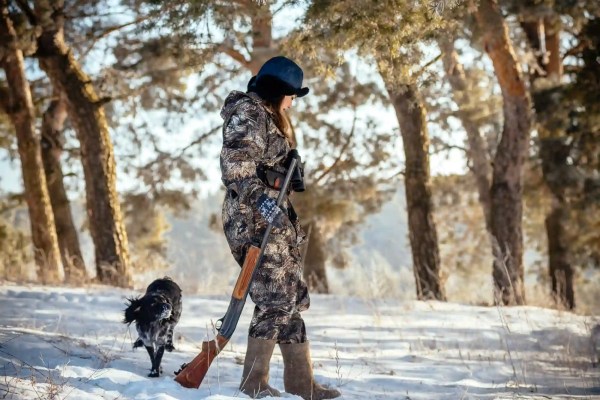
Pheasant hunting now takes place almost exclusively in Ticino
The federal hunting statistics show a species without a population that continues to be hunted in a single canton.
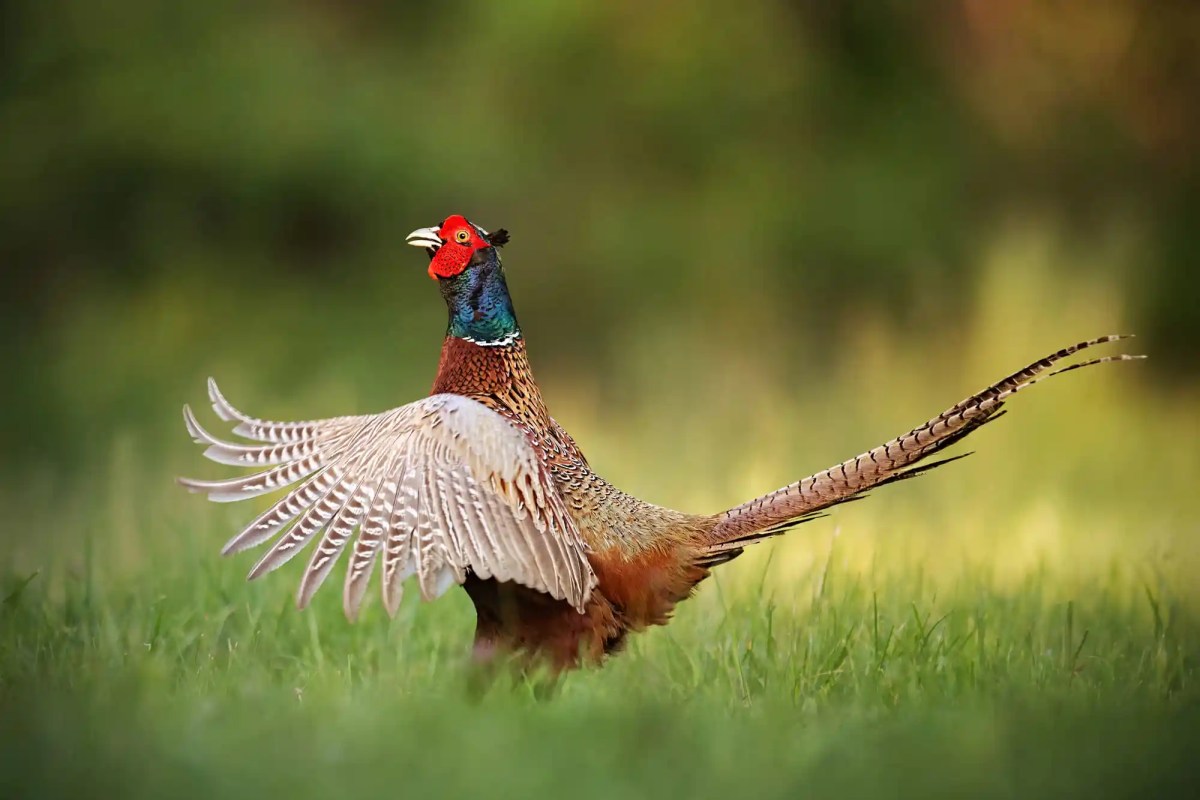
«Fair Game Straight from the Factory»
In 2023, six pheasants were killed across the whole of Switzerland, all six in the canton of Ticino.
A legal opinion commissioned by the federal government notes that hunting pheasants are essentially released only in this canton.
A decline of 96 per cent
The federal hunting statistics still recorded 155 pheasants killed across the whole of Switzerland in the year 2000. In 2023 there were six, the lowest value in the series. That corresponds to a decline of around 96 per cent.
In the first five years of the survey, from 2000 to 2004, a total of 575 pheasants were killed. In the last five years, from 2020 to 2024, there were 87. Over the entire 25-year period, the kills add up to 1’120 animals. The annual average over the last ten years is just under 18 animals for the whole of Switzerland.
Since 2017 the figures have moved almost consistently in the single-digit to low double-digit range: eight animals in 2017, nine in 2019, six in 2023, 23 in 2024.
The federal figures are the Ticino figures
The telling finding emerges only when two analyses of the same database are compared. If the Switzerland-wide series is set against the Ticino series, the values for the more recent years are identical. 2021: 24 animals in Switzerland, 24 in Ticino. 2023: six and six. 2024: 23 and 23.
Even in the years with high values, the canton dominates the statistics. In the year 2000, of the 155 pheasants killed across Switzerland, 143 fell to Ticino, which is around 92 per cent.
Pheasant hunting in Switzerland has thus for years been practically exclusively a Ticino affair. In the other cantons it effectively no longer takes place.
The federal government documents the release practice
What explains this finding is set out in a legal opinion on Swiss species protection law, commissioned by the Federal Office for the Environment. It states that the release of huntable animals is now of only minor significance and that essentially only in the canton of Ticino are hunting pheasants released.
The opinion dates from 2005. Whether the practice described there continues to this day is not publicly documented. The kill figures of the following two decades, however, show the same pattern: a pheasant hunt that is almost entirely concentrated in a single canton.
The Ticino hunting regulation expressly lists the pheasant, in Italian fagiano comune, in the list of huntable bird species. The regulation sets out annually the hunting seasons, the huntable species and the number of animals that may be killed.
This shifts the question. It is not about why more pheasants are shot in one canton than elsewhere, but about whether a wild population is hunted at all, or whether animals bred in captivity are released only to be killed shortly afterwards.
What the law requires
Federal law does not have a general ban on releases, but it ties releasing to conditions and to the authorities. Under Article 6 of the hunting act, the cantons may release huntable animals, provided that suitable habitat is available and sufficient protection is guaranteed. Animals that cause major damage or that threaten native biodiversity may not be released.
The competence therefore lies with the canton, not with private individuals. Anyone who deliberately and without authorisation releases animals is liable to prosecution under Article 17 of the hunting act, with the penalty threat extending to up to one year of imprisonment or a monetary penalty.
The preliminary stage is also expressly covered. Under Article 18, anyone who, without authorisation, captures, keeps in captivity, appropriates or imports huntable animals in order to release them is punishable by a fine of up to 20’000 francs. Anyone wishing to import huntable animals in order to release them additionally requires a federal permit under Article 9.
The legislator therefore certainly has the whole chain in view, from breeding through import to release. Decisive at every link of this chain is the question of authorisation.
Huntable, while related species are protected
In the classification of the hunting statistics, the pheasant is marked as a huntable species. Within the same group of gallinaceous birds, the capercaillie, hazel grouse, rock partridge and quail are listed as protected.
The pheasant does not sit at the margins of federal law, but right at its centre: Article 5 of the hunting act lists it by name and assigns it its own closed season from 1 February to 31 August. The law thus treats it like a species with a relevant population.
The common argument of recreational hunters that hunting serves to regulate populations does not hold up against these figures. Where, nationwide, fewer than twenty animals are killed on average per year, there is no population that would need regulating. And if the animals moreover come from breeding, the argument turns on its head: it is not an existing population that is being reduced, but an artificial one that is first created in order to be hunted.
If releasing is necessary, the habitat is lacking
Article 6 of the hunting act ties releasing to a condition: suitable habitat must be present. Just how narrow this condition is, is spelt out, of all people, by a hunting association itself.
In a technical article, the Upper Austrian regional hunting association notes that supporting populations through releasing raises an awkward question: why should pheasants have to be released in a hunting ground that represents suitable habitat? If the habitat is right, the increase turns out accordingly. If the increase fails to materialise and releasing is therefore carried out, then the habitat is precisely not suitable. It would then be appropriate to first address the causes.
With this, recreational hunting itself describes the contradiction that federal law leaves open. Releasing is permitted when suitable habitat is present. Yet it becomes necessary precisely when it is not.
The NABU North Rhine-Westphalia draws a consequence from this for the species list. It assumes that pheasants do not form a self-sustaining population and only survive because bred birds are repeatedly released. Only species that can be used without populations being artificially boosted for the purposes of recreational hunting should belong in the catalogue of huntable species.
For Switzerland, the figures show the same trend as with the kills. In the 1970s, a good 18,000 pheasants were still released here each year; in 2007 the number was 173. The Swiss breeding population is estimated at 100 to 500 pairs, an order of magnitude that cannot sustain independent hunting use.
The international comparison
In Europe, the pheasant is the central species of commercial reared-bird hunting. According to the British Ecological Society, around 41 to 50 million pheasants and red-legged partridges are bred and released for commercial shoots in Great Britain each year, a figure that, according to the same source, lies well above that of other European countries.
A study in the European Journal of Wildlife Research arrived at an average of 31.5 million pheasants released annually in Great Britain alone, and noted that there is hardly any regulation of these releases. A survey commissioned by the Game and Wildlife Conservation Trust found that around 47 million pheasants were released in 2016, of which at most 18 million were recorded as killed. By far the largest proportion of the released animals appears in no kill statistics at all.
In Austria, the practice has led to legal restrictions. In Burgenland, releasing is banned; in Vorarlberg and Salzburg it requires a permit; in Vienna, the killing of released animals is prohibited. This was based on the assessment that pheasants bred in captivity are not capable of surviving in the wild.
In Italy, too, right on the Ticino border, the breeding and release of pheasants for hunting is an established practice with its own legal framework for reintroduction areas and private breeding operations.
The open questions
The state of the data and the legal situation give rise to questions that have not been answered publicly.
Are pheasants currently being released for hunting purposes in the canton of Ticino, to what extent, and on the basis of what official decision? On what surveys is the finding required by law based, namely that suitable habitat is available and that sufficient protection is guaranteed? Do released animals come from abroad, and, if so, is the required federal permit in place? Does a self-sustaining wild pheasant population exist in the canton? And on what technical basis does a species remain within the hunting regime whose kill figures have been in the single to low double digits for over a decade?
The rise from six animals killed in 2023 to 23 in 2024 calls for an explanation for a species with no discernible wildlife population.
More on the topic: Cruel hunting methods, tolerated and encouraged and What recreational hunting costs the taxpayer
More on the subject of recreational hunting: In the dossier The Role and Criticism of Recreational Hunters we shed light on the training, power and self-image of recreational hunters. The scientific evidence is presented in the overview Studies on the Effects of Recreational Hunting.
The position of IG Wild beim Wild: IG Wild beim Wild rejects recreational hunting. Our model is the canton of Geneva, which has managed without recreational hunting since 1974: without hunting seasons, without hunting dogs, without driven hunts, without high seats, without the animal cruelty and crime that go hand in hand with hunting season elsewhere. What has worked there for over fifty years disproves every position paper by JagdSchweiz. An association that bases its policy on claims it refutes in its own documents is not a professional organisation, but a factory for misinformation.
Support our work
With your donation you help to protect animals and give their voice a hearing.
Donate now →