Valais hunt 2026/27: incidents, violations and developments at a glance
Wild beim Wild continuously documents the 2026/27 hunting season in Valais. The ticker features official announcements, incidents, violations, kills and other notable events – updated chronologically.
«What Valais Shot»
Valais is officially opening the 2026/27 recreational hunting season on 21 September and intends to be the first canton in Switzerland to apply for a regulation of the lynx population.
At the same time, a new trophy hunting model for ibex and repeated herd protection failures following wolf kills are causing controversy. Just how deeply recreational hunting is culturally rooted in Valais is shown in the article The Psychology Of Recreational Hunting In The Canton Of Valais.
Ticker
22.10.2026
Thu 06:30
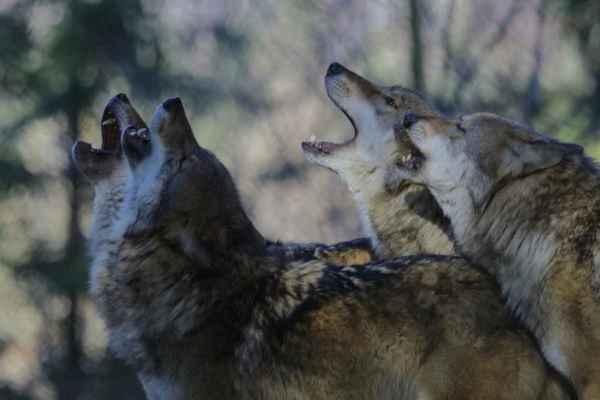
Nendaz-Isérables: first young wolves killed, once again just an entry in a table
On 21 October, the "WH+" scheme killed two young wolves within the perimeter of the Nendaz-Isérables pack. This emerges solely from the table “Causes of death of wolves in Valais” of the Service for Hunting, Fisheries and Wildlife; there is no press release, and no genetic identifiers have been entered. These are the first kills in this pack in the current period: on 14 September, the FOEN had authorised the killing of up to two thirds of the wolves born in 2026 from the Nendaz-Isérables and Les Toules packs until 31 January 2027. Since 1 September, ten wolves have thus been killed in the canton under proactive regulation: two in Augstbord, six in the Nanztal and two in Nendaz-Isérables, plus the single kill in Vérossaz on 5 September. For the Nendaz-Isérables perimeter, the same table already lists eight wolves killed for the 2024/25 period, and a further three in the "Nendaz" perimeter for 2025/26. That pups are nevertheless growing up there again shows that the pack is being decimated year after year, not dissolved, and the table gives no figures on livestock kills or information on herd protection. The current status on the counter Wolf kills Switzerland 2026/27.
21.10.2026
Wed 05:20
Fox and badger in Valais: around CHF 24,700 in bounties, no fallen game reported
According to the Federal Hunting Statistics, recreational hunters in Valais shot 1,556 foxes and 68 badgers in 2025. At CHF 15 per fox and CHF 20 per badger, that amounts to around CHF 24,700 in kill bounties paid from the public purse. How many foxes and badgers die on Valais roads, by contrast, is unknown: the canton reports no fallen game to the Confederation for either species. For roe deer, 445 animals died in road traffic in 2025. At the same time, recreational hunting remains permitted at dusk during the week after the clocks change when commuters are on the road in the dark.
The bounty serves no purpose: in Nancy, fox tapeworm infestation rose despite intensified hunting (Comte et al. 2017), and Luxembourg has given up fox hunting since 2015 without either the population or tapeworm infestation increasing. More in the Fox dossier, in the Badger dossier and in the Cost dossier.
16.10.2026
Fri 04:54
Hunting act consultation: Valais demands wolf quotas and pup kills from June, and wants the ibex to be less protected too
According to the According to «Le Nouvelliste» of 15 October, the Valais Council of State has sent the Confederation its response to the revision of the federal hunting act, decided at its meeting on 7 October, as the Council of State bulletin confirms. The canton supports the implementation of the Friedli motion (wolf kills in federal hunting ban areas) and the Broulis motion (action against problem wolves from packs), but finds the draft too narrow: «Il est à craindre qu’une nouvelle révision, plus complète, s’avère nécessaire peu après l’adoption du présent projet». Among other things, it calls for annual kill quotas per canton, longer regulation periods, and the removal of wolf pups «dès le 1er juin» as well as wolf pairs within these quotas. For the preventive regulation of wolf packs, the period currently applying, according to the FOEN federal ordinance cantonal summary, already 150 red deer were killed through regulatory kills in federal hunting ban areas; the response aims to relax protected areas and protection periods further. On the ongoing consultation: Hunting Act: Consultation on wolf kills during the whelping season and in hunting ban areas runs until 16 October
16.10.2026
Fri 04:53
Evolène: cow falls to its death, an association demands the kill of an entire wolf pack as a result
On 14 October a cow fell to its death above Evolène; the carcass had to be, according to Rhône FM be recovered by helicopter. The «Association romande pour la régulation des grands prédateurs» interprets the accident as a «conséquence indirecte de la présence du loup» and calls on Bern to decide without delay on the Valais application for the complete removal of the Arolla-Ferpècle pack. Rhône FM cites no finding by the wildlife wardens, no tracks and no witness statements pointing to any involvement of wolves; the report merely reproduces the association's own assessment. The actual cause of the fall remains open in it. As a further argument, the association states that in 2024 sixteen cattle were attacked, fell to their deaths or disappeared in the region within a single year, a figure that lumps together attacks, accidents and missing animals so that they can no longer be told apart. The association thus links the unexplained fall with the demand for the whole pack to be shot, without the report providing any evidence of wolf involvement. By way of comparison: Val Russein: 82 sheep plunged to their deaths, office finds no indication of a wolf
13.10.2026
Tue 17:54
Arolla-Ferpècle: Valais wants a fourth wolf pack killed in its entirety
According to the press release from the Office for Hunting, Fisheries and Wildlife of 13 October, the canton has asked the FOEN (BAFU) for the complete removal of the Arolla-Ferpècle pack in the Val d’Hérens, the sixth Valais application of the 2026/27 regulation period. The total culls in Nanz and Augstbord, as well as partial culls in Nendaz-Isérables and Les Toules, have already been approved, while the application for Réchy-Anniviers is still pending. In this way, Valais intends to eliminate four packs entirely. The announcement contains no kill figures, no information on herd protection and nothing on the size of the pack; the application is justified solely by conflicts in "problem areas". According to cantonal kill table twelve wolves from the Hérens and Hérens-Mandelon packs have already been killed in the Val d’Hérens since December 2023, one of them by a recreational hunter. In 2023, the Federal Administrative Court regulation in the same valley had still been rejected because the sheep that were killed had been insufficiently protected. Since 1 September, eight wolves have been killed in Valais as part of proactive regulation, plus one individual kill in Vérossaz. More on this: «Wolf kills Switzerland 2026/27» counter
13.10.2026
Tue 03:44
Former recreational hunter criticises kills within wolf groups on RTS, while four wolves are killed in a single day in the Nanztal
On 12 October, RTS in a report profiled the wolf observer Christine Tardy, who by her own account has filmed wolves 45 to 50 times, in some cases entire packs at a distance of around ten metres, without ever observing a sign of aggression. Tardy, herself a former recreational hunter according to RTS, is not opposed to every form of regulation: «Je suis pour la régulation des individus qui sont un problème». However, she criticises kills within groups, where the animals can hardly be identified, since even the death of a pup or an adult wolf can severely upset the balance of the whole pack; instead, she advocates herd protection with guardian dogs and collars for cattle. In parallel, the removal of the entire pack is under way in the Nanztal, to which the FOEN agreed on 29 September. According to the cantonal kill table, one adult and three young wolves were killed there on 11 October, after one adult and one young wolf had already been shot on 8 October. For the four animals of 11 October, no identification has so far been entered in the published table; which individuals are affected is therefore not apparent from it. More on this: Valais: Nanz pack approved for complete removal
12.10.2026
Mon 13:22
Nanz: Canton has four wolves killed in one day, six since 8 October
On 11 October, the “WH+” operation killed one adult and three young wolves in the perimeter of the Nanz pack. Once again, this emerges solely from the table “Causes of death of wolves in Valais” from the Service for Hunting, Fishing and Wildlife, there is no press release, and genetic identifiers have not yet been entered. Together with the two wolves of 8 October, six Nanz wolves have thus been killed, and eight across the whole canton since 1 September as part of proactive regulation, plus one individual kill in Vérossaz. In the Nanz perimeter, the table now lists 17 wolves killed since December 2023. The fact that a whole wolf family was living there again after eleven kills in two periods shows that territories that become vacant are reoccupied and the conflict remains. More on this: Nanz pack cleared for total kill and the «Wolf kills Switzerland 2026/27» counter
10.10.2026
Sat 04:50
Simplon: recreational hunter shoots one red deer stag too many — the case is recorded by her husband, who works as a game warden
According to the «Walliser Bote» (pomona.ch, 9 October), a recreational hunter on the high hunt at Simplon shot a red deer stag in excess of her quota. The case was recorded by her husband, who works as a game warden; this is causing irritation within the Upper Valais recreational hunting community, and the Office for Hunting, Fishing and Wildlife has issued a statement. What tasks the husband specifically took on and what sanction followed is not disclosed in the freely accessible part of the report. The 2026–2027 Hunting Decree stipulates that animals not permitted to be shot must be «reported immediately to the game warden responsible for the kill location» (Art. 11); mistaken kills are dealt with under Article 44 of the implementing regulation (Art. 27). The Valais Administrative Procedure Act requires the recusal of persons who issue or prepare a ruling and who are «connected to a party through marriage, engagement or adoption» (Art. 10). Whether recording a mistaken kill falls under this provision remains unclear. The Office's high hunt report of 8 October does not contain any figures on mistaken kills, self-reports or fines; Ticino, for its high hunt, reported around 130 self-reports, 45 minor offences and six licence revocations. More on this: Hunting Laws and Control, and to listen, our song «Who checks whom»
10.10.2026
Sat 04:25
Quality label for game meat: Valais promotes certified meat from recreational hunting, ammunition question remains open
According to the Cantonal press release of 9 October meat from Valais game can in future be certified with the «Valais Brand»; a set of specifications is meant to ensure traceability «from the kill to the sale». The release explicitly mentions themed days in communal kitchens as part of the «Regional Cooking» initiative, a programme that the canton, according to its own project page, has also brought to school boards, daycare centres and care facilities; whether game is actually offered there remains open. The Federal Food Safety and Veterinary Office advises: «Children up to seven years of age, pregnant women, breastfeeding women and women wishing to conceive should, as a precaution, avoid game meat, since it is not always possible to determine which ammunition was used to kill an animal.» The press release on the new label does not mention ammunition at all. What is more: as muscle meat from mammals, game meat is classified by the World Health Organization as red meat and therefore as «probably carcinogenic» (Group 2A); once processed into sausage or dried meat, it falls into Group 1, to which the WHO's cancer research agency also assigns asbestos and tobacco smoke. Traceable origin does not yet answer the question of which ammunition was used to kill an animal, let alone whether its meat is healthy. More on this: Game meat and health risks: what studies show, and to listen, our song «Straight from the forest»
09.10.2026
Fri 04:10
Nanz: Canton has one young wolf and one adult wolf killed, again without any announcement
On 8 October, the «WH+» deployment — that is, professional and auxiliary wildlife wardens together with the «support group hunting» — killed a young and an adult wolf within the perimeter of the Nanz pack. This emerges solely from the table «Causes of death of wolves in Valais» of the Office for Hunting, Fisheries and Wildlife; a genetic identifier has not yet been entered. On the news page of the service there is, as with the two Augstbord wolves from 26 September, no entry on this, even though the canton had publicly announced the authorisation to kill the entire pack on 30 September. Since the start of the regulation period on 1 September, four wolves have thus been killed from the two Upper Valais packs released for total removal. In the Nanz perimeter, the table has already listed 13 killed wolves since December 2023, nine of them in the 2024/25 regulation period alone, one of them by a recreational hunter. The fact that two years later an entire wolf family is again set to disappear there shows that the kills do not resolve the conflict permanently. More on this: Nanz pack cleared for total kill
Corrected on 10.10.2026: An earlier version stated that nine of Nanz's kills took place "in winter 2024/25". One of these occurred on 11 September 2024; the correct wording is "in the 2024/25 regulation period".
09.10.2026
Fri 04:08
High hunt summary: 1,607 red deer killed, 150 of them in federal hunting ban areas
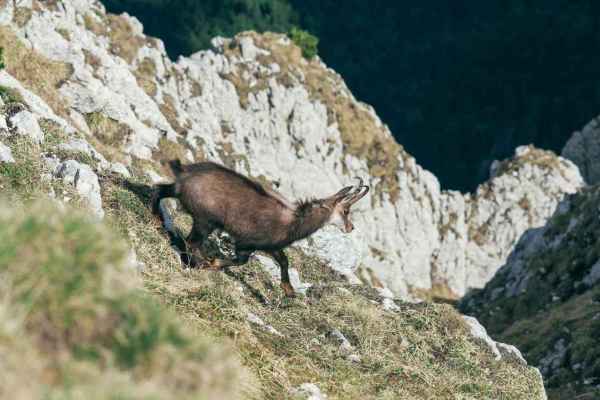
According to the press release from the Office for Hunting, Fisheries and Wildlife of 8 October, recreational hunters killed 1,607 red deer during the high hunt from 21 September to 3 October (2025: 1,427), along with 1,617 chamois (1,537), 192 roe deer does (212) and 11 wild boars (22). 150 of these red deer died in regulatory kills within federal hunting ban areas, in both their partially and fully protected zones. The cantonal kill quota of 1,700 red deer was nevertheless not reached, although this is only recorded in the German version of the statement; now the professional wildlife wardens are to carry out additional kills in «problem areas», a follow-up hunt is said not to be necessary. The department sees the chamois as regionally threatened by the «strong presence» of wolf and lynx, yet the kill tally is nonetheless 80 animals higher than the previous year, which is explained by the nicer weather. The only factor the canton directly controls is the kill itself, and that rose: 1,617 chamois killed in 13 days, with more than 2,100 high hunt licences issued. Background: End to recreational hunting in wildlife sanctuaries
07.10.2026
Wed 08:14
‘Lifetime buck’ with three horns: Rare chamois buck shot above Stalden
The “Walliser Bote” reports on pomona.ch about a young recreational hunter from Grächen who, on only his second high hunt above Stalden, shot a ten-year-old chamois buck with a third horn. The paper adopts the shooter's perspective, refers to the ‘lifetime buck’, and illustrates the report with a photo he provided himself. Such an additional horn is considered a rare malformation. Anyone wishing to document it could have observed and photographed the buck; instead, the rarity ends up as a trophy on the wall. What's more: a study commissioned by the Valais hunting association itself identifies a surplus of does in the Valais chamois population and recommends allowing bucks to grow into the socially important age class above eleven years. The buck from Stalden, at ten years old, was close to reaching that age. Background: Science warns, politics shoots
06.10.2026
Tue 04:05
Trophy leftovers: Valais urgently seeks customers for ibexes aged eleven and over
On its page about ibex regulation, the Department for Hunting, Fisheries and Wild Animals announces, in both German and English, that for the 2026 regulation period there are "still a few free quotas in the 11+ age class" available, and those interested can sign up at short notice via a survey link. This refers to the customer kills, which are also open to recreational hunters from other cantons and from abroad. According to the Directive on customer kills, an ibex of this age class costs Valais residents 5,000 francs, other Swiss citizens 12,500 francs, and people resident abroad 25,000 francs, whereas a one- to two-year-old buck costs just 1,000 francs. The shooting takes place accompanied by a game warden, at the latest by 30 November; according to the directive, the customer is entitled to an animal of the allocated age class, "but not to a trophy of a particular length". The ibex is protected under federal law, and kills are only permitted within the framework of a regulation approved by the Federal Office for the Environment (FOEN). When the very same cull costs five times as much depending on the shooter's place of residence, and it is precisely the oldest bucks that are advertised as leftover stock, what is happening is not regulation but the sale of a trophy. Background: Is trophy hunting in Valais for a good cause?
05.10.2026
Mon 03:33
Augstbord: Canton has two adult wolves killed, no announcement issued
Two days after the decision to fully eliminate the Augstbord pack took effect on 24 September, Valais killed the first two wolves on 26 September. This is evident solely from the table «Causes of death of wolves in Valais» published by the Service for Hunting, Fishing and Wildlife: two adult wolves, killed under the «WH+» deployment — that is, professional and auxiliary game wardens together with the «support group hunting» — with no genetic identifier given. The news page of the service contains no mention of this to date, even though every new authorisation was publicly announced. According to the same table, the canton has already killed 21 wolves in the Augstbord perimeter since December 2023, four of them by recreational hunters. The fact that it is having an entire pack killed at the same location once again after two regulation winters shows that the kills do not permanently rid the area of wolves. Also noted only in the table is a single kill on 5 September: an adult female wolf was killed in Vérossaz. Why transparency is needed when entire wolf families are concerned: Nanz pack cleared for total kill.
04.10.2026
Sun 07:30
Recreational hunters in protected area: canton allocated kills in six federal wildlife sanctuaries
Hunting is prohibited in federal wildlife sanctuaries — it even says so in the Valais Hunting Decree 2026/27 (Art. A4-3). Nevertheless, from 21 September to 3 October, the Hunting Service allocated “regulatory kills” to recreational hunters in six sanctuaries with seven perimeters, from Aletschwald to Haut de Cry-Derborence. In almost all perimeters, each person was allowed to shoot up to three red deer, explicitly including calves and hinds. For the first time, recreational hunters are also shooting in the fully protected zones, where according to Rhône FM 2025 the wildlife wardens were still deployed. The Federal Supreme Court ruled in 2020, in the Aletschwald case, that only “certain specially qualified persons” may shoot there. Valais requires a valid licence and registration for this; in the event of oversubscription, a lottery decides, with no special qualification required. Background: End to recreational hunting in wildlife sanctuaries.
03.10.2026
Sat 07:50
High hunt over, bird season begins: Valais opens woodcock, black grouse and ptarmigan to hunting
Today the high hunt ends in Valais; from Tuesday, 6 October, licence B applies for low hunting. From 16 October, recreational hunters with pointing or retrieving dogs may shoot black grouse and ptarmigan, and from 20 October woodcock, in each case until 28 November. Permitted per person are six black grouse, six ptarmigan and 15 woodcock. On the Red List of breeding birds of Switzerland, the woodcock population is classed as “vulnerable”, while that of black grouse and ptarmigan is classed as “potentially endangered”. For the ptarmigan, the Red List expects the decline to intensify further with climate warming. The canton is thus opening up three Red List species as recreational quarry. How other cantons handle recreational hunting of birds: St. Gallen sticks to recreational bird hunting, Zurich draws the consequences.
Sources: Canton of Valais, Decision on the exercise of hunting in Valais 2026-2027 (SGS 922.110), Art. 10, Art. 23 and Annex 1; Knaus et al., Red List of breeding birds of Switzerland, FOEN/Swiss Ornithological Institute Sempach, 2021.
02.10.2026
Fri 07:40
Poor shots, missing butchers: the Valais high hunt's game meat problem persists
The Valais online magazine Pomona reported on 1 October on the ongoing high hunt and named in its headline what has been known for years: «poor shots» and «missing butchers». Already in 2024, Upper Valais butchers had refused to process animals with gut shots, because stomach contents contaminate the meat (Valais butchers boycott recreational hunters). Two years on, nothing fundamental appears to have changed. Every gut shot means a slow death or a lengthy follow-up search for the animal hit.
On top of that, there is lead. The Valais lead ban announced in 2021 was watered down by the Council of State in 2025 and postponed to 1 January 2030. Until then, lead bullet ammunition remains permitted, while lead shot and calibres under 6 millimetres will remain permitted even afterwards (Bearded vulture record: lead from recreational hunting remains dangerous). The Federal Office for Food Safety and Veterinary Affairs therefore advises: «Children up to the age of seven, pregnant and breastfeeding women, and women wishing to conceive should, as a precaution, avoid game meat, since it is not always possible to determine which ammunition was used to kill an animal.» Those who advertise «local game on the plate» usually keep this warning quiet. More on this: Game meat and health risks: what studies show
02.10.2026
Fri 05:25
Second pack within a week: the Nanz pack may also be completely wiped out
Since 30 September, Valais has been permitted to kill the entire Nanz pack between Visperterminen and Staldenried, parent animals as well as young wolves. Six days earlier it was the Augstbord pack's turn, and a third application is pending for Réchy-Anniviers. Recreational hunters with a regulation permit are also allowed to take part in the shooting. The canton does not disclose how many wolves are affected, which attacks are attributed to them, or how the herds were protected. More on this: Nanz pack cleared for total kill
25.09.2026
Fri 12:50
University of Bern counts 37 lynx instead of 80: kill request under scientific pressure
Researchers at the University of Bern estimate the Valais lynx population for winter 2025/26 at 37 independent animals (confidence interval 26 to 52). The figure of 80 lynx cited in politics is based on an extrapolation using data from Vaud and Bern. State Councillor Darbellay states a density for north-western Valais that is three times higher than what the study measures.To the article.
25.09.2026
Fri 04:30
15 francs per fox, 20 per badger: Valais keeps paying bounties
While the canton of Zug has scrapped its kill bounties for foxes and crows for this season, prompting six recreational hunters to take the matter all the way to the Federal Supreme Court (Zug recreational hunters challenge follow-up search obligation and abolition of fox bounties before Federal Supreme Court), Valais is sticking unwaveringly to its bounty scheme. The decree on the exercise of hunting 2026/27 (SGS 922.110) stipulates: the cantonal office for hunting, fisheries and wild animals pays every recreational hunter 15 francs per fox killed and 20 francs per badger. The canton also covers the cadaver disposal fees. Proof consists simply of the two severed front paws, which must be handed in to the game warden within ten days of the close of the hunting season. Foxes may be shot under permit E until 27 February.
The scale: according to cantonal hunting statistics, around 1,556 foxes and 68 badgers were killed in Valais in 2025, and nearly 1,900 foxes in 2024. That amounts to roughly 25,000 francs a year in bounty money from the public purse, not counting disposal costs. Such bounties were introduced in the 1970s to combat rabies. Rabies has been eradicated in Switzerland since 1998 — the bounty in Valais has not.
How little this bounty actually achieves was scientifically examined by the canton of Zug in 2026. The study commissioned by the Zug Office for Forests and Wildlife, conducted by the SWILD bureau under Dr Claudia Kistler and Dr Fabio Bontadina, concluded in May 2026 that licence hunting of foxes neither sustainably reduces populations nor curbs wildlife diseases: hunted populations compensate for losses through greater reproduction, higher survival rates and immigration (Canton of Zug stops promoting fox hunting). Zug drew the consequence and abolished the bounty as a relic. Valais continues to reward the killing of predators per head and, alongside Uri (30 francs per fox), is one of the last cantons with this system. Background: End fox hunting and dossier «The fox in Switzerland».
Sources: Canton of Valais, Decree on the exercise of hunting in Valais 2026-2027 (SGS 922.110); Statistics of Valais hunting 2025 (DJFW, as at 17.04.2026); SWILD, Fox hunting in the canton of Zug, May 2026; NZZ am Sonntag, 13 May 2023.
24.09.2026
Thu 10:28
Federal Office releases young wolves from two packs, three Valais packs to be eliminated entirely
On 14 September, the FOEN approved two applications from the canton, which have been in force since 18 September: from the Nendaz-Isérables and Les Toules packs, up to two-thirds of the wolf pups born in 2026 may be killed until 31 January 2027. Three further applications are still pending, with which Valais intends to eliminate the Nanz, Augstbord and Réchy-Anniviers packs entirely. This means that five of the eleven Valais packs are wholly or partly up for elimination. The canton provides no figures on kills per pack, details on herd protection in the alps concerned, or genetic evidence, even though livestock kills across Switzerland fell from 402 to 183 during the alpine summer of 2026. The full analysis in the article Valais permitted to kill young wolves: Three packs still await total removal.
24.09.2026
Thu 10:16
«More than shooting»? Canal9 portrays the high hunt as a nature experience
The Valais regional broadcaster Canal9 accompanied a young recreational hunter on the Riederalp in its "Tagesinfo" programme of 23 September, under the title "Hunting: more than shooting". The portrait presents recreational hunting as tradition and a nature experience. Little room is given to its downsides: the high hunt falls right in the middle of the red deer rut, during which recreational hunters in Schwyz prefer not to hunt because the meat of the stags is barely palatable. The kill quota of 1700 red deer is rising again despite three years of missed targets, Upper Valais butchers criticised frequent gut shots in 2024, and the kill of a protected female wolf in Herbriggen cost 300 francs. The full context is available in the article «More than shooting»? The Valais High Hunt between Image Film and Red Deer Rut.
19.09.2026
Sat 06:10
1,700 red deer as the target: Valais high hunt starts with the same quota as in 2015
On Monday, 21 September, the high hunt begins in Valais. According to the «Walliser Bote» (pomona.ch, 18.09.2026), around 2,100 recreational hunters are taking part, with the kill target for red deer set at 1,700 animals. This figure is nothing new. As far back as 2015, the target was also 1,700 red deer, at that time with 2,700 licence holders. In 2022, 1,630 were planned and 1,744 were shot. In 2023, 1,700 were planned and 1,411 were achieved; in 2025, 1,650 were planned and 1,415 were achieved. Despite three consecutive missed targets, the quota rises again to 1,700 in 2026.
Anyone who has had the same number of non-human animals killed year after year for over a decade is not regulating a population but managing it. The red deer compensate for the losses through higher reproduction rates, the target figure remains, and the cycle begins anew. We have compiled the relevant research in Hunting Fact Check. The role predators could play is shown in the article No Forest Without Wolf.
What is remarkable is how the canton secures the quota. According to the decree on the exercise of hunting for 2026/27, the wildlife wardens will shoot additional animals if recreational hunting fails to meet the target figure. Sub-areas of cantonal reserves may be opened up for the killing of hinds, yearling hinds and calves. Appeals against the decree are stripped of suspensive effect. Protected areas and legal recourse thus apply only for as long as they do not stand in the way of the kill tally.
The comparison with Grisons shows two paths to the same goal. Grisons protects lactating red deer hinds and calves in September and releases them for the special hunt in November and December, which effectively takes place every year. Valais has no institutionalised special hunt; instead, it shoots hinds and calves already during the high hunt, opens protected areas for this purpose, and has the wildlife wardens shoot additional animals if the quota is not met. And while Grisons places the first hunting phase before the rutting season, the Valais high hunt falls entirely within those weeks in which Schwyz recreational hunters consider the meat of the stags barely palatable and the disturbance not in keeping with hunting ethics. Background on the Grisons model is provided in the article Nine Questions on the 2026 Red Deer Kill Quota, the season is documented by the Grisons Tracker.
At the same time, the Office for Hunting, Fisheries and Wildlife is warning of acute natural hazards. In Blatten in the Lötschental, the landslide exclusion zone remains closed to recreational hunting, while in the Blinnental a large rock mass is being monitored. Near Randa, ice falls—potentially escalating into larger ice avalanches—threaten from the Weisshorn hanging glacier and the Bis glacier. A mountain range in motion, combined with 2,100 armed individuals in the midst of the red deer rut: for wild animals as much as for the recreational public the most turbulent time of year is beginning.
18.09.2026
Fri 16:20
300 Francs for a Shot Female Wolf: Herbriggen Exposes Valais' Justice Problem
In Herbriggen in the Mattertal valley, a recreational hunter shot a protected female wolf, claiming to have mistaken her for a fox. According to the «Walliser Bote», the public prosecutor's office of Upper Valais fined him 300 francs, and his hunting licence remains valid. For comparison: a discarded cigarette butt now costs 80 francs in Valais. The same excuse was already given in January 2024 in Goms, when a recreational hunter killed a female wolf during a nocturnal wait hunt for foxes. Of the 13 wolves proven to have been poached in Switzerland since 1999, seven occurred in Valais. While Norway sends ten wolf poachers to prison and France demands over 30,000 euros for a killed lynx, Valais settles the case of a female wolf at the rate of a minor fine. The full analysis in the article 300 Francs for a Female Wolf: How Swiss Justice Trivialises Poaching.
12.09.2026
Sat 07:15
Valais: The high hunt starts in a week, right in the middle of the red deer rut, while Schwyz recreational hunters reject exactly that
In about a week, the high hunt begins in Valais – right in the middle of the onset of the red deer rut (mid-September to mid-October). That this timing is contentious even among recreational hunters themselves is currently evident from a look at Central Switzerland. In the canton of Schwyz, recreational hunters are up in arms against hunting rutting red deer, for two reasons.
First, meat quality: venison from a stag taken during the rut has a very intense, strong taste of its own and is therefore usually not recommended for normal consumption. In plain terms: the killed animal is deemed barely edible.
Second, among recreational hunters it is considered not «sportsmanlike» to disturb the animals during the rut, when stags gather at the rutting grounds to establish rank. Nevertheless, hunting pressure ultimately prevailed: following protests from the hunting community, the Schwyz hunting administration granted a short-notice «stag day» so that recreational hunters could still kill multi-tined stags – that is, male animals with antlers – before the rut-related deterioration in taste set in.
Valais, by contrast, makes hunting during the rut a regular model. What Schwyz recreational hunters shun as questionable both in terms of taste and hunting ethics is a fixed component of the high hunt in Valais. We are documenting the Valais season from its start.
05.09.2026
Sat 16:52
Killed again: sheep summered without herd protection despite last year's attack
As early as 2025, 54 unprotected sheep were killed by wolves on an alp near the Topali hut in the Matter Valley. Nevertheless, sheep were again summered in the same area this year without herd protection, at altitudes of 2600 to 2900 metres above sea level, where grazing brings no ecological benefit. The renewed kills were the predictable result. More on the connection between herd protection and kill rates in the article Halfway Through Alpine Summer: Wolf Kills Cut In Half.
19.06.2026
Fri 17:30
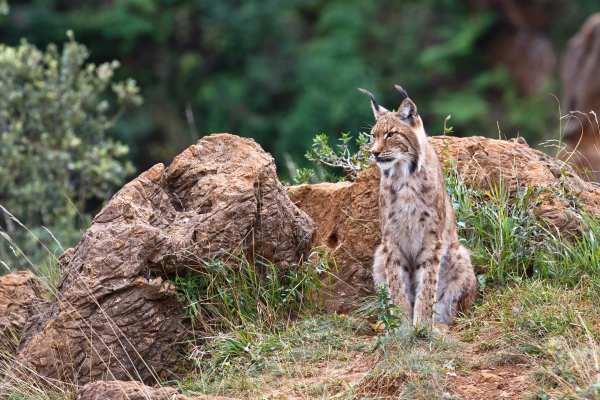
Valais aims to be the first canton to regulate its lynx population
State Councillor Christophe Darbellay has announced that he will submit an application to the Federal Office for the Environment by the end of summer for a lynx regulation, even though roe deer hunting is already being significantly restricted. It would be the first regulation of a lynx population in Switzerland. Individual lynxes have already been shot with federal approval, most recently in 2024 in the Muotatal valley in the canton of Schwyz. More on this in the detailed article.
18.03.2026
Wed 00:00
New trophy hunting model: Valais to allocate ibex kills differently in future
Because the kill quotas for ibex have repeatedly been missed in recent years, Valais is introducing a new regulation model from 2026: every licensed recreational hunter receives a basic quota of two animals – first a female ibex, then a male ibex of the assigned age category. The new model replaces the previous «Ibex Campaign» and makes trophy hunting of ibex in Valais even more systematically accessible. More on the previous criticism in the article Controversial Ibex Hunting In Valais.
Background
- Dossier: Wolf in Switzerland: facts, politics and the limits of hunting
- Dossier: Herd Protection In Switzerland: What Works And What Fails
- Valais Demands Lynx Kill: Shooting Instead Of Protecting
- Wolf Kill In Staldenried: Federal Government Sues Valais, Darbellay Continues To Rage
More on the subject of recreational hunting: In the dossier Poaching and hunting crime in Switzerland we document cases, legal questions and recurring patterns. The scientific evidence is presented in the overview Studies on the Effects of Recreational Hunting.
The position of IG Wild beim Wild: IG Wild beim Wild rejects recreational hunting. Our model is the canton of Geneva, which has managed without recreational hunting since 1974: without hunting seasons, without hunting dogs, without driven hunts, without high seats, without the animal cruelty and crime that go hand in hand with hunting season elsewhere. What has worked there for over fifty years disproves every position paper by JagdSchweiz. An association that bases its policy on claims it refutes in its own documents is not a professional organisation, but a factory for misinformation.
Wild animals need a voice
Once a week: research, petitions and background information on recreational hunting. Free of charge and can be unsubscribed from at any time.

All articles are written by IG Wild beim Wild as well as by external co-authors. Research, structuring and editorial processes may be supported by AI-assisted tools.
Support our work
With your donation you help protect animals and give their voice a hearing.
Donate now →