St. Gallen sticks with bird hunting – Zurich draws the consequences
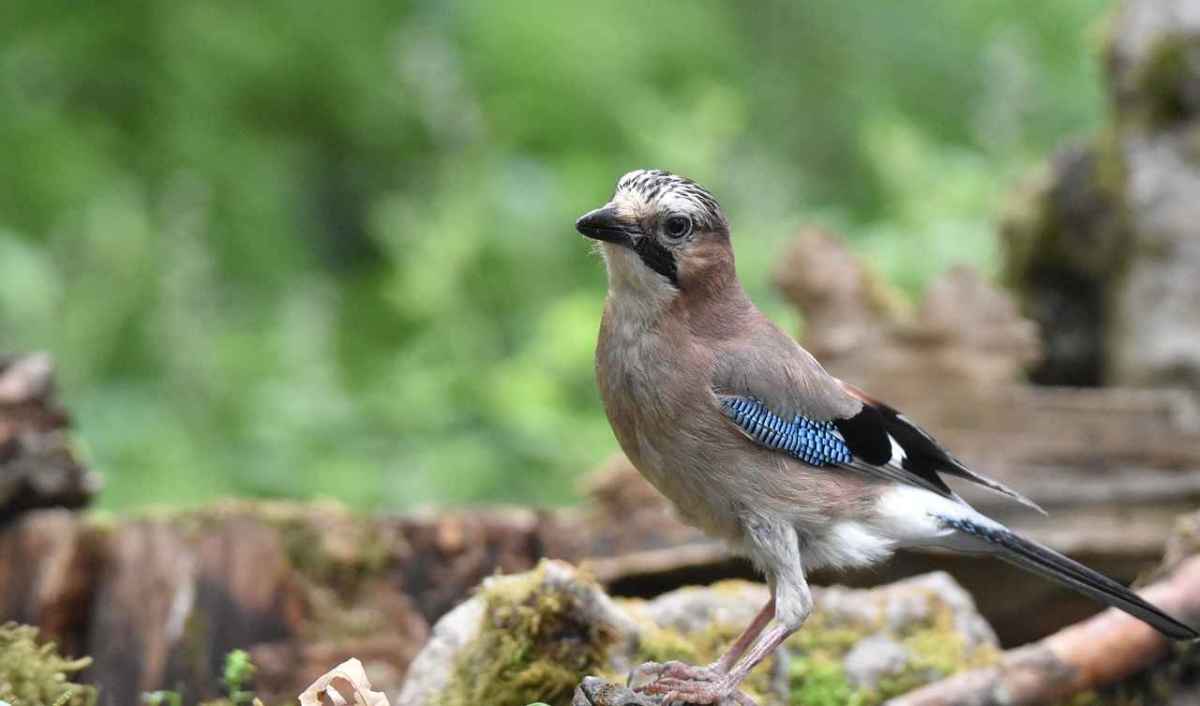
St. Gallen keeps jay, magpie and Eurasian collared dove on the hunting list. Zurich has long protected them – because they cause hardly any damage and hunting them is not necessary.
«The green network of favouritism»
Jays, magpies and Eurasian collared doves cause hardly any relevant agricultural damage.
While the canton of Zurich has implemented this finding in its hunting ordinance and protected these species, the St. Gallen government wants to continue hunting them. The difference reveals that this is not necessarily about science or necessity, but about cantonal hunting policy.
In the canton of St. Gallen, jays, magpies, Eurasian collared doves and other bird species may still be shot. For jays and magpies, the hunting season runs from 1 August to 15 February. At the same time, the canton of Zurich, just a few kilometres away, has removed these species from the list of huntable birds – explicitly on the grounds that hunting them is only useful in isolated cases and that they cause hardly any damage to agriculture.
This cantonal contrast raises a fundamental question: why should a jay be protected on Zurich soil while it is considered a legitimate hunting target in St. Gallen? The animals do not distinguish between cantonal borders. Nor does their ecological function.
St. Gallen says no
The starting point was a motion by St. Gallen GLP cantonal councillor Andreas Bisig. He called for a review of the list of huntable bird species. His criticism: the canton continued to list species as huntable even though they cause hardly any relevant damage. He specifically referred to the jay; the black grouse, whose populations are under pressure nationwide, was also mentioned.
The St. Gallen government rejects an adjustment. It states that the selection of huntable species is not based on their damage potential, but "primarily on species conservation". The jay is not endangered in the canton, and black grouse populations are considered stable. Therefore, there is no need for stricter rules.
This logic is not convincing. The fact that a species is not currently on a Red List does not answer the question of why it should be killed. "Not endangered" can at most explain why a species need not be specially protected. It is not, however, a factual justification for opening it up to recreational hunting.
The current St. Gallen ordinance contains only a few additionally protected species at cantonal level, including the mountain hare, rock ptarmigan and woodcock. For the remaining huntable animals, it essentially refers to the federal hunting and closed seasons. In doing so, St. Gallen adopts a large part of the hunting permitted under federal law, instead of using its cantonal scope for action to provide precautionary protection for species that are not endangered.
Zurich decides differently
The canton of Zurich has shown that things can be done differently. With an amendment to the cantonal hunting ordinance dated 18 June 2025, jays, magpies and Eurasian collared doves were removed from the list of huntable species. The cantonal government's reasoning is clear: hunting them is "only useful in isolated cases"; they cause "hardly any damage" to agriculture.
This wording is notable because it lays bare the central criterion: if there is no relevant damage and no regular hunting is required, there is no factual basis for a blanket hunting permit. Zurich kept other species on the list, such as the carrion crow, rook, hooded crow and wood pigeon. For these, the cantonal government pointed to documented compensation payments from the wildlife damage fund as well as, in some cases, rising populations.
This does not mean that every remaining hunting permit is automatically justified. But it does show that a government can differentiate between species and base its decisions at least on concrete damage data. For the jay, the magpie and the Eurasian collared dove, Zurich concluded that this was not the case.
Zurich also went beyond species conservation: hunting of waterfowl was banned in floodplain areas, moors, amphibian spawning grounds of national importance and other significant wetlands. The cantonal government justified this by citing the protection of rare and disturbance-sensitive species and the fact that hunting itself is a source of disturbance for wild animals.
No natural law at cantonal borders
These contradictory rules are not the result of different biology. A jay is no less worthy of protection simply because it flies from Zurich to St. Gallen. Its way of life, its capacity to feel pain and its function in the forest do not end at an administrative border.
The jay is widespread across large parts of Switzerland. In autumn, it gathers acorns and nuts, hides them as a winter store, and thereby contributes to the natural spread of trees. Seeds that are not retrieved can germinate in spring. The canton of Solothurn therefore describes the bird as an important part of seed dispersal.
Scientific literature underlines this function: oaks, with their heavy seeds, depend on animals to transport them. Studies show that jays disperse acorns over long distances, that their caching activity spreads seedlings spatially, and that the acorns are partly protected from small mammals in the process.
The jay is therefore not a superfluous "hunting object", but part of a complex forest ecosystem. It disperses seeds, supports natural forest regeneration and, as an omnivore, fulfils other ecological functions. Anyone who allows it to be shot without a concretely demonstrated purpose is ignoring these connections.
Kills without a discernible purpose
According to cantonal hunting statistics, 18 magpies and 16 jays, among others, were shot in the canton of St. Gallen last year. Such figures are small in relation to overall hunting activity, but that is precisely what makes the question of purpose all the more pressing: if the kills serve neither to avert relevant damage nor a clearly justified protective measure, why are they permitted at all?
A minimal number of animals killed is not an argument for killing them. On the contrary: if hardly any damage is documented for a species and hunting it plays only a minor role, it would be simple and logical to remove it from the list of huntable animals, as Zurich has done.
The Zurich ordinance amendment also shows that protecting these species need not cause any new costs or additional administrative burden for the canton or municipalities. The cantonal government explicitly stated that the adjustment would result in neither additional costs nor extra administrative effort.
Species conservation must not be selective
The St. Gallen government invokes "species conservation" to justify not extending protection. But species conservation should not consist merely of taking a species seriously only once its population has already collapsed. Modern nature conservation should act preventively: avoiding unnecessary burdens, safeguarding habitats, and not exposing animals to lethal recreational use without compelling reason.
The precautionary principle is especially important because hunting has far more effects than merely the number of animals killed. Hunting activity causes disturbance. Animals are startled, fleeing costs energy, social groups can be torn apart, and safe refuges lose their function. Even the Zurich cantonal government acknowledges that hunting represents a source of disturbance for wild animals.
Claiming that a species is not endangered says nothing about the burden on individual animals, the disturbance of their population, or the legitimacy of a kill. Population protection alone is not comprehensive animal welfare.
When a canton allows animals to be hunted without any demonstrably proven benefit, it is not just about ordinances and lists. It is also about the question of how political power is exercised towards those who have no voice in parliament.
A spiritual teacher, whose criticism of hunting and politics still provokes today, saw the same temptation in both areas: the urge to have power over the weaker. His view is not a scientific explanation and does not replace political analysis. However, it identifies an ethical question that is often overlooked in hunting regulations: may a person or an authority decide over the life of a defenceless animal when there is no compelling reason to do so?
For him, recreational hunting was neither a sport nor a service to nature, but a one-sided game. The animal has never agreed to its rules and cannot escape the weapon. In this reading, politics becomes an ego game wherever it does not protect, but instead decides over life and death.
This is precisely why it is not enough to point out that a bird species is "not endangered". The absence of acute threat is not a licence to kill. Responsible policy would need to explain why an animal should die – not merely why it has not yet gone extinct.
A question of political attitude
The problem runs deeper than any single government. In Switzerland, the federal government sets the legal framework with the JSG. However, the cantons regulate and plan hunting in concrete terms: they set their detailed rules, determine hunting seasons, can grant species further protection, and thereby largely decide which animals are considered huntable.
As a result, the life of a jay does not depend solely on its ecological significance or possible damage it may cause. It also depends on which canton it happens to fly in and whether the political authorities there are willing to critically review traditional hunting allowances.
Zurich has decided, regarding the jay, the magpie and the Eurasian collared dove, that minor agricultural damage and hunting that only makes sense in individual cases do not constitute grounds for a regular hunting allowance. St. Gallen is sticking to the existing regulation. The same bird is thus treated fundamentally differently in two neighbouring cantons.
This is not an objectively given necessity. It is a political decision. Political decisions reflect majority relationships, administrative practices, traditions, and the willingness to measure hunting privileges against transparent, scientifically verifiable criteria.
Where hunting is regarded as the normal state of affairs, the burden of proof is often reversed: it is not the authorities who must plausibly explain why an animal should be killed. Rather, animal welfare and nature conservation must justify why it is allowed to live. Especially for species with no relevant potential for damage, this reversal of the burden of proof is neither ethically nor politically acceptable.
St. Gallen should therefore follow Zurich's example and remove the jay, the magpie and the Eurasian collared dove from the list of huntable species. As long as no concrete, verifiably documented purpose is demonstrated for their regular hunting, there is no basis for releasing their lives to recreational hunting.
More on the jay and its function in the forest: The jay in Switzerland – nature's tree planter in the crosshairs of small game hunting.
Dossier: St. Gallen hunting administration:
- Dominik Thiel: Wolf hunter at taxpayers' expense – a department head as a security risk for wildlife protection
- The psychology of hunting in the canton of St. Gallen
- Hunting season until New Year's Eve: kill pressure instead of wildlife management
- Licence hunting as a solution to red deer conflicts?
- St. Gallen hunting administration: wolf management without science and without credibility
- The approval to kill a wolf in the canton of St. Gallen was unlawful
- Public deception in the canton of St. Gallen
- Office for Hunting and Nonsense in St. Gallen modernises hunting training
- St. Gallen wants to regulate the wolf pack at Gamserrugg
- Controversy about SwitzerlandAn official on the wolf hunt in Russia
- "Experts" in St. Gallen end wolf regulation for this winter
- The rotten apple in the St. Gallen hunting administration
- Lying hunter became department head in the canton of St. Gallen
- St. Gallen: stop the fox and badger massacre
- Are the FOEN and the hunting administrations still working seriously?
- How recreational hunter Simon Meier lures onto the wrong trail
More on the subject of recreational hunting: In our dossiers on the criticism of recreational hunting gather fact-checks, analyses and background reports. The scientific evidence is presented in the overview Studies on the Effects of Recreational Hunting.
The position of IG Wild beim Wild: IG Wild beim Wild rejects recreational hunting. Our model is the canton of Geneva, which has managed without recreational hunting since 1974: without hunting seasons, without hunting dogs, without driven hunts, without high seats, without the animal cruelty and crime that go hand in hand with hunting season elsewhere. What has worked there for over fifty years disproves every position paper by JagdSchweiz. An association that bases its policy on claims it refutes in its own documents is not a professional organisation, but a factory for misinformation.

All articles are written by IG Wild beim Wild as well as by external co-authors. Research, structuring and editorial processes may be supported by AI-assisted tools.
Support our work
With your donation you help protect animals and give their voice a hearing.
Donate now →