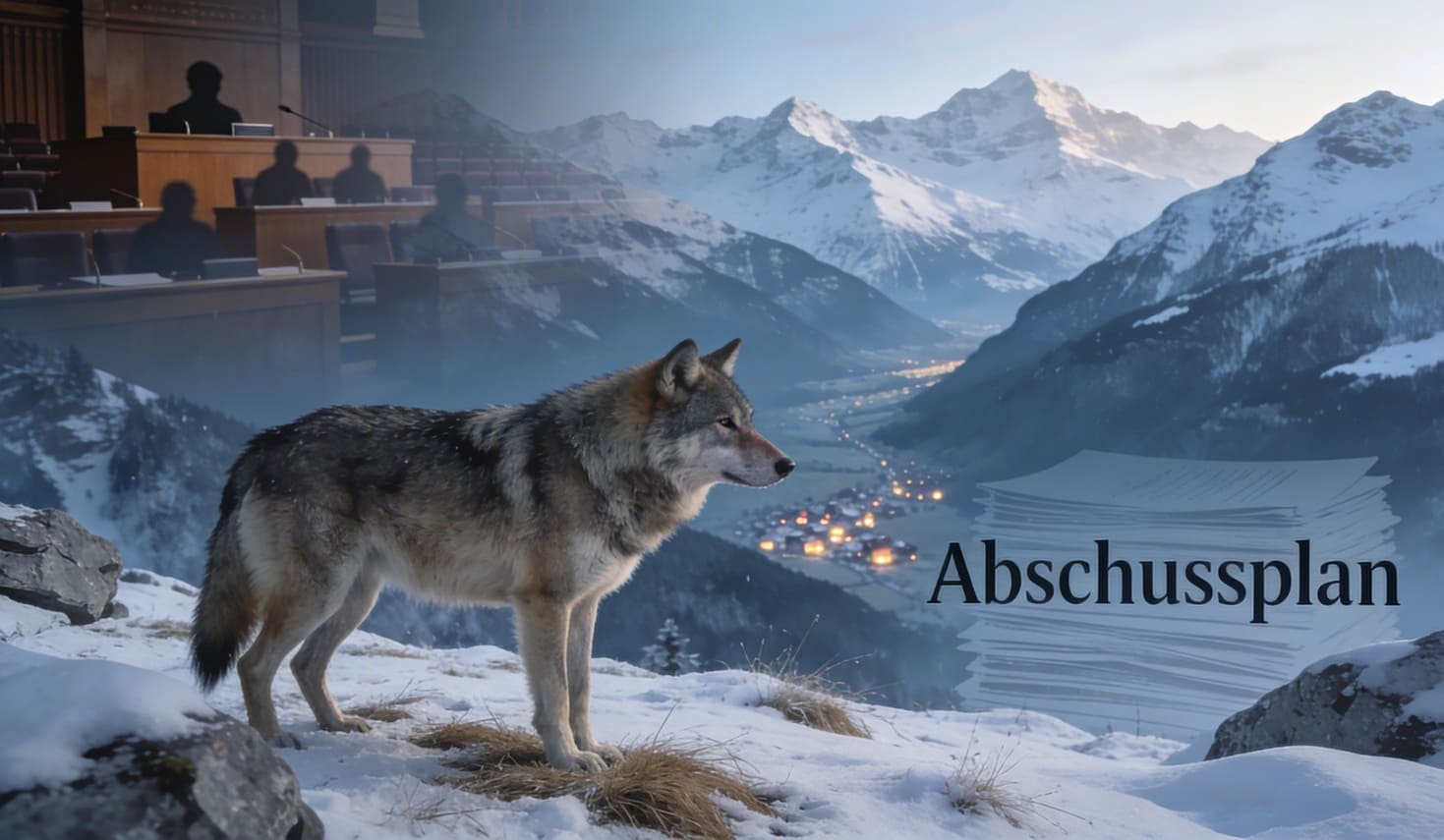
Are FOEN and Hunting Authorities Working Responsibly?
Apparently, DNA tests are no longer required for shooting permit applications targeting young wolves. IG Wild beim Wild questions the working methods of FOEN and hunting authorities.

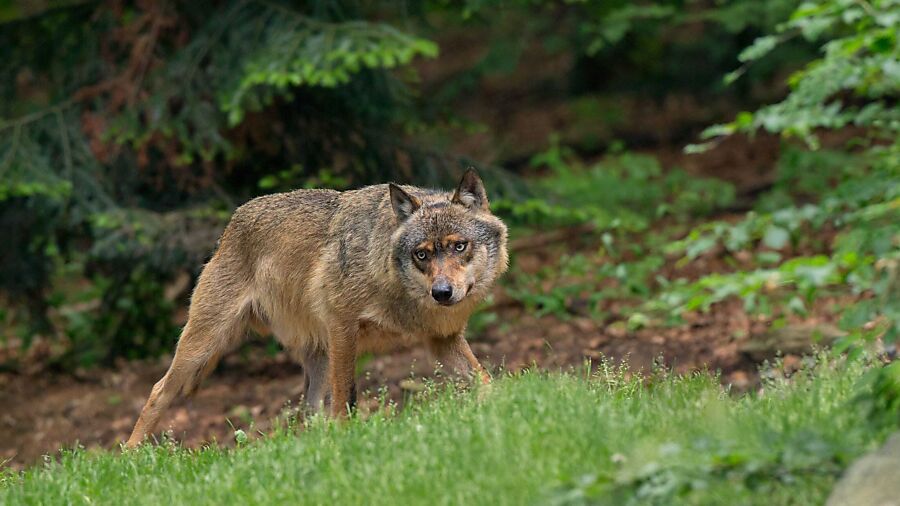
Apparently, no proper assignments such as DNA tests are required at all from the cantons for their shooting permit applications targeting young wolves.
Christoph Jäggi, Head of Hunting and Fisheries in Glarus, has submitted a regulation request for the Kärpf pack in connection with the damage on the Alp Gamperdun.
Now the damage is additionally being attributed to the Calfeisen pack as well: «Based on the tracks found at the scene, it is assumed that the damage was caused by the so-called Calfeisental pack.«
The FOEN is apparently no longer able to verify the facts accurately and is irresponsibly waving through shooting permit applications from the cantons. This constitutes abuse of office and a betrayal of voters and taxpayers.
In 2020, the Swiss population decided by a large majority to maintain the protection of wolves. Wolf protection in Switzerland is not to be relaxed. However, the responsible Federal Office for the Environment (FOEN) appears to care as little about the will of the people as the Federal Council does.
Furthermore, given the imprecise information provided by the cantons, it is questionable whether these shooting permit applications are even legally compliant.
On one occasion, the canton of St. Gallen made contradictory statements about the number of young animals in the Calfeisen pack, and now two different packs in the canton of Glarus are said to be responsible for the damage on the same alpine pasture on the night of 28 to 29 August 2023.
It is hardly conceivable that both packs killed the few animals in the same area. It is absolutely incomprehensible and unacceptable that a protected wild animal such as the wolf, which behaves in a completely normal and species-typical manner by seizing easily available prey when the opportunity arises, is shot simply because livestock owners and politicians, driven by base motives, are unwilling to consistently protect their farm animals.
Since the new Hunting Ordinance (JSV) came into force on 1 July, the federal government and cantons have been issuing one shooting permit after another. Wolf pups may be shot for offences committed by their older family members — a purely decimating measure. Wolves that prey on completely unprotected sheep on so-called “not reasonably protectable” alpine pastures may also be killed ostensibly to protect (!) the livestock — a thoroughly paradoxical situation. These wolves have done nothing wrong, but have simply acted in a species-typical manner by taking advantage of the opportunities offered to hunt easily catchable prey, namely unprotected sheep and goats.
Every year, more than ten thousand sheep, goats, cattle perish during the alpine summer, due to inadequate herding and the poor animal welfare standards of hobby livestock keepers who lack any certificate of competence — and not because of the wolves! Doing nothing about the catastrophic conditions on the alpine pastures, which are concealed behind sober yet alarming figures is also a hallmark of the FOEN.
Press releases from the Canton of Glarus:
- Application submitted to the federal government for regulation of the Kärpf pack
- Calfeisen wolf pack to be regulated in the Canton of Glarus as well
- Calf killed by wolves
Dossier: Wolves in Switzerland: facts, politics and the limits of hunting
Further articles
- Swiss meadows are losing biodiversity at an alarming rate
- When sheep, cattle and others occupy wildlife habitat
- Swiss animal protection organisation criticises planned wolf culls as a threat to pack structures and herd protection
- Wolf management incompetence runs rampant in Graubünden
- Val Fex: When the herd protection concept has more holes than the fence
- Culling instead of protection — Switzerland on the path to the silent extermination of wolves
- Communication failure at the Office for Hunting and Fishing in Graubünden
- Illegal wolf hunting in Switzerland
- Wolf pups in Switzerland caught in the crossfire
- Switzerland sells massacre of wolves as a success
- Sloppiness in Katrin Schneeberger's office
- Livestock grazing alters the soil, plant life and insect populations
- The insane hunt for wolves in Switzerland
- The truth about sheep mortality in Switzerland: causes and statistics
- Wolf culls in Switzerland: concerns about party politician Albert Rösti
- Let us stop the SVP's destructive frenzy
- Participatory campaign: an appeal for change in Switzerland
- 200 environmental organisations from 6 continents call on the Swiss government: Stop the wolf cull
- The Federal Council faces sharp criticism from wolf experts
- The consequences of controversial wolf management in Switzerland
- Wolf: Federal Councillor Rösti (SVP) circumvents law and order
- A farmer's boy I shall not reprimand
- Are FOEN and the hunting administrations still working diligently?
- Federal Councillor Albert Rösti tramples the will of the people
- The consequences of controversial wolf management in Switzerland
- Too many sheep harm biodiversity
- Agricultural use destroys alpine meadows
- Kills despite herd protection — how is that possible?
- The rotten apple in the St. Gallen hunting administration
- Pro Natura demands a comprehensive strategy for summer sheep grazing
- According to an Agridea study, herd protection with dogs works well
- Thanks to herd protection, wolves in Switzerland kill fewer livestock
- Farmers treat fields as waste disposal sites
- Biomass of wild animals
- Of sheep farmers and vague authorities
- The double standards of wolf opponents
Interest group Wild beim Wild
The IG Wild beim Wild is a non-profit interest group committed to the sustainable and non-violent improvement of the human-animal relationship, with the IG also specialising in the legal aspects of wildlife protection. One of our main concerns is to introduce a contemporary and professional wildlife management system in the cultivated landscape, modelled on the Canton of Geneva — without recreational hunters but with upright wildlife wardens who truly deserve the name and act according to a code of honour. The monopoly on the use of force belongs in the hands of the state. The IG supports scientific methods of immunocontraception for wild animals.
More on the subject of recreational hunting: In our dossiers on recreational hunting gather fact-checks, analyses and background reports. What the research says about this is shown by Hunting fact-checked: the state of research.
The position of IG Wild beim Wild: IG Wild beim Wild rejects recreational hunting. Our model is the canton of Geneva, which has managed without recreational hunting since 1974: without hunting seasons, without hunting dogs, without driven hunts, without high seats, without the animal cruelty and crime that go hand in hand with hunting season elsewhere. What has worked there for over fifty years disproves every position paper by JagdSchweiz. An association that bases its policy on claims it refutes in its own documents is not a professional organisation, but a factory for misinformation.