Children and Recreational Hunting in Switzerland: Law, Risks, and Psychology
Why a minimum age for participation in killing activities is long overdue.

In Switzerland, there is no uniform minimum age for the involvement of children in killing activities during recreational hunting, even though developmental psychology research clearly warns of the consequences.
The recreational hunting lobby portrays the involvement of children and adolescents as educationally valuable. Developmental psychologists and animal welfare organizations disagree: confronting children with killing acts and violence against animals can leave lasting psychological scars and normalizes violence as an acceptable means. In several cantons, it is legal and common practice to involve children as spectators, beaters, and in some cases even as active shooters in hobby hunts.
What does Swiss law permit?
Swiss hunting law (the Federal Hunting Act and cantonal implementing provisions) contains no uniform, nationwide regulation on a minimum age for participation in recreational hunting. The hunting license can be obtained in most cantons from the age of 18, while in some cantons the age limit is even higher. However, this says nothing about whether younger children may participate in hobby hunts as companions or beaters.
In several cantons, there are explicit youth programs designed to introduce children to recreational hunting. Minors are taken to shooting ranges and involved in hunting events. The Dossier on Hunting and Children demonstrates that a systematic legal protection framework is lacking, and the involvement of children in killing activities is largely left to the discretion of the hunting associations.
What is the difference between accompaniment and active participation?
The recreational hunting lobby distinguishes between passive accompaniment, where children observe adults hunting, and active participation, meaning independently shooting at wild animals. In practice, this boundary is blurred. Children deployed as beaters in driven hunts are physically integrated into the hunting process. They are directly confronted with blood, injured animals, and acts of killing, regardless of whether they themselves are shooting or not.
Recreational hunting as an event documents how hunting parties systematically promote the social integration of children: as a means of securing the next generation for a shrinking recreational hunting community.
What do developmental psychologists say?
Developmental psychological research on violence and child development is extensive. Works by Frank Ascione and Clifton Flynn document that violence toward animals in childhood is associated with reduced empathy and later behavioral problems. The mechanism is well established: when a child learns that killing leads to pride and recognition, when the father is praised after the kill and the child is part of this celebration, killing becomes anchored as a positively valued action.
Psychology of hunting explains that recreational hunting culture actively frames compassion for animals as a weakness. Children who grow up in this environment learn early on to suppress empathy and rationalize animal suffering.
How does recreational hunting culture influence children?
Children learn through role models. When adults kill animals with weapons and present this as natural, traditional, and socially accepted, children adopt this worldview. Recreational hunting creates a closed experiential space in the process: rituals such as the “Schüsseltreiben” (post-hunt feast) after the hunt, the trophy presentation, or the communal inspection of the bag (the laid-out animals) constitute social initiation, in which killing is experienced as a community-building act.
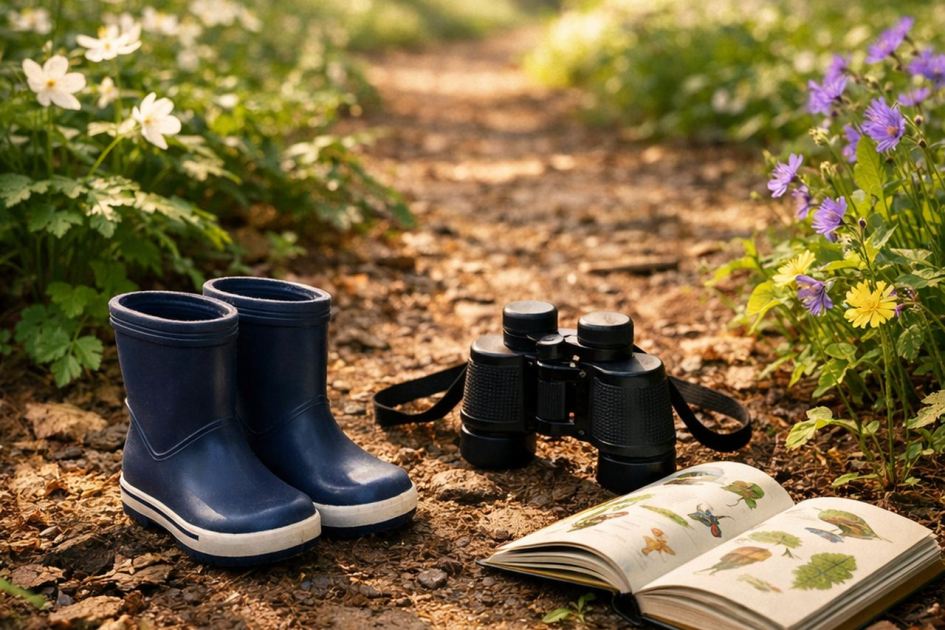
This is psychologically effective — and that is precisely the problem. What is marketed as “nature education” is primarily the early normalization of behavior that, without this context, would be classified as animal cruelty. Alternatives such as wildlife observation, tracking, and ecological education convey a connection to nature without violence.
What risks arise from contact with firearms?
Children in the proximity of firearms are exposed to an increased risk of accidents.Hunting accidents in Switzerland demonstrate that recreational hunting accidents regularly occur in situations considered controlled: at raised hides, during driven hunts, at dawn. Children present at such events become co-victims in the event of an accident. At the same time, early exposure normalizes the handling of weapons as a recreational tool.
An incident in Carinthia in October 2025, in which a 16-year-old youth was struck by shotgun pellets during a driven hunt, illustrates how realistic these risks are. Age does not automatically provide protection: the danger arises from the situation, not from the age of the person involved.
How does the recreational hunting lobby portray the involvement of children?
JagdSchweiz and cantonal hunting associations argue that recreational hunting teaches children where meat comes from and fosters respect for nature. This line of reasoning is systematically flawed: knowledge about food chains can be conveyed without acts of killing. Respect for nature does not arise through killing, but through observation, understanding, and conservation.
Hunting myths exposes how such narratives obscure the actual function: the objective is not nature education, but the recruitment of new members for a shrinking recreational community.
What does the UN Convention on the Rights of the Child demand?
The UN Committee on the Rights of the Child stated unequivocally in 2023 with “General Comment No. 26”: children must be protected from all forms of physical and psychological violence, including exposure to violence against animals. As a state party to the UN Convention on the Rights of the Child, Switzerland is obligated to effectively guarantee this right. This means: the passive and active participation of minors in recreational hunting activities stands in contradiction to applicable international law.
Are there political initiatives and international precedents?
Poland in 2018 became the first country in Europe to categorically prohibit minors from participating in hobby hunts. The ban came about after years of pressure from child psychologists, educators, and animal welfare organizations. In Switzerland, concrete parliamentary initiatives for a minimum age at the federal level have so far not materialized. At the cantonal level, there are isolated discussions but no comprehensive legislation. Template texts for hunting-critical parliamentary initiatives offer cantonal council members concrete drafting assistance for corresponding initiatives.
Petition: Penalize recreational hunters who allow minors to participate
The IG Wild beim Wild has launched a petition to Federal Councillor Albert Rösti. It demands an explicit federal-level ban on the participation of minors in recreational hunting, both in active form (hunting along, shooting, tracking wounded animals) and in passive form (presence during acts of killing). Recreational hunters and hunting organizations that allow minors to participate in recreational hunting shall be consistently sanctioned. The petition is based on the recommendations of the UN Committee on the Rights of the Child in "General Comment No. 26" and on the extensive findings from developmental psychology regarding the consequences of exposure to violence in childhood.
Conclusion
The involvement of children in recreational hunting is barely regulated in Switzerland. While developmental psychology formulates clear warnings and animal welfare law demands the protection of all living beings, a uniform protective framework for minors in recreational hunting contexts is lacking. What is marketed as tradition and nature education is, from a scientific perspective, the early normalization of violence against animals. A minimum age for participation in acts of killing would be a comparatively modest yet effective measure.
Sources
- Federal Act on Hunting and the Protection of Wild Mammals and Birds (JSG), SR 922.0
- Ordinance on Hunting and the Protection of Wild Mammals and Birds (JSV), SR 922.01
- Animal Welfare Act (TSchG), SR 455
- UN Committee on the Rights of the Child, General Comment No. 26 (2023)
- Ascione, F. R. (1993): Children Who Are Cruel to Animals: A Review of Research and Implications for Developmental Psychopathology. Anthrozoos, 6(4), 226–247
- Flynn, C. P. (1999): Animal Abuse in Childhood and Later Support for Interpersonal Violence in Families. Society & Animals, 7, 161–172
- Flynn, C. P. (1999): Exploring the Link between Corporal Punishment and Children’s Cruelty to Animals. Journal of Marriage and the Family, 61, 971–981
- German Federal Hunting Act (BJagdG), § 16
Further reading
- Petition: No minors on recreational hunts
- Hunting and children
- Psychology of hunting
- Hunting and animal welfare
- Recreational hunting as an event
- The hunting license
- Hunting accidents in Switzerland
- Poland's path to banning hunting in the presence of minors
- Children, hunting, and socialization into violence
Unterstütze unsere Arbeit
With your donation, you help protect animals and give them a voice.
Donate now →More on the subject of recreational hunting: All Dossiers at a glance bring together fact checks, analyses and background reports. The scientific evidence is presented in the overview Studies on the Effects of Recreational Hunting.
The position of IG Wild beim Wild: IG Wild beim Wild rejects recreational hunting. Our model is the canton of Geneva, which has managed without recreational hunting since 1974: without hunting seasons, without hunting dogs, without driven hunts, without high seats, without the animal cruelty and crime that go hand in hand with hunting season elsewhere. What has worked there for over fifty years disproves every position paper by JagdSchweiz. An association that bases its policy on claims it refutes in its own documents is not a professional organisation, but a factory for misinformation.