
Hunting and Children
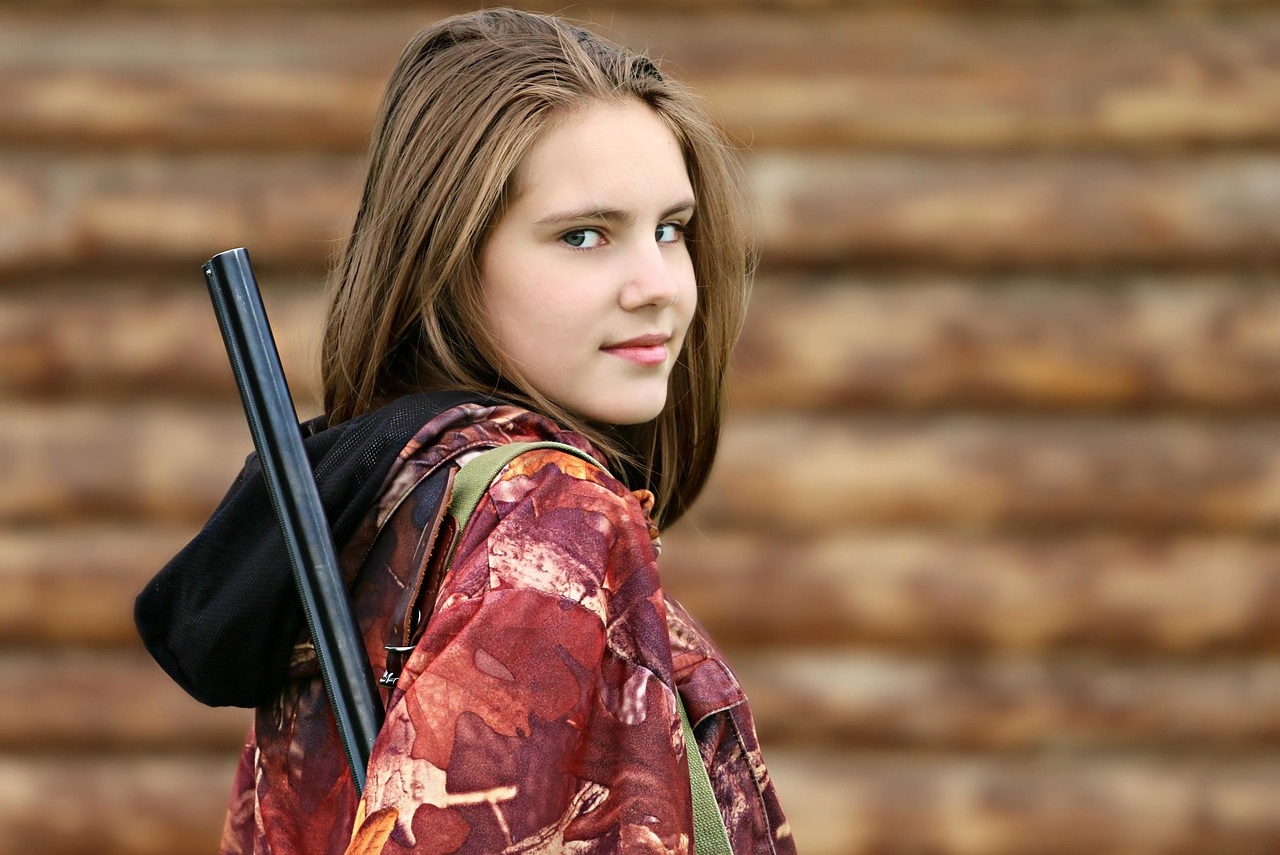
Many adults associate hunting with nature experiences. When children are involved, this is often marketed as "pedagogically valuable": children should "learn where meat comes from" or develop "respect for nature". But the crucial question is: What values are actually being transmitted when killing is presented as a normal means of dealing with wildlife?
Recreational hunting is a practice that teaches people to normalize and positively evaluate violence against animals. Without a certain callousness toward suffering, most people could not sustain recreational hunting long-term. When children are introduced early to this environment – through hunting trips, school visits by recreational hunters, teaching materials from the JagdSchweiz network, or hunting camps –, no nature education takes place. Socialization takes place: the practice of a value framework in which violence against animals is considered tradition, competence, and social cement.
What to expect here
- Children learn through role models: What hunting socialization concretely transmits: How rituals, language and recognition in the hunting environment shape children's moral landscape.
- Bringing hunting into schools: JagdSchweiz as "nature educator": What JagdSchweiz concretely offers through the kiknet platform and school visits – and what is missing from these materials.
- Weapons and children: What research says about early weapon exposure: How early weapon contact in positively coded social contexts shapes attitudes toward violence.
- Animal suffering and children: Callousness or disturbance? What happens when children are confronted with death and blood at hunting events – differently, but relevant in both cases.
- The language of hunting as protective layer: How terms like "laying bag", "field dressing" and "harvesting" normalize violence – and what this means for children who learn this language first.
- Social Consequence: When Hunting Becomes Identity: Why early hunting socialization structurally hampers democratic debates on hunting policy.
- What meaningful nature education can achieve instead: Which approaches convey empathy, responsibility and nature encounters without killing.
- Animal welfare law and children's rights dimension: What the UN Convention on the Rights of the Child, Animal Welfare Act and pedagogical minimum standards say on this issue.
- Arguments: Responses to the most common justifications for hunting programs for children.
- Quick links: All relevant articles, studies and dossiers.
Children learn through role models: What hunting socialization conveys
Children learn moral orientation not primarily through explanations, but through observation, imitation and emotional embedding. When adults go into the forest with weapons, kill animals, ritualize the killing – laying out the bag, taking trophy photos, displaying trophies – and receive social recognition for it, this shapes their moral landscape. The message that emerges is not 'killing is wrong'. It reads: violence is a legitimate tool when it is traditionally embedded, legal and socially recognized.
This message works without being spoken. Children who grow up in a hunting environment experience that empathy is negotiable. Compassion for animals becomes relative as soon as tradition, hobby or an alleged 'stewardship mandate' comes into play. Those who feel disgusted or sad in front of the dead animal are quickly considered 'too sensitive'. Children learn to suppress these feelings instead of taking them seriously. This is not nature education. This is the early practice of indifference to suffering – institutionally promoted and ritually anchored.
More on this: Psychology of Hunting and Trophy Photos: Double Standards, Dignity and the Blind Spot of Recreational Hunting
Bringing hunting into schools: JagdSchweiz as 'nature educator'
JagdSchweiz operates its own learning platform for schools and offers classroom visits for teachers and school classes. Under the motto 'Bringing hunting into schools', teaching units are promoted as 'appropriately prepared for different levels', which 'combine linguistic, mathematical, musical and visual elements in an ideal combination'. In parallel, JagdSchweiz offers teaching materials through the kiknet platform that present hunting as a 'sustainable measure for preserving biodiversity and preventing damage'.
What is missing from these materials is documented: animal welfare problems, missed shots, animal suffering, driven hunts, social controversy and the actual data on missed shots and wounded animals are barely or not addressed at all. Recreational hunters appear in schools and kindergartens as supposed nature educators – even though their central interest lies in gaining acceptance and recruits for a hobby based on killing animals with firearms. Teaching materials from interest groups that are used one-sidedly and without critical classification are not education. They are lobbying in the classroom.
More on this: Hunter Lobby in Switzerland: How Influence Works and No Hunting Propaganda by Recreational Hunters in Schools (Model Motion)
Weapons and children: What early weapon exposure means
Weapons are not neutral objects. They are built for a single purpose: to injure or kill. Handling weapons in an environment framed as 'nature', 'tradition' and 'adventure' creates a specific meaning connection for children: weapons belong to nature, weapons are tools of adult competence, weapons are socially recognized objects.
Anyone wanting to introduce children to nature does not need weapons for this purpose. Switzerland offers countless opportunities to observe wildlife, read tracks, experience habitats and understand ecological connections – without a single shot being fired. Young people undergoing hunting training in the Canton of Zurich receive education in the first years that includes 'use of firearms, cold weapons and hunting dogs' as a separate training module. What is conspicuously absent: a documented training module on animal suffering, animal dignity and ethical decision-making. This is not nature education. This is weapons training with a nature backdrop.
More on this: Hunting and weapons: Risks, accidents and the dangers of armed recreational hunters and The hunting license
Animal suffering and children: Desensitization or disturbance
Hunting means blood, death, sometimes also injured animals, tracking wounded game and prolonged suffering. Adults often decide for children what is 'acceptable' – but children react very differently. Some show signs of desensitization: They learn to block out what they see and force the experience into the prescribed evaluation framework. Others react with disturbance, sadness or rejection – and are then classified as 'too sensitive'.
In both cases, the fundamental pedagogical question arises: What is a child really learning here? Blood, dead bodies and slit-open animal bellies are sold as 'completely normal'. They speak of 'field dressing' instead of tearing apart, of 'laying out the bag' instead of carcasses. The language protects the adults – but it also shapes children's perception. Violence no longer appears as something shocking, but as routine, as custom, as cause for pride. Children who must suppress their natural empathy towards animals in order to function in the social context are not learning respect for nature. They are learning to switch off compassion when it becomes inconvenient.
More on this: Wild animals, mortal terror and lack of anesthesia and Hunting and animal welfare: What the practice does to wild animals
The language of hunting as protective layer
Hunting language is not a folkloristic curiosity. It is a psychological protective instrument. 'Taking' instead of 'killing'. 'Field dressing' instead of cutting open. 'Bag' instead of pile of corpses. 'Regulation' instead of mass killing. 'Population management' instead of shooting campaign. This language has a function: It creates emotional distance between the action and its meaning.
For adults, this is a learned protective strategy. For children who learn this language first, something different emerges: They internalize from the beginning a perception of the world in which animals are not sentient individuals, but 'populations', 'bags' and 'raw material'. This is not a linguistic detail. Language shapes thinking. Those who learn as children that a dead deer is 'game' think differently about wild animals than someone who has learned that a deer is a social, learning-capable animal with individuality and capacity for suffering.
More on this: Hunting myths: 12 claims you should critically examine and Children, hunting and violence socialization
Social consequence: When hunting becomes identity
Those who grow up in a hunting environment where hunting means identity, family tradition and social belonging will later defend hunting with high probability – not because the arguments are convincing, but because criticism is experienced as an attack on their own origins. This is not a failure of individual persons. It is a predictable result of early, deep socialization.
The societal consequence is significant: hunting policy in Switzerland is co-shaped by a small minority – approximately 30,000 recreational hunters – who were disproportionately socialized within hunting-adjacent structures. Their convictions are not the result of free deliberation between alternatives, but often the result of socialization that doesn't even know alternatives exist. When hunting is established early as unquestionable normality, criticism later becomes structurally more difficult – not because it's wrong, but because it stands against practiced identity. This impedes democratic debates and stabilizes a system that is ethically controversial.
More on this: Introduction to hunting criticism and Ending recreational violence against animals
What meaningful nature education can do instead
Nature education that deserves its name introduces children to wild animals without making them targets. It explains ecological relationships, shows conflicts between humans and animals – and seeks solutions where nobody has to die. This is not naivety. This is a fundamental pedagogical decision for empathy as a learning goal. Concrete alternatives:
- Wildlife observation: Observing deer in forest clearings at dawn, watching fox families in spring, documenting bird migration – all without weapons, without noise, without disturbance.
- Track reading: Finding and categorizing animal tracks in snow, feeding signs, dens and sleeping places – intensive nature encounters that show animals as subjects.
- Ecological relationships: Explaining food chains, habitat quality, predator-prey dynamics and human influences – without the message that killing is the normal response.
- Conflict mediation: What happens when a fox gets into the chicken coop? How can a fence provide protection? What makes a habitat safe for wild animals and for livestock? Children can develop solutions that don't kill anyone.
Wilderness education and nature-based learning consistently show: nature experiences promote children's well-being, strengthen empathy and generate more sustainable environmental behavior – without a single shot being necessary.
More on this: Alternatives to hunting: What really helps without killing animals and Geneva and the hunting ban
Animal welfare and children's rights dimension
The UN Convention on the Rights of the Child, which Switzerland has joined, guarantees children protection from all forms of physical and mental violence in Article 19 and the right to education that promotes respect for the natural environment and human dignity in Article 29. Educational materials that present violence against animals in a one-sidedly positive way and systematically exclude critical perspectives are difficult to reconcile with this educational mandate.
The Swiss Animal Welfare Act protects the dignity and well-being of animals. Nature education that presents wild animals as shooting targets and 'game bag' contradicts the spirit of a law that explicitly protects animal dignity. Education is never value-neutral. Anyone who confronts children with hunting programs makes a value decision – and this decision deserves public discussion, not silent consent.
More on this: Ban for children and youth in hunting (model motion) and Template texts for hunting-critical motions in cantonal parliaments
What would need to change
- Ban on participation of children and youth in hunting activities: Minors may not participate in the active practice of recreational hunting and may not be present during shootings, tracking or game laying out. Protection from exposure to violence must take precedence over the recruitment interests of recreational hunters. Model motion: Ban for children and youth in hunting
- No teaching materials from hunting associations in public schools: Materials from JagdSchweiz, kiknet or other hunting-affiliated organizations must not be used in public schools as long as they are one-sided and ignore animal suffering, wounding shots and social controversy. School visits by recreational hunters acting as 'nature educators' must be replaced by independent specialists. Model proposal: No hunting propaganda by recreational hunters in schools
- Cantonal guidelines for nature education without exposure to violence: Cantons must issue binding guidelines that commit nature education in schools and youth programs to violence-free methods: wildlife observation, tracking, habitat studies, ecological connections instead of weapons and shooting demonstrations.
- Protection of animal dignity in educational contexts: Trophy images, trophy presentations and the ritual staging of killed animals must not be used as educational material. Animal dignity (Art. 3 Animal Welfare Act) must also serve as a standard in the educational sector. Model proposal: Regulate trophy images
- Raise the minimum age for beginning hunting education nationwide to 18 years: Hunting education, which includes handling firearms, cold weapons and hunting dogs, should only be possible from the age of majority. Young people first need comprehensive ethical education before they gain access to a practice based on killing sentient animals.
Arguments
'Children learn where meat comes from through hunting.' Meat comes from a slaughterhouse or from a farm – this can also be conveyed without firearms. Anyone who wants to explain 'where meat comes from' pedagogically has better places than a driven hunt in the autumn forest. And anyone who honestly explains where meat comes from also explains animal suffering, slaughter conditions and alternatives – not just the positive aspects of hunting tradition.
'Children learn respect for nature through hunting.' Respect for nature arises through observation, wonder and empathy – not through killing. Studies on wilderness education show that children develop deeper ecological understanding through positive, non-invasive nature experiences. Respect that arises through ritual and social integration into a killing environment is not respect towards wild animals – it is respect towards the group.
'JagdSchweiz materials are neutral and created by experts.' JagdSchweiz is an interest organization with the stated goal of maintaining acceptance for hunting and recruiting new members. Educational materials that one-sidedly present hunting as sustainable and scientifically based, without addressing wounding shots, animal suffering, driven hunt problems and social controversy, are interest-driven communication – not neutral education. This applies regardless of who created them.
'Young people can decide for themselves whether they want to hunt.' That's true – but only if they were previously informed about alternatives, know the real data situation and were not already socialized in an environment that evaluates criticism as an attack on identity. Early, intensive hunting socialization does not formally restrict freedom of choice, but does so factually.
Quick links
Articles on Wild beim Wild:
- Children, hunting and violence socialization
- Hunting and children: Original article (January 2026)
- No hunting propaganda by recreational hunters in schools (Model proposal)
- Ban for children and young people on hunts (Model proposal)
- Regulate trophy images: Protect animal dignity beyond death (Model proposal)
- Recreational hunting as an event: When shooting becomes leisure activity
- Hunting and animal welfare: What practice does to wild animals
Related dossiers:
- Psychology of hunting: Why people kill animals and how recreational hunting normalizes its violence
- Recreational hunting tourism: Trophy hunting, hunting trips and fairs – a global leisure industry at the expense of animals
- Hunting and children
- Hunting victims in Europe: Deaths, injuries and a continent without statistics
- Trophy photos: Double standards, dignity and the blind spot of recreational hunting
- Why animal welfare law ends at the forest boundary
- End recreational violence against animals
- Trophy hunting: When killing becomes a status symbol
Our mission
Children deserve nature education that promotes empathy, not suppresses it. When recreational hunters appear in schools, when JagdSchweiz distributes educational materials and when children are confronted with death and violence at hunting events, this is not education. It is the early conditioning of violence acceptance that disguises itself as tradition. This dossier documents why this is problematic, what research and children's rights say about it and what alternatives exist. It is continuously updated when new data, studies or political developments require it.
If hunting programs are running in schools, kindergartens or youth groups in your area, contact us. We document what is being taught, who is behind it and what alternatives exist.
More on recreational hunting: In our hunting dossier we compile fact-checks, analyses and background reports.