
IG Wild beim Wild criticises the Thusis Fur Market 2026
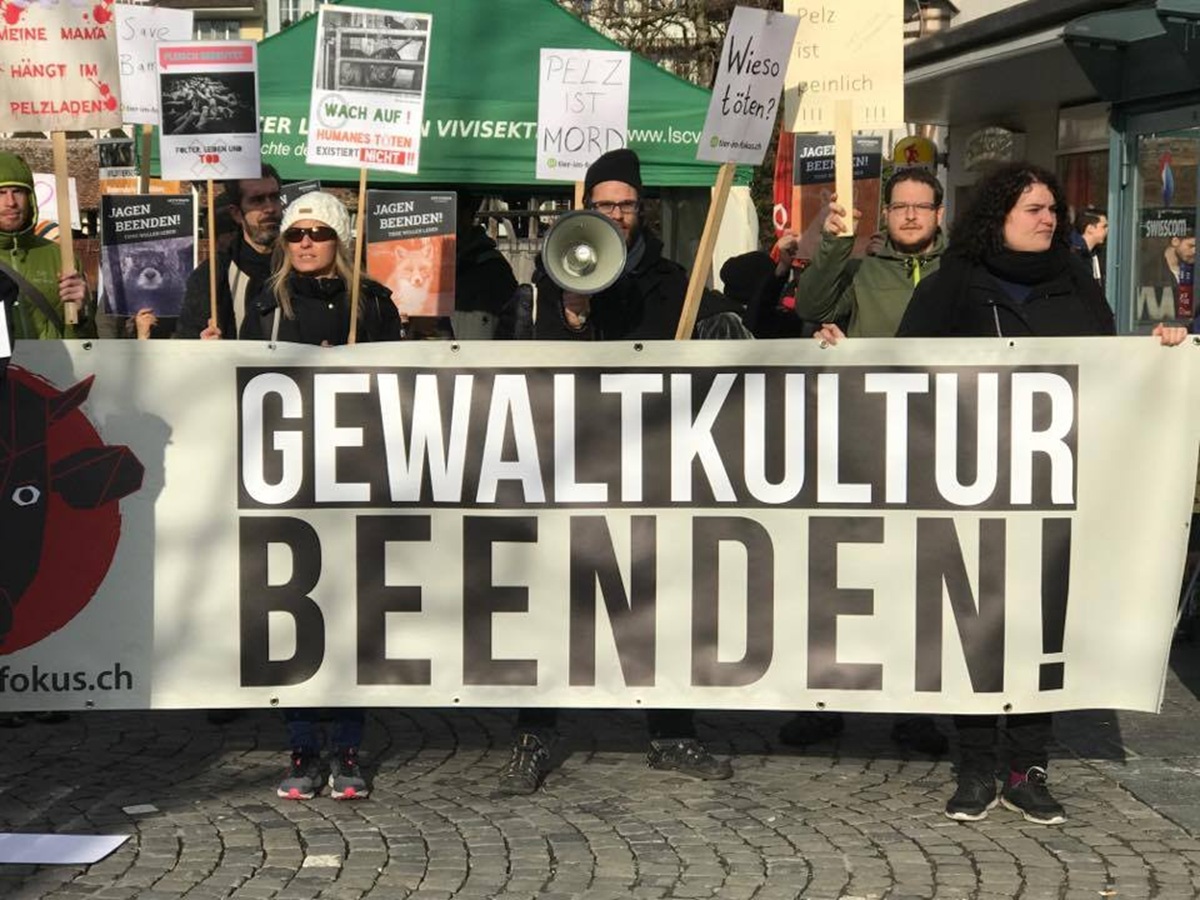
How such events combine tradition, commerce and animal suffering.
Criticism of fur and trophy events in Switzerland, exemplified by the traditional fur market in Thusis (GR) on 14 March 2026.
Wild animals are not commodities for entertainment, prestige and commerce.
IG Wild beim Wild strongly criticises fur and trophy events in Switzerland in the harshest terms. Year after year, such events present killed wild animals as trophies, decorative objects and trade goods. This normalises a way of dealing with wild animals that is no longer in keeping with the times and clearly contradicts society's expectations regarding animal ethics and respect for fellow creatures.
The organisers sell these events as upholding tradition and as a contribution to so-called conservation. In reality, killed wild animals are at the centre, their body parts measured, graded, awarded prizes or traded as merchandise. This practice promotes an outdated trophy culture in which the animal as a sentient individual does not count, but rather the hunting achievement and the size of antlers, horns or other «signs of success».
It is particularly offensive that such events also serve as a marketplace for trading in furs. Fox furs and other hides are purchased, evaluated, partly awarded prizes or raffled off. This trade ignores the suffering behind every single fur and contributes to regarding wild animals as a raw material. While Politics and society take steps towards restricting the fur trade, Switzerland continues to celebrate a commercialised form of hobby hunting that is ethically barely defensible.
Such markets are not folklore, but part of a system that puts a price on animal bodies. When furs are traded at unit prices, animal suffering becomes a calculation. It is precisely this logic that is incompatible with a modern understanding of wildlife protection .
IG Wild beim Wild also points out that the hunting practice portrayed often conveys an embellished picture. In reality, missed shots, injured animals and prolonged suffering are part of everyday hobby hunting. These aspects are neither addressed at such events nor openly communicated by those responsible. The claim that trophy shows serve to analyse the state of wildlife populations is barely tenable. Scientifically grounded monitoring instruments do not require displayed skulls and antlers, which primarily serve self-promotion. Trophies are a material expression of killed wild animals, whose kill quality, follow-up search and suffering scarcely feature in the official picture.
From an animal welfare perspective, it is also concerning that children and young people are introduced to such events without being taught a respectful and contemporary approach to wild animals. Instead of imparting knowledge, the focus is on a spectacle that trivialises violence and propagates a romanticised hunting world.
Arms dealers, optics manufacturers, hunting accessories, hunting trips, raffles of hunting kills abroad: a hunting-industrial system of violence is emerging, in which kills and animal bodies are part of a marketing system.
Whoever kills senselessly is not protecting anything, and it serves no purpose for a civilised society. Hobby hunters therefore do not ensure healthy or natural wildlife populations, least of all with their abhorrent fox hunting. Such events regularly raise questions about ethical aspects, permit practices and public impact, and they finally deserve to be fundamentally reviewed politically and socially.
The IG Wild beim Wild calls on those responsible in municipalities, towns and cantons to fundamentally rethink such events. A civilised society does not need competitions in which dead wild animals are presented as successes, and it does not need a market on which furs are traded like arbitrary commodities. What is needed instead is a respectful understanding of wild animals, a scientifically sound wildlife ecology and a move away from hobby hunting.