
Recreational Hunting as Event
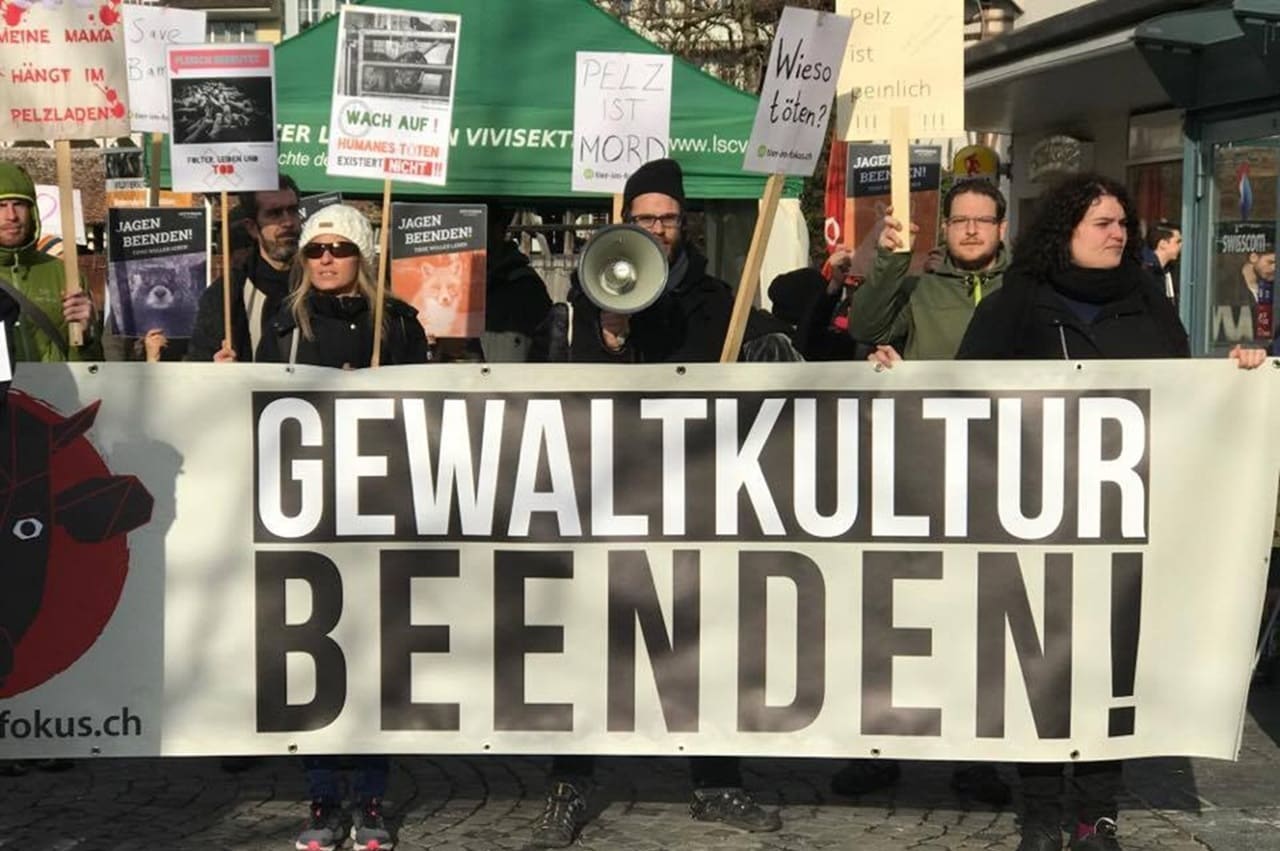
Anyone browsing hunting magazines and hunting association websites in Switzerland will find more than just dates. They will find a narrative. Hunting is staged there as a mixture of custom, family outing, market, trade fair and continuing education. With festival catering, tombola, children's programs and 'workshops,' the killing of wild animals is given a framework that makes it appear harmless and self-evident.
The range is considerable: shooting training and long-range shooting seminars, trophy shows, fur and pelt markets, hunting fairs, lottery, hunting horn festivals, Hubertus masses, children's concerts. Recreational hunting is thus not only claimed as a 'craft,' but as a cultural offering intended to establish social acceptance. This dossier analyzes how this event culture functions, what it conceals – and what questions the public has the right to ask.
What awaits you here
- Shooting as normality: Training, instruction and long-range shooting: How shooting seminars and long-range shooting courses shift the focus from wildlife protection to shooting performance – and why this is ethically problematic.
- Fur and pelt as attraction: Markets, awards, trade: What it means when dead animal bodies become beauty competitions and violence is folklorized.
- Trophy shows: Hunting as exhibition and status symbol: Why the public display of killed wildlife is not a neutral 'tradition,' but framing.
- Fair, market, 'cultural evening': Recreational hunting as PR offensive: What hunting fairs like the 'Hunting Fair Switzerland' at the Environment Arena Spreitenbach really are – and what is missing from them.
- Religion and customs: Hubertus mass and hunting horn festival: How cultural and religious charging immunizes hunting against criticism.
- Hunting as family program: Children's concert and red deer breeding show: What it means when killing is embedded in children's formats – and how early framing begins.
- Lotto, 'pillar shooting' and butchering festivals: Death as a game: How banalization and gamification turn wildlife death into leisure routine.
- What the public can and should ask: Concrete questions, polite but persistent.
- Arguments: Responses to the most common justifications of hunting event culture.
- Quick links: All relevant articles, studies and dossiers.
Shooting as normality: Training, instruction and long-range shooting
Several dates in the current Swiss hunting calendar explicitly revolve around shooting: an instruction course at the Selgis hunting and sport shooting facility (13.12.2025) and a public clay pigeon training (28.01.2026) at the same facility. Later follow two seminars in Bülach: 'Hunting long-range shooting' (26.03.2026) and 'Finishing shot with short and long weapons' (29.03.2026).
This reveals a problematic shift: Instead of talking about wildlife rest, habitats or conflict prevention, range, technique and hit performance become the core content. At the 'long-range shooting' seminar, distance becomes the learning objective. The consequence is known: With every additional distance, control possibilities decrease, external influences like wind and animal movement have stronger effects, the impact becomes harder to assess. Even from hunting-internal sources we read: 'Responsibility grows with every additional distance. A bad shot means suffering for the wildlife – and that must never be the price for technical overconfidence.' The event framework nevertheless consistently shifts focus away from the animal and toward performance. Anyone marketing long-range shooting as an event normalizes a practice that should actually require critical examination under animal welfare law.
More on this: Hunting accidents in Switzerland: The risk that is rarely discussed honestly and Hunting and weapons: Why 'hobby' and firearms are politically connected
Pelts and fur as attraction: Markets, awards, trade
The event calendar of Swiss hunting associations lists for the first months of 2026 alone a dense series of pelt and fur markets: 'Traditional pelt fur market' in Altstätten with awards for the most beautiful fox pelts (05.02.2026), 'Central Swiss fur market' in Sursee (10.02.2026), 'Glarus pelt fur market' (14.02.2026), 'Zurich fur market' (28.02.2026), 'Pelt fur market of the Aargau hunting wardens' (28.02.2026), 'Upper Valais pelt fur market' (28.02.2026) and 'Fur market Thusis' (14.03.2026).
The message of these events is clear: Animals are turned into raw materials, pelts into collectibles, handling them is folklorized. When fox pelts are publicly awarded – ranked according to 'beauty', displayed and judged – a dead animal is reinterpreted as the object of a beauty contest. This is not 'tradition', this is aestheticization of violence. That these markets are hardly critically commented on in public is itself a symptom: The normalization work of hunting event culture has progressed so far that the obvious appears invisible. Fur markets in the 21st century, in a country with animal welfare law and animal dignity clause in the civil code, are not self-evident. They should trigger public debate.
More on this: Hunting and animal welfare: What the practice does to wild animals and Fox hunting without facts: How JagdSchweiz invents problems that others have long solved
Trophy shows: Hunting as exhibition and status symbol
The calendar features several trophy formats: the cantonal Bernese trophy exhibition in Thun (31.01.2026), the Schwyz trophy show (28.02.2026), the Nidwalden trophy show (07.03.2026) as well as the Uri trophy show (21.03.2026, including Uri fur pelt market). Trophies are not neutral 'data'. They are symbolic evidence of a kill, often of the largest or strongest animal in a population.
When trophies are publicly displayed, death is presented as achievement. Festival catering and raffles amplify this effect: the whole thing becomes a village festival where the core moral question – why a sentient wild animal was made into an object – disappears in the noise of conviviality. From a wildlife biology perspective, there's an additional factor: strong, experienced animals are carriers of social knowledge and genetic quality. Their preferential selection as trophy animals demonstrably damages pack and herd structures. The trophy show celebrates this. The public applause for it is not neutrality – it is a choice.
More on this: Hunter photos: Double standards, dignity and the blind spot of recreational hunting and Trophy hunting: What 'Trophy Hunting' really means
Trade fair, market, 'cultural evening': Recreational hunting as PR offensive
The 'Jagdmesse Schweiz' takes place on 7/8 March 2026 in the Umwelt Arena Spreitenbach – and advertises as the 'biggest hunting & shooting event of the year'. Expert presentations, workshops, 'delicious local food and drinks in the festival restaurant', hunting travel providers and 'innovations from all areas of hunting' – this is how the trade fair describes itself. Organizer Ralf Wirtensohn markets the event as an 'unforgettable experience' and 'here beats the heart of Swiss hunting'.
What's missing is telling: no independent animal welfare voice on panels, no critical examination of misshots, lead contamination in game meat or hunting pressure on protected areas, no scientific assessment of hunting impact on wildlife populations. Hunting trade fairs are more than commerce. They are acceptance machines: equipment, cuisine, 'tradition meets future'. The framing only works because inconvenient facts are consistently excluded. PETA Deutschland has documented the same pattern for German hunting and angling fairs: dogs and birds of prey as living props, no space for critical expertise, trivialization of animal suffering as the basic principle of event logic.
More on this: Hunter lobby in Switzerland: How influence works and Recreational hunters and media
Religion and customs: Hubertus Mass and hunting horn festival
A Hubertus Mass in Schlierbach (29.12.2025) and the Federal and international hunting horn players' festival in Liestal (30.05.2026) connect hunting with ritual and community. This can be humanly unifying. But it's also a strategy: whoever charges hunting religiously or culturally immunizes it against criticism.
Then opposition quickly appears like an attack on 'customs' or on 'tradition' – although in truth it's about animal suffering, ecological impact and democratic control. The pattern is known from other areas: cockfighting, bullfighting, fur industry – all were or are defended with 'tradition', until societal majorities and courts saw it differently. The religious coding of recreational hunting through Hubertus Masses serves the same function: it sets an interpretive framework in which moral questions appear as prudishness or sentimentality. This is no coincidence. It is a communication strategy.
More on this: Hunting myths: 12 claims you should critically examine and Psychology of hunting
Hunting as family program: Framing begins early
At the Red Deer Trophy Show St. Gallen (07.03.2026), a family programme with children's concert is being promoted. When hunting is embedded in children's formats, an early image emerges: hunting is natural history, folk festival and adventure. A space where animals are exhibited, trophies admired and hunting presented as a normal part of nature.
But the reality is also: hunting means fear, flight, injury and death for wildlife. Children's programmes at hunting exhibitions are therefore not harmless 'education', but framing. Those who first bring children into contact with killed wildlife in a positive, social environment create a preliminary experience – before the child is able to ask questions. This is not a conspiracy. It is a well-known mechanism of normalisation that is also well documented with other consumer topics – meat industry, circus. Informed parents may name this.
More on this: Hunting and Children: What it means to sell killing as a nature experience and No hunting propaganda by recreational hunters in schools (model motion)
Lottery, 'Säulischiessen' and Metzgete: Death as a game
A hunter's lottery (01.01.2026) and the Säulischiessen in Wittenbach (07.02.2026), combined with Metzgete and meat prize, mark the final stage of banalisation: recreational hunting becomes a gaming and consumer format. At the Säulischiessen, the language of points and hits is employed. What is practised on targets ends up outside on animal bodies.
Gamification and prize-giving fulfil a precise psychological function: they couple the killing of animals with positive emotions like success, competition and sociability. This is the exact opposite of what ethically reflective hunting education should achieve – namely awareness of animal suffering, responsibility and the question of whether a shot is necessary at all. When death becomes a game win, ethical reflection is no longer part of the framework.
More on this: The Hunting Licence and Wild Game: From Shot to Plate
What the public can and should ask
These events are public or semi-public – and precisely therefore socially relevant. Those who criticise recreational hunting need not look away. One can look closely and ask concrete questions – politely but persistently:
- What standards apply against mis-shots and tracking wounded animals – and how are they addressed, controlled and documented at these events?
- How is animal suffering realistically addressed in training, instead of exclusively conveying technique and shooting performance?
- What role do fur and pelt markets still play today – and why are pelts awarded prizes as if they were art objects rather than remains of killed wildlife?
- Why are trophies exhibited instead of conducting the debate about ethics and necessity?
- Where are independent animal welfare and wildlife research voices on panels – and not just hunting-related presentations?
- How are minors at hunting events protected from one-sided framing?
- Who finances these events – and in what relationship do public funds and association money stand?
What would need to change
- Transparency obligation for hunting events with public character: Hunting fairs, trophy shows and fur markets that are publicly accessible or use public infrastructure must disclose who finances them, whether public funds flow and what animal welfare standards are maintained. Model motion: Curb hunting propaganda with dead animals
- No public funds for hunting PR: Cantons and municipalities provide no public spaces, subsidies or personnel support for events that promote hunting as leisure culture without simultaneously involving independent animal welfare and wildlife protection voices.
- Age restrictions for hunting events: Events where trophies are displayed, pelts are awarded prizes, or animals are raffled as prizes receive age restrictions or are required to offer child-appropriate alternative programs without glorification of hunting. Model motion: Ban on children and young people participating in hunting
- Obligation to contextualize trophy shows and fur markets: Trophy shows and fur markets held publicly are required to visibly inform about misshot rates, wounding rates, and the ecological impacts of recreational hunting, so that visitors can make an informed assessment.
- Ban on long-range shooting seminars as public recreational offerings: Seminars that specifically aim to maximize shooting distance are not promoted as recreational formats. Shooting training that goes beyond the legal minimum standard is exclusively controlled by authorities and only offered within the framework of professional wildlife management training.
- Independent animal welfare voices at hunting fairs: Hunting fairs with public character are required to include independent animal welfare, wildlife research, or ethics perspectives in their program when they position themselves as educational or informational events.
Arguments
"This is tradition – it has existed for hundreds of years." This is true for many practices that society has nevertheless overcome: bear fighting, falconry as a status symbol, fur trading at weekly markets. Tradition is a description of the past, not a moral argument. Animal welfare law and animal dignity are also parts of the Swiss legal order – and more recent ones.
"Hunting fairs and shooting training are harmless recreational formats." That's exactly the point: They are presented as harmless. What is omitted in the staging are misshots, wounded animals, wildlife stress, lead contamination, and the ecological consequences of intensive recreational hunting. A 'harmless recreational format' that consistently ignores everything uncomfortable is not providing entertainment – it's conducting PR.
"Children learn something about nature at hunting events." One-sidedly positively coded nature experience at hunting events is framing, not natural science education. Enlightened nature education shows wildlife as living, sentient individuals with social structures – not as trophies and fur market goods. There is wildlife education without killing. This should be the standard.
"Long-range shooting seminars improve competency and reduce misshots." The Graubünden data shows: Around 9 percent of all shots are unlawful, annually several hundred misshots in a single canton. If shooting training were the key, these numbers would have improved long ago. The problem is structural, not technical. More distance with the same structural irresponsibility creates more suffering, not less.
"It's about strengthening community and solidarity." Community and solidarity are legitimate social needs. They don't need trophy shows, fur markets, and long-range shooting seminars as platforms. Those who build community on the backs of wildlife have other options – and still choose this. That is a decision that may be questioned.
Quick links
Posts on Wild beim Wild:
- Recreational Hunting as Event: Original article (December 2025)
- Bloody Hobbies Instead of Animal Welfare: PETA Demands End to Hunting and Fishing Fairs
- Arguments Against Recreational Hunters
- High Hunting in Switzerland: Traditional Ritual, Zone of Violence and Stress Test for Wildlife
- No Hunting Propaganda by Recreational Hunters in Schools (Model Motion)
- Regulate Hunter Photos: Protect Animal Dignity Beyond Death (Model Motion)
- Curb Hunting Propaganda with Dead Animals (Model Motion)
- Ban on Children and Young People Participating in Hunting (Model Motion)
Related Dossiers:
- Media and Hunting Topics
- How Hunting Associations Influence Politics and the Public
- Hunter Lobby in Switzerland: How Influence Works
- Recreational Hunting as Event
- Recreational Hunting Starts at the Desk
Our Commitment
Recreational hunting invests considerable energy in its public staging. Trophy shows, fur markets, children's programs and hunting fairs are not harmless events. They are acceptance machines that normalize, folklorize and immunize the killing of wild animals against criticism. IG Wild beim Wild documents this event culture, identifies the framing mechanisms and asks the questions that are systematically excluded from these events.
We do not demand that recreational hunters should not be allowed to meet. We demand that the public knows what takes place behind the festival catering, tombolas and 'cultural evenings', and that public spaces and public funds are not used to market an armed leisure lobby as traditional custom preservation. This dossier will be continuously updated when new event formats, political initiatives or investigations require it.
Call to Action: Have you attended or documented a hunting event? Share your observations with us: wildbeimwild.com/kontakt
More on recreational hunting: In our Hunting Dossier we compile fact-checks, analyses and background reports.