Recreational hunting as an event: killing as a leisure activity
Anyone leafing through the relevant hunting magazines in Switzerland will find more than just a calendar of events. They will find a narrative. Hunting is staged there as a blend of tradition, family outing, market, trade fair, and continuing education. With food stalls, tombolas, children's programmes, and 'workshops', the killing of wild animals is framed in a way that makes it appear harmless and self-evident.

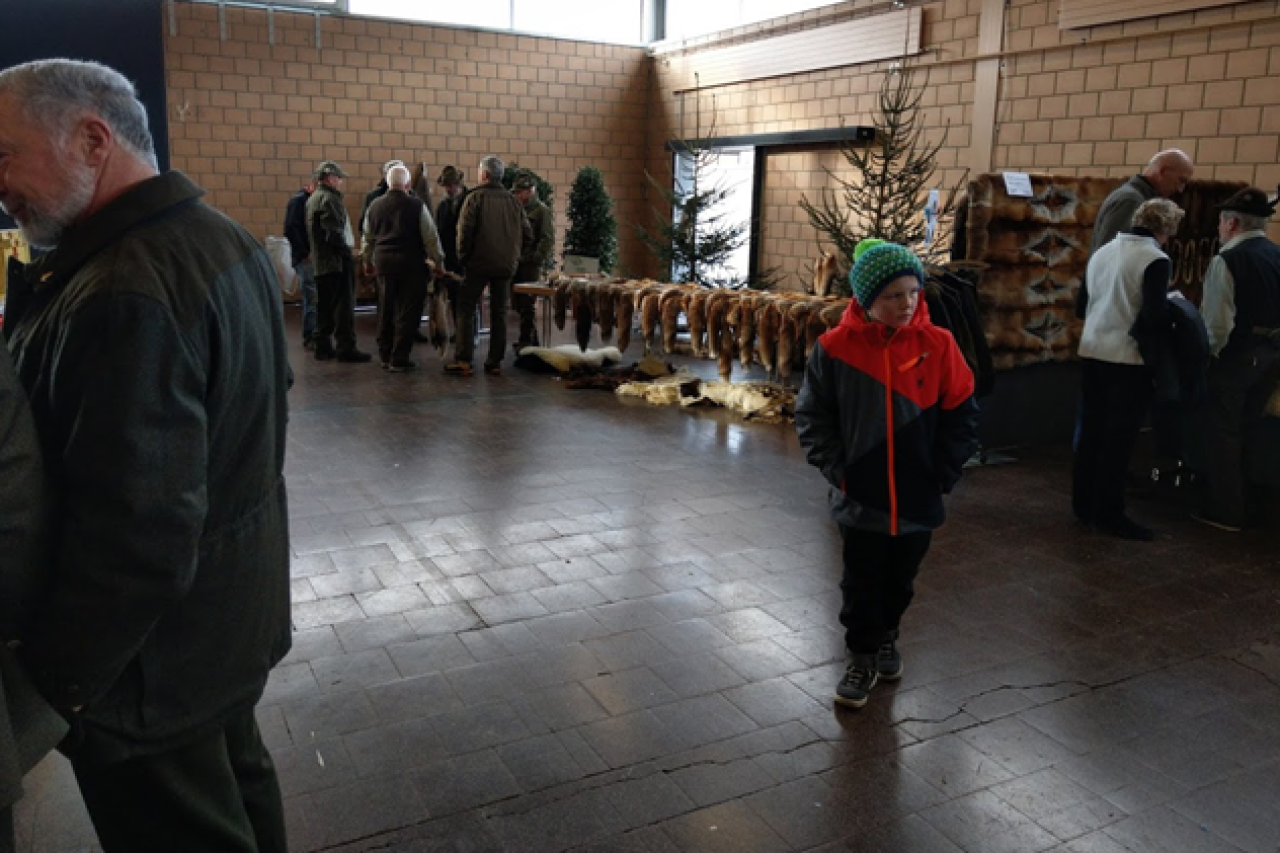
What is striking is the breadth of the spectrum: shooting training sessions and long-range shooting seminars, trophy shows, fur and pelt markets, hunting fairs, lotteries, hunting horn festivals.
Recreational hunting is thus presented not merely as a 'craft', but as a cultural offering designed to generate social acceptance.
1) Shooting as normality: training, 'instruction', and long-range shooting
Several events revolve explicitly around shooting: an instruction course at the Selgis hunting and sport shooting facility (13.12.2025) and a public clay pigeon shooting training session (28.01.2026) at the same facility.
Shortly after, two seminars follow in Bülach: «Long-Range Hunting Shot» (26.03.2026) and «Finishing Shot with Handgun and Rifle» (29.03.2026). Here the problematic shift becomes apparent: instead of discussing wildlife disturbance, habitats or conflict prevention, range, technique and shooting performance become the core content. In «Long-Range Shot», distance is even described as a learning objective. This is precisely where the ethical imbalance begins, because with every additional distance, the possibilities for control diminish and the risk of errant shots and avoidable suffering increases. The event format shifts the focus away from the animal and towards performance.
2) Fur and Pelt as Attraction: Markets, Awards, Trade
The calendars list a series of fur and pelt markets: including the «Traditional Fur Market» in Altstätten with an award for the finest fox pelts (05.02.2026), the «Zentralschweizer Fäälimärt» in Sursee (10.02.2026), the «Glarner Pelzfellmarkt» (14.02.2026), the «Zürcher Fellmarkt» (28.02.2026), the «Pelzfellmarkt der Aargauer Jagdaufseher» (28.02.2026), the «Oberwalliser Pelzfellmarkt» (28.02.2026) and the «Fellmarkt Thusis» (14.03.2026).
The message is clear: animals are reduced to raw materials, pelts become collectible objects, and the handling of them is folklorised. When fox pelts are awarded prizes, a dead animal is reframed as a beauty contest. This is not «tradition» — it is the aestheticisation of violence.
3) Trophy Shows: Hunting as Exhibition and Status Symbol
The calendar features several trophy formats: the cantonal Bernese trophy exhibition in Thun (31.01.2026), the Schwyz trophy show (28.02.2026), the Nidwalden trophy show (07.03.2026) and the Uri trophy show (21.03.2026, incl. Uri fur market).
Trophies are not neutral «data». They are symbolic proof of a kill. When they are displayed publicly, death is presented as achievement. Festival catering and tombolas reinforce this effect: the whole affair becomes a village fair at which the core moral question — why a sentient wild animal was turned into an object — disappears in the noise of sociability.
Regardless of how hunters justify wildlife management and regulation, the events calendar reveals a second dimension: hunting is staged as a leisure and cultural offering.
4) Trade Fair, Market, «Cultural Evening»: Recreational Hunting as a PR Offensive
The «Jagdmesse Schweiz» in Spreitenbach (08.03.2026) promotes hunting as a «meeting point» complete with workshops and lectures. Trade fairs like this are more than commerce. They are acceptance machines: equipment, culinary experiences, «tradition meets the future». What is often missing is transparency regarding kill figures, mistaken shots, lead-based ammunition, disturbances in protected areas, wildlife stress caused by dogs, driven hunt pressure, or the role of recreational hunters in conflict with species protection and animal welfare.
5) Religion and Custom: The Hubertus Mass and the Hunting Horn Festival
A Hubertus Mass in Schlierbach (29.12.2025) and the Swiss and International Hunting Horn Blowers' Festival in Liestal (30.05.2026) link hunting with ritual and community. That can be humanly unifying, no question. Yet it is also a strategy: those who invest hunting with religious or cultural significance immunise it against criticism. Dissent then quickly appears as an attack on «custom», even though the real issues at stake are animal suffering, ecological impact, and democratic accountability.
6) Hunting Becomes Family Entertainment: Children's Concert and "Morning Programme"
The Red Deer Trophy Exhibition St. Gallen (07.03.2026) advertises a family programme, including a children's concert. When hunting is embedded in formats aimed at children, an image is established early: that hunting is nature study, folk festival, and adventure. The reality, however, is also this: hunting means fear, flight, injury, and death. Children's programmes at hunting exhibitions are therefore not harmless «education» — they are framing.
7) Lottery and «Säulischiessen»: Death as a Game
A hunters' lottery (01.01.2026) and the Säulischiessen in Wittenbach (07.02.2026), combined with a Metzgete and meat prizes, reveal the next stage of trivialisation. Here, recreational hunting is definitively turned into a format for gaming and consumption. The Säulischiessen in particular draws attention through its language of points and hits. What is practised on targets ends, out in the field, on the bodies of animals.
What We as the Public Can Do
These events are public or semi-public, and it is precisely for this reason that they are of social relevance. Those who criticise recreational hunting need not look away. One can look closely and ask concrete questions — politely, but persistently:
- What standards apply to prevent mistaken shots and tracking of wounded animals, and how are they enforced?
- How is animal suffering realistically addressed in training, beyond mere technique?
- What role do fur and pelt markets actually still play today, and why are pelts awarded prizes?
- Why are trophies displayed instead of engaging in debate about ethics and necessity?
- Where are independent animal welfare voices on panels, rather than only hunting-affiliated presentations?
The event calendars make it clear: recreational hunters are actively working on their image. Anyone who takes animal welfare seriously should not cede this stage without a fight.