
Trophy Hunting: When Killing Becomes a Status Symbol
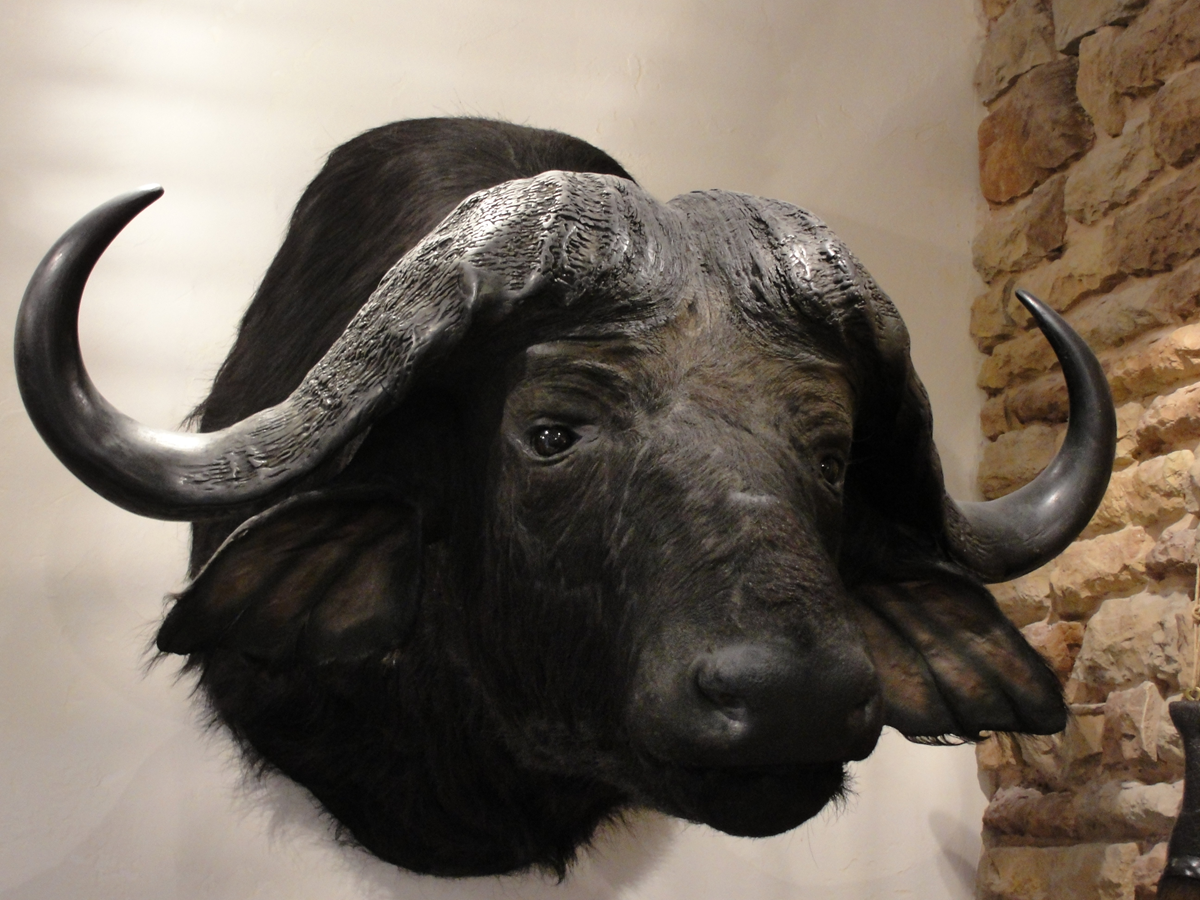
Trophy hunting is not a nature experience, but a highly organized business model. Tour operators sell shooting packages, guides deliver the animal, bureaucracy delivers the paperwork, social media provides the stage. Killing happens not out of necessity, but for prestige, living room decoration and what the scene calls 'thrill to kill'. And because it costs money, it attracts corruption, gray areas and fraud.
Political reactions are gaining momentum: Belgium adopted an import ban for hunting trophies of protected species in 2024. The UK House of Commons passed the Hunting Trophies (Import Prohibition) Bill, which bans imports of around 6,000 species – and has been explicitly resisting US pressure to withdraw this promise since February 2026. In the EU, the hunting lobby blocks national bans by invoking EU competence – a legal maneuver that shifts the problem to the European level without solving it.
What awaits you here
- What trophy hunting is and how a kill is sold: Booking logic, processing, utilization – the business model behind the romanticization.
- The conservation lie fact-checked: Why the IUCN argument for trophy hunting applies under certain conditions – and under which conditions it collapses.
- Biology: Why trophy hunting destabilizes populations: Lions, giraffes, elephants – the structural damage caused by selective killing.
- Wolf trophy hunting in Europe: The loophole model: How commercial hunting trips systematically circumvent EU trade bans.
- Import bans: Who acts, who hesitates, who blocks: Status spring 2026 – UK, Belgium, France, Netherlands, Germany, Switzerland in comparison.
- Corruption and gray areas: Where large sums flow, misguided incentives emerge – the IUCN names them itself.
- Demands: What comprehensive protection would mean.
- FAQ: All central counterarguments – factual and substantiated.
- Quicklinks: Evidence, studies and dossier contributions.
What trophy hunting is and how a kill is marketed
Trophy hunting functions like a premium product with full service:
- Select target species: as iconic as possible, as large as possible, as rare as possible ('Big Five', giraffe, lion, rhinoceros, elephant, polar bear)
- Book package: including accommodation, guide, transport, weapons logistics, certificates
- The kill is organized on-site by professionals – the paying clientele is the end point, not the actor
- Trophy is prepared, exported, often processed with CITES and customs papers
- 'Success' is presented as a status symbol: photo, head, hide, teeth, bones, social media post
Where wild populations can no longer serve the market, substitute markets emerge: fenced hunting, canned hunting, breeding operations where animals are produced as living trophies. The hunting package from a Slovakian hunting operation, which shows trophy fees of several thousand euros per animal, illustrates: This is recreational consumerism with carcasses, not wildlife management.
More on this: Recreational hunting tourism: When killing becomes a package tour and Hunter photos: Double standards, dignity and the blind spot of recreational hunting
The conservation narrative: What's true, what's not
The hunting lobby markets trophy hunting as conservation financing. The IUCN briefing paper 'Informing Decisions on Trophy Hunting' is the most cited source for this – and it is regularly misrepresented. What the paper actually says: There are programs that under ideal conditions can deliver revenues for protection and local communities. At the same time, the paper explicitly identifies: lack of transparency, corruption, excessive quotas, inadequate monitoring, weak governance – as recurring and widespread problems in several countries. 'Can work' under ideal conditions is not a recommendation for a system that in practice structurally tends toward misguided incentives.
The EU Parliament addressed the EU as a major import market in a 2022 resolution and called on the Commission to examine import bans. The message: The narrative 'trophy hunting is conservation' no longer holds in European debate. Photo tourism, ecotourism and local nature-based economy deliver higher, more stable and more equitably distributed revenues in many regions – without trophy kills.
More on this: Hunting myths: 12 claims you should critically examine and Import ban on hunting trophies – Dossier and political status Switzerland
Biology: Why selective killing destabilizes populations
Trophy hunting systematically targets the wrong animals: large, old, conspicuous males – precisely those individuals that are central to social structure, reproductive stability and gene pool.
Lions: Killing an adult male can tear apart pride structures. This is followed by territory takeovers by foreign males and killing of young, which multiplies the loss from the kill. An analysis by Oxford University shows: Minimum age rules for lion kills would only mitigate the problem if hunters could reliably estimate age – which frequently fails in practice.
Giraffes: Popular worldwide, therefore barely discussed for decades. IUCN and African Wildlife Foundation note that populations have declined by around 40 percent since the 1980s. In 2024, the US Fish and Wildlife Service proposed listing several giraffe subspecies under the Endangered Species Act – with significantly stricter regulations for imports, including hunting trophies. This is a political warning signal: Even apparently 'common' species are under hunting and trade pressure that the public underestimates.
Wolf in Europe: A special category. Commercial hunting tour operators offer wolf trophy hunting in EU countries like Bulgaria – although EU law fundamentally prohibits trade in wolf trophies. The loopholes: The kill is 'legal' as long as it is declared as 'removal'. Export of the trophy to non-EU countries is possible. Taking it without declaration as a personal souvenir passes border control unchecked. This shows: 'Legal' is no protection as long as loopholes exist.
More on this: Hunting and biodiversity: How recreational hunting endangers species diversity and Wolf: Ecological function and political reality
Import bans: Who acts, who hesitates, who blocks
The political trend is clearly going in one direction – but the pace is uneven:
| Country/Region | Import Ban Status |
|---|---|
| UK | Hunting Trophies (Import Prohibition) Bill passed in House of Commons; explicitly resisting US pressure since February 2026 |
| Belgium | Import ban for trophies of protected species, decided January 2024 |
| France | Import ban for lion trophies since 2015 |
| Netherlands | Import ban for trophies of over 200 species since 2015 |
| Finland | Import ban for strictly protected species (Appendix A + 12 Appendix B) since June 2023 |
| Germany | Second largest EU importer; federal government announced restrictions in 2022; implementation blocked by hunting lobby report on EU competence |
| Switzerland | Motion 'Import ban for hunting trophies' submitted; not yet implemented |
| EU level | EP resolution 2022 for import bans; Commission under pressure; hunting lobby argues with exclusive EU competence against national bans |
The hunting lobby employs a legal strategy: The CIC report from January 2025 declares national import bans in the EU to be contrary to treaty law, claiming only the EU has competence. This is a delaying tactic: There is no EU-wide solution – and as long as none comes, nothing should happen nationally either. The EU Parliament, in contrast, clearly passed a resolution in 2022. The demand is there. The political will in the Commission has been lacking so far.
More on this: Hunting Politics 2025: Wolf Culling, Trophy Hunting and Poaching in Service of the Lobby and Hunter Lobby in Switzerland: How Influence Works
Corruption and Gray Areas: The Structural Problem
Where high sums flow – trophy kills cost tens of thousands to hundreds of thousands of euros depending on the species – perverse incentives arise: concession allocation, quota trading, 'favor controls', disappeared data, embellished population figures, trophy export via detours. The IUCN explicitly identifies corruption and lack of transparency as recurring problems in several countries.
And precisely for this reason, 'legal' provides no reassurance. Legal can mean that a system is politically tolerated – not that it is ecologically or ethically defensible. Those who refer to CITES papers ignore that CITES quotas are based on national self-reports that are rarely verified by independent parties. 'Non-detriment finding' – the Non-Detriment Finding – is formally required, but in practice often issued by the same authorities that profit from hunting concessions.
More on this: Hunting Laws and Control: Why Self-Regulation Is Not Enough and Wolf Trophy Hunting Despite EU Ban: Loopholes
What Would Need to Change
- Import ban for hunting trophies, at minimum harmonized EU-wide, without national blockade through competence reports
- Switzerland: Adoption of the motion 'Import ban for hunting trophies' and implementation as federal law
- Transparency obligations: Quotas, concessions, money flows, control reports, independent audits – publicly accessible
- Strengthen CITES: Non-detriment findings by independent scientific bodies, not by stakeholders in the hunting industry
- Priority for ecotourism: State funding for nature-compatible photo tourism and local value creation without trophy logic
- Wolf and European species: Consistent closure of loopholes in EU trade bans – no export via non-EU detours, no 'personal transport'
- Model initiatives: Template texts for hunting-critical initiatives and Import Ban Hunting Trophies – Dossier and political status Switzerland
Arguments
'Trophy hunting finances species conservation in Africa.' The IUCN briefing paper 2019 states: Under ideal conditions, revenues can arise for conservation and local communities. At the same time, the same paper identifies lack of transparency, corruption, excessive quotas and weak governance as recurring, widespread problems. 'Can work' under ideal conditions is no recommendation for a system that in practice structurally tends toward perverse incentives. Photo tourism and ecotourism deliver more stable and equitably distributed revenues in many regions.
'Trophy hunting is legal and internationally regulated.' Legal does not mean ecologically or ethically defensible. CITES quotas are based on national self-reports that are rarely independently verified. Non-detriment findings are often issued by the same authorities that profit from hunting concessions. Belgium, UK, France, the Netherlands and Finland have enacted import bans because they assess the existing regulatory system as insufficient.
'Import bans harm the local population in Africa.' Local value creation is a legitimate goal. In practice, most revenues remain with international operators and middlemen. Ecotourism demonstrably reaches local communities more directly and sustainably. The EU Parliament passed a resolution for import bans in 2022 because the species conservation narrative no longer holds in the European debate.
'The CIC report proves that national import bans are contrary to EU law.' The CIC report from January 2025 is a legal opinion commissioned by the hunting lobby that classifies national import bans as contrary to treaty law and postulates exclusive EU competence. It is a delaying tactic: As long as no EU-wide solution exists, nothing should happen nationally either. Belgium and the Netherlands have enacted national bans and demonstrate that this is legally possible.
'Trophy hunting only affects exotic species, not Switzerland.' In Switzerland, a motion for an import ban has been submitted. Swiss recreational hunters book trophy trips through international providers. Wolf trophy hunting takes place in EU countries like Bulgaria and circumvents EU trade bans. Switzerland is directly involved as an import and transit country.
FAQ
Is all trophy hunting automatically illegal?
No. But even serious assessments like the IUCN briefing paper emphasize: The system suffers from weak oversight, corruption, lack of transparency and perverse incentives in many countries. Legality is not synonymous with ecological or ethical acceptability.
Does trophy hunting sometimes help conservation after all?
Under ideal conditions – science-based quotas, genuine local participation, functioning oversight, transparent financial flows – revenue can be generated. Where these conditions are absent, trophy hunting becomes exploitation. In practice, documented cases with perverse incentives predominate.
Why are kills of large males so problematic?
Because they play central roles in social structure and reproduction. With lions, a single kill can trigger infanticide by takeover males. Age regulations only help if hunters can reliably assess age – which empirically often fails.
Why does the EU block national import bans?
The hunting lobby commissioned a legal opinion that classifies national bans as treaty violations and claims exclusive EU competence. This is a legal-political maneuver: As long as no EU solution exists and national bans are deemed inadmissible, nothing happens. The political answer is EU-wide regulation – for which the EU Parliament already passed a resolution in 2022.
What about the argument 'local population benefits'?
Local value creation is a legitimate goal – and is achieved more stably and fairly through photo tourism and ecotourism in many regions. The argument often serves as a cover for the hunting lobby, while most revenue remains with international operators and middlemen.
Quick links
Posts on Wild beim Wild:
- Import ban on hunting trophies – Dossier and political status Switzerland
- Wolf trophy hunting despite EU ban: Loopholes (February 2026)
- Hunting politics 2025: Wolf killings, trophy hunting and poaching in service of the lobby
- Trophies: The pleasure hunt
Related dossiers:
- Psychology of hunting: Why people kill animals and how recreational hunting normalizes violence
- Recreational hunting tourism: Trophy hunts, hunting trips and trade shows – a global leisure industry at animals' expense
- Hunting and children
- Hunting victims in Europe: Deaths, injuries and a continent without statistics
- Trophy photos: Double standards, dignity and the blind spot of recreational hunting
- Why animal welfare law ends at the forest edge
- End recreational violence against animals
- Trophy hunting: When killing becomes a status symbol
Our mission
The trophy hunting dossier documents a business model that operates with conservation rhetoric but is based on prestige, profit and impulsiveness. IG Wild beim Wild identifies the mechanisms with numbers, scientific sources and political analysis – because a society that claims to value biodiversity and animal ethics must know what is covered in its name through import papers, CITES certificates and package tour bookings.
The hunting lobby's arguments – conservation, local value creation, sustainable management – are not rejected wholesale here, but examined: under what conditions they apply, where they regularly fail and who profits from the ambiguity. Anyone who wishes to contribute observations about trophy imports, hunting travel offers or political initiatives in Switzerland should write to us. Good information is the foundation of any effective criticism.
Trophy hunting is an uncivilized practice. Killing animals as status symbols and displaying body parts as living room decoration is incompatible with a contemporary understanding of wildlife. The claim that killing equals conservation is an admission of bankruptcy. Real conservation means: securing habitats, defusing conflicts, combating poaching, fairly involving local populations and making wildlife valuable alive. Photo tourism and ecotourism are demonstrably the economically superior alternative in many regions – without carcasses, without corruption, without population damage.
More on recreational hunting: In our hunting dossier we compile fact-checks, analyses and background reports.