Hunting Policy 2025: Wolf Culls and Trophy Hunting
The new normal of hunting policy: when the wolf becomes a scapegoat and the elephant a trophy.


On 8 December 2025, a glance at the news reveals the same pattern across three continents: hobby hunters, the trophy lobby, and political majorities are systematically overriding science, ethics, and species protection.
From wolf culls in Swiss hunting reserves to the planned wolf hunting law in Germany and elephant trophies in Botswana, wildlife is being reduced to a pawn in day-to-day politics.
Switzerland: The Wolf as a Political Lightning Rod
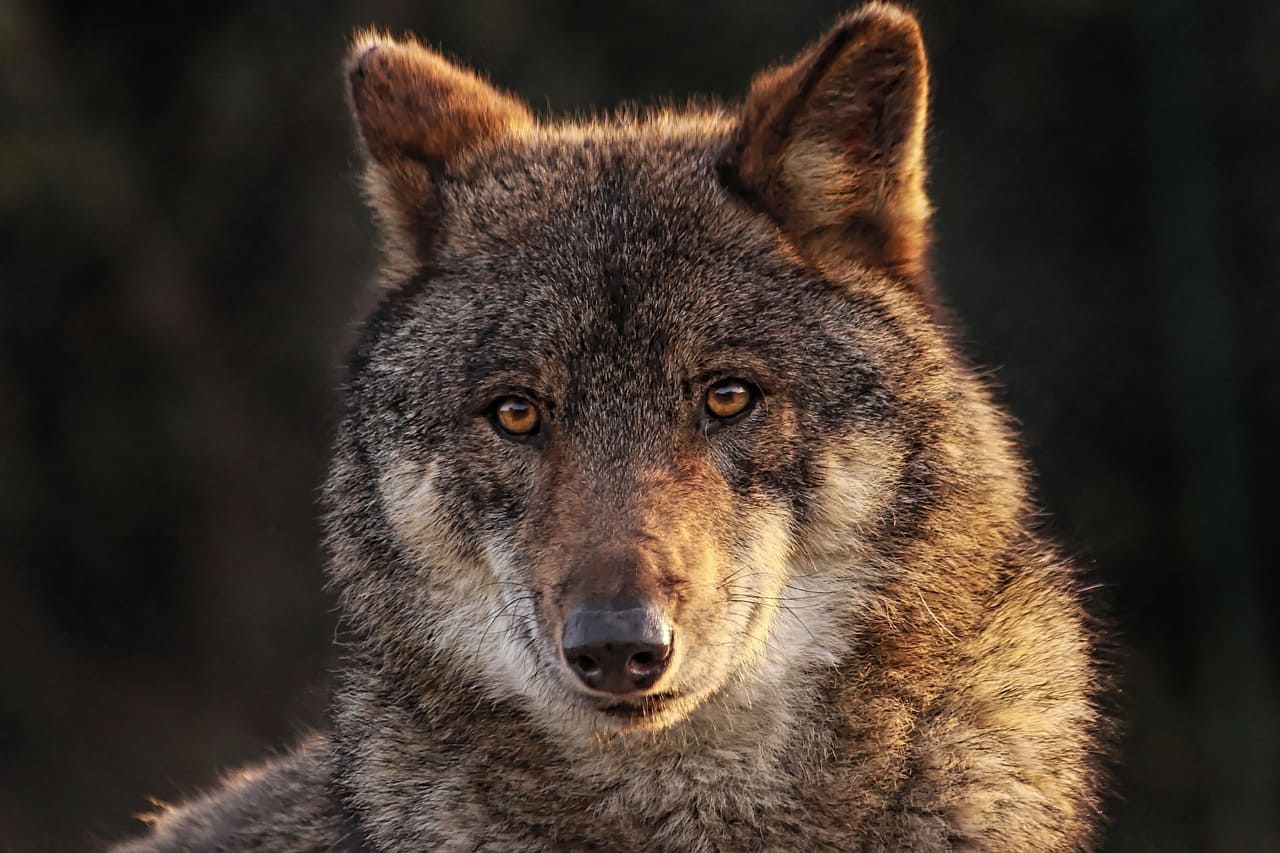
In Bern, the hunting lobby is celebrating one incremental victory after another. During this parliamentary session, the National Council and the Council of States have resolved to lower the threshold for wolf culls yet again, even as livestock predation figures are declining. In future, wolves are to be subject to preventive culling even more easily — including in hunting reserves, which are actually intended to serve as refuges for wildlife.
Even Federal Councillor Rösti, not otherwise known for putting the brakes on hunting policy, adopted a more restrained tone during the debate. The parliamentary majority of farming associations, the hunting lobby, and right-wing bourgeois parties remains undeterred. Where facts are lacking, buzzwords such as “safety,” “tradition,” or “protection of the Alpine population” fill the void.
Conservation organisations speak of an unbounded culling policy. Declaring a wolf a target simultaneously hollows out the very concept of protected areas. Hunting reserves lose their credibility when shooting with state authorisation is permitted in precisely those locations.
International criticism is correspondingly sharp. Experts from the IUCN have previously warned that a quasi-permanent hunting season on wolves is neither ecologically sound nor legally clean. With its wolf obsession, Switzerland risks not only its reputation but also the functional integrity of entire ecosystems that depend on large predators.
Germany and the EU: How to Hunt Up Wolf Problems
While Switzerland is driving wolves out of protected areas, Germany is working on a wolf-hunting law that legal experts consider to be in open conflict with EU law. What is being sold as a “solution” to conflicts with livestock owners ultimately amounts to an almost unrestricted licence to shoot.
The biological connections have been documented for years. The indiscriminate culling of pack members can cause social structures to collapse, forcing young animals to hunt on their own and potentially increasing conflicts with livestock. This is precisely what is being ignored by those political circles that campaign on wolf hysteria while simultaneously courting the votes of the hunting lobby.
At EU level, these forces have already prevailed. The European Parliament voted in spring to weaken the strict protected status. It is no coincidence that these same circles rarely speak of herd protection, land-use policy, or subsidy systems. The aim is not to find solutions, but to cultivate enemies.
Worldwide: Bears, Elephants, and Abalone as Collateral Damage
Looking beyond Europe reveals the same script. In Florida, authorities are permitting a bear hunt for the first time in ten years. Biologists and animal protection organisations criticise the fact that population levels have barely been reliably assessed, and that political symbolism is displacing the scientific basis. Recreational hunting is being sold as “management”, even though fundamental groundwork — such as securing rubbish, habitat planning, and public education — remains undone.
In India, meanwhile, reports of poaching are increasing in regions such as Telangana. Deer are being shot in urban parks, and suspects with connections to local politicians are being named. Where weapons, hunting tradition, and political influence converge, wildlife is quite obviously without legal protection.
The situation in South Africa is particularly dire. Despite a massive decline in stocks, the government is withdrawing an international protection listing for abalone. Populations have been reduced to a fraction of their original levels through poaching and organised crime. Rather than taking consistent action against these networks, commercial pressure continues unabated while marine ecosystems collapse.
In Botswana, elephants have been a plaything of the trophy hunting industry for years. Adult bulls are simultaneously burdened by hunting quotas, poaching, habitat loss, and human-wildlife conflict. Repeatedly removing the strongest individuals from a population weakens its genetic foundation in the long term. What appears in promotional brochures as “sustainable use” is, in reality, a slow and costly form of exploitation.
From Europe and North America, new poaching cases are reported daily: illegally killed trophy deer, shot birds of prey, “mistakenly identified” species. Behind many of these cases lies not desperation, but a combination of the need for status, weapons fetishism, and near-consequence-free prosecution.
From hobby to raison d’état: The political power of the hunting lobby
The patterns are similar everywhere:
- Science and monitoring are mentioned decoratively, but ignored in concrete policy.
- Recreational hunting is systematically reframed as a “service” and “species conservation,” so that public criticism falls silent and subsidies continue to flow.
- Wildlife is either stigmatized as pests or marketed as trophies.
In Switzerland, this is particularly evident in the case of protective forests. Instead of taking seriously the ecological role of predators such as the wolf and lynx, the focus remains primarily on lead from the recreational hunter’s rifle. At the same time, the same circles complain about browsing damage and high costs, without questioning their own interventions in the forest.
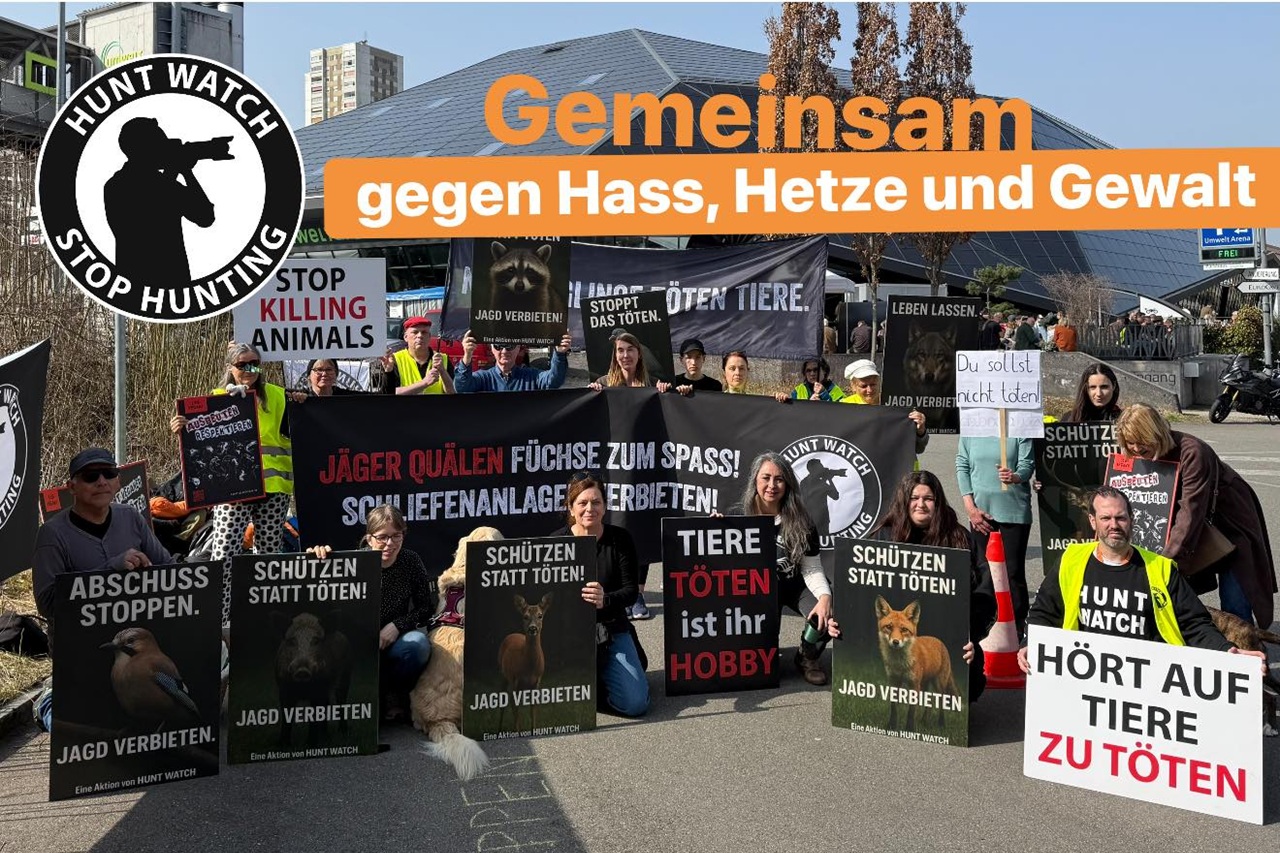
Wild beim Wild has begun to publish template texts for hunting-critical motions in cantonal parliaments . This makes it possible to establish at least a counter-narrative at the political level. Where the hunting lobby operates with emotional imagery, questionable “educational offerings” for children, and aggressive lobbying, cantons and parliaments need fact-based, legally sound alternative proposals.
Children, schools, and the normalization of violence against animals
Particularly problematic is the sectarian propaganda with which hunting associations attempt to entrench themselves among children through school projects and teaching materials. When hobby hunters appear in classrooms to romanticize hunting as an idyllic form of nature stewardship — complete with “smiling next to the carcass” — violence, suffering, and death disappear from the picture entirely.
Instead of factual environmental education, children receive a romanticized narrative in which shooting is sold as responsible nature stewardship. Suffering, misshots, tracking, mutilations, wounded animals, and entire ecosystems barely appear in these materials.
Those who exert influence this early build willing majorities for the hunting policy of tomorrow. From a pedagogical standpoint, this is a problem. From a democratic standpoint, it is a deliberate manipulation of the worldview of the next generation.
Hunting policy in 2025 is a stress test for the rule of law
Whether it is the wolf in Switzerland, the bear in Florida, the elephant in Botswana, or abalone off South Africa: conflicts surrounding hunting and wildlife are no longer a fringe issue. They reveal how easily democratic systems can be hijacked by vocal minorities, arguments from tradition, and short-term economic interests.
Instead of addressing the actual challenges — such as consistent livestock protection, habitat conservation, reduction of animal populations in agriculture, or an honest approach to consumption and land use — only symptoms are tinkered with. Wildlife serves as a projection screen for frustration, fear, and fantasies of power.
A contemporary wildlife policy would have to look quite different:
- clear priority for habitat and ecosystems
- predators as allies of the forest rather than as enemy images
- consistent prosecution of poaching and illegal killings
- separation of the weapons lobby, trophy industry, and state management
- genuine environmental education for children instead of hunting propaganda
As long as that does not happen, hunting policy in 2025 remains one of the most visible examples of how, with fine words, the rule of law, animal welfare, and science are undermined piece by piece.