What is the Bern Convention and does it protect the wolf?
How Switzerland is undermining international species protection law.


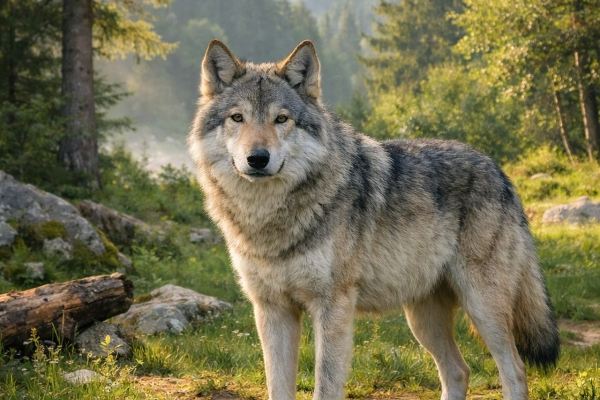
The Bern Convention lists the wolf as a protected species and prohibits its deliberate killing except under narrowly defined exceptions, yet Switzerland is circumventing this protection through increasingly wolf-hostile national legislation.
What is the Bern Convention?
The Bern Convention, officially the Convention on the Conservation of European Wildlife and Natural Habitats, was signed in Bern in 1979 and entered into force in 1982. It is an international treaty of the Council of Europe and obliges signatory states to protect wild animal and plant species as well as their habitats.
The agreement distinguishes three appendices: Appendix I for strictly protected plant species, Appendix II for strictly protected animal species, and Appendix III for protected animal species. Relevant to the wolf are Appendices II and III: Appendix II covers strictly protected animal species whose deliberate killing, capture or disturbance is prohibited. Appendix III lists protected species for which regulated use is possible. Until December 2024, the wolf was listed under Appendix II, the strictest protection category. In December 2024, the Standing Committee decided, at the EU's request, to downgrade the wolf to Appendix III (“protected”).
When did Switzerland ratify the Bern Convention?
Switzerland ratified the Bern Convention in 1981 and is therefore bound under international law to comply with its provisions. In concrete terms, this means: Switzerland may not deliberately kill the wolf, except under clearly defined exceptional circumstances. These exceptions are established within the agreement itself and are subject to strict conditions: there must be no satisfactory alternative, there must be an actual threat to public safety or serious damage to livestock, and the measure must not jeopardise the conservation status of the species.
As the Dossier Wolf in der Schweiz elaborates, the Standing Committee of the Bern Convention explicitly stated in October 2024: preventive, proactive wolf culls without proven concrete damage are incompatible with the agreement.
Why is Switzerland under investigation by the Council of Europe?
On 5 December 2024, the Standing Committee of the Bern Convention unanimously opened a formal investigation against Switzerland for wolf management practices that are not in conformity with the Convention. The complaint filed by the organisations CH-Wolf and Avenir Loup Lynx Jura (ALLJ) was upheld. The background is the practice of “proactive regulation,” through which Switzerland has enabled preventive pack culls since the 2022 revision of the JSG — that is, culls carried out without any prior evidence of actual damage.
A formal investigation by the Council of Europe is a clear signal that national measures are exceeding the boundaries of what is permissible. Switzerland thereby risks international reputational harm as a country that undermines international protection agreements. The Dossier Jagdrecht Schweiz and the Dossier Jagdgesetze und Kontrolle shed light on the structural problems of Swiss wolf policy.
How has Switzerland regulated wolf protection at the national level?
The Swiss Hunting and Species Protection Act (JSG) lists the wolf as a protected species. Since 2012, individual culls have been possible under certain conditions. The 2008 Wolf Switzerland concept established threshold values: 25 livestock killed in one month or 35 livestock in four months, and only if all reasonable protective measures had been implemented.
The 2022 revision of the JSG, whose implementing provisions entered into force in December 2023, has systematically lowered these thresholds. The revised Hunting Ordinance (JSV) has since also permitted “proactive regulation” — that is, culls in the vicinity of settlements, even in the absence of concrete damage. This contradicts both the spirit and the letter of the Bern Convention. As the Dossier Jagdmythen demonstrates, these legislative changes are justified with arguments that do not withstand scientific scrutiny.
What does “protected species” status mean in concrete terms?
Even following the downlisting to Appendix III, a protected species may not be killed without justification. Exceptions are permitted only under strict conditions and must be demonstrated on a case-by-case basis. The favourable conservation status of the population must be guaranteed.
In Swiss practice, these requirements are routinely circumvented. The Dossier Wolf in der Schweiz documents several erroneous kills: In 2022, among other cases, the alpha animal of the Marchairuz pack in the canton of Vaud was shot instead of a juvenile animal, in Graubünden the alpha female of the Moesola pack was killed, and in Valais a wolf was killed without authorisation. These errors are not isolated failures, but a symptom of a system that places quotas above precision.
What has changed with the downlisting?
On 3 December 2024, the Standing Committee of the Bern Convention decided by a two-thirds majority to downlist the wolf from Appendix II (strictly protected) to Appendix III (protected). The downlisting took effect on 7 March 2025. This decision was criticised as premature by numerous scientists and by the Large Carnivore Initiative for Europe (LCIE).
Switzerland is not an EU member, but the Bern Convention remains in force. Even after the downlisting, the requirement stands: a favourable conservation status of the wolf population must be ensured. In the 2024/25 season, around 90 wolves were killed in Switzerland, a figure that may jeopardise conservation status.
Who benefits from the weakening of wolf protection?
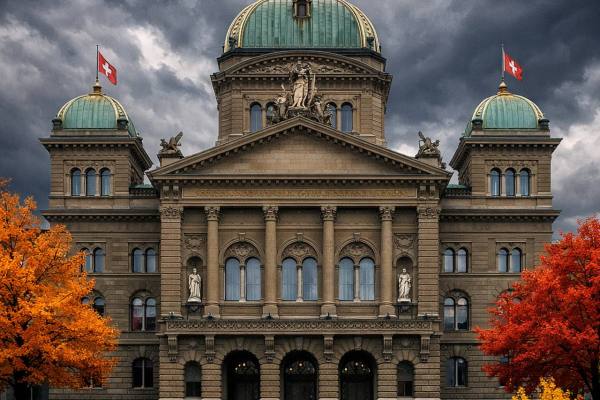
The political pressure for reduced wolf protection comes from cantons with a strong recreational hunting tradition and from the agricultural lobby. As the Dossier Hobby-Jagdlobby in der Schweiz shows, over 30,000 hobby hunters are organised within JagdSchweiz and have a parliamentary group in the Federal Palace. The wolf competes with hobby hunters for red deer and roe deer — this is the real conflict of interest behind the protection debate.
Which institutions oversee compliance with the Bern Convention?
The Standing Committee of the Bern Convention meets regularly and can determine violations of the agreement. It has already issued recommendations to Switzerland on multiple occasions to strengthen wolf protection. The formal investigation of December 2024 represents an escalation of the long-standing conflict between Swiss wolf policy and international obligations.
In addition to the Council of Europe, NGOs such as Pro Natura, WWF Switzerland and Gruppe Wolf Schweiz (GWS) are also monitoring the situation. These organisations have filed complaints and are documenting violations of the protection provisions, with growing success before the courts.
What specifically do conservation organisations demand?
Environmental and nature conservation organizations demand, among other things: full protection for young animals under 12 months, proof of implemented livestock protection measures as a prerequisite for any culling, independent scientific monitoring without the involvement of hunting associations, and transparency in culling decisions. This also includes the abolition of proactive pack regulation, which is incompatible with the Bern Convention.
The Dossier Hunting Laws and Oversight describes in detail how the current system produces structural conflicts of interest: Cantonal authorities staffed with close ties to hunting approve culling plans on the basis of damage reports originating from those same hunting-affiliated circles.
Conclusion
The Bern Convention protects the wolf, at least on paper. In Swiss practice, national legislation has systematically moved away from these obligations. The formal inquiry launched by the Council of Europe in December 2024 is a clear signal: Switzerland cannot undermine international protection agreements with impunity. Those who take wolf protection seriously must demand that the Bern Convention is not treated as a non-binding recommendation, but implemented for what it is: binding international law.
Sources
- Bern Convention (Convention on the Conservation of European Wildlife and Natural Habitats, SR 0.455)
- JSG (SR 922.0): Federal Act on Hunting
- JSV (SR 922.01): Hunting Ordinance
- Wolf Concept Switzerland, FOEN 2008
- Decision of the Standing Committee of 3 December 2024 (downlisting of wolf to Appendix III)
- Decision of the Standing Committee of 5 December 2024 (opening of investigation proceedings against Switzerland)
- Complaint by CH-Wolf and Avenir Loup Lynx Jura (ALLJ), 2024
- Pro Natura, WWF Switzerland, BirdLife Switzerland: Joint media statement of 3 December 2024
Further Content
- Wolf in Switzerland: Facts, Politics and Hobby Hunting
- Hunting Law Switzerland
- Hunting Laws and Oversight
- Hunting Myths
- Hobby Hunting Lobby in Switzerland
- Livestock Protection in Switzerland
Unterstütze unsere Arbeit
Mit deiner Spende hilfst du, Tiere zu schützen und ihrer Stimme Gehör zu verschaffen.
Jetzt spenden →