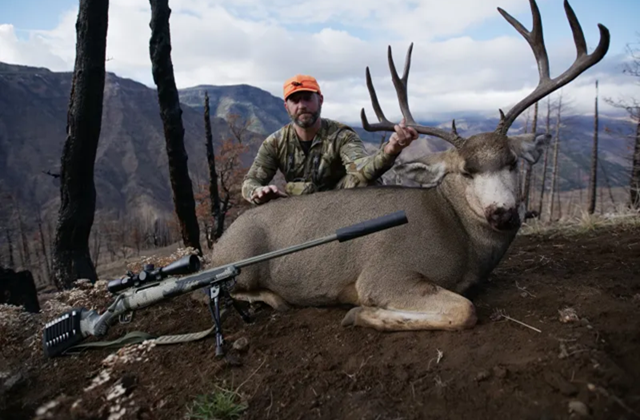
Poland bans children from participating in hunting
Poland's 1997 Animal Protection Act contained a little-known clause prohibiting the killing of vertebrates in the presence of or with the involvement of children. In principle, this meant that children should never witness or participate in the slaughter of animals — a measure intended to protect their mental well-being.

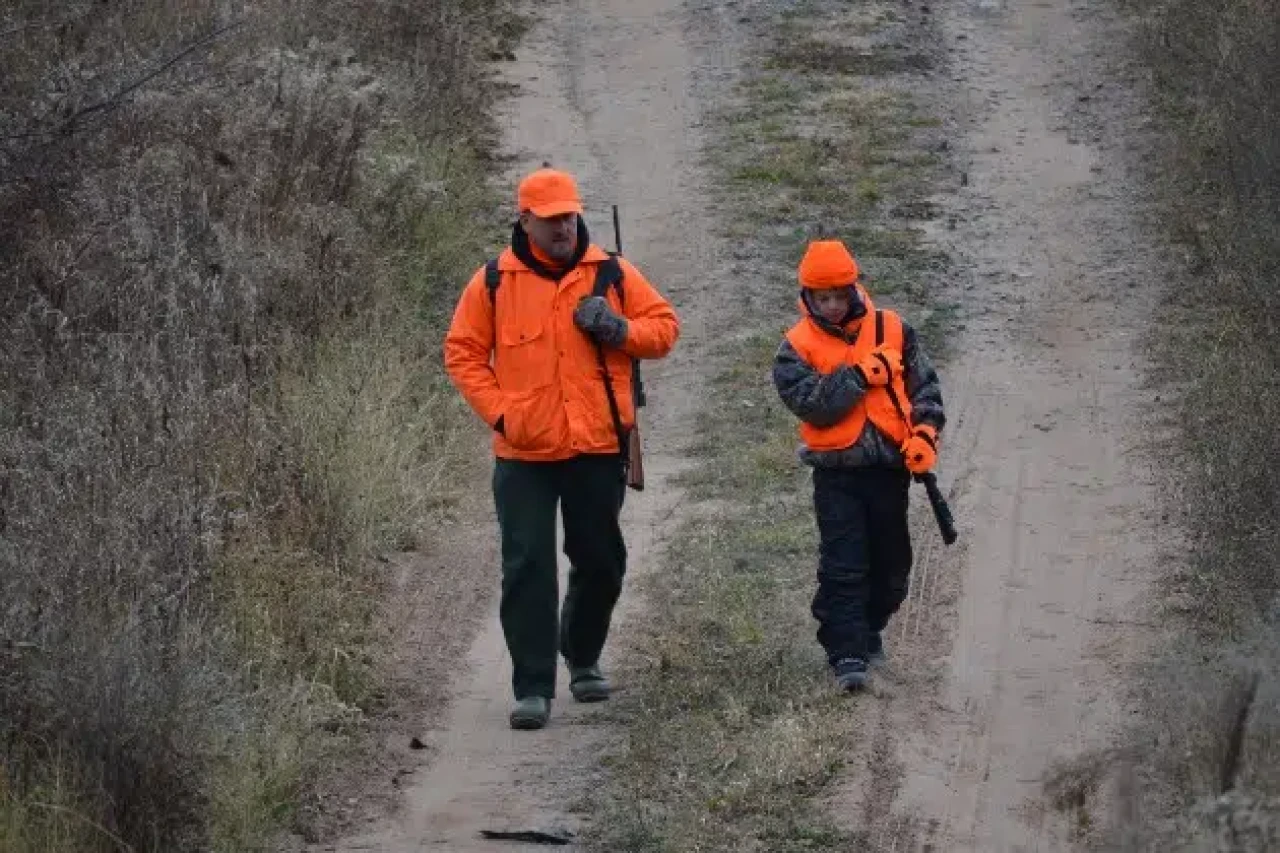
The Hunting Act, passed in 1995, however predated the Animal Protection Act and was never updated to incorporate its provisions protecting children.
As a result, hunting was treated in practice as an exception for many years. The 1997 prohibition on killing animals in the presence of children was not enforced in the context of family hunting outings. Polish hunting customs continued to involve minors, with young people accompanying their elders on hunts and even taking part in ritual displays of animal carcasses after the hunt — apparently in contradiction to the spirit of the more recent Animal Protection Act.
This legal loophole went largely unnoticed for nearly two decades, until activists and legal experts drew attention to the inconsistencies in the mid-2010s. They argued that the Hunting Act needed to be brought into line with the existing statutory protections for children in Poland as well as with modern educational standards.
2015: Raising public awareness and the launch of the campaign
In 2015, a broad coalition of animal welfare advocates and children's rights activists mobilised to draw attention to the issue. Under the slogan “Polowanie NIE dla dzieci” (“Hunting NOT for children”), they organised public demonstrations — most notably a rally in front of the Polish parliament (Sejm) in Warsaw on 26 May 2015, where activists held placards featuring a teddy bear target logo to protest against the involvement of children in hunting. Open letters were addressed to the President and the Prime Minister calling for reforms, including a ban on the participation of minors in hunts.
The media began reporting on the emerging consensus that participation in hunting is harmful to children. The Gazeta Wyborcza, for instance, published an article titled “Hunting has a negative effect on children” and quoted experts warning of psychological harm. Even within the hunting community, concerns were raised: Jerzy Żagiell, a regional chairman of the Polish Hunting Association, acknowledged that times had changed and signalled openness to ending the tradition of taking children hunting. However, his remarks triggered backlash from tradition-minded recreational hunters who felt their parental rights were under attack.
In 2015, Polish scientists and professionals in particular made their voices heard. In April 2015, the Committee for Educational Sciences of the Polish Academy of Sciences issued a statement pointing to the “harmful effects on the socialisation of younger generations” caused by children’s participation in hunting. They invoked the constitutional guarantees protecting children from violence and cruelty, and explicitly referenced the prohibition contained in the 1997 Animal Protection Act on killing animals in the presence of children, noting that no exceptions exist.
Likewise, a group of psychologists from the University of Silesia published an expert opinion warning that children exposed to the traumatic experience of killing animals could suffer a “harmful impact on their psyche” far beyond what their emotional development is able to bear.
These public statements by educators, child psychologists and scientists were amplified by campaigns from non-governmental organisations. Organisations dedicated to child welfare — including UNICEF — joined the chorus. All agreed that routine exposure to the violence of hunting is inappropriate and potentially traumatic for minors.
The growing public awareness in 2015 brought the issue onto the political radar. During a session of the parliamentary environmental committee on hunting legislation in March 2015, Paweł Suski — one of the few members present who were not recreational hunters — formally proposed introducing a ban on the participation of those under 18 in hunts, framing it as a social demand. The idea met with fierce resistance from members of parliament affiliated with recreational hunting. Some declared angrily that it was unacceptable to dictate to recreational hunters how to raise their children, describing the matter as a violation of family tradition. One opposition member even argued (absurdly) that children kept away from hunting would end up eating inferior meat from the shop “make from toilet paper,” instead of learning to appreciate wild game. Despite such outbursts, the seeds of reform had taken hold: by mid-2015, the presence of children at hunts was being widely debated, and the once-overlooked 1997 ban was now common knowledge.
Building Momentum
In the years that followed, activists built a strong, evidence-based case and broadened their coalition. The Children's Rights Ombudsman, Marek Michalak, came out in support of the ban. The Ministry of Education and two separate committees of the Polish Academy of Sciences — the Committee on Pedagogy and the Committee on Psychology — each issued statements supporting the position that minors should not be involved in hunting. Prominent Polish psychologists also spoke out: Mirosława Kątna of the Committee for the Protection of Children's Rights emphasised, for example, that hunting falls far outside any acceptable childhood experience. She pointed out that the developmental stages of a child in a hunter's family are the same as in any other family — “if a family traditionally serves alcohol, that does not mean you give it to the children” – drawing an analogy to illustrate the risk of emotional harm. “Participation in a recreational hunt exceeds a child's age,” Kątna stated, urging that the psychological fragility of children be respected.
Non-governmental organizations kept the issue in the public eye through articles, petitions, and educational outreach. The ecological monthly magazine Dzikie Życie published interviews and essays on the subject. Activists frequently cited studies establishing a link between animal cruelty in childhood and a greater propensity for violence in later life. As these findings spread, public opinion increasingly aligned with the reformers. Crucially, the Niech żyją! coalition and its allies maintained pressure on political decision-makers. They participated in legislative consultations and committee hearings, ensuring that expert testimony and citizen petitions were entered into the record. At the end of 2016, the ruling parliamentary majority (the conservative PiS party) was working on a comprehensive amendment to the hunting law – partly to address questions raised by a 2014 Constitutional Court ruling on hunting on private land, but also to open the door to long-sought ethical reforms. Advocacy groups seized this opportunity to push for the inclusion of a ban on hunting for those under 18, alongside other animal welfare measures.
Behind the scenes, key individuals worked to build consensus. Political decision-makers across party lines proved surprisingly receptive to protecting children from violence in hunting – an issue that transcends typical ideological divides. Paweł Suski (Civic Platform, PO) and Gabriela Lenartowicz (also PO) championed the cause from the opposition, while within the PiS government, figures such as Minister Henryk Kowalczyk (who took over the environment portfolio in early 2018) showed willingness to adopt some animal-friendly proposals. In early 2018, an unusual cross-party rapprochement took place: as activist Paweł Średziński noted, the reform became possible “thanks to an agreement across political divides.” This reflected the broad social consensus that had emerged – polls showed that a large majority of Poles, whether urban liberals or rural conservatives, agreed that children should be kept away from the violence of hunting.
Legislative Breakthrough in 2018
In March 2018, Poland passed a landmark revision of its hunting law after years of debate, which among other things prohibits minors from participating in or attending hunts. The new provisions – Article 42aa Point 15 and Article 52 Point 7 of the Hunting Law – made it illegal to "conduct a hunt in the presence of or with the participation of children under 18 years of age," with violations punishable by fines, restrictions on liberty, or up to one year in prison.
The vote in the Sejm (lower house) showed overwhelming support: 335 deputies voted in favor of the ban, 73 against it. Above all, the ruling party PiS backed the reform (197 out of 221 PiS deputies supported it), followed by nearly all deputies of Civic Platform (PO) and most other parliamentary groups. Only a handful of conservative and agricultural deputies (primarily from PSL and the Kukiz’15 alliance) opposed the amendment – some of whom had argued in vain that "raising children outside of hunting" was contrary to tradition. However, their position was decisively rejected. As a hunting magazine noted through gritted teeth, legislators from across the political spectrum regarded the idea of taking children hunting as a "horrendum" – something terrible and unacceptable. Parliament's message was unequivocal: children's right to a non-violent upbringing takes precedence over the claims of hunting tradition.
The legislative process was not without last-minute drama. When the bill was introduced in the Senate in March 2018, a group of hunting enthusiasts in the Senate attempted to water down the provision for those under 18. They introduced an amendment to lower the minimum age to 15, among other changes in favour of recreational hunters. Senators Józef Łyczak, Zdzisław Pupa and Józef Zając (all recreational hunters or allies of the hunting lobby) vehemently defended the old regulations. During the Senate debate on 14 March 2018, Senator Łyczak invoked religion and claimed that humans had a God-given mandate to subdue nature (he even paraphrased the biblical “Be fruitful and multiply, and fill the earth and subdue it” in support of recreational hunting). He also insisted that at least teenagers should be permitted to participate in recreational hunting, as hunting “awakens a love of nature and animals” – conveniently ignoring the fact that this “love” was expressed by firing lead bullets at wild animals. Another senator argued that a ban would drive children towards worse pursuits such as violent video games, and exclaimed “Better a rifle than a joystick” as a remedy for youth boredom. Despite these colourful objections, the Senate ultimately yielded to public pressure. It passed the law with the complete ban for minors under 18 – the attempt to soften it to 15 was rejected.
The final law, signed by President Andrzej Duda and entering into force in April 2018, made Poland the first country in Europe to categorically prohibit minors from participating in hunts. As activist Radosław Ślusarczyk of the Workshop for All Beings explained, this victory marks “the end of the Rzeczpospolita Myśliwska (Republic of Hunters)» – after years of effort, the hunting lobby had been overcome by a broad alliance of citizens and experts, making Poland’s wilderness “safer for people and wildlife.”
Hunting lobby backlash and attempts to reverse the ban (2018–2022)
It comes as no surprise that the hunting establishment reacted swiftly and with irritation to the new law — particularly to the prohibition on taking children along on hunts. The Polish Hunting Association (PZŁ) and its allies denounced the ban as an attack on tradition and family rights. The National Hunting Council publicly lamented that "our children can no longer accompany us on hobby hunts and are therefore unable to learn about nature," framing recreational hunting as healthy outdoor family education. Infographics were circulated through PZŁ's social media channels extolling the alleged benefits of hunting for children: it supposedly promotes physical fitness, parent-child bonding, respect for nature, and an understanding of where meat comes from. (Tellingly, this promotional graphic was removed from the internet after just one day, having rapidly attracted ridicule and criticism.)
In 2018, shortly after the new law came into force, a group of pro-hunting members of parliament filed a constitutional complaint (Case K 4/18) with the Polish Constitutional Tribunal. They argued that the prohibition on hunting in the presence of minors violated constitutional principles such as parental rights (Article 48), freedom of assembly (Article 58), and legal certainty. In February 2019, however, the Polish Prosecutor General submitted a formal opinion rejecting the complaint. He upheld the constitutionality of the ban, emphasising the state's obligation to protect children from violence and cruelty. The Prosecutor General argued that hunting constitutes a form of intentional killing of animals and that protecting minors from such acts is a legitimate objective consistent with the Constitution and the Animal Protection Act of 1997. The court ultimately did not strike down the provision, and the prohibition on the participation of minors in hunts remains in force.
Specifically, the hunting lobby made several attempts to overturn or weaken the ban. In late 2018, barely a year after the new law came into force, the PZŁ floated the idea of having Polish hunting recognized by UNESCO as intangible cultural heritage. Observers viewed this as an attempt to leverage the status of "tradition" to undermine the ban – in particular, the tradition of passing hunting knowledge within the family. The UNESCO application failed, however.
In 2019, the hunters then found a receptive ear in the Ministry of the Environment. Although the law continued to prohibit the participation of children under 18 in hunting, the Minister of the Environment (himself a recreational hunter) issued a new regulation amending the official "hunting rulebook". This 2019 regulation permitted the presence of children at certain non-lethal moments – for example, at the briefing before the hunt or at the meal after the hunt – as long as they did not participate in the hunting itself, the killing, or the display of animals after death. It constituted a partial rollback of executive regulations: minors were still not permitted to participate in the actual hunt (no involvement in tracking, killing, or handling slain animals), and they were excluded from the ritual laying out of the dead game. However, the amendment opened the door for recreational hunters to bring children into the hunting area. For the hunting lobby, this concession was "far too little" – they wanted the entire ban lifted.
Encouraged by this, a coalition of hunting organizations chose a more direct approach. They organized a legislative initiative titled “Krzewienie Tradycji Łowieckiej” (“Preservation of Hunting Tradition”) and collected signatures for a draft law that would once again permit children to participate in hunts. In October 2019, this draft was submitted to the Sejm, officially supported by the national chairman of the PZŁ, Rafał Malec. It proposed amending the law to allow minors to hunt “with the consent of parents or legal guardians.” In essence, the proposal sought to add an exception to the 2018 ban: if parents consent, a child may accompany them, and neither the adult nor the organizers would face penalties. Opponents pointed out that this caveat would entirely hollow out the ban, since it is typically the hunters’ own children who are primarily involved.
The initiative also received support from abroad. FACE published an official statement endorsing the Polish proposal. In its communiqué of April 2020, FACE welcomed the draft law as a “positive step” and expressed regret that Poland had ever introduced such a strict ban in the first place. The federation described the participation of young people in hunting as an educational tool that “promotes an understanding of nature, responsibility, and the sustainable use of natural resources,” and called on the Polish parliament to reverse what it termed a “regrettable” restriction on family hunting traditions.
The first reading of the draft law took place on 15 April 2020, precisely during the first days of the COVID-19 pandemic. Even in the midst of the crisis, non-governmental organisations and experts gathered to oppose the legislation. A coalition of children's rights and environmental organisations addressed a joint open letter to the Speaker of the Sejm. They called on parliament to reject the repeal of the law, stating that they “decisively oppose the killing of animals in the presence of minors for educational, psychological, social and legal reasons”. The letter emphasised that the fact that children witness the brutal, violent and cruel behaviour of hunters towards animals — injuring them, killing them, quartering them and ultimately displaying them — has led to trauma that continues to haunt children into adulthood. It warned that this “early indoctrination through hunting” teaches a dehumanising, objectifying attitude towards nature and conveys that it is acceptable to take life for one’s own pleasure. These arguments were substantiated with references to Polish law and international obligations: advocates pointed out that Polish schools do not take children on excursions to slaughterhouses, and that by the same logic, children should not be brought to scenes of violence in forests. They also invoked Article 19 of the UN Convention on the Rights of the Child (which Poland has ratified), which prescribes the protection of children from all forms of physical or mental violence.
Thanks to this pressure and the near-unanimous condemnation by experts, the law to promote hunting traditions was halted in 2020. Parliamentary records show that the Sejm’s Environment Committee rejected the proposal at its first reading, preventing it from advancing further. The Children’s Rights Ombudsman and even the government’s Ministry of Education had also issued negative opinions, making it politically difficult to justify lifting the ban.
The hunting lobby, however, did not give up. In 2022, there was another attempt — this time under the guise of a broader deregulation. In September 2022, hunting-friendly legislators inserted provisions into a "law to eliminate unnecessary administrative obstacles" that, hidden among dozens of unrelated clauses, would amend the hunting law to permit hunting for those under 18 "with parental consent." Observers noted that this "backdoor" approach was a direct ploy by the hunting lobby to quietly achieve what it could not push through openly. Once again, environmental NGOs raised the alarm. When the plan became public in 2022, it sparked outrage and became a political hot-button issue. By early December 2022, a special parliamentary committee had put the contentious articles on ice. The government, facing public criticism, was reluctant to push through the amendment ahead of elections. As of 2025, the ban on minors participating in hunting remains in force and represents a hard-won protection — even as vigilance remains necessary, given that hunters regularly lobby to overturn the ban.
Conclusion
Poland's ban on hunting in the presence of minors is a compelling example of activist persistence and effective coalition-building. A reform that once seemed unlikely given the country's deeply rooted hunting culture was achieved through a combination of legal insights, public campaigns, and expert support. Activists first unearthed a forgotten legal principle (the 1997 animal protection clause) and used it as a moral and legal anchor. They then rallied diverse stakeholder groups around them — animal protection organizations, child psychologists, educators, pediatricians, and human rights organizations — uniting them with the clear message that children should be excluded from organized killing. Through media coverage and the creation of educational materials, they shifted public opinion and compelled policymakers to act. Key Polish institutions spoke with one voice — from the Polish Academy of Sciences and the Children's Ombudsman to respected non-governmental organizations and even religious figures — all emphasizing that exposing children to such activities runs counter to both scientific findings and Poland's constitutional duty to protect children from violence. This broad societal consensus empowered politicians across party lines to support the ban in 2018, representing a rare example of cross-party cooperation on a social issue.
Source: Ban on Hunting with Children
Anyone can officially file a complaint with the UN on this topic here.
More on this in the dossier: Psychology of Hunting
Unterstütze unsere Arbeit
Mit deiner Spende hilfst du, Tiere zu schützen und ihrer Stimme Gehör zu verschaffen.
Jetzt spenden →