Hobby hunters and silencers: a no-go
Why silencers make oversight of recreational hunting even more difficult and promote animal suffering

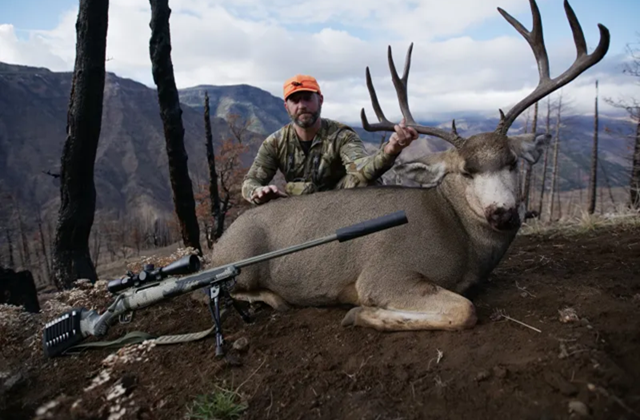
While Switzerland discusses the value of peace, ethics, and responsibility on a daily basis, hobby hunters are pushing for technical aids designed to make killing in the forest even less conspicuous.
Silencers, already permitted in some countries, are banned here for good reason. Yet the recreational hunters' lobby refuses to give up.
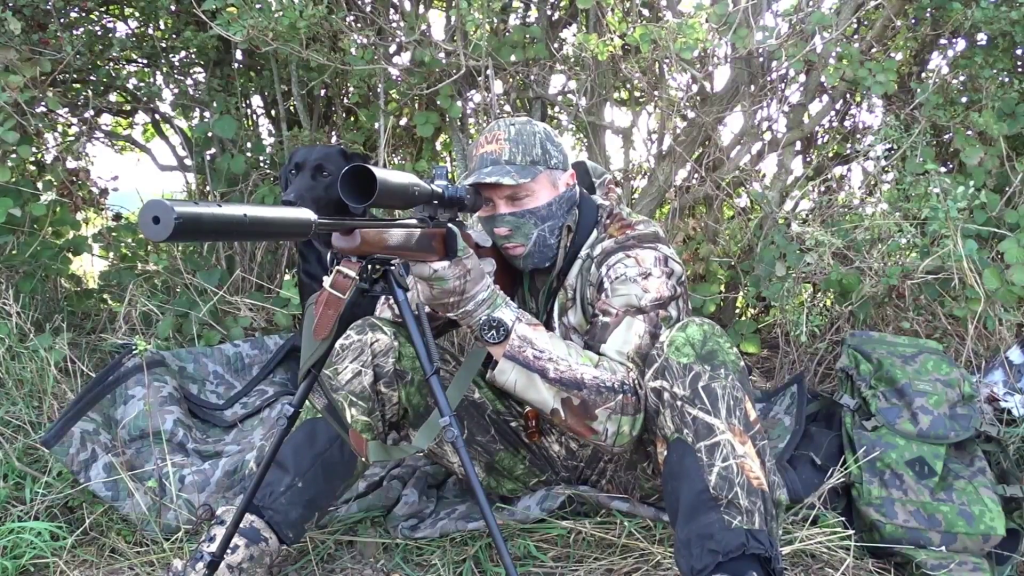
Silencers are supposedly intended to protect hobby hunters' hearing and improve precision. In reality, they primarily serve to make shots quieter and therefore harder to monitor.Wildlife wardens and supervisory authorities face a serious problem: who can tell where a shot was fired in the forest when there is no bang?
The fear of poaching is well founded. A near-silent shot makes tracking far more difficult and opens the door to abuse. Oversight of hunting activity would decline further — and this in a country where numerous violations of hunting and animal protection laws are already recorded every year.
Technology is no substitute for a sense of responsibility
The hobby hunt is often romanticised by its proponents as a tradition or a contribution to nature conservation. Yet reality tells a different story: an ageing recreational hunting community, inadequate training, errant shots, and animal suffering.
A silencer does not turn a poor marksman into a better one. It merely alters the acoustic perception of the suffering caused by the bullet. And that is precisely the problem: the quieter the shots, the more silent the conscience becomes.
Risk to humans and animals
Not only wild animals, but also walkers, horse riders, and families are put at risk. When shots are barely audible, the risk of accidents increases. At the same time, animals lose the chance to flee at the sound of a shot — they become unsuspecting targets.
What is presented as progress is, in reality, a step backwards in terms of ethics and safety.
Animal protection instead of technology fetishism
Animal welfare advocates have been calling for years that wildlife management may only be carried out by professional game wardens and specialists with clear oversight, as in the Canton of Geneva. Anyone who is genuinely interested in animal welfare should not be talking about silencers, but about alternatives to hobby hunting.
Because nature does not need armed recreational activists, but rather respect, protection and refuges. Hobby hunting is not a hobby — it is an intervention in the lives of other living beings.
A clear no to silent hobby hunting
Switzerland does not need quieter weapons, but louder voices for animal protection. Silencers are not progress — they are another tool to conceal the suffering of animals. The silence they create is not the peace of nature; it is the silence about unnecessary killing.
It is not that silencers make the weapon more accurate per se, but according to the hobby hunters, they are supposedly supposed to make it easier to shoot the weapon more accurately. However, silencers also throw off the balance of the rifle, for example, which does not lead to greater accuracy. A silencer does not increase the chances of a first shot hitting — it improves the prospects for a second shot should the first shot miss and the wildlife not be startled, or when the hobby hunter wishes to shoot additional wildlife on the spot undisturbed in quick succession. Silencers primarily serve the killer and not animal welfare.
Every shot fired by hobby hunters disturbs the entire biotope for many kilometres around. Everyone is confronted with negative energy. The product game meat is, according to numerous studies, unhealthy. Processed game meat is carcinogenic — like cigarettes, asbestos or arsenic — warns, among others, the World Health Organization WHO.
Fellow citizens are also subjected to nervous disturbance by the noise and hobby hunting. The Grisons hobby hunters in particular are a prime example of a lack of moral and ethical standards. Every year there are around one thousand reports and fines, because Grisons hobby hunters violate hunting laws, weapons laws, environmental laws, animal protection laws, and marksmanship accuracy requirements. The poorly managed hunting practices and lack of integrity among recreational hunters are extensively documented.
Fair chase with technical aids?
With silencers, hobby hunters will be even harder to monitor. How are wildlife wardens, hunting inspectors, and other supervisory bodies supposed to correctly identify a barely audible discharge? This means the many missed shots by hobby hunters will be reported even less.Animal cruelty is given free rein. Ordinary people are put at additional risk, because hobby hunters are permitted to hunt virtually any wild animal almost year-round — not only in Graubünden. Wild animals also have fewer chances of survival, as they are not startled by the insidious shots.
Anyone who cannot succeed as a hobby hunter without technical aids will not succeed with a silencer either.
Animal protection advocates are decidedly convinced that technical aids such as silencers should be in the hands of well-trained wildlife wardens only, as is the case in the Canton of Geneva!
Hobby hunters who cannot tolerate recoil or are sensitive to noise should find a quieter hobby. There is no necessity and no legal basis, under Art. 3 JSV, for silencers to be permitted for hunting purposes in general.
Furthermore, recreational hunters should vote YES on the initiative for the «restriction of fireworks» if they truly care about animal welfare.
In the view of IG Wild beim Wild, hobby hunters should be required to undergo annual medical-psychological fitness assessments modelled on the Dutch system, as well as a binding upper age limit. The largest age group among hobby hunters today is 65+. Within this group, age-related impairments such as declining visual acuity, slowed reaction times, reduced concentration, and cognitive deficits increase statistically and significantly. At the same time, accident analyses show that the number of serious hunting accidents involving injuries and fatalities rises significantly from middle age onward.
The regular reports of hunting accidents, fatal errors, and the misuse of hunting weapons highlight a structural problem. The private ownership and use of deadly firearms for recreational purposes largely evades continuous oversight. From the perspective of IG Wild beim Wild, this is no longer justifiable. A practice based on voluntary killing that simultaneously generates considerable risks for humans and animals loses its social legitimacy.
Recreational Hunting is furthermore rooted in speciesism. Speciesism describes the systematic devaluation of non-human animals solely on the basis of their species membership. It is comparable to racism or sexism and cannot be justified on cultural or ethical grounds. Tradition does not substitute for moral scrutiny.
Critical scrutiny is especially indispensable in the field of hobby hunting. Hardly any other field is so characterized by euphemistic narratives, half-truths, and deliberate disinformation. Where violence is normalized, narratives often serve as justification. Transparency, verifiable facts, and open public debate are therefore essential.