IUCN criticises Swiss wolf culls 2025
Switzerland stands at a turning point in wildlife management. In 2025, too, new hunting regulations are set to come into force that permit the large-scale killing of wolves (Canis lupus) – even without proof of concrete damage. This threatens to become an ethical, ecological and legal fiasco whose negative impact reaches far beyond the country's borders.
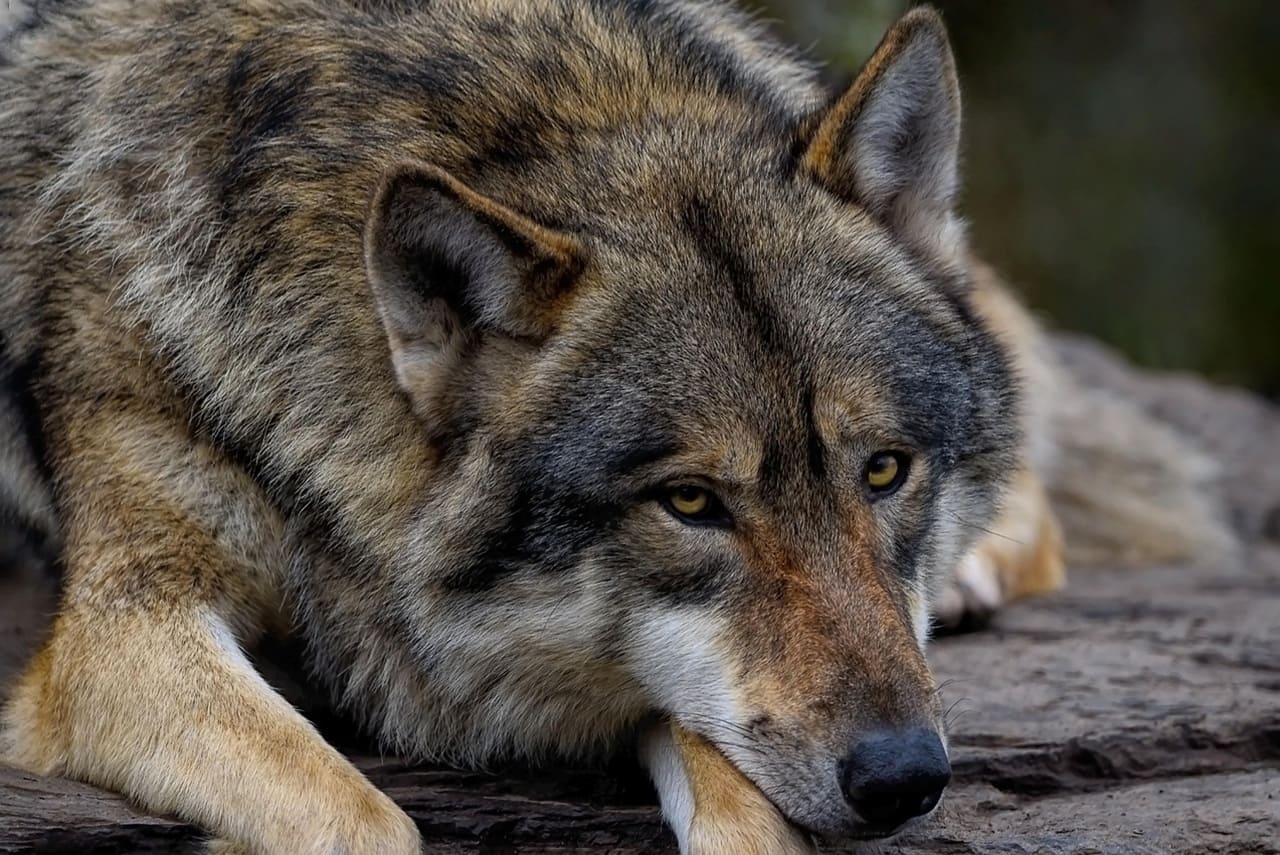
The wolf is back in Switzerland – a success story for nature conservation, one might think.
Yet no sooner has the species re-established itself than politics falls back into old patterns. Instead of relying on scientifically grounded coexistence, the kill is being treated as the standard solution. According to the new hunting regulations, up to two thirds of the young animals could be killed – regardless of whether they have ever caused any damage. Entire packs may be wiped out.
What many do not know: this policy is not merely tolerated but actively driven forward by the Federal Office for the Environment (BAFU) under the leadership of Katrin Schneeberger and the cantonal hunting authorities. And this despite the fact that it is in clear contradiction with the Bern Convention – an international agreement that Switzerland ratified in 1982.
Swiss practice runs in exactly the opposite direction: cantons apply for preventive kills, and the BAFU approves them, even when no damage has been documented. In some cases entire packs are wiped out, including young animals – an approach that would not be permitted in any EU country.
Switzerland is systematically violating the spirit and the letter of the Bern Convention, says an international conservation lawyer who wishes to remain anonymous. The BAFU's approvals legitimise a policy that is highly problematic under international law.
The BAFU regularly invokes “cantonal sovereignty” and “regional room for manoeuvre”. But in truth these are politically motivated favours with which federal and cantonal authorities seek to cushion the pressure from hunting lobbies and farming associations.
Instead of acting as the guardian of nature and species conservation, the authority increasingly behaves as an enabler of a kill policy that is scientifically untenable. Critical experts within the administration report political influence and a censorship of scientific assessments that do not fit the narrative of “damage prevention”.
Several cantons permit the use of thermal imaging and night vision devices in wolf hunts – methods that are expressly prohibited under Article 8 of the Bern Convention. This disregards European animal welfare standards that are actually considered the minimum requirement.
The BAFU has so far responded with silence – even though, in its role as the enforcement and supervisory authority, it would be obliged to prevent or sanction violations.
Experts from the IUCN (International Union for Conservation of Nature) are now sounding the alarm: such interventions threaten the genetic stability of the Alpine population and could create so-called «demographic black holes» – regions in which wolves are exterminated and migratory movements interrupted.
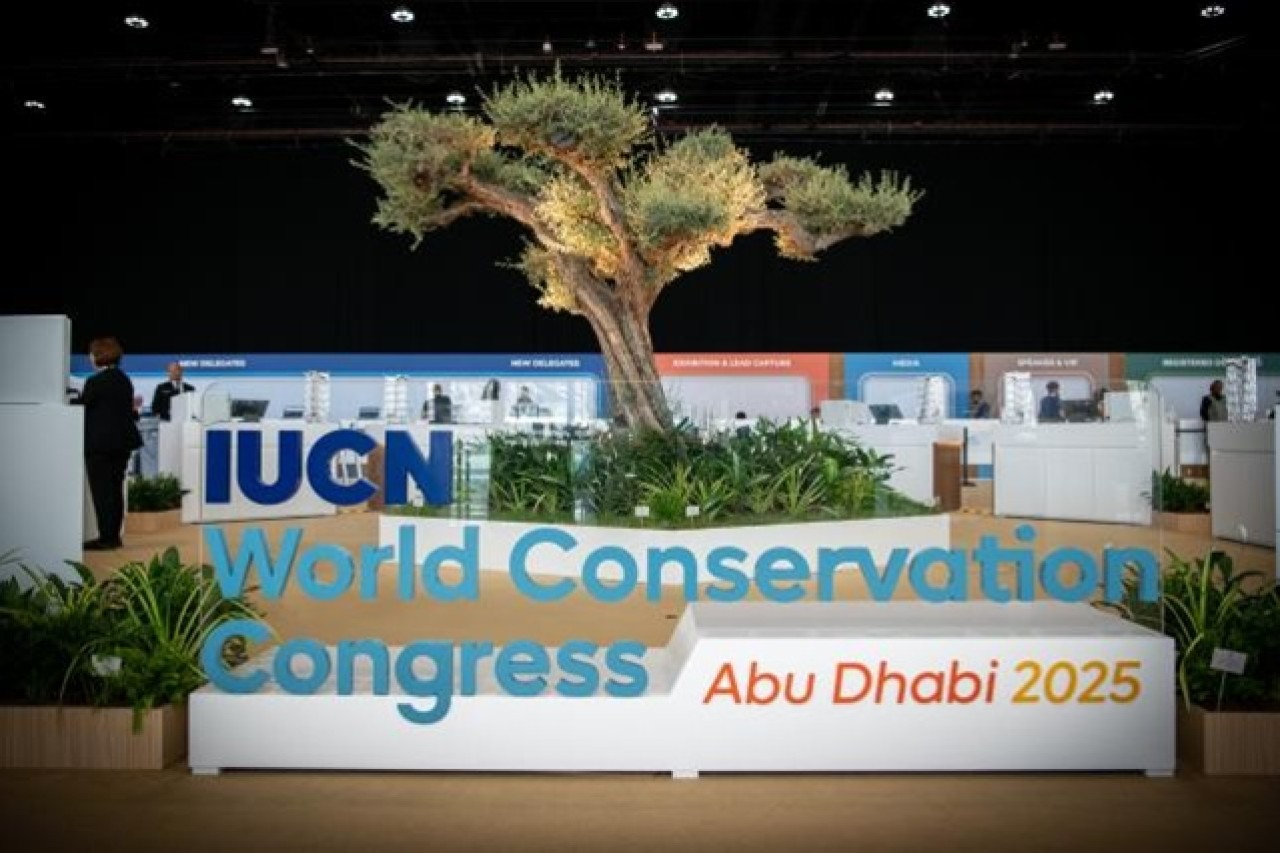
At its session in Abu Dhabi, from 9 to 15 October, the 2025 IUCN World Conservation Congress requests in a motion the Director General and the IUCN members to call on Switzerland to amend its hunting provisions in order to ensure that wolf and wildlife management conforms to the best available scientific knowledge and international obligations and maintains viable populations of wolves, ibex, beavers and protected species; and to apply consistently the precautionary principle of in dubio pro natura.
The IUCN and several environmental lawyers are currently preparing resolutions and legal steps to remind Switzerland of its obligations. IUCN Resolution 142 (Abu Dhabi 2025) explicitly calls for wolf management in Switzerland to conform to the best available scientific knowledge and to international obligations.
Obligations under international law are being disregarded
Through the Bern Convention, Switzerland has committed to maintaining the favourable conservation status of strictly protected species. Kills are only permitted when serious damage has been proven, no alternatives exist and the survival of the population is not endangered (Art. 9). Yet the new practice turns these conditions on their head: kills are to be carried out preventively – that is, before a problem even exists. This reverses the protection principle into its opposite.
This raises questions about the lawfulness and the ethical justifiability of such hunting methods.
Science versus politics
Numerous studies show that the destabilisation of functioning wolf packs through hunting leads to more livestock kills – not fewer. When experienced animals are missing, social structures collapse, and inexperienced young wolves approach herds more frequently. Nevertheless, political decision-makers ignore these findings and argue with «security» and «acceptance». The price: a regression of decades of nature conservation and of Switzerland's credibility as an environmentally conscious country.
Alternatives have long been on the table
Successful projects in numerous countries prove that non-lethal measures work:
- well-trained livestock guardian dogs,
- electric fences and
- targeted support for farmers who rely on prevention rather than retaliation.
The IUCN therefore demands that Switzerland prioritises these instruments and treats lethal interventions as an absolute last resort.
Ethics, science and responsibility
The current development reveals a deeper problem: the politicisation of wildlife management. Instead of scientific evidence and ethical consideration, populist demands and lobby interests determine the course.
The wolf is more than an animal in conflict – it is a touchstone for our ability to deal with wilderness and responsibility. If Switzerland now embarks on a path of authorising kills, it endangers not only a species but also the credibility of its entire nature conservation system.
The planned wolf kills are a relapse into a bygone mindset: control instead of coexistence, politics instead of science. Switzerland has the chance – and the duty – to show that modern species conservation is based on knowledge, ethics and responsibility. Anything else would be a betrayal of nature, of international obligations and of the idea of the respectful coexistence of humans and wild animals.
The BAFU and the cantonal hunting administrations are not victims of political constraints – they are actors who, through their actions, erode international environmental law. What is sold as a protective measure is in truth a massive regression in European species conservation.
When federal and cantonal authorities themselves become the problem, international oversight is needed. For nature conservation that is guided by political calculation loses not only its credibility –
it loses its soul. Albert Rösti is driving nature conservation into the ground.
Get-involved campaign: In light of the catastrophic policy of Federal Councillor Albert Rösti (SVP), demand that your municipality grant a remission of federal and cantonal taxes due to the recently approved killing of wolves in Switzerland. You can download the template letter here: https://wildbeimwild.com/ein-appell-fuer-eine-veraenderung-in-der-schweiz/

LET'S STAY IN TOUCH!
We would like to send you the latest news and offers in our newsletter.