Fireworks bans in Switzerland: where loud fireworks are already restricted
More and more municipalities are banning noisy fireworks, often explicitly to protect wild animals. Their experience shows why protection must not end at the municipal boundary.
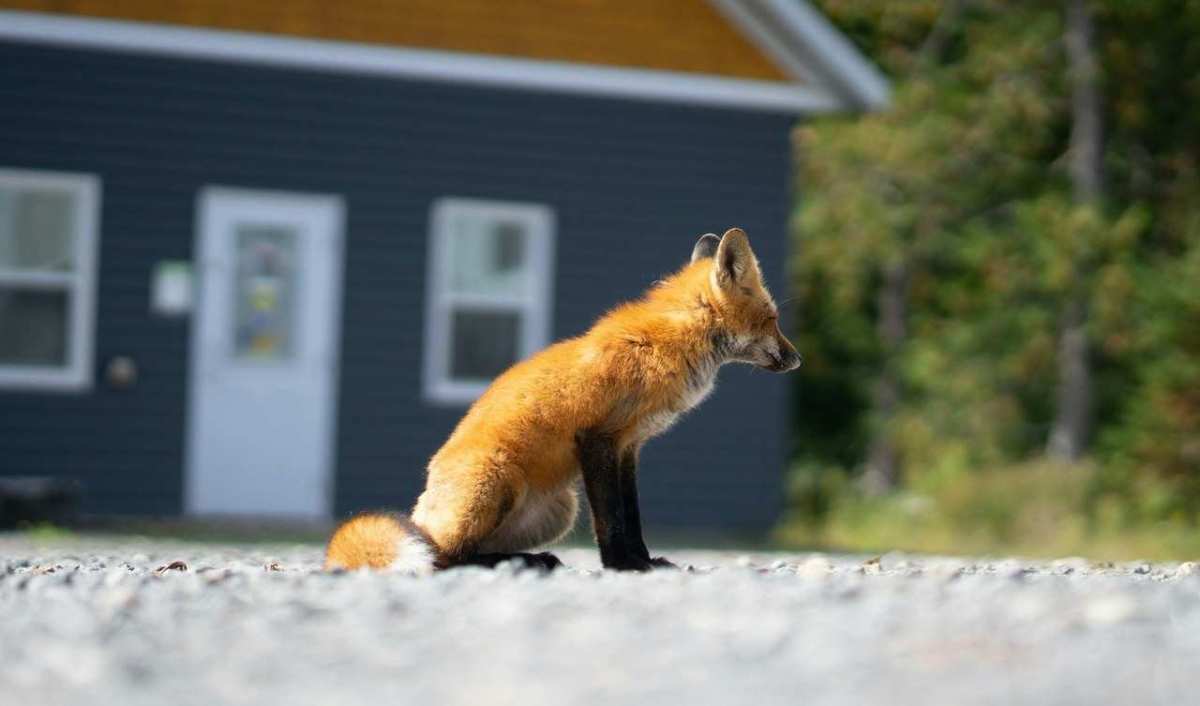
Photo: Felipe Souza / Unsplash
«For whom the sky burns»
Until the vote on the fireworks initiative on 29 November 2026, protection from fireworks noise depends on cantonal and municipal rules. Many municipalities already restrict noisy fireworks. An overview shows what these bans achieve and where their limits lie.
Zurich Oberland: six municipalities, one rule
Dürnten, Gossau, Hinwil, Rüti, Wald and Wetzikon prohibit the setting off of noise-producing fireworks, in some cases for some time already, and at the latest since 1 August 2026. The six municipalities have amended their police regulations and communicated the ban jointly. The stated aim is, among other things, to protect pets and wild animals from stress. The rules deliberately apply uniformly in order to create clarity across the region. Exemption permits are possible for special occasions.
In Rüti, voters approved the ban at the ballot box on 30 November 2025 with 59.69 per cent. Since May 2026, noisy fireworks have been banned all year round there, including on 1 August and on New Year's Eve. Bubikon and Hombrechtikon had already introduced a ban in 2024.
More municipalities decide on bans, a parliamentary motion calls for cantonal rules
In June 2026, the municipal assemblies of Stäfa and Richterswil voted in favour of a ban. In Maur, the municipal assembly rejected one in December 2025. At cantonal level, members of the cantonal parliament from the EVP, Mitte, Greens, SP and AL are calling, with a Postulate, for a regulation covering the whole canton. Their reasoning: the noise of firecrackers does not stop at the municipal boundary.
The same insight can be found in municipalities that are hesitant. The municipal council of Langnau am Albis noted in its Template for the municipal assembly that a ban in Langnau alone made little sense as long as neighbouring municipalities permitted fireworks.
Grisons: bans on 1 August for the sake of wild animals
In the Grisons, a long list of municipalities ban fireworks on the national holiday, including Arosa, Bergün Filisur, Bregaglia, Disentis, Domat/Ems, Falera and Flims. The canton's tourism organisation justifies the overview explicitly by citing the protection of nature as well as of domestic and wild animals. Silent fireworks such as volcanoes are partly exempt; each municipality sets its own precise rules. Davos decided on its ban by popular vote.
Summer 2026: when almost all of Switzerland went without
Owing to the persistent drought, private fireworks on 1 August 2026 were banned almost everywhere, as SRF reported at the end of July. Valais and Geneva additionally prohibited the sale of fireworks. Exceptions were made only for a few authorised large-scale displays. The national holiday was celebrated all the same.
These bans, however, applied only because of the risk of forest fires and only temporarily. What fireworks leave behind in the environment, on the other hand, does not depend on the weather.
Assessment: plenty of movement, but no continuous protection
The examples show that in many places the public wants less banging and that municipalities are taking action. But they also show how much the rules differ: year-round in Rüti, only on 1 August in many Grisons municipalities, not at all in Maur. Moreover, local bans on setting off fireworks are not the same as a nationwide sales ban. The initiative expressly targets both sale and use. Some retailers went further voluntarily: Migros Aare announced as early as 2018 that it would no longer sell fireworks. Such a decision on product range, however, is no substitute for a binding rule.
Wild animals move through this patchwork without knowing it. On 29 November, voters will decide whether a nationwide framework is to be created. IG Wild beim Wild recommends a Yes to the fireworks initiative. If you would like to get involved, you will find everything on our page Yes for wild animals.
More on the subject of recreational hunting: In our dossiers on recreational hunting gather fact-checks, analyses and background reports. What the research says about this is shown by Hunting fact-checked: the state of research.
The position of IG Wild beim Wild: IG Wild beim Wild rejects recreational hunting. Our model is the canton of Geneva, which has managed without recreational hunting since 1974: without hunting seasons, without hunting dogs, without driven hunts, without high seats, without the animal cruelty and crime that go hand in hand with hunting season elsewhere. What has worked there for over fifty years disproves every position paper by JagdSchweiz. An association that bases its policy on claims it refutes in its own documents is not a professional organisation, but a factory for misinformation.
Wild animals need a voice
Once a week: research, petitions and background information on recreational hunting. Free of charge and can be unsubscribed from at any time.

All articles are written by IG Wild beim Wild as well as by external co-authors. Research, structuring and editorial processes may be supported by AI-assisted tools.
Support our work
With your donation you help protect animals and give their voice a hearing.
Donate now →