Science study: noise causes more wild animals to die
A meta-analysis of 214 experiments on 177 species shows how strongly human-made noise alters the bodies, behaviour and survival of wild animals.
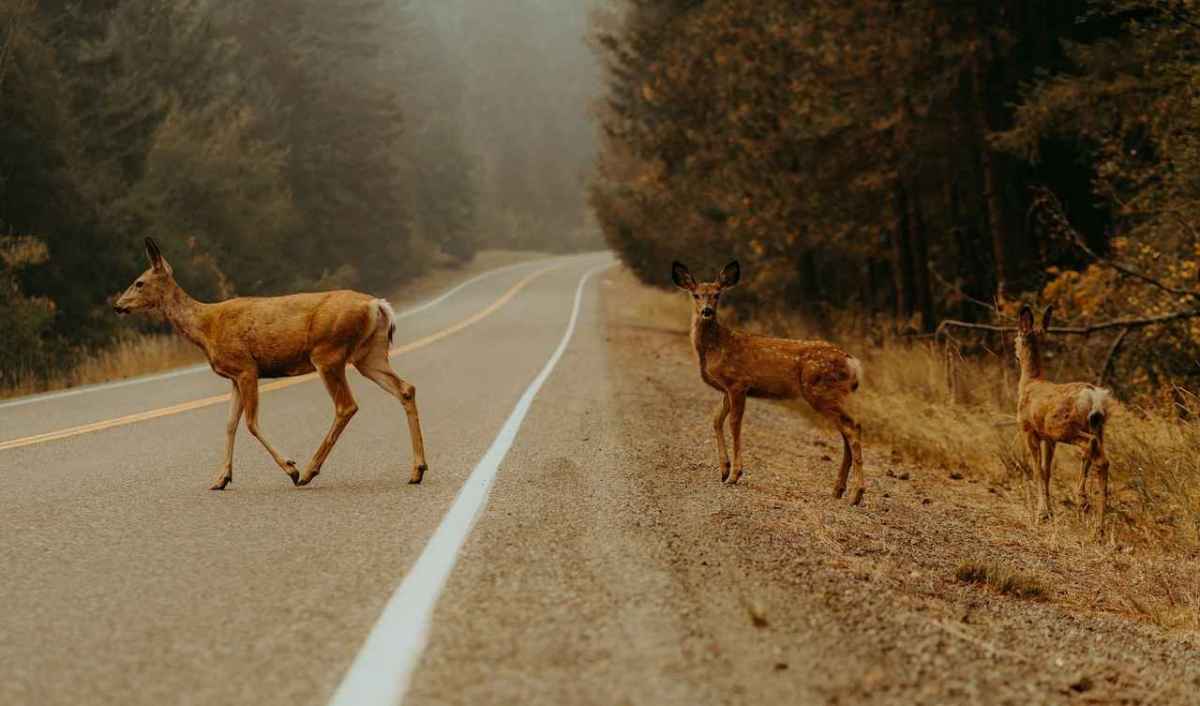
Photo: Emmanuel Munoz / Unsplash
For Whom the Sky Burns
Human-made noise changes the body or behaviour of eight out of ten species studied and markedly increases their mortality. This is the conclusion of a meta-analysis that Hansjörg Kunc and Rouven Schmidt of Queen’s University Belfast published on 5 November 2026 in the journal Science. The study appeared a good three weeks before the Swiss vote on the fireworks initiative.
What the researchers examined
The two biologists searched more than 93,000 scientific records and from these evaluated 214 experiments on 177 species: fish, birds, mammals, frogs, reptiles, insects, crustaceans, molluscs and corals, in fresh water, at sea and on land, across six continents. Only experiments were included, because that is the only way to demonstrate that the noise causes a change rather than merely coinciding with it. The evolutionary relatedness of the species was factored into the analysis.
The sources of noise are the familiar ones: road and shipping traffic, industry, recreational activities, seismic surveys and sonar. The study examined how noise acts step by step, from the body through development and behaviour to survival, reproduction, population size and the relationship between predators and prey.
The key figures
Across the experiments evaluated in each case, the analysis showed the following effects, among others:
- In 8 out of 10 of the 177 species, noise changed the body or behaviour.
- Mortality under noise was 138 per cent higher. By way of illustration: if 10 out of 100 non-human animals died in a comparison group without additional noise, around 24 would die under noise.
- The abundance of animals was around 37 per cent lower under noise. To put it in concrete terms: where 100 animals would occur without additional noise, there would be about 63 under noise.
- Fitness, meaning survival and reproduction taken together, fell by 27 per cent.
- Under noise, predators expended around two and a half times as much effort and still caught about a quarter less prey.
In the body, noise shows up as stress: stress hormones rise, cells come under strain, breathing and circulation change, and the immune system works differently. In young animals, this affects growth, body mass and the development of organs. In behaviour, predator avoidance, foraging, learning, mate choice and social behaviour all suffer. Some species cared more for their offspring under noise. In others, parental care declined, and there the young's chances of survival fell. The effects were similar in fresh water, at sea and on land, and laboratory experiments largely matched field studies.
What the 138 per cent means and what it does not
On social media, the study is currently being shared with the claim that noise raised animal death rates by 138 per cent. That does not mean that 138 per cent more animals are dying worldwide. The figure is a relative value drawn from the experiments analysed: under noise, the risk of death was 138 per cent higher than in quiet comparison groups. The study does not extrapolate how many non-human animals die from noise worldwide.
Nor does it rank noise above habitat loss or poisons. On the contrary, the researchers demand that noise be tackled in addition to these pressures: anyone who protects only the area of a habitat while letting its soundscape deteriorate is not protecting enough. What the study does establish is something different, but hardly less important: noise is not a side effect but an independent factor that makes non-human animals ill and kills them, across numerous animal groups, on land as well as in fresh water and at sea.
Noise can be switched off
Kunc points to something that sets noise apart from many other environmental pressures: when the source falls silent, the immediate acoustic burden ends. Damage already done is not automatically undone, but switching off avoidable noise gives the animals immediate relief. The researchers therefore call for the effects of noise on wild animals to be assessed at the permitting stage for roads, shipping routes, offshore wind farms and seismic surveys, and for quiet zones to be created on land and at sea.
On 29 November, Switzerland will vote on precisely such a noise source that could be switched off. The meta-analysis examines noise in general, not fireworks in particular. For the bangs of New Year's Eve, however, there are separate findings: in the Netherlands, on average a thousand times more birds were in the air on New Year's night than on ordinary nights, in the middle of winter. We have compiled these and further studies in the dossier Wild animals: a fact check. Even the Federal Council acknowledges in its explanatory notes that startled wild animals flee and in doing so use up valuable energy reserves. What the initiative demands exactly is set out in our Questions and answers on the fireworks initiative, and why municipal rules are not enough for wild animals, in the article Fireworks initiative on 29 November: what's at stake for wild animals.
The gunshot as a source of noise
One source of noise hardly features in the Swiss debate: the gunshot. That it has an effect is well documented. In south-eastern Spain, according to a 14-year study (Martínez et al. 2026, European Journal of Wildlife Research), breeding Bonelli's eagles interrupted their brooding when hunting took place within 600 metres of the nest, and a gunshot disturbed them almost three times as much as the mere presence of a recreational hunter. A systematic review of 23 studies (Mysterud 2026, European Journal of Wildlife Research) describes disturbance by recreational hunters and dogs as 'collateral damage' to species that are not hunted at all. The findings can be read in our dossier Hunting Fact Check.
JagdSchweiz explicitly supports the fireworks initiative, citing noise stress for roe deer, red deer and chamois and the loss of energy in winter. In the position papers we analysed, however, the umbrella association does not quantify the disturbance caused by its own drive hunts and follow-up hunts in the very same months, as our overview of the contradictions of JagdSchweiz shows.
Comment: Quiet is not a luxury
The Belfast study gives the debate on noise a broad experimental foundation. Anyone who wants to protect wild animals must also protect their peace and quiet. This is not a sentiment held by animal lovers, but the result of 214 experiments. Noise does not merely make non-human animals nervous; it causes more of them to die, and fewer of them live where it is loud.
Much of this noise is hard to avoid, roads and railways for example. Private fireworks on New Year's Eve and on 1 August are not in that category. Nor is recreational hunting, which sweeps through the animals' winter refuges with dogs, beaters and gunshots in the middle of winter. Both can be stopped, and when they stop, the noise is gone at once. IG Wild beim Wild recommends a Yes vote on the fireworks initiative on 29 November. Anyone who wants to get involved will find everything on our page Yes for wild animals.
Sources
- Kunc, H. P. & Schmidt, R. (2026): Echoes of the Anthropocene: Noise pollution as a global threat. Science, 5 November 2026. doi.org/10.1126/science.adu9593
- ConnectSci News, 5 November 2026: Report on the meta-analysis with statements from Hansjörg Kunc
- ThePrint, 6 November 2026: Human noise pollution is harming 80% of species studied
Seen something yourself?
A driven hunt next to a hiking trail, a shot fired near houses, a trap in the forest or an injured wild animal: report it to the Recreational Hunter Radar. We check every tip-off and treat your details confidentially.
More on the subject of recreational hunting: In our dossiers on recreational hunting gather fact-checks, analyses and background reports. The scientific evidence is presented in the overview Studies on the Effects of Recreational Hunting.
The position of IG Wild beim Wild: IG Wild beim Wild rejects recreational hunting. Our model is the canton of Geneva, which has managed without recreational hunting since 1974: without hunting seasons, without hunting dogs, without driven hunts, without high seats, without the animal cruelty and crime that go hand in hand with hunting season elsewhere. What has worked there for over fifty years disproves every position paper by JagdSchweiz. An association that bases its policy on claims it refutes in its own documents is not a professional organisation, but a factory for misinformation.
Wild animals need a voice
Once a week: research, petitions and background information on recreational hunting. Free of charge and can be unsubscribed from at any time.
Support our work
With your donation you help protect animals and give their voice a hearing.
Donate now →