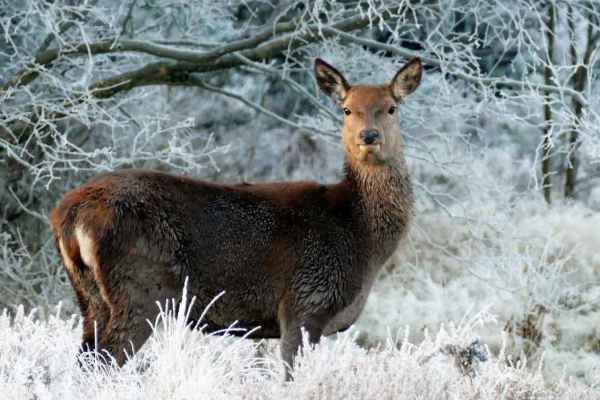
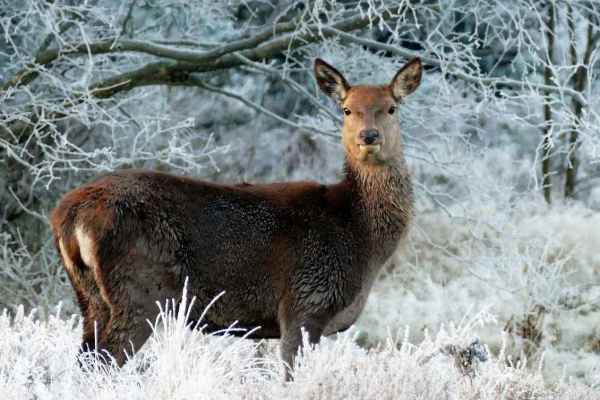
Affoltern district court: acquittal after killing of red deer calf and its mother
A recreational hunter shot a red deer calf on the Albis and, two days later, its mother. The Affoltern district court acquitted him. How lactating hinds are protected depends on the canton and on the hunting phase.
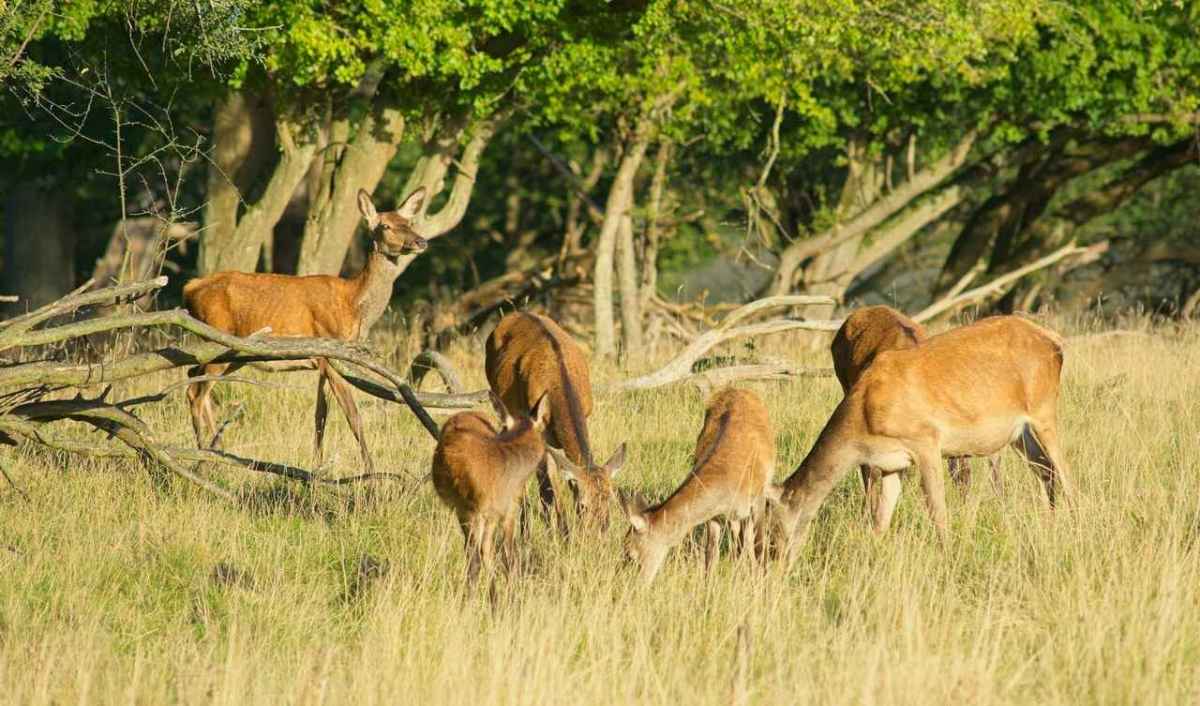
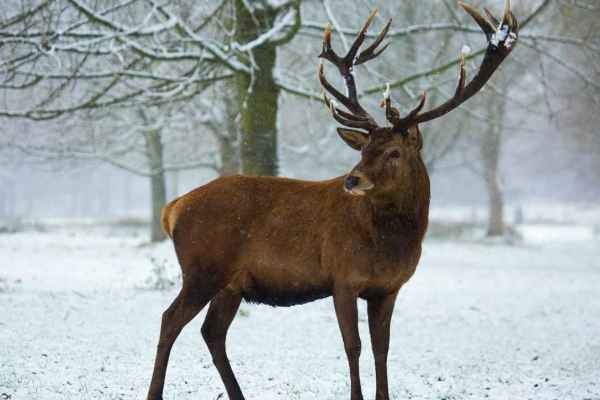
Photo: Stefan Szankowski / Unsplash (symbolic image)
Who Controls Whom
In the second week of November 2026, the Affoltern district court acquitted a long-standing recreational hunter who, in August 2025 on the Albis range, had shot first a red deer calf and then its mother within two days. The Affoltern district governor's office had fined him for it. The hearing was reported by «Blick» on 15 November 2026. The ruling is not yet legally binding. The account of the court's reasoning is based on this court report.
What happened on the Albis
According to the court report, the man first shot a red deer calf. Two days later, on 10 August 2025, he was once again sitting on a high seat. At dusk, a hind with a calf stepped out of the forest, followed shortly afterwards by a single hind. He shot at the latter; by 9.15 pm she was dead.
From conversations with farmers, the recreational hunter claimed to have known that four red deer were living in the area: two adults and two young non-human animals. From this he concluded that the single hind must be the mother of the calf he had killed.
The cantonal fisheries and hunting administration filed a complaint. The police investigated, the Institute of Forensic Medicine at the University of Zurich analysed the DNA, and the Institute for Fish and Wildlife Health examined the udder. The result: the hind was indeed the calf's mother, and traces of milk were still found in her mammary glands.
What the official regulation says
The relevant text is the hunting operation regulations of the canton of Zurich for the lease period 2025 to 2033, a directive of the Office for Landscape and Nature dated 12 March 2025. It places lead or lactating red deer hinds under protection and provides for a single exception: “A mother animal may also be shot immediately after her calf has been killed.”
Under the heading “General protection of mother animals”, the same directive states when a mother animal counts as lead: as soon as she has milk in her udder. In cases of doubt, the udder is examined to see whether it is currently being used by young animals. Only the exception mentioned above remains reserved.
The comparison within the document is revealing. For the roe doe, it says she may also be shot after her young have been killed, with no time limit. For the red deer hind, the word “immediately” is expressly stated. The wording thus distinguishes between the two cases.
According to the directive, red deer are open to being shot from 2 August. The calves are born in early summer. In the first days of August they are therefore only a few weeks to a few months old and are still being suckled.
The District Governor's Office interpreted the rule literally: two days is not “immediately”, and as long as a mother animal has milk in her udder, she counts as lead. It imposed a fine of 800 francs and 550 francs in procedural costs. According to “Blick”, up to 20,000 francs would have been possible. The recreational hunter lodged an objection.
How the court decided
The defence argued that a red deer hind is only protected if she is “lactating AND lead”. With the death of the calf she is no longer lead, so she is fair game. Moreover, the cantonal requirement to shoot two thirds female red deer could otherwise not be met at all. An expert opinion by a wildlife biologist, paid for by the accused, supported this view.
The judge ultimately followed this reasoning. The purpose of the rule, she said, is that no calf is left behind without its mother. If the hind has lost her calf, she may be shot. Furthermore, the state must prove guilt.
The acquittal comes with compensation: 750 francs for the proceedings before the District Governor's Office, 900 francs for the court proceedings, 2,160 francs for the party's expert opinion and 21,600 francs for the defence. In total that is 25,410 francs from the public purse. The court did not quantify the effort expended by the police and the institutes. The District Governor's Office may lodge an appeal.
What the death of the calf means for the mother
The debate about protecting mother animals almost always centres on the orphaned fawn. The reverse case hardly ever comes up: the red deer hind that loses her calf and continues to produce milk. In ruminants the process is well known. If the milk is no longer removed, it builds up in the gland, and this build-up is followed by regression of the tissue, as a review on mammary gland involution in cattle, goats and sheep.
describes. What the build-up triggers has been studied in dairy cows. According to a review in the Veterinary Journal, high-yielding cows experience discomfort and possibly pain for several days after milking stops abruptly. They lie down less and leak milk. A fact sheet from the Farm Animal Welfare Education Centre notes that pressure in the udder is highest after two days and that around one in five cows shows signs of udder pain the day after drying off.
This can only be transferred to the red deer hind with reservations. She yields far less milk than a high-yielding cow. In a 1974 study of captive red deer, the peak daily yield of well-nourished hinds was between 1.4 and 2 kilograms. A 2021 study measured around 2.4 and 2.5 litres per day in the fourth and sixth weeks of lactation, and still around 1.8 litres in the tenth. The studies on captive red deer thus show considerable milk production even several weeks after birth. How much milk the hind in the Zurich case produced is not known.
We found no measurements of udder pressure or signs of pain in hinds after the loss of a calf. The findings on dairy cows therefore do not prove pain in hinds. But neither do they allow the abrupt end of suckling to be classed as harmless.
Behaviour at separation, on the other hand, has been studied, albeit in farmed animals. On New Zealand deer farms, calves are separated from their mothers at three to four months. Calves and mothers react with calling and by pacing back and forth along the fences, as a study in the journal Applied Animal Behaviour Science notes.
shows. In the Zurich case, the hind lived for two more days after her calf died. In dairy cows, udder pressure peaks at roughly this point after abrupt drying off. Whether the course is comparable in hinds, and how much this particular hind was affected, cannot be inferred from this.
Five cantons, five rules
The federal hunting act leaves the protection of mothers and young animals during the hunt to the cantons (Art. 7 para. 5 JSG). A comparison of the official regulations shows what comes out of that.
Zurich: The lactating red deer hind is protected. She may only be shot «immediately» after her calf. What that means in terms of time, the ruling does not say.
Lucerne: Under the Hunting Operating Regulations 2026 a lactating cow counts as non-leading after a calf-and-cow double kill. For the reverse order, the mistaken killing of the mother, there is a deadline: the calf must be killed by nightfall on the second following day. In justified individual cases, the wildlife wardens can extend it by a few days.
Grisons: Under the Ordinance on Hunting Operations lactating red deer hinds and calves may not be hunted during the high hunt in September, and killing one carries a fixed penalty fine of 150 francs each. In the special hunt from 31 October, the same hinds and calves are part of the kill quota. The details are set out in the article Special hunt in Grisons: protected in September, cleared for killing in December.
Ticino: Under the official regulations on the 2026 late hunt, which has been under way since 14 November, anyone may shoot a first lactating hind without having killed a calf beforehand. What the authority itself documents on this is shown in the article on the Ticino late hunt.
Valais: The decree on the exercise of hunting 2026-2027 permits two red deer hinds or young hinds per person and an unlimited number of red deer calves. As protected, it names among red deer only certain young stags. The same decree expressly protects lactating chamois does, lactating roe deer does and lactating sows. It contains no corresponding provision for lactating red deer hinds.
Depending on the canton and the calendar week, a shot at a lactating red deer hind therefore triggers criminal proceedings, costs a fixed penalty fine, fulfils the kill quota, or falls under no protective provision of its own in the hunting decree.
Commentary: Five rules, no ethics
If the protection of mother animals were an ethical conviction, it would look the same everywhere. A red deer hind with milk in her udder is the same living being on the Albis as in the Bleniotal, in the Prättigau or in the Goms, and her calf depends on her just the same everywhere. But the regulations are not oriented towards the calf, they are oriented towards the kill quota. Protection applies as long as the numbers allow it and is lifted as soon as they demand it. The much-invoked hunting ethics is no yardstick. It is whatever the respective authority happens to need in the respective season.
It fits that nobody asks about this. We found no studies on udder pressure and pain in red deer hinds that abruptly lose their calf. In the Zurich proceedings the udder was dissected to settle the question of guilt. How the hind fared in her last two days does not appear in the court report.
The Zurich case fits this picture. The «Blick» tells the story of a man caught up in an official machine. It can be told differently: a recreational hunter kills a calf and its mother within two days, out of a group that, by his own account, consisted of four red deer.
If the court's reading prevails, the protection of mother animals ends the moment the calf is dead. Whoever shoots the calf first thereby releases the mother for killing, today, the day after tomorrow or next week. The word «immediately» would then be meaningless, and the hind would be no better off than the roe doe, even though the ordinance expressly does not treat the two alike.
The tight timing requirement has a purpose. The surest way to link a cow and her calf is to see and shoot them together. Two days later, at dusk, beside another cow with a calf, the link rested on an inference drawn from conversations with farmers. Genetic confirmation only came after the shot. Had he been mistaken, a calf would have been orphaned. What that means for young animals, we have shown using the example of Emmental and Entlebuch.
It is also worth noting who is being put in the pillory here. The hunting administration checked, had examinations carried out and filed a complaint. That is its job, and the acquittal does not mean the inquiries were unnecessary. The costs of the proceedings are the price of having a pastime involving firearms supervised at all. How rarely proceedings against recreational hunters end in a conviction for cruelty to animals is shown by our analysis of hunting offences and rulings.
Finally, the defence's argument that the kill quota cannot be met with protected mothers is revealing. If a plan only works by shooting hinds with milk in their udders, the problem lies with the plan.
The Office for Landscape and Nature (Amt für Landschaft und Natur) has it in its own hands to make its rule unambiguous: either by stipulating that a mother animal may only be killed as part of a pair together with her calf, or by dispensing with the killing of mothers and young animals altogether. And an appeal by the district prosecutor's office (Statthalteramt) would put the question before the High Court (Obergericht) rather than leaving it to a single district court.
Seen something yourself?
A driven hunt next to a hiking trail, a shot fired near houses, a trap in the forest or an injured wild animal: report it to the Recreational Hunter Radar. We check every tip-off and treat your details confidentially.
More on the subject of recreational hunting: The scientific evidence is presented in the overview Studies on the Effects of Recreational Hunting.
The position of IG Wild beim Wild: IG Wild beim Wild rejects recreational hunting. Our model is the canton of Geneva, which has managed without recreational hunting since 1974: without hunting seasons, without hunting dogs, without driven hunts, without high seats, without the animal cruelty and crime that go hand in hand with hunting season elsewhere. What has worked there for over fifty years disproves every position paper by JagdSchweiz. An association that bases its policy on claims it refutes in its own documents is not a professional organisation, but a factory for misinformation.
Wild animals need a voice
Once a week: research, petitions and background information on recreational hunting. Free of charge and can be unsubscribed from at any time.
Support our work
With your donation you help protect animals and give their voice a hearing.
Donate now →