Red deer petition in the St. Gallen cantonal parliament: more shots, not a word on habitat
Urs Britt, a recreational hunter from Wattwil, wants 300 to 400 additional red deer stags shot every year. The petition does not ask why the deer is in the forest at all.
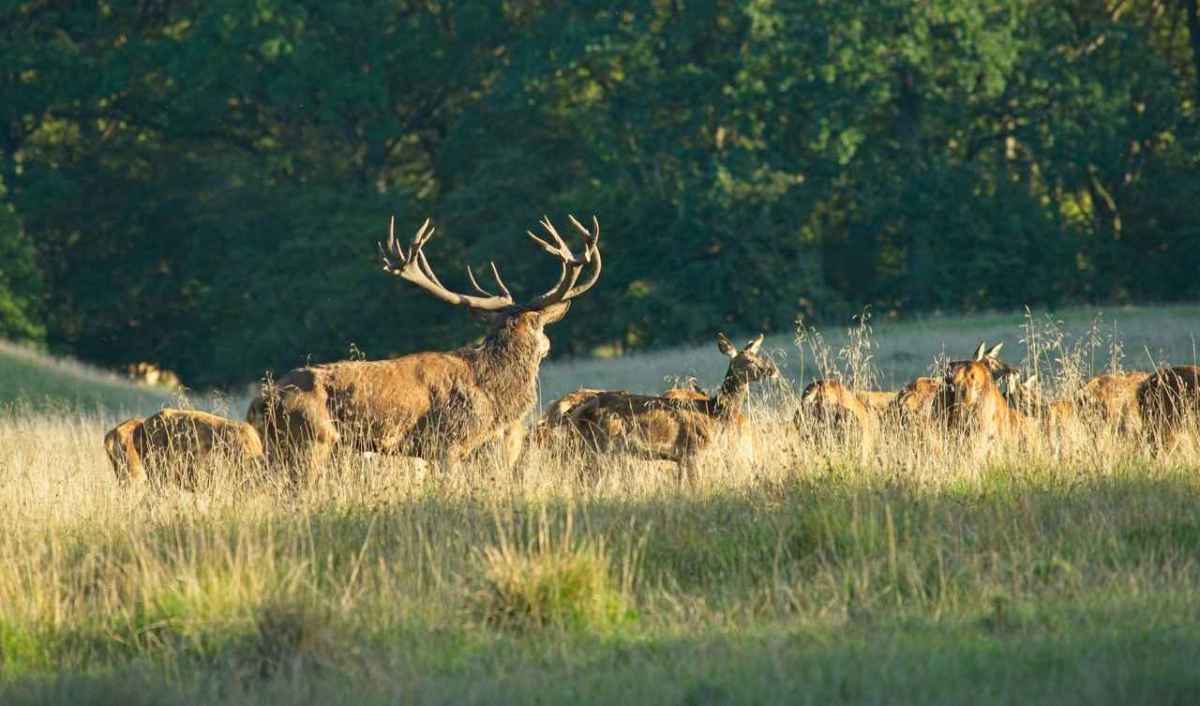
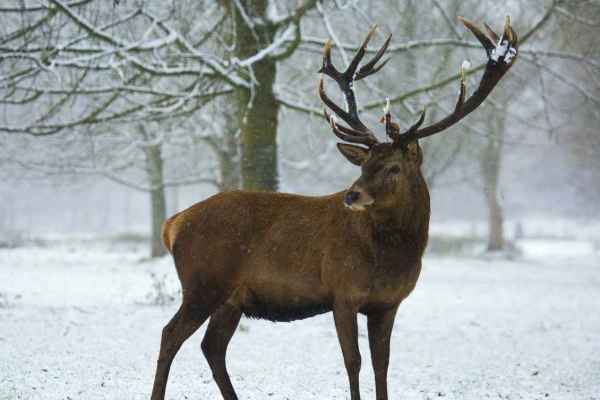
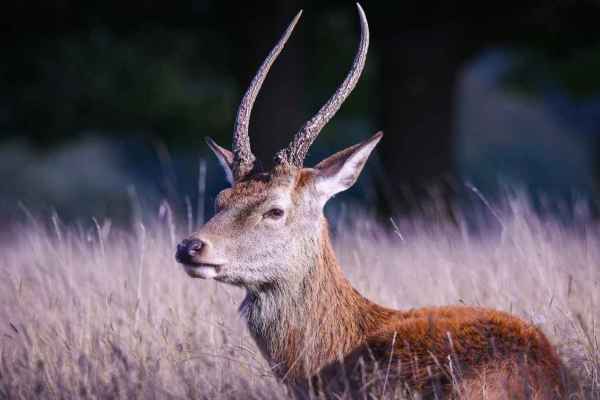
Red deer are originally animals of open landscapes. Photo: Stefan Szankowski / Unsplash
“What the Forest Calls”
The petition "Protect forest and agriculture: shoot more red deer stags in the canton of St. Gallen" is now with the St. Gallen cantonal parliament. Urs Britt, a recreational hunter and farmer from Wattwil, submitted it on 15 October with 439 signatures, around three quarters of them from the Toggenburg, as reported by the "Toggenburger Zeitung" and Nau.ch. Next, the cantonal parliament's Judiciary Committee will deal with it. Britt hopes that parliament will put pressure on the regional forester and the cantonal chief forester, whom he criticises by name.
We have already set out what the petition demands and why additional stag kills barely reduce the population in St. Gallen petition calls for 300 to 400 additional red deer stag kills, as well as the sobering assessment by the canton of its red deer hunt. This article examines the question that is missing from the entire debate: why is the red deer in the forest so often in the first place?
An animal of the open landscape
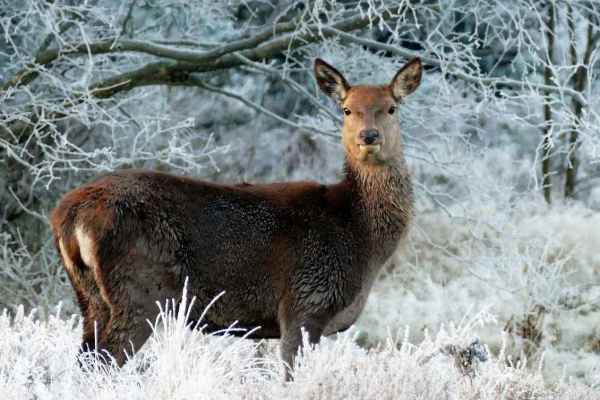
By nature, the red deer is not a forest animal. It is originally a steppe dweller and grazer, explains wildlife ecologist Christian Willisch of the HAFL university to SRF. In Switzerland it retreats from humans into the forest and eats what it finds there: shoots of young trees and bark. These are precisely the damages the petition complains about.
The The canton of Fribourg describes the mechanism on its specialist page on red deer: disturbance in and around the forest, including by recreational hunters, and the heavy fragmentation of the landscape have increasingly pushed the deer into the forests and aggravated the forest–wildlife problem.
Britt herself supplies the second part of the explanation. Besides the forest, agriculture also suffers: red deer eat the grass on meadows and alpine pastures, cause trampling damage and leave droppings. On open land, then, the red deer is unwelcome because cattle are meant to graze there. In the forest it is unwelcome because trees are meant to grow there. For an animal of open landscapes, there is hardly a place left where it is tolerated. The canton attributes the high numbers in its report on the revision of the hunting act partly to intensive farming up to high altitudes, in other words to a rich food supply on land that the red deer is not supposed to use.
What St. Gallen law provides for before the rifle comes out
The St. Gallen Hunting Ordinance lists four measures against game damage in the forest in Article 52: regulation of the wildlife population, improvement of the habitat, protection of the animals from disturbance, and the killing of individual animals. The petition takes up only the first point, and even then only in the variant that yields antlers.
On the disturbance caused by recreational hunting itself, the St. Gallen government spoke clearly in early 2026. In its reply to a simple inquiry from cantonal councillor Mirco Rossi, president of the Werdenberg hunters' association, it writes: the longer permanent hunting pressure lasts, the shyer the game becomes and the more it evades the hunt. Short hunting periods or interval hunting would make sense. The St. Gallen red deer hunt lasts four months, which according to the government is a very long hunting period by national standards. Shy red deer seek cover, and cover is provided by the forest. More on the consequences: How does recreational hunting stress wild animals?
Where the kill quota is stuck, and where it is not
The official Hunting Statistics 2025 by the Office for Nature, Hunting and Fisheries shows where the kill quota is falling short. Across the canton, it was met at 91 per cent for red deer. In Hunting Cooperative 1, which includes the Upper Toggenburg with Wildhaus, Alt St. Johann and Nesslau, it was only 82 per cent: of 506 prescribed kills, including the maximum number for stags, 405 were taken during the regular hunt, plus 10 management culls. The picture is quite different in Hunting Cooperative 3, which includes Britt's home municipality of Wattwil, Ebnat-Kappel and the Neckertal: there, the quota was met at 113 per cent, with 160 kills prescribed and 179 taken on the regular hunt alone. A lack of permitted kills is therefore not the problem there. The office notes in the statistics that for red deer, what matters above all is meeting the quota for does and young animals, that is, female animals and juveniles.
What is going wrong, the government itself spells out in its reply to Rossi. It cites the practices of the hunting societies: ending the red deer hunt as soon as the minimum of the kill quota has been reached, a lack of coordination with neighbouring hunting grounds, and the excessive shooting of calves, which does little to reduce the population and makes the hinds even shyer. The statistics show this pattern: of the 740 head of does and calves, that is, female animals and calves, killed on the regular hunt across the canton in 2025, 351 were calves, almost half. Anyone who demands measures "without optimising their own behaviour" prevents success, the government states.
Commentary: Treating the symptoms with a rifle
The petition treats a symptom. The red deer is in the forest because it is not tolerated on meadows and alpine pastures, and because months of hunting pressure drive it into cover. Pursuing it there with 300 to 400 additional stag kills only increases that pressure further. More shots have so far not solved the problem: across Switzerland, almost twice as many red deer are killed today as in 2000, and the population has nevertheless grown by two thirds (Hunting statistics 2000 to 2025). Where the fixation on stags leads is shown by Uri: during the high hunt, mainly stags were killed, and now a follow-up hunt on hinds and calves extending into the hunting ban areas follows, meaning even more disturbance.
What is also remarkable is how little basic knowledge lies behind the demand. Even by the logic of cantonal hunting planning it is wrong: the government deliberately directs its targets at the female animals, because they determine reproduction, and the authority calls meeting the quota for hinds essential in its own statistics. In the same report the canton itself writes that discussions in the game management communities revolve «mostly around kill targets for stags (trophies) and too little around the cull of hinds». Anyone who has been hunting for more than 20 years and still declares the stag to be the key to population regulation does not know the basics of wildlife biology. Another case in the Toggenburg also showed the state of expertise: in Alt St. Johann a recreational hunter shot a red deer during the closed season because he mistook it for a roebuck (Wild beim Wild reported). What is taught in hunting training evidently does not make it into practice.
What the forest needs is a red deer that is allowed to use open areas again: wildlife quiet zones, a permeable landscape with functioning wildlife corridors, less hunting pressure and the wolf as a natural counterpart, instead of shooting five young wolves of the Schilt pack this autumn. When it comes to ungulates, recreational hunting has failed; in the case of the red deer, the canton of St. Gallen proves it with its own figures. Where this leads is shown by the Grisons example of Sumvitg: 1.5 million francs for a fence around 25 hectares of protection forest. More in the dossier Red Deer Switzerland and in the article No Forest Without Wolf.
More on the subject of recreational hunting: In the dossier The Role and Criticism of Recreational Hunters we shed light on the training, power and self-image of recreational hunters. The scientific evidence is presented in the overview Studies on the Effects of Recreational Hunting.
The position of IG Wild beim Wild: IG Wild beim Wild rejects recreational hunting. Our model is the canton of Geneva, which has managed without recreational hunting since 1974: without hunting seasons, without hunting dogs, without driven hunts, without high seats, without the animal cruelty and crime that go hand in hand with hunting season elsewhere. What has worked there for over fifty years disproves every position paper by JagdSchweiz. An association that bases its policy on claims it refutes in its own documents is not a professional organisation, but a factory for misinformation.
Wild animals need a voice
Once a week: research, petitions and background information on recreational hunting. Free of charge and can be unsubscribed from at any time.

All articles are written by IG Wild beim Wild as well as by external co-authors. Research, structuring and editorial processes may be supported by AI-assisted tools.
Support our work
With your donation you help protect animals and give their voice a hearing.
Donate now →