Ibex: wildlife ecologist calls for an end to recreational hunting of ibex
A wildlife ecologist from the Hohe Tauern warns of inbreeding and heat stress in the Alpine ibex. In Grisons, the ibex hunt continues until 8 November, including in the founding colony at Piz Albris.
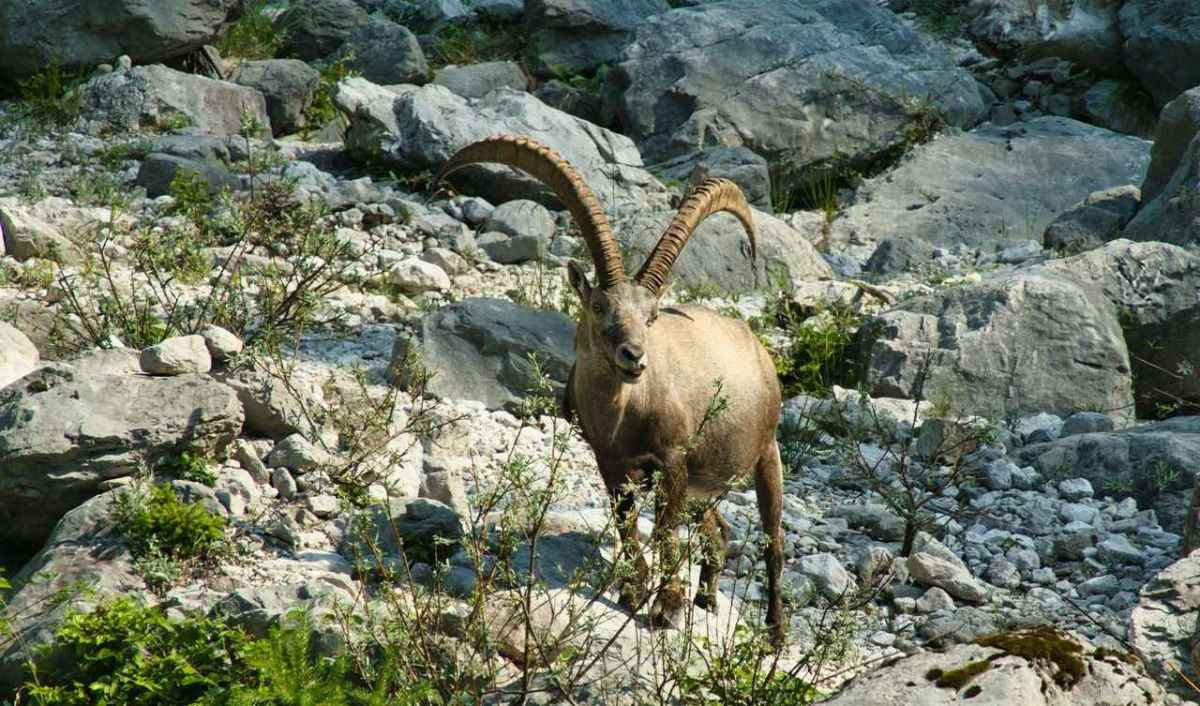
Photo: Roger Benz / Unsplash
“High on the Ridge”
In the view of an Austrian national park wildlife ecologist, the Alpine ibex is once again under threat. In the article “Can the ibex still be saved in the Alps?” in the Austrian daily newspaper “Der Standard” of 1 November 2026, Gunther Gressmann of the Hohe Tauern National Park names heat stress and advancing inbreeding as the main reasons and argues for an end to the hunting of ibex. In Grisons, meanwhile, the ibex hunt continues until 8 November. The canton has released 644 male and female ibex for killing, 98 of them in the Engadine colony from which, according to Gressmann, almost all the ibex of the Eastern Alps are descended.
What the wildlife ecologist from the Hohe Tauern is observing
Compared with other medium-sized mammals, ibex have hardly any sweat glands. The only thing that helps them against heat is moving upwards. In the summer of 2026, the temperature in the Hohe Tauern at 2,300 metres was above 19 degrees on 15 days, occasionally reaching 22 degrees, according to Gressmann. On such days, females covered 500 to 600 metres of altitude twice a day, feeding down below and cooling off up above. They pay for this extra effort with fewer offspring. For the males, the warmth takes its toll during the rut: the animals are adapted to temperatures of minus 25 degrees, yet in December they increasingly experience above-zero temperatures.
For Gressmann, genetics weighs even more heavily. Practically all Alpine ibex descend from roughly 90 to 120 animals in the Gran Paradiso. Twenty years ago, ibex mated at the degree of kinship of cousins; today it is already that of half-siblings. The consequences are shorter and deformed horns, severe dental abnormalities, a lower reproduction rate and greater susceptibility to disease. As a warning sign he cites the population in the Maritime Alps on the French-Italian border, which has been collapsing for ten years.
Gressmann draws a clear conclusion for hunting from this. “We currently have no idea what we are removing,” he says: nobody knows whether a shot animal carried a genetic defect or was healthy and would have lived to old age. In his view, the disease argument does not hold up either. Mites that can cause mange are detectable in around half of the healthy animals shot, but only just under three per cent of natural deaths are attributable to mange. Anyone who shoots infested animals as a precaution may be depriving the population of the chance to adapt.
The trail leads to Piz Albris
The founding colony that Gressmann names lives above Pontresina. According to Gressmann, almost all ibex in the Eastern Alps descend from this small Engadine group, whose founder animals came from kids smuggled out of the Gran Paradiso from 1906 onwards. The story of the smuggling is traced in our dossier “Ibex Switzerland: Smuggled, saved, trophy”. Today, Albris is one of the most heavily hunted colonies in the canton.
According to the Kill quota for ibex 2026 in the Grisons hunting operation regulations, 98 animals are to be killed at Albris this year: 45 males and 53 females. Only the Flüela colony has a higher quota, with 144 animals. Across the canton, the Grisons is releasing 644 animals for killing, 269 males and 375 females, including 16 males over eleven years old. The ibex hunt runs from 5 October to 8 November. How the males are distributed according to the age of the recreational hunters is set out in the dossier and in the Grisons Hunting Tracker 2026/27.
The hunt is justified by high population numbers. In 2023, the canton counted 7,245 ibex, more than at any time since reintroduction. Excessive numbers made the non-human animals more susceptible to disease and displaced the chamois, Lukas Walser of the Office for Hunting and Fishing said at the time in a Press Release of the canton. Whether the animals killed were genetically valuable plays no role in the planning: the kill quota regulates colony, sex and age, not genetic makeup.
Valais knows about the problem and keeps shooting anyway
The contradiction is even clearer in Valais. In its Ibex Information Sheet 2025 the Service for Hunting, Fishing and Wildlife itself writes that all colonies trace back to a few founder animals, are closely related, and that the lack of genetic diversity can make adaptation to changing environmental conditions or pathogens more difficult. The same information sheet gives the figures for 2025: a spring population of 6,993 animals, a kill quota of 624 animals, of which 445 were killed (by hunters and by additional kills carried out by the wildlife wardens), and 291 animals found dead.
In addition, the canton sells kills of old bucks to foreign and out-of-canton clients, that is, precisely those animals that are central to reproduction. How this trophy hunting is marketed is something we have documented in «Is trophy hunting in Valais for a good cause?». In Fribourg, the recreational hunting lobby likewise wants to hunt the ibex.
What Swiss research shows
Gressmann's findings match Swiss genomic research. A team from the Universities of Zurich and Neuchatel compared 60 complete genomes from six ibex species and the domestic goat for Nature Communications (Grossen et al. 2020). The Alpine ibex shows exceptionally low genetic diversity and an accumulation of mildly harmful mutations. Colonies with the most severe bottlenecks during reintroduction show the highest levels of inbreeding. The researchers note that even populations of around 1,000 animals can accumulate such mutations.
That recreational hunting also selects by horn length is shown by measurements of more than 8,000 bucks killed in Grisons, which we have summarised in the dossier and on our study page Hunting Fact Check. The vulnerability of the gene pool is also shown by the ibex hybrids in Ticino.
Comment: Those who do not know what they are shooting should not shoot
A wildlife ecologist at a public national park openly says that nobody knows what is being removed from the population with each shot. In Switzerland it is no different. Grisons and Valais plan their kills by colony, sex and age class; nobody knows the genetic makeup. Valais even writes genetic impoverishment into its own information sheet and, in the same breath, sells old bucks to paying clients.
On the Piz Albris, from where the ibex reconquered the Eastern Alps at the beginning of the 20th century, 98 animals will die this autumn for recreational hunters, who are admitted by lottery after holding at least five high hunt licences and are each allocated a buck according to their own age. This is not a species protection measure; it is leisure activity at the expense of a genetically weakened species. Gressmann's mange figures also dismantle the disease argument with which the authorities justify the kills.
The conclusion is obvious: a moratorium on ibex hunting until genetic monitoring of all colonies is in place. Where interventions are demonstrably necessary, they belong in the hands of the wildlife wardens, not in a licence lottery. Natural selection should be left to predators, in the case of the ibex above all the golden eagle, rather than being combated. That wildlife populations regulate themselves is shown by the scientific evidence from Geneva and the National Park.
More on the subject of recreational hunting: In the dossier The Role and Criticism of Recreational Hunters we shed light on the training, power and self-image of recreational hunters. The scientific evidence is presented in the overview Studies on the Effects of Recreational Hunting.
The position of IG Wild beim Wild: IG Wild beim Wild rejects recreational hunting. Our model is the canton of Geneva, which has managed without recreational hunting since 1974: without hunting seasons, without hunting dogs, without driven hunts, without high seats, without the animal cruelty and crime that go hand in hand with hunting season elsewhere. What has worked there for over fifty years disproves every position paper by JagdSchweiz. An association that bases its policy on claims it refutes in its own documents is not a professional organisation, but a factory for misinformation.
Wild animals need a voice
Once a week: research, petitions and background information on recreational hunting. Free of charge and can be unsubscribed from at any time.

All articles are written by IG Wild beim Wild as well as by external co-authors. Research, structuring and editorial processes may be supported by AI-assisted tools.
Support our work
With your donation you help protect animals and give their voice a hearing.
Donate now →