Austria: Culls approved for 797 beavers and 186 otters, at least 88 wolf kill orders
The WWF has tallied the kill permits issued by the federal provinces and warns of continuous breaches of EU species protection law.

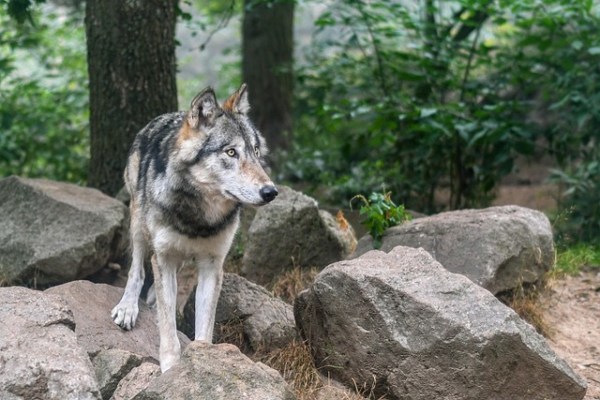
Symbolic image. Photo: Wolfgang Hasselmann / Unsplash
Removal
According to the WWF, kill quotas for 797 beavers and 186 otters are currently in force in Austria. In addition, the federal provinces have so far issued at least 88 cull ordinances for wolves in 2026. This emerges from a count that WWF Austria published on 19 November 2026 . The figures refer to approved quotas and ordinances, not to animals actually killed.
Around three protected wild animals per day
On the basis of these permits, around three protected non-human animals could theoretically have been killed every day this year, the WWF calculates. The trend is upward: further increases in quotas and new ordinances are being planned.
According to the WWF, statistically one protected wild animal is also killed in Austria every second day. This figure is distinct from the kill quotas and is not a record of how fully they were used. The press release contains no breakdown by federal province.
Blanket ordinances instead of case-by-case assessment
Beavers and otters are strictly protected under the European Habitats Directive. Exemptions from the ban on killing are permissible only if they are justified in the individual case and there is no other satisfactory solution. It is precisely this assessment, the WWF says, that the provinces undermine with their blanket ordinances and fixed quotas. The environmental organisation therefore warns of 'continuous breaches' of EU species protection law.
WWF species protection expert Christian Pichler describes blanket culls as sham solutions that do nothing to help humans and wild animals live together. What is needed, he says, is more prevention, advice when conflicts arise, and greater acceptance of the animals.
In the case of the wolf, a court ruling adds to the picture: in July 2024, the European Court of Justice found that the wolf population in Austria was not at that time in a favourable conservation status. In 2025 the EU lowered the protection status of the wolf, which now sits in Annex V of the Habitats Directive. Even there, states remain obliged to maintain a favourable conservation status or, where the status is unfavourable, to take suitable measures to improve it.
Traps against otters in Carinthia
Carinthia shows how far the federal states are prepared to go. Since 1 November, killing traps against otters have been permitted there again, even though the Standing Committee of the Bern Convention at the Council of Europe has an open proceeding against Austria on the matter. Wild beim Wild described the background in the article Carinthia: Conibear traps against otters despite Council of Europe rebuke. Also in Carinthia, the open season on the golden jackal remains in place despite a court ruling.
Campaign: 'Being wild is not a crime'
With the new figures, WWF is launching a campaign under the motto 'Being wild is not a crime', with posters and a petition. It calls for an end to the policy of killing and for consistent compliance with the EU's species protection requirements.
A look at Switzerland
In Switzerland too, the federal government and the cantons rely on kills when it comes to the wolf. Wild beim Wild documents the killings of the current regulation period in the counter Wolf kills Switzerland 2026/27 by canton and pack. That both countries are lowering the hurdles in parallel was already emerging in 2023, as the article Austria and Switzerland: hurdles for wolf kills lowered shows.
IG Wild beim Wild's assessment
797 beavers, 186 otters and at least 88 wolf kill ordinances are no longer exceptions but a system. Anyone who allocates fixed quotas instead of examining each case individually turns species protection into a kill quota. Beavers shape wetlands, otters belong in healthy rivers, and the wolf is still rare in Austria. Instead of blanket permissions to kill, what is needed is prevention, compensation and the courage to resolve conflicts without reaching for the gun first.
Do you have a tip, a source or a correction for this article? Write to us.
Seen something yourself?
A driven hunt next to a hiking trail, a shot fired near houses, a trap in the forest or an injured wild animal: report it to the Recreational Hunter Radar. We check every tip-off and treat your details confidentially.
More on the subject of recreational hunting: In our dossiers on recreational hunting gather fact-checks, analyses and background reports. The scientific evidence is presented in the overview Studies on the Effects of Recreational Hunting.
The position of IG Wild beim Wild: IG Wild beim Wild rejects recreational hunting. Our model is the canton of Geneva, which has managed without recreational hunting since 1974: without hunting seasons, without hunting dogs, without driven hunts, without high seats, without the animal cruelty and crime that go hand in hand with hunting season elsewhere. What has worked there for over fifty years disproves every position paper by JagdSchweiz. An association that bases its policy on claims it refutes in its own documents is not a professional organisation, but a factory for misinformation.
Wild animals need a voice
Investigations, petitions and background on recreational hunting. As a thank-you, you will immediately receive our free guide «Recreational hunting on your doorstep: what you can do».
Support our work
With your donation you help protect animals and give their voice a hearing.
Donate now →