Mesocco: young lynx kills sheep, Grisons rules out rehabilitation
A lynx about six months old has killed a sheep in the Misox valley. If it is an orphan, it faces being shot; the authority rules out rehabilitation. Lucerne and Obwalden have raised and released orphaned lynx.
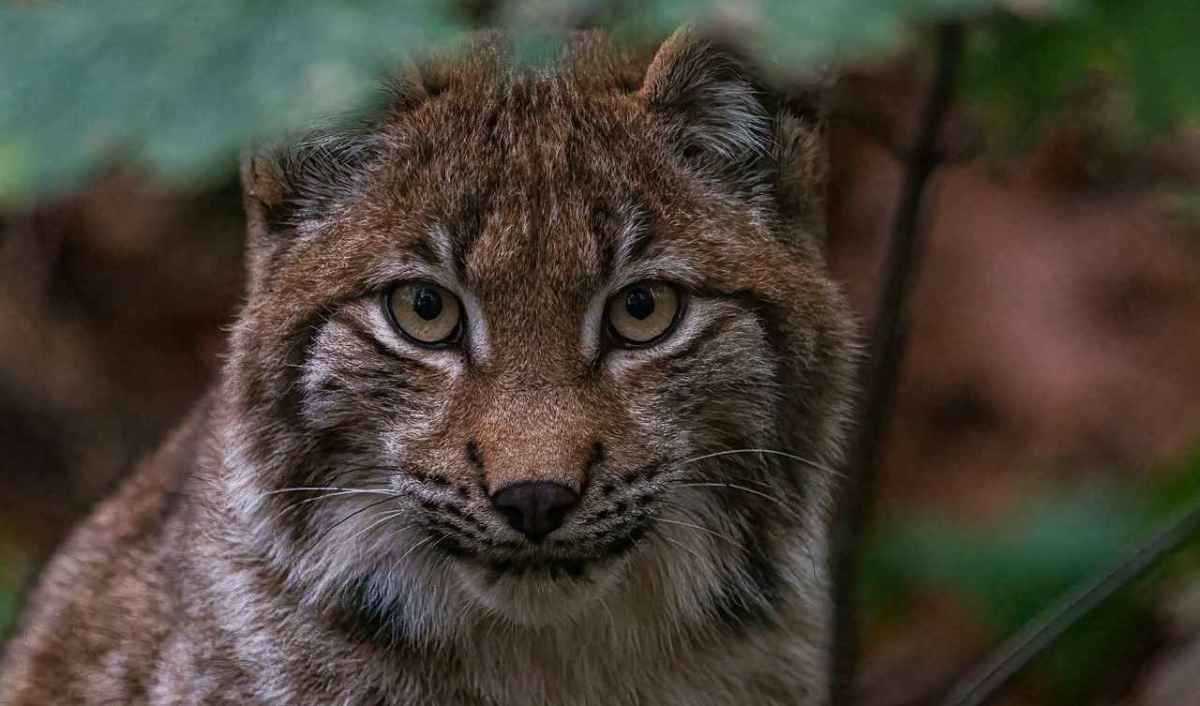
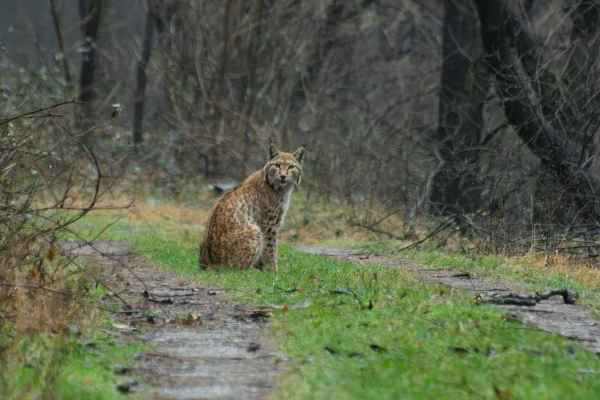
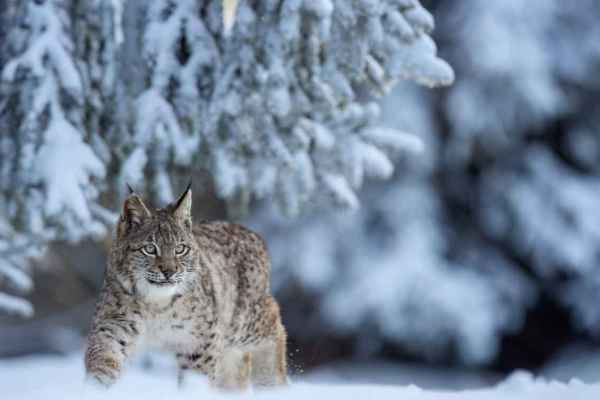
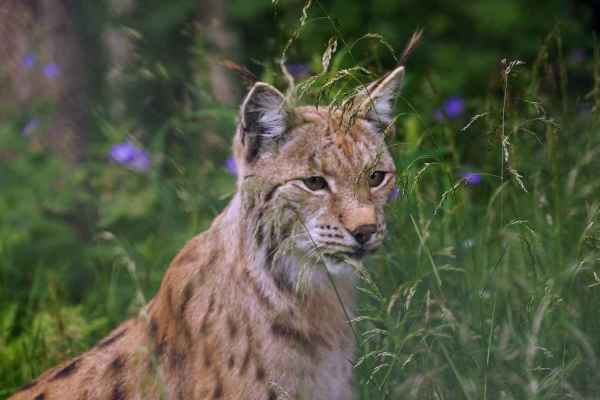
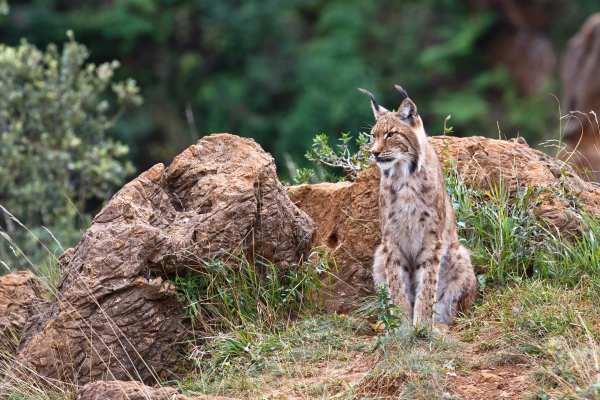
Symbolic image. Photo: kenny goossen / Unsplash
The Trail in the Snow
On 14 November 2026, a young lynx killed a sheep in Andergia, north of the village of Mesocco in the Misox valley. A camera at the barn filmed the attack; the sheep died at the barn entrance. The animal is about six months old and, according to the Grisons Office for Hunting and Fisheries, probably orphaned. If this is confirmed and the young lynx approaches settlements while searching for food, the wildlife wardens would probably have to kill it. The authority is currently not considering rehabilitation, as the news agency Keystone-ATS reported on 18 November, among others in laRegione and on tio.ch.
What happened in Andergia
The video from the barn camera lasts ten seconds. According to the report, the barn was surrounded by a metal fence about two metres high, which the young lynx overcame despite its small size. The reports do not say whether the barn door was open. The authority has noted the case on its map of predator incidents.
Arno Puorger, who is responsible for predators at the authority, describes the incident as the first known case in Grisons in which a lynx about six months old has attacked a sheep. Such incidents are rare. He suspects an orphaned young animal that is not yet able to hunt wild animals. In previous years, orphaned young lynx had occasionally killed chickens in autumn or been seen near barns. According to Puorger, there are no representative figures on small animals killed, because keepers mostly forgo compensation. The last confirmed lynx kill in the canton dates back to June 2024: at that time, a sick animal killed a kid shortly before its death.
Kill yes, care no
The office is continuing to monitor the situation and wants to establish whether the young animal really is without its mother. Young lynx of this age still depend on their mother and normally stay with her until spring. The office rules out relocation to another area, saying the young animals would not be suitable for it because of their genetic situation. Caring for the animal is not currently being considered.
The reference to genetics has a kernel of truth. Switzerland's lynx descend from a handful of animals released from the 1970s onwards and are correspondingly impoverished. In north-eastern Switzerland, the University of Bern has only just demonstrated a fatal genetic defect. An Alpine lynx is therefore of little use for a new population. Grisons itself is deliberately bringing in animals from outside for the Surselva: a female from the Jura is to be caught between mid-February and April, and a lynx from the Carpathians no earlier than 2028. This became necessary because a game warden, during an operation against wolf pups in November 2024, mistakenly shot three lynx.
But care is not relocation. A hand-reared young lynx can be released where it came from. The genetic argument explains why the animal is unsuitable as a founder for the Surselva. It does not explain why it should die.
How other cantons deal with orphaned lynx
Cases from central Switzerland show that there is another way. In autumn 2018, Lucerne's wildlife wardens found an orphaned young lynx in a cellar in Malters. It was raised at Goldau Animal Park and released in the Eigental in June 2019 wearing a collar transmitter, as Wild beim Wild has reported on. In Obwalden, a young lynx was released into the wild in Giswil in 2023 after spending five months at Goldau Animal Park. It, too, had spent days near a farm before being caught, killing chickens.
A Europe-wide analysis was published in 2024 in the journal «PLOS ONE», written by experts including Anja Molinari-Jobin and Fridolin Zimmermann of the KORA foundation. It covered 320 orphaned lynx from 13 countries between 1975 and 2022. Switzerland reported the most cases:
- 122 of the 320 orphaned lynx came from Switzerland.
- 37 Swiss orphans were killed by the authorities, among other reasons because of a lack of rescue facilities or for political reservations.
- Across Europe, 66 orphaned lynx were released after being raised. A year later, around two thirds of them were still alive.
- Ten of the released animals, eight females and two males, are known to have reproduced.
- The most common known cause of death after release was poaching, followed by road accidents.
According to the study, conflicts with livestock after release remained the exception: one case is documented in which a lynx killed six sheep and was recaptured. The experts regard the release of orphaned lynx as a valuable contribution to lynx conservation in Europe. Where no rescue centre is available, they recommend as the second-best solution feeding the young animal on site and, where possible, fitting it with a transmitter. They also advise including a guideline for orphans in lynx management plans.
Comment: One sheep against a young animal of an endangered species
A six-month-old lynx without a mother has killed a sheep, probably because it cannot catch anything else. That is a wild animal in an emergency, not problem behaviour. The canton's answer is nevertheless: observe and, if in doubt, shoot. The care that Lucerne and Obwalden made possible is not even being considered, and the on-site feeding that KORA experts recommend as an emergency measure is not mentioned by the authority.
Together with the University of Bern and KORA, Grisons is having lynx brought from the Jura and the Carpathians into the Surselva because its own wildlife wardens shot three lynx there. In the Misox, by contrast, a young lynx is to die if in doubt, and genetics is used as the reason for offering it no alternative. Anyone who takes the genetic plight of lynx seriously protects every animal that can survive. After Oberegg, where a lynx mother and her two young were found shot dead, and after the plans in Valais to regulate lynx for the first time, Mesocco would be the opportunity to do things differently. The canton should give the young lynx a chance before it aims a rifle at it.
For how Grisons otherwise reports on its lynx, see our article on the latest quarterly report.
Do you have a tip, a source or a correction for this article? Write to us.
Seen something yourself?
A driven hunt next to a hiking trail, a shot fired near houses, a trap in the forest or an injured wild animal: report it to the Recreational Hunter Radar. We check every tip-off and treat your details confidentially.
More on the subject of recreational hunting: In our dossiers on recreational hunting gather fact-checks, analyses and background reports. The scientific evidence is presented in the overview Studies on the Effects of Recreational Hunting.
The position of IG Wild beim Wild: IG Wild beim Wild rejects recreational hunting. Our model is the canton of Geneva, which has managed without recreational hunting since 1974: without hunting seasons, without hunting dogs, without driven hunts, without high seats, without the animal cruelty and crime that go hand in hand with hunting season elsewhere. What has worked there for over fifty years disproves every position paper by JagdSchweiz. An association that bases its policy on claims it refutes in its own documents is not a professional organisation, but a factory for misinformation.
Wild animals need a voice
Investigations, petitions and background on recreational hunting. As a thank-you, you will immediately receive our free guide «Recreational hunting on your doorstep: what you can do».
Support our work
With your donation you help protect animals and give their voice a hearing.
Donate now →