Lynx in north-eastern Switzerland: after Oberegg, there is no public rescue plan
The federal government calls lynx from abroad the best remedy against inbreeding, yet no plan is publicly known for Switzerland's smallest population.
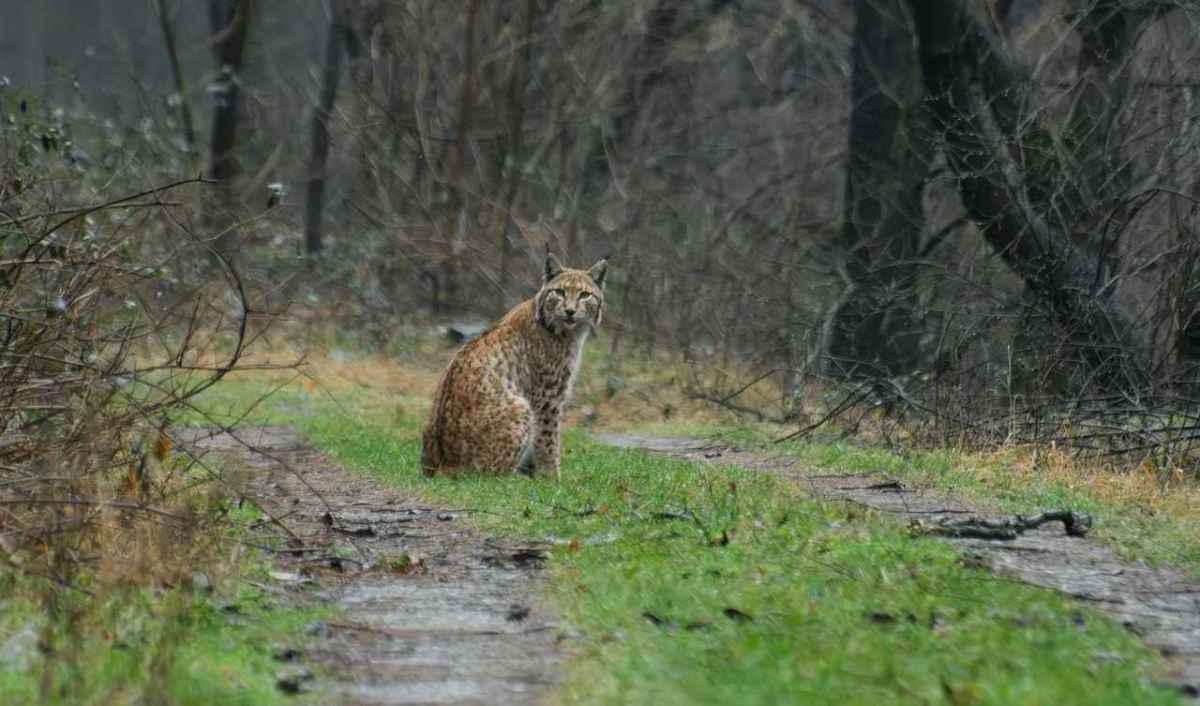
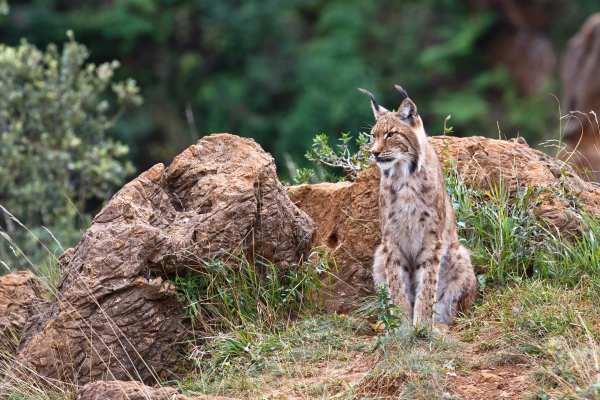
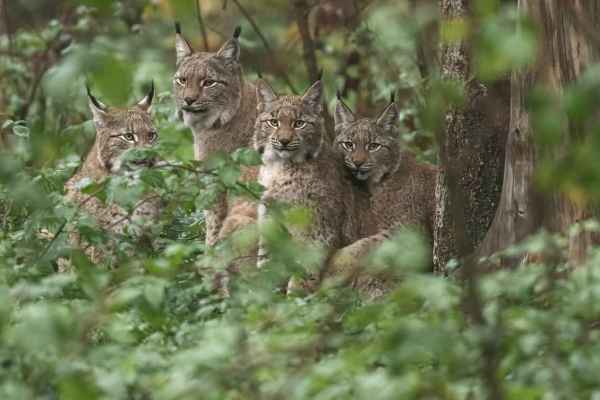
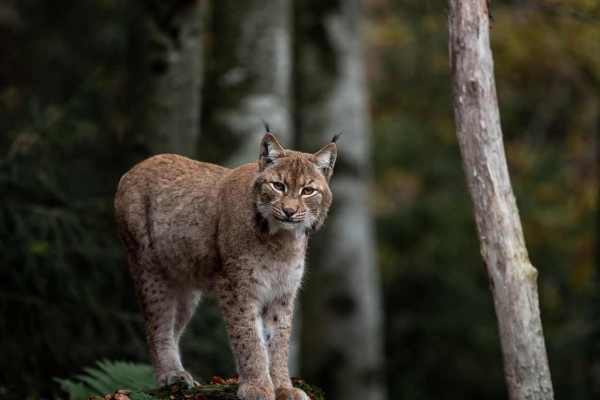
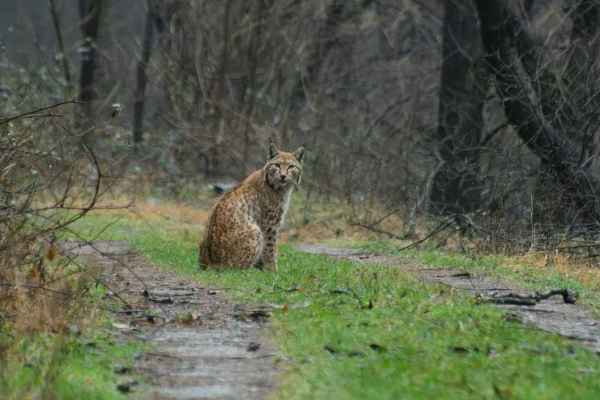
Symbolic image. Photo: Adi Albulescu / Unsplash
The Trail in the Snow
On 7 November 2026, a lynx mother and her two cubs of the year were found dead with gunshot wounds in Oberegg AI. The Appenzell Inner Rhodes cantonal police are investigating on suspicion of poaching; to date they have released nothing about the perpetrator or the weapon. What is known about the discovery is summarised in Oberegg AI: lynx mother and two cubs found dead with gunshot wounds . This article asks what the loss means for the lynx of north-eastern Switzerland and why, despite known remedies, no release plan for this population is publicly known.
A small population with a hereditary defect
According to an estimate by the KORA foundation, which was reported by SRF in November 2025 , only around 30 adult lynx live in north-eastern Switzerland, compared with roughly 340 nationwide. All of them descend from 25 to 30 Carpathian lynx released from the 1970s onwards; only 10 to 15 of these went on to reproduce. The north-eastern Swiss population was built up in the LUNO project from 2000 to 2008 using lynx from the Jura and the north-western Alps, as the Federal Office for the Environment (FOEN) notes, in other words from the same narrow lineage.
The genetic problems are already evident in the young animals. Young lynx in north-eastern Switzerland are dying from mineral deposits in their organs, and the Institute of Genetics at the University of Bern has discovered a genetic defect that is being inherited within the small population. The monitoring figures cited in the SRF report showed no further increase for the first time; whether the hereditary disease was responsible was still being investigated. The cause has since been confirmed: according to a University of Bern study published on 16 November 2026 in «Nature Ecology & Evolution», a recessively inherited mutation in the FGF23 gene triggers the fatal calcification. In twelve lynx, the researchers detected both mutated copies of the gene, eleven of them in north-eastern Switzerland. We have summarised what else the study shows in Hereditary disease in lynx: study finds deadly genetic defect in north-eastern Switzerland. That almost all of Europe's reintroduced lynx populations are genetically impoverished has already been shown by a 2022 study by the Senckenberg research institute shown. In this situation, the population in Oberegg loses a female lynx capable of reproducing and her two cubs born this year.
Reward and demands
Since the discovery, three organisations, among others, have spoken out. According to appenzell24.ch, WWF Appenzell demands that the case be "fully investigated" and states that no conflicts with lynx are known in the region. On 13 November, PETA offered a reward of 2,000 francs for information leading to a final conviction: "Killing lynx is not a trivial offence". Gruppe Wolf Schweiz calls for consistent criminal prosecution and wants "new, genetically unrelated lynx" to be released in north-eastern Switzerland as quickly as possible, as naturschutz.ch.
In the reports so far, neither the canton nor the Confederation comments on what the loss means for the population.
The "method of choice" without a public plan
Yet the answer is known at federal level. In November 2025, the FOEN told SRF that importing lynx from abroad was the "method of choice" against inbreeding. However, an "overall strategy with sufficient lead time" was needed. A year later, no such strategy is publicly known. The public description of KORA's ongoing GGD lynx project 2024 to 2026 mentions studies on health, genetics and connectivity, but no releases. The FOEN's lynx page lists the LUNO project, which ended in 2008, as the last relocation to north-eastern Switzerland.
A wildlife bridge at the Walensee is also intended to improve connectivity. According to SRF, however, experts consider it insufficient in the long term on its own. How narrow the Central Plateau is for migrating lynx is shown by the article The Central Plateau as a bottleneck.
Grisons shows that it can be done
Grisons shows that a release of Carpathian lynx can be approved in Switzerland. At the end of November 2025, the FOEN approved the release of two lynx in the Surselva, valid until the end of 2030, as SRF reported. They are meant to replace the three lynx that a game warden shot in November 2024 during wolf regulation, and to strengthen genetic diversity. One lynx is to be caught in the Jura; the second is a wild-caught animal from the Carpathians, from Romania or Slovakia, and is to follow in 2028.
Parliamentary motions from the SVP and Mitte temporarily halted the project in spring; we reported on this in Grisons: The Release of Lynx Has Been Stopped reported. In June 2026 the Grand Council rejected both motions, the SVP's by 73 to 37 and the Centre party's by 70 to 41 votes, as swissinfo reported. The first capture is now planned for the winter, according to watson.
In Grisons, the canton's own mistaken kills were the reason for a population reinforcement, which is also meant to strengthen genetic diversity. For north-eastern Switzerland, no comparably concrete project is publicly known.
Carpathian lynx from Swiss breeding, but for Germany
Conservation breeding programmes could also contribute to genetic refreshment. The lynx “Freya” comes from the Carpathian lynx breeding programme at Wildnispark Zurich and was released in the western Ore Mountains in Saxony on 2 September 2025, as documented by the European expert network Linking Lynx. Saxony wants to use this to connect the isolated populations of Central Europe with those in the east. Since 2023, Tierpark Bern has kept a pair of lynx from Czech zoos, whose young are to be released into the wild in future, as plattformj.ch reported. Whether suitable lynx for north-eastern Switzerland would be available from this would have to be clarified by the federal government.
A lynx from Swiss breeding is thus already helping with genetic rescue in Germany. In Switzerland itself, only a single wild-caught Carpathian lynx is publicly known, and that is not planned until 2028 in Grisons.
Commentary: rescue and protection belong together
The call for new lynx is right, and it is feasible. Genetic refreshment must include lynx from suitable source populations outside Switzerland, such as the Carpathians. Exchange between the Swiss populations remains important, but in the long run it is not enough on its own, because they all descend from the same few founder animals. Yet new lynx are of no use if they are shot, as in Oberegg. Anyone who wants genetic rescue must seriously prosecute the poaching of protected predators: with forensic examination of every dead lynx found with gunshot wounds, with investigations that also extend to those holding hunting rights, and with a public statistic on how such proceedings end.
At the same time, Valais wants to be the first canton to ask the federal government for permission to regulate lynx, even though Swiss lynx are genetically impoverished, as we explained in Valais wants to be the first canton to kill lynx have set out. A species whose young die of inbreeding must not be regulated. The Confederation must present the overall strategy that it itself describes as necessary, and state publicly when and how the north-eastern Swiss population is to be strengthened.
Seen something yourself?
A driven hunt next to a hiking trail, a shot fired near houses, a trap in the forest or an injured wild animal: report it to the Recreational Hunter Radar. We check every tip-off and treat your details confidentially.
More on the subject of recreational hunting: In our dossiers on recreational hunting gather fact-checks, analyses and background reports. What the research says about this is shown by Hunting fact-checked: the state of research.
The position of IG Wild beim Wild: IG Wild beim Wild rejects recreational hunting. Our model is the canton of Geneva, which has managed without recreational hunting since 1974: without hunting seasons, without hunting dogs, without driven hunts, without high seats, without the animal cruelty and crime that go hand in hand with hunting season elsewhere. What has worked there for over fifty years disproves every position paper by JagdSchweiz. An association that bases its policy on claims it refutes in its own documents is not a professional organisation, but a factory for misinformation.
Wild animals need a voice
Once a week: research, petitions and background information on recreational hunting. Free of charge and can be unsubscribed from at any time.
Support our work
With your donation you help protect animals and give their voice a hearing.
Donate now →