
Stop fox hunting – write to the Grand Council of Graubünden
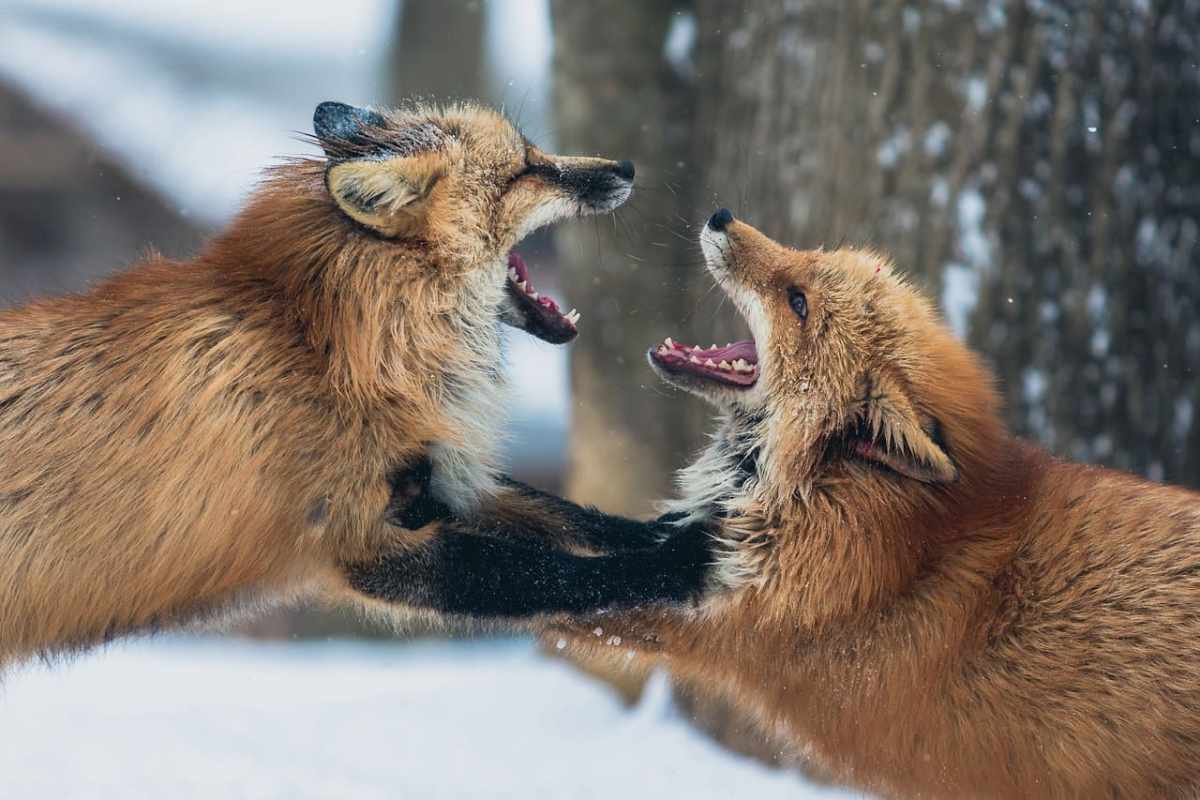
In Graubünden, the fox is hunted during three types of hunt: the high hunt in September, the low-ground hunt in October and November, and nocturnal wait hunting from November to the end of February. According to Federal Hunting Statistics 2,027 foxes were killed in the canton in 2025. Over the past ten years, recreational hunters in Graubünden killed between 1,350 and 3,412 foxes a year, according to the government.
On 15 October 2026, the Lucerne lawyer Pascal Wolf submitted the petition “Ban on general fox hunting” to the cantonal chancellery: a year-round closed season for the red fox, kills only in exceptional cases approved in advance, monitoring with a report to the Grand Council, and priority for non-lethal measures, following the example of the canton of Geneva. On 6 November 2026 the reply came (reply from the DIEM): all six requests rejected.
The letter was signed by Government Councillor Dr Carmelia Maissen, head of the Department of Infrastructure, Energy and Mobility. Unlike Lucerne, Glarus or Solothurn, Graubünden engages with the petition over six pages and thanks the petitioner for the “carefully reasoned submission, backed by scientific sources”. All the more remarkable is what the letter concedes along the way: a cantonal ban would be “permissible under federal law”, the mange-related kills contribute to combating the disease “only to a very limited extent”, and on the protection of rare species the petition's reasoning “applies” to Graubünden “in full”. In the end, the government expressly justifies fox hunting “for traditional reasons”.
You can do something, no matter which constituency you live in. Contact a member of the Grand Council directly. It is legal, effective and takes very little time.
Important: do not rely on e-mail alone. We have received feedback from several cantons that messages about recreational hunting of the fox are sometimes returned as undeliverable. Use several channels, therefore: a letter, a phone call or a personal conversation. A message to a parliamentary group or party secretariat is often more effective than one to individual members.
Template letter: copy this text into your e-mail programme
Subject: Fox hunting in Graubünden: request to consider a year-round closed season
Dear Ms [Name] / Dear Mr [Name]
I ask you to review fox hunting in the canton of Graubünden politically.
On 6 November 2026, the Department of Infrastructure, Energy and Mobility rejected the petition “Ban on general fox hunting”. The reply itself concedes that a cantonal ban would be permissible under federal law, that killing mangy foxes contributes only very marginally to combating the disease, and that the fox plays a role in the decline of rare species only in rare cases and locally. How strongly recreational hunting regulates the fox population “cannot be conclusively stated”. In the end, fox hunting is justified by tradition.
Every year, between 1,350 and 3,412 foxes are killed in Grisons. According to the cantonal government, between 80 and 100 foxes had to be killed in 2023 and 2024 to prevent wildlife damage. It does not set out what damage lies behind these figures. Individual cases do not call for general hunting of an entire population, but for targeted intervention by the wildlife wardens, as the law already permits today.
That it is possible without fox hunting is shown not only by the urban canton of Geneva, but by Grisons itself: the Swiss National Park in the Engadine has been free of hunting since 1914, including for the fox. In over a hundred years, none of the scenarios used to justify fox hunting has materialised there. The expert report by SWILD commissioned by the canton of Zug (May 2026) also concludes that fox hunting as currently practised does not regulate the population sustainably and does not improve the control of epidemics.
Politically, tradition is by no means sufficient grounds for continuing a hunt whose benefit the canton itself cannot demonstrate. I therefore ask you to work in the Grand Council for an independent scientific review of fox hunting and for a year-round closed season for the red fox.
Kind regards
[Your name]
[Your place of residence]
What was decided in the canton of Grisons
Petition “Ban on general fox hunting”, submitted on 15 October 2026 by Pascal Wolf. It calls for a year-round closed season for the red fox, the killing of individual foxes only in exceptional cases approved in advance, clear rules for sick and injured animals, protection of exceptional culls against abuse, monitoring with a report to the Grand Council, and priority for non-lethal measures.
Reply of 6 November 2026, Government Councillor Dr Carmelia Maissen, Department of Infrastructure, Energy and Mobility: all motions rejected. With 7,105 square kilometres and 28 inhabitants per square kilometre, the Grisons, it argued, cannot be compared with Geneva. Fox hunting was lawful and sustainable, it said, serving to kill sick animals and to prevent damage by wildlife. As evidence, the government states that conflicts increased after wait hunting near settlements was restricted from 2021: instead of 10 to 40 foxes a year (2018 to 2022), between 80 and 100 foxes had to be killed in 2023 and 2024 to prevent damage by wildlife.
What the government does not substantiate
The department confirms that a cantonal ban on general fox hunting would be permissible under federal law, and that measures against individual animals causing considerable damage would remain possible even then. The canton could therefore ban general fox hunting, but it does not want to. Continuing it is a political decision, not an obligation under federal law.
By its own admission, the department cannot say how strongly recreational hunting regulates the fox population: it cannot “give a conclusive answer”. In the very next sentence, however, it states that it can “be strongly assumed” that hunting culls contribute significantly to unproblematic coexistence with the fox. The letter provides no proof of effectiveness. An assumption becomes the justification for up to 3,412 foxes killed every year.
For culls ordered by the authorities, the canton demands a link to the individual case, a justification and proportionality. The administration is barred from using such exceptions for “blanket, indiscriminate population regulation”. For general fox hunting, by contrast, the assumption that it is useful is enough. It is precisely this double standard that politicians must examine.
As evidence of growing conflicts in settlements, the department cites the number of foxes killed to prevent damage by wildlife. What damage occurred, how its extent developed and which protective measures were tried beforehand remains unclear. More kills initially prove only more kills, not the need for general hunting. Moreover, wait hunting near settlements was restricted because of a feared attraction effect on wolves; whether the increase has other causes is not examined in the letter.
Disease does not support the argument either. According to the department, culling mangy foxes only combats the disease to a very limited extent. Nobody disputes that severely injured or suffering animals should be put out of their misery, and the petition expressly provides for such cases. But killing a sick fox does not justify a general hunt of its healthy conspecifics.
Non-lethal measures already take priority, the department writes. It does not show which ones were used where, or with what result. Instead, it expressly considers fox hunting justifiable "for traditional reasons". The government dismisses the Geneva example by pointing to rural conditions, but does not mention the national park in its own canton, which has been hunting-free since 1914. What tradition is worth is shown by the Grisons fur market: 8 francs per pelt.
What Science Says
Population regulation: The red fox quickly compensates for losses through increased reproduction and immigration. Local culling does not reduce fox density at the landscape level (Baker et al. 2002; Rushton et al. 2006; Kämmerle et al. 2019). The Grisons government itself cannot say how strongly recreational hunting regulates the population.
Mange: In 2025, the Grisons wildlife wardens killed 160 mangy foxes. In its reply, the government itself confirms that these kills barely contain the disease. Many foxes survive mange and develop antibodies.
Rabies and fox tapeworm: Rabies was not defeated by hunting but by vaccine baits from 1978. In the case of the fox tapeworm, intensive hunting in the Nancy area increased the proportion of infected foxes (Comte et al. 2017); in Luxembourg it fell from around 40 to under 10 per cent after the hunting ban of 2015.
Hunting-free areas: No foxes have been hunted in the Swiss National Park since 1914. Populations there regulate themselves through food supply, competition and natural mortality. More in the dossier Fox Switzerland: the most hunted predator without a lobby.
Full overview of studies: Studies: The Impact of Recreational Hunting on Wild Animals
The Zug SWILD report
The canton of Zug is so far the only canton to have responded to the fox hunting petition with a scientific study. The SWILD expert report was published in May 2026 and was submitted to the hunting commission on 16 June 2026. Its findings: fox hunting as currently practised does not regulate the population sustainably, does not improve disease control, and is inferior to non-lethal methods in protecting livestock. Grisons has been recording causes of fallen game and the number of foxes observed since 1991. The data for such a review would therefore be available.
The full study is publicly accessible: Scientific Basis for Fox Hunting
Where to find the contact details
The Grand Council of the canton of Grisons has 120 members, elected in 39 constituencies. The term of office runs from the August 2026 session to the August 2030 session. You can find names, parliamentary groups and contact details in the council information system at ris.gr.ch: Members of the Grand Council. A personally worded message to members from your constituency or your party is the most effective.
What has happened so far in the canton of Grisons
📌 8 francs per pelt: What the Grisons pelt market reveals about fox hunting
700 to 800 fox pelts in Thusis, presented as 'appreciation of animals and nature'.
📌 Flims, Klosters, Sedrun: Three dogs that recreational hunters in Grisons mistook for foxes
Night, fox hunting and a target that was not clearly identified before the shot.
📌 Calanca Valley: Killed Foxes Next to Bus Stop
Recreational hunters hang up shot foxes along the cantonal road and opposite a bus stop.
📌 Grisons hunt 2026/27: incidents, violations and developments at a glance
Our ongoing ticker on the Grisons hunting season.
📌 Hunting statistics 2000 to 2025: half as many foxes killed
Across Switzerland, fox hunting has halved; in Grisons it fell by only 26 per cent.
📌 Fox Switzerland: the most hunted predator without a lobby
Why around 19,000 foxes are shot every year in Aargau without any kill quota and without scientific justification.