Swiss wolf model: Italian newspaper doubts the effect of the kills
224 wolves killed over three regulation periods, yet more packs: «il Dolomiti» questions Swiss kill policy.
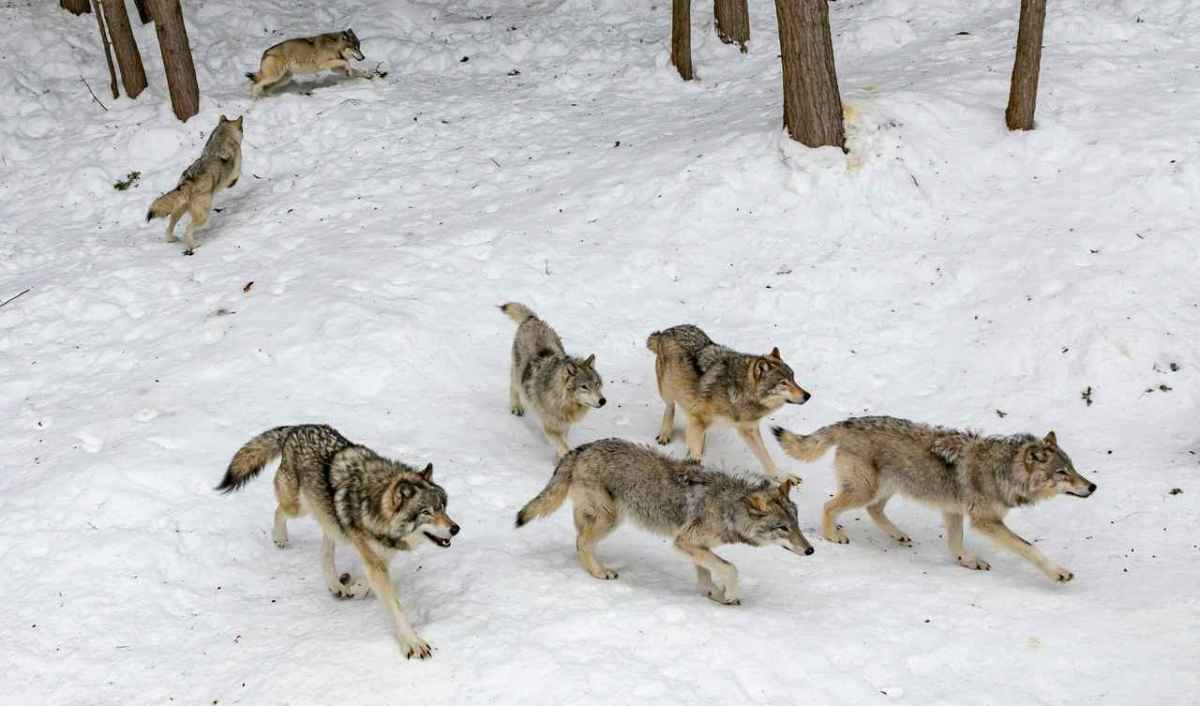
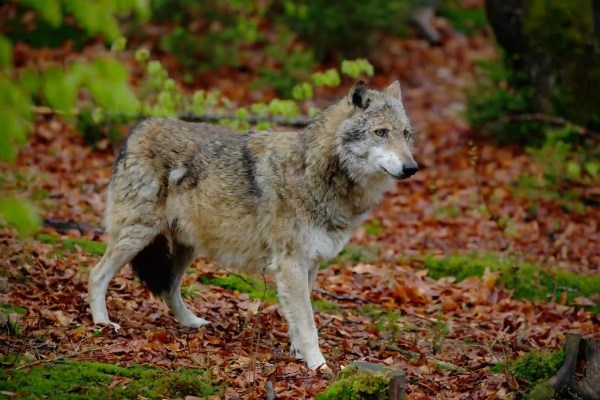
Stock image. Photo: Eva Blue / Unsplash
In Reserve
On 14 November 2026, the Trentino online newspaper «il Dolomiti» took a close look at Swiss wolf policy. Its question: does the Swiss model really work? The paper questions whether the kills achieve their goals: the number of packs continues to rise, and where livestock losses are falling, the respective contributions of herd protection and kills cannot yet be separated. The view from outside carries weight because, since the downgrading of wolf protection in the EU, the Swiss approach has been mooted as a possible model in Trentino.
The figures that stand out in Italy
Author Marcello Oberosler bases his Article on information from the Federal Office for the Environment (FOEN) and the canton of Valais. These can be verified against the official sources:
- In the three regulation periods to date, 55, 92 and 77 wolves were killed, 224 in total.
- After the first regulation period in 2023/24, the FOEN counted 35 packs, after the second 36 and after the third period in 2025/26 there were 40, including ten cross-border packs. In the 2025/26 monitoring year, 350 wolves were recorded.
- In Valais, which accounts for more than a third of all kills, the number of genetically identified wolves rose within a year from 61 to 75, according to Canton. The number of packs remained at eleven.
- Of eight approved complete pack removals in winter 2025/26, only one led to the complete dissolution of a pack, according to FOEN's knowledge at the time.
The hook of the Italian article is the Arolla-Ferpècle pack in Valais. The FOEN has authorised its complete removal, and the decision has been in force since 10 November 2026. After Augstbord and Nanz, it is the third Valais pack that is to disappear entirely this season. How many wolves belong to the pack and what damage is attributed to it is not stated in the canton's announcement. The current situation can be found in the wolf kill counter 2026/27 and in the Valais ticker.
Fewer kills, but who deserves the credit?
As far as livestock are concerned, the picture is opaque, according to «il Dolomiti». Kills are declining: in Valais, 401 livestock animals were killed by wolves in 2023, 341 in 2024 and 318 in 2025. Across Switzerland, damage is approaching the levels of 2020/21, when there were only 10 to 15 packs, according to the FOEN. The decline began, however, before pre-emptive shooting started, as Pro Natura points out. The FOEN itself attributes it to expanded herd protection and to regulation. Wild beim Wild examined the time series in the article Acquitted: it wasn't the wolf.
The Italian newspaper also gives the other side a voice. Proponents read the same figures differently: growth of the population has been strongly curbed, and the decline in kills has given tangible help to mountain farming. In its assessment of May 2026, the FOEN states that rapid growth has been slowed, but that the number of packs continues to rise. To confirm this trend with certainty, the agency considers several further regulation periods necessary. A scientific study with the Universities of Zurich and Lausanne is not expected to deliver results for several years, according to «il Dolomiti».
Politicians are not waiting for the answer
The shooting continues regardless, and Parliament is going a step further still. On 23 September 2026, the National Council adopted the motion by Ticino Council of States member Fabio Regazzi by 116 votes to 73. It demands kills as soon as the population exceeds a set threshold. The details are in the article Wolf threshold: National Council approves stockpiled kills. How far practice departs from the Confederation's assurances to the Council of Europe is shown by the practice check on 15 assurances.
Commentary
When a newspaper from a region that is itself arguing over wolf culls takes a critical look at the Swiss figures, it exposes a central weakness of local wolf policy: the culls continue even though their added benefit compared with herd protection has not been demonstrated. Switzerland kills pups and entire wolf families pre-emptively, in Valais with the help of recreational hunters holding regulation permits, and the FOEN (Federal Office for the Environment) itself considers further regulation periods necessary to confirm the trend with certainty. Anyone intervening in this way must present more than falling damage figures, which can just as well be explained by expanded herd protection. A policy that shoots first and only afterwards checks whether it achieved anything is a field experiment on a protected species. That herd protection works is established. Before that comes the question of which Alpine summer grazing in wildlife habitats is justifiable at all.
Seen something yourself?
A driven hunt next to a hiking trail, a shot fired near houses, a trap in the forest or an injured wild animal: report it to the Recreational Hunter Radar. We check every tip-off and treat your details confidentially.
More on the subject of recreational hunting: In our dossiers on recreational hunting gather fact-checks, analyses and background reports. What the research says about this is shown by Hunting fact-checked: the state of research.
The position of IG Wild beim Wild: IG Wild beim Wild rejects recreational hunting. Our model is the canton of Geneva, which has managed without recreational hunting since 1974: without hunting seasons, without hunting dogs, without driven hunts, without high seats, without the animal cruelty and crime that go hand in hand with hunting season elsewhere. What has worked there for over fifty years disproves every position paper by JagdSchweiz. An association that bases its policy on claims it refutes in its own documents is not a professional organisation, but a factory for misinformation.
Wild animals need a voice
Once a week: research, petitions and background information on recreational hunting. Free of charge and can be unsubscribed from at any time.
Support our work
With your donation you help protect animals and give their voice a hearing.
Donate now →