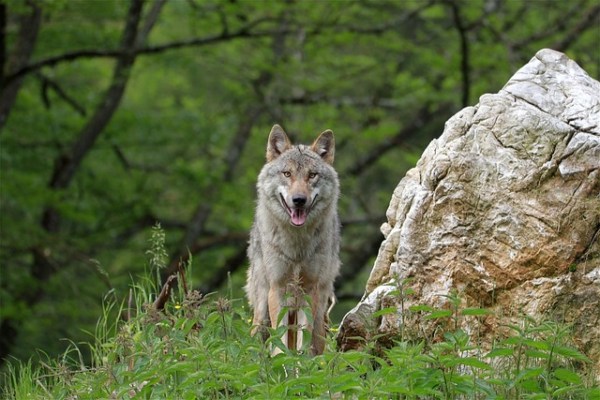
Brandenburg: new wolf plan initially provides for ten kills
After a single confirmed attack on protected livestock, recreational hunters are to be allowed to kill a wolf for up to eight weeks, even if it did not cause the damage.
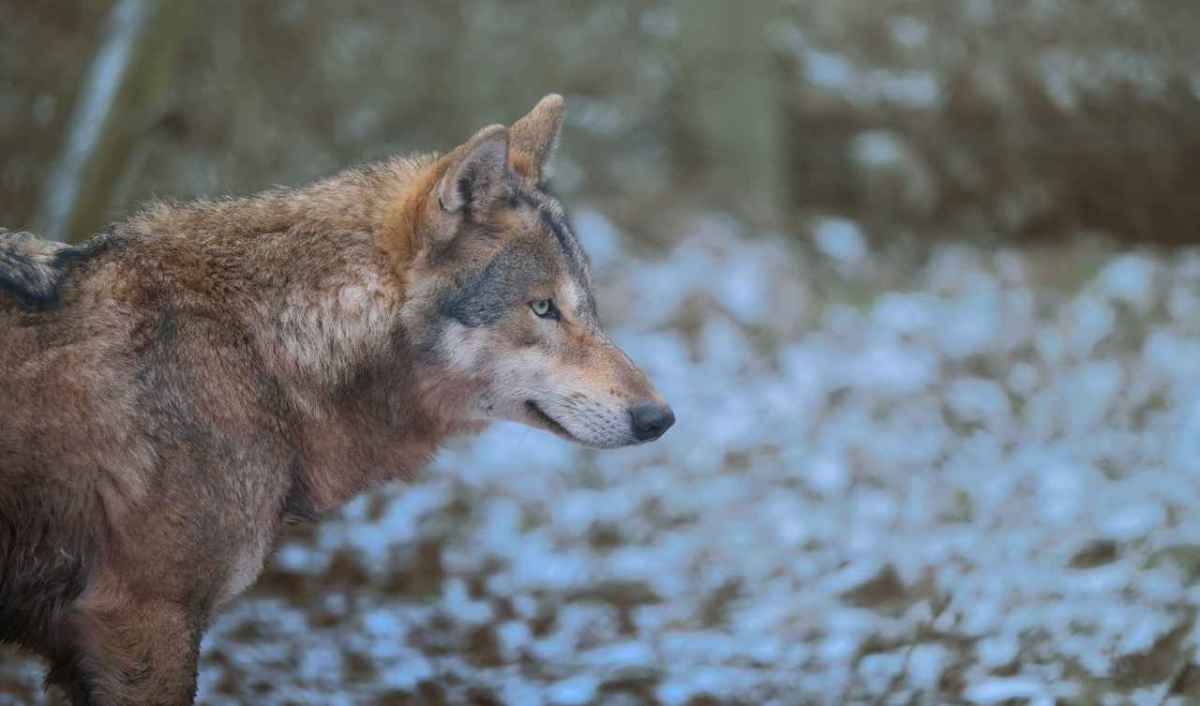
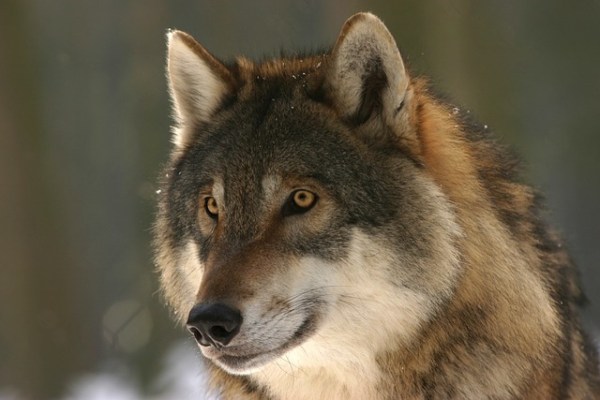
Stock image. Photo: Ma Ti / Unsplash
Removal
In the 2026/27 hunting year, Brandenburg wants to have up to ten wolves killed. On Wednesday, 11 November 2026, Agriculture and Environment Minister Hanka Mittelstädt (SPD) presented a new wolf management plan in Potsdam. According to the German Press Agency, it is due to come into force on 19 November as a general ruling and to make kills possible after just a single confirmed attack on protected livestock.
A single confirmed kill is to be enough
The general ruling is entitled “Cross-territorial management plan for the hunting of the wolf species”. After a suspected wolf attack on livestock, a kill assessor must check on site within 24 hours, on the basis of tracks and other evidence, whether a wolf caused the damage. Genetic proof is not required. If the suspicion is confirmed, a so-called intervention area is designated: all hunting districts within a radius of 1.5 kilometres of the site of the damage. There, the recreational hunters with hunting rights in the affected grounds may shoot one wolf for a maximum of eight weeks. “In future it will be enough that a wolf has once overcome suitable herd protection”, says Mittelstädt, according to the ministry statement.
The precondition is that the herd was protected by suitable measures. As herd protection for sheep, goats, llamas and alpacas, the ministry cites, for example, a mobile electric fence at least 120 centimetres high carrying 4,000 volts, or a permanent wire-mesh fence at least 140 centimetres high with protection against digging under and climbing over. In individual cases, night pens, closed stables or shepherding may also suffice if the nature conservation authority confirms this. For cattle and horses, decisions are made case by case.
It does not have to be the wolf that made the kill
The crucial point: as soon as a wolf has been killed in the intervention area, hunting there ends. According to the ministry, it need not necessarily be the wolf that caused the damage. If the same herd is attacked again within seven days of a kill, a wolf may be shot for a further eight weeks without a new expert assessment. According to dpa, the BUND considers the plan legally and technically problematic and criticises: “What counts is the killing of any wolf.”
The upper limit is not a fixed ceiling either. The state sets it anew at the start of each hunting year, at ten wolves for 2026/27. Once this number is reached, the districts, as the lower hunting authorities, can continue to order the killing of wolves that cause damage, based on Section 22d, paragraph 4 of the Federal Hunting Act. A prerequisite is an assessment of the kill. In cases of imminent danger to protect people or public safety, the police authorities are responsible.
Fewer attacks, yet easier kills
The ministry provisionally puts the population for the 2025/26 monitoring year at around 51 packs, 9 pairs and 3 territorial single animals, and describes it as stable. At the same time, damage is declining: in 2023 the state counted 358 attacks on livestock, in 2025 only 178. From January to the end of September 2026 there were 133. Since 2016, around 6.3 million euros have gone into fences and livestock guardian dogs. At present, up to 1.5 million euros a year are available for prevention and up to 150,000 euros for compensation.
Farmers and recreational hunters want more
The Brandenburg state farmers' association feels the plan does not go far enough. “The hurdles to effective regulation of the wolf population in Brandenburg remain far too high,” Jens Schreinicke of the association told top agrar. The association had demanded 90-centimetre-high fences as the standard and a radius of five kilometres, and calls ten wolves "a drop in the ocean". The state hunting association also wants more. "Removing individual problem wolves is not enough," says its president, Dirk-Henner Wellershoff.
Made possible by the downgrading of protection status
The basis is the relaxation of protection at European level. The EU has moved the wolf in the Habitats Directive from Annex IV (strictly protected) to Annex V (protected), and the European Parliament approved this in May 2025. Since 2 April 2026, the wolf in Germany has been subject to federal hunting law. Regional management plans are intended to provide the basis for hunting where the conservation status is favourable. According to dpa, citing the ministry, Hesse and Lower Saxony have already drawn up such plans. Why Wild beim Wild considers this relaxation premature is explained in the article Wolf protection in Germany: relaxation too soon.
Commentary: Shooting on suspicion
Between 2023 and 2025, the number of registered attacks in Brandenburg more than halved. Minister Mittelstädt herself describes proper herd protection as "the most effective instrument for preventing attacks". Nevertheless, the state is now creating eased kill options in which it need not be established that the wolf killed actually caused the damage. If any wolf within a radius of 1.5 kilometres may be killed, the animal hit may well be one that never set foot on a pasture. This has little to do with targeted damage prevention; it is shooting on suspicion.
The fact that the farmers' association and recreational hunters are demanding more on the very first day shows where this is heading. The same logic can be observed in Switzerland, where in Ticino even the first attack is meant to allow kills. In Sweden, courts have halted the wolf hunt because it was incompatible with species protection, as the article Sweden's wolf model fails in court shows. In Spain, too, kill plans for wolves have been overturned by courts several times. Whether Brandenburg's plan will stand up in court remains to be seen.
More on the subject of recreational hunting: The scientific evidence is presented in the overview Studies on the Effects of Recreational Hunting.
The position of IG Wild beim Wild: IG Wild beim Wild rejects recreational hunting. Our model is the canton of Geneva, which has managed without recreational hunting since 1974: without hunting seasons, without hunting dogs, without driven hunts, without high seats, without the animal cruelty and crime that go hand in hand with hunting season elsewhere. What has worked there for over fifty years disproves every position paper by JagdSchweiz. An association that bases its policy on claims it refutes in its own documents is not a professional organisation, but a factory for misinformation.
Wild animals need a voice
Once a week: research, petitions and background information on recreational hunting. Free of charge and can be unsubscribed from at any time.

All articles are written by IG Wild beim Wild as well as by external co-authors. Research, structuring and editorial processes may be supported by AI-assisted tools.
Support our work
With your donation you help protect animals and give their voice a hearing.
Donate now →