
Petition: No recreational hunting of endangered species
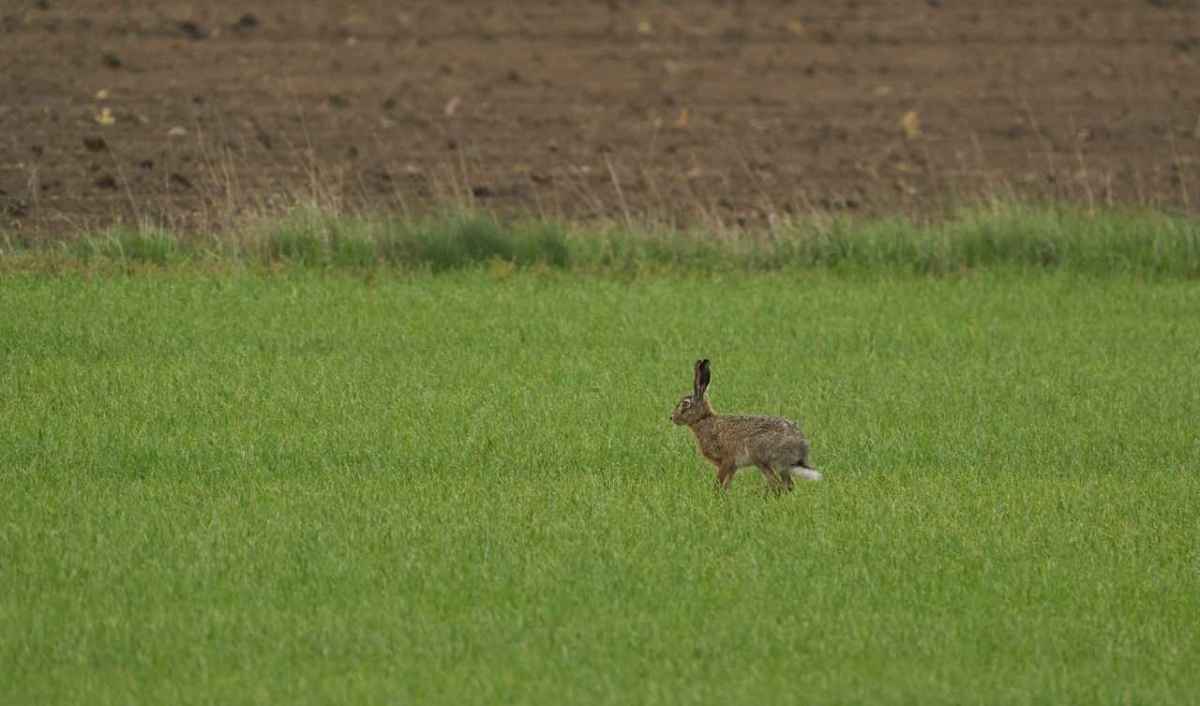
In September 2026, France placed the rock ptarmigan and the capercaillie under strict protection. In Switzerland, according to the Federal Hunting Statistics 223 rock ptarmigan were killed in 2025, along with 1,400 woodcocks and 1,343 brown hares. In Switzerland the woodcock and the brown hare are classed as vulnerable and the rock ptarmigan as near threatened. This petition demands that threatened and near-threatened species may no longer be hunted.
👉 Even more effective than a signature: Write to your cantonal parliament. The cantons can already extend closed seasons and restrict the list of huntable species today, and to protect locally threatened species they are in fact obliged to do so (Art. 5 para. 4 JSG). You will find the addresses of all cantonal parliaments on our letter page, and a ready-made parliamentary motion in the template text “Abolition of small-game hunting”.
Our demands
The signatories call on the Federal Council and the Federal Assembly to amend the list of huntable species in the Hunting Act (JSG) and the Hunting Ordinance (JSV) so that:
- No recreational hunting of Red List species takes place. Species classified in the national Red Lists as near threatened, vulnerable, endangered or critically endangered are removed from the list of huntable species. Today this affects, among others, the woodcock, brown hare, wild rabbit, rock ptarmigan, black grouse, mountain hare, common pochard, common teal, tufted duck, gadwall and great crested grebe.
- New classifications take effect quickly. The legal basis is framed so that a corresponding reclassification in the Red Lists leads to a hunting ban within a binding deadline.
- The Federal Council acts immediately. Under Article 5 paragraph 6 JSG, it may restrict the list of huntable species after consulting the cantons if the conservation of threatened species requires it. It has already done so in the Hunting Ordinance for the grey partridge and the ferruginous duck. Until Parliament amends the law, it should take this route for all the species named.
What the hunting statistics show
Wild beim Wild's analysis of the 2025 Swiss Federal Hunting Statistics shows ten Red List species that were still being killed last year. The worst affected were the Eurasian woodcock, with 1’400 birds, 1’172 of them in Ticino, and the brown hare, with 1’343 hares killed, 947 of them in Grisons.
Over ten years, the numbers add up: from 2016 to 2025, 16’935 woodcocks, 16’108 brown hares, 9’363 mountain hares, 4’108 black grouse and 3’346 rock ptarmigan were killed. The table with all ten species, their classification and the sources can be found in the Swiss Hunting Statistics 2025 dossier.
A note on context: the figures cited include kills and special kills as recorded in the Swiss Federal Hunting Statistics. For birds, the threat classifications refer to Swiss breeding populations, whereas the kill figures may also include migratory and wintering birds.
The European rabbit is classed as endangered in the 2022 Red List of mammals and yet remains in the hunting act. In Valais, 9 wild rabbits were still shot in 2019 and 14 in 2022; the statistics report no kills for 2023 to 2025. More in the Wild rabbit dossier.
France shows it can be done
In March 2026, the Conseil d’État, France's highest administrative court, ordered the government to suspend recreational hunting of the rock ptarmigan for five years. In September 2026, protected status followed: the rock ptarmigan and the capercaillie are now on the list of protected bird species.
Around 40 per cent of the central European population of the rock ptarmigan breeds in Switzerland. It is still hunted in Grisons, Valais and Uri; according to the Swiss Ornithological Institute, none has been shot in Ticino since 2019. In Uri, voters narrowly rejected the initiative 'Let the ptarmigan and the mountain hare live!' in May 2025, with 52.9 per cent voting no. More on this, and the evidence for the French decrees, in the article 'Rock ptarmigan: France protects, Switzerland shoots'.
What experts are demanding
The Swiss Ornithological Institute in Sempach is calling for the great crested grebe to be struck from the list of huntable species and for hunting pressure on the woodcock to be reduced. In the case of the woodcock, recreational hunting does not affect only passing migrants: a study by Bohnenstengel and colleagues (2020) estimates that 14 to 33 per cent of the woodcocks shot in Switzerland come from the native breeding population. More in the Woodcock dossier.
Read more: Brown Hare Dossier · Mountain hare dossier · Rock Ptarmigan Dossier · Waterfowl dossier · Geneva: A canton without recreational hunting since 1974 · Section: Campaigns & Hunting
Dear Members of the Federal Council
Dear Members of the Federal Assembly
According to the Federal Hunting Statistics, in 2025 some 1,400 woodcocks, 1,343 brown hares and 223 rock ptarmigans were killed in Switzerland. The woodcock and the brown hare are classed as vulnerable, the rock ptarmigan as near threatened. In September 2026, France placed the rock ptarmigan under strict protection.
I call on you to amend the list of huntable species so that:
Species classed in the national Red Lists as near threatened, vulnerable, endangered or critically endangered may no longer be hunted.
A corresponding reclassification in the Red Lists leads to a hunting ban within a binding deadline.
Pending the amendment of the act, the Federal Council restricts the list by ordinance on the basis of Article 5, paragraph 6 of the Hunting Act.
Yours sincerely
Add your voice now
Your signature counts.
I signed because...
-
«It is regrettable that rare animals are being shot. I go into the woods fairly often, but I have never once seen a living brown hare in Switzerland. Or a capercaillie, or any woodcock or grey partridge... In other countries, by contrast, I have – in Spain or France, for example. There I saw them in large numbers in a big field. The fields and forests in Switzerland sometimes seem as if they have died out. You only see a few species. Many animals are probably hiding because of the hunting pressure (which is also why there is browsing damage to the trees in the forests. Because in fact roe deer, for example, would graze in the meadows and at the forest edge if they could.)»
-
«It is a failure of the state that hunting of endangered species is still possible at all. But it also shows with absolute clarity the recklessness of recreational hunters towards nature and biodiversity. Barbara Trentini»