Songbird catching in the Salzkammergut: VGT reports around 75 birds per exhibition
Upper Austria permits, by provincial ordinance, the catching of wild birds for traditional exhibitions. On 29 November the VGT is protesting in Bad Ischl.
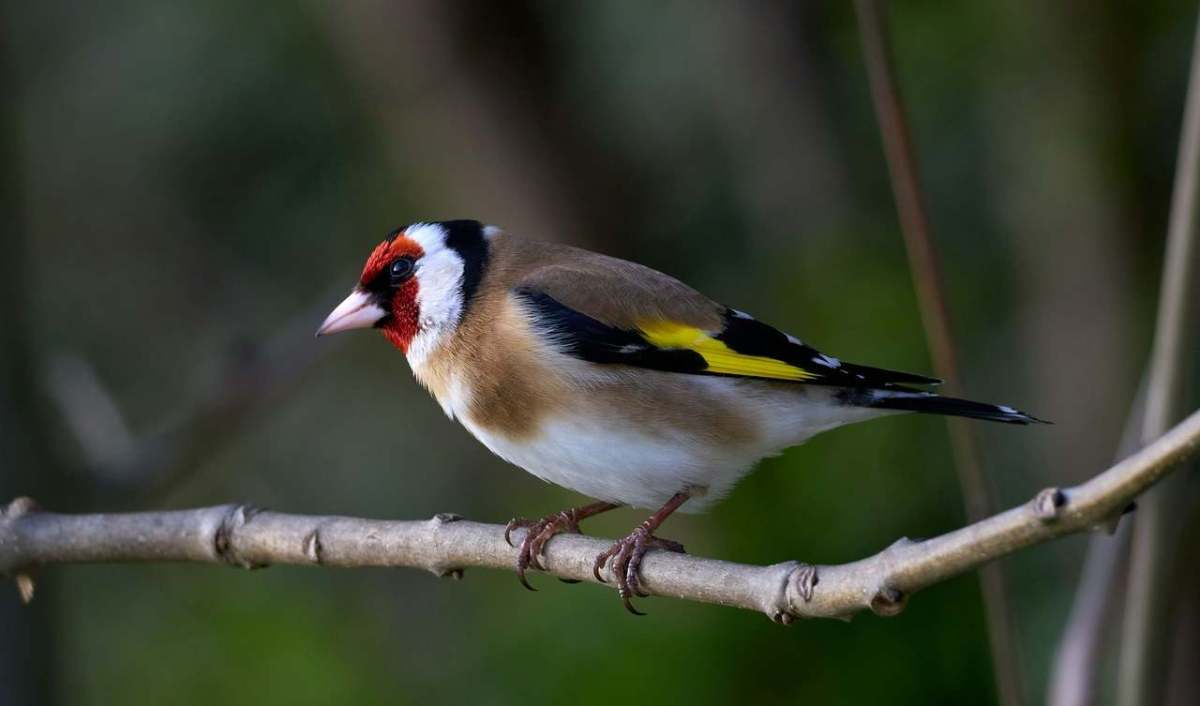
Photo: Diane Theresa Hendrick / Unsplash
In parts of Upper Austria, certain wild songbirds may be caught and kept for traditional exhibitions with official authorisation. The Verein gegen Tierfabriken (VGT, Association Against Animal Factories) criticises this practice. On Sunday, 22 November 2026, its activists visited five songbird exhibitions in Ebensee, Bad Goisern and Gosau. On 29 November the association is calling for a protest in front of the closing exhibition in Bad Ischl.
What the VGT reports from the exhibitions
According to a VGT press release of 23 November an average of around 75 songbirds could be seen at each of the five exhibitions, in small cages hung on the wall. A ban on photography applied everywhere. Bird catchers allegedly pushed and chased visitors who took out their mobile phones, and animal welfare campaigners were refused entry. The preliminary rounds of the individual bird-catchers' associations took place on the same day. The information comes from the association and has not been independently confirmed.
What the Upper Austrian Species Protection Ordinance permits
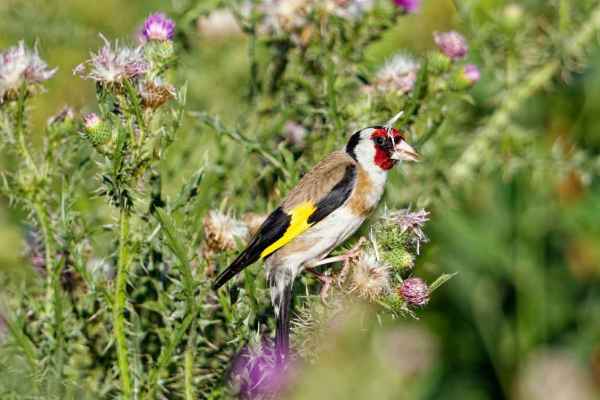
The basis is Section 11 of the Upper Austrian Species Protection Ordinance. The exemption applies to catching in the district of Gmunden and in expressly named municipalities of the districts of Vöcklabruck and Wels-Land, in each case outside bird protection areas. The birds may be kept in these three districts. The exemption requires official authorisation and names exactly four species: goldfinch, siskin (or Eurasian siskin), bullfinch and common crossbill. In principle, each permit holder may catch only one specimen per species, with a maximum of 550 birds per species and catching season; decoy birds are not included. A record must be kept of the catching period, location, catching methods and catching success.
The trapping season runs from 15 September to 30 November. As a rule, the captured birds must be released by 10 April of the following year at the latest; this deadline does not apply to decoy birds deemed permissible. Anyone who traps in mid-September therefore keeps a wild bird for almost seven months. For this, species-appropriately structured aviaries of at least four cubic metres are required. The birds may be kept in cages only during the exhibitions, plus decoy cages during trapping and transport cages.
The rules on decoy and transport cages are new. The Upper Austrian state government amended Section 11 in June 2026 (LGBl. No. 48/2026). Since then, keeping decoy birds in decoy cages during trapping has been expressly permitted. Transport must take place in transport cages or containers, for as short a time as possible and at least with the light dimmed. By-catch must be released immediately. A trapping permit may also now be granted for up to six trapping seasons instead of one, as before. This followed two rulings by the Upper Austrian Regional Administrative Court in February 2025: according to VGT the court held that transport is subject to animal welfare law and that hanging live decoy birds in cages constitutes animal cruelty under the Animal Welfare Act. The VGT considers the amendment unconstitutional, because animal welfare is a federal matter.
What the Constitutional Court decided in 2007
The exhibition of wild-caught birds was expressly prohibited in Section 2, paragraph 2 of the Animal Welfare Events Ordinance. The Constitutional Court repealed this provision on 8 March 2007. At the heart of the case was the constitutional duty of consideration between the federal government and the states: the federal exhibition ban conflicted with the Upper Austrian regulation on traditional songbird exhibitions. The decision was not a declaration by animal welfare experts that the practice was harmless. Since 2010, the 'Salzkammergut bird trapping' has also been listed in Austria's inventory of the UNESCO intangible cultural heritage.
Protest on 29 November in Bad Ischl
The season concludes with the final competition, at which the 'most beautiful birds' are awarded prizes. The VGT is protesting on Sunday, 29 November 2026, from 10 am to 4 pm in front of the Kongress & TheaterHaus Bad Ischl at Kurhausstrasse 8. The trapping season ends one day later.
Comment: Tradition is not a free pass
In the cases reported by Wild beim Wild from Vicenza and Brescia it is a matter of bird poaching; in the Salzkammergut, by contrast, an officially authorised trapping practice is under criticism. For the birds, the difference is smaller than it looks on paper: they are taken from their habitat, kept for months and put on show for a competition between humans.
A special legal provision does not answer the question of the animals' welfare. Even during the proceedings before the Constitutional Court, the Animal Welfare Council warned of extreme restriction of movement, a lack of places to retreat to and additional stress from the proximity of many people. The photography bans described by the VGT make it harder to document the conditions in which the birds are kept publicly. And when the court objected to the transport and the keeping of decoy birds, the province adapted the ordinance, not the practice. It is the custom that is being safeguarded, not the animal.
Do you have a tip, a source or a correction for this article? Write to us.
Seen something yourself?
A driven hunt next to a hiking trail, a shot fired near houses, a trap in the forest or an injured wild animal: report it to the Recreational Hunter Radar. We check every tip-off and treat your details confidentially.
More on the subject of recreational hunting: In our dossiers on recreational hunting gather fact-checks, analyses and background reports. What the research says about this is shown by Hunting fact-checked: the state of research.
The position of IG Wild beim Wild: IG Wild beim Wild rejects recreational hunting. Our model is the canton of Geneva, which has managed without recreational hunting since 1974: without hunting seasons, without hunting dogs, without driven hunts, without high seats, without the animal cruelty and crime that go hand in hand with hunting season elsewhere. What has worked there for over fifty years disproves every position paper by JagdSchweiz. An association that bases its policy on claims it refutes in its own documents is not a professional organisation, but a factory for misinformation.
Wild animals need a voice
Investigations, petitions and background on recreational hunting. As a thank-you, you will immediately receive our free guide «Recreational hunting on your doorstep: what you can do».
Support our work
With your donation you help protect animals and give their voice a hearing.
Donate now →