Beaver dams on the Alte Lorze: Zug lowers the water level and lets the beaver stay
Pipes and a beaver slide are meant to prevent flooding along the Alte Lorze near Baar. The canton of Zug is lowering the water level; the dams and the beaver stay.
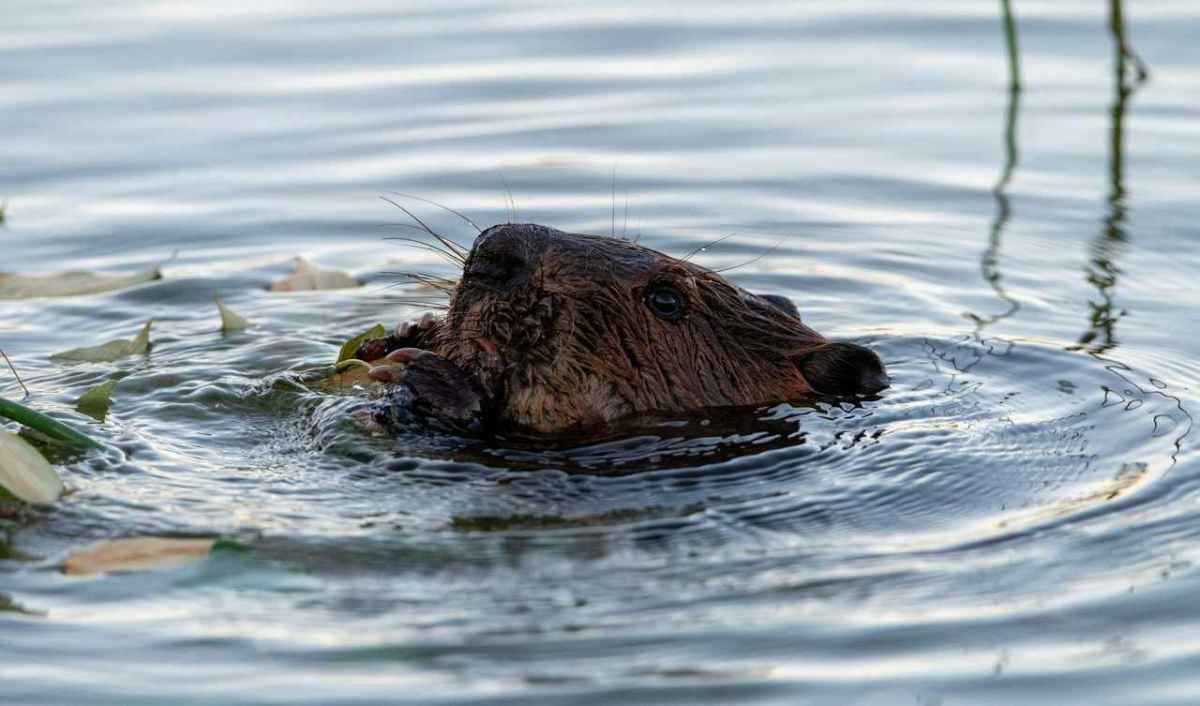
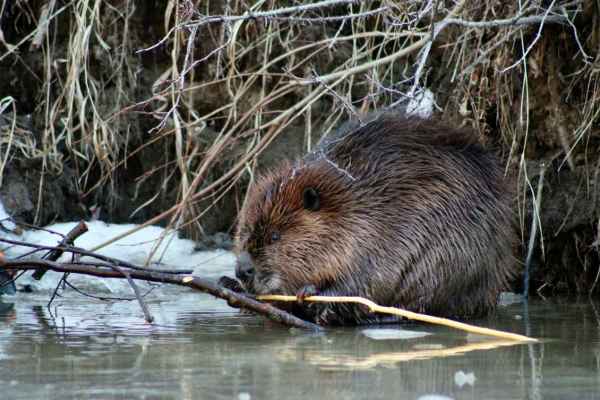
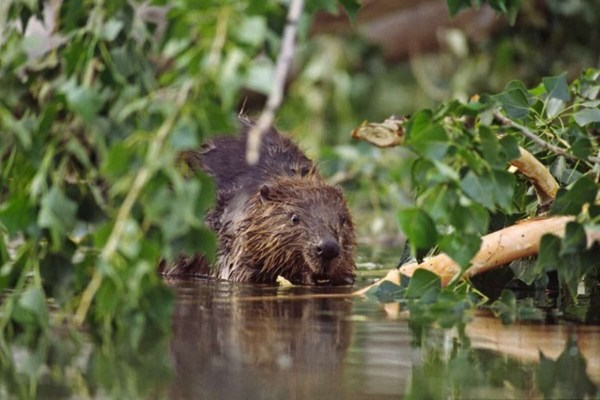
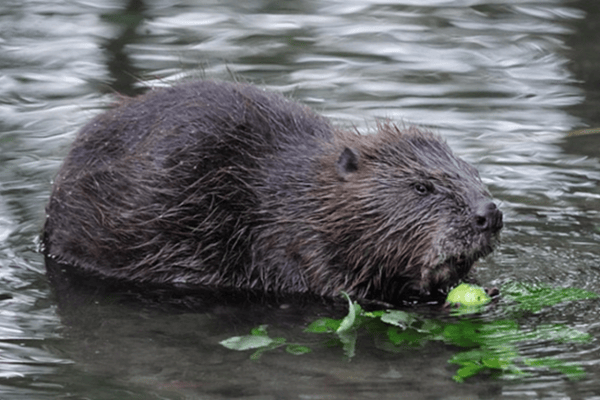
Illustrative image. Photo: Arthur Dick / Unsplash
What It Builds
On the Alte Lorze near Baar, a beaver built two new dams in September and October. The canton of Zug does not want to drive it away. Instead, it has laid pipes and a so-called beaver slide into the dam, lowering the water level by around 20 centimetres. The dams remain in place, as SRF reports.
What has happened on the Alte Lorze
The Alte Lorze flows past the Baar motorway exit, alongside hiking and cycling paths and through a nature reserve. The beaver is nothing new there: the municipality of Baar already reported in August 2025 a beaver family at the pond by the motorway exit. With the new dams, the water level has risen markedly. That is intentional as far as the beaver is concerned: in higher water it can float felled branches and trunks to its lodge and its food stores. For the paths and meadows alongside, however, the risk of flooding increases.
The Zug civil engineering office first created depressions in the ground and small embankments along the hiking trail. That will not be enough in the long run, says Jasmin Schnyder of the Zug Office for Forests and Wildlife, speaking to SRF: “In heavier rainfall, however, these measures might no longer be sufficient. In that case, flooding threatens the hiking trail, the cycle route, agricultural land and the lower-lying nature reserve.” The motorway drainage could also be affected.
Pipes in the dam, the beaver stays
Instead of removing the dam, the canton had pipes and a beaver slide installed to drain off excess water. "We are also making sure that the beaver continues to have enough water," says Schnyder. Because beavers and their structures are protected under federal law, this required an exemption permit, which was published in the Official Gazette of the Canton of Zug. It is not the first intervention of this kind: on the Grobenmoosbach in Cham, the canton allowed in the summer a beaver dam to be lowered, subject to conditions.
As in Cham, Pro Natura is on board. "It is planned as a one-off intervention, and we support that," says Marianne Rutishauser of Pro Natura. Even for the canton, the drainage is not a permanent solution: the beaver keeps trying to close the supposed leak with branches, and the pipes have to be checked and cleared regularly. Together with Pro Natura, the canton is now looking for a longer-term solution. According to the canton, only one thing is certain: the beaver is not to be driven out of the Alte Lorze. "It is a productive promoter of biodiversity," says Schnyder. According to a rough estimate by the office, around 90 beavers live in the Canton of Zug.
What the Hunting Ordinance has allowed since 2025
This approach is by no means a given. Individual beavers could be removed even before 2025, but that was ordered by the federal government. Since 1 February 2025, the cantons decide for themselves: under Article 9d of the Hunting Ordinance, they can order measures up to and including killing if beavers cause considerable damage or endanger people and this cannot be prevented by reasonable measures. According to the ordinance, considerable damage includes, among other things, an impoundment that floods settlements or buildings and facilities of public interest. According to the federal government's explanatory notes, even incipient flooding is sufficient for this.
What is reasonable is regulated by Article 10g. In the case of impoundment, this includes measures on the beaver dam, from lowering the dam crest and channelling the water through pipes to removing the dam altogether. Zug opted for the gentle variant, which preserves the dam and the territory. What the new regulation means for the beaver as a whole is shown by the dossier "The Beaver in Switzerland".
Elsewhere, the pressure is pushing in the opposite direction. In the Canton of St. Gallen, the FDP parliamentary group is demanding, by means of a cantonal initiative, that particularly affected cantons be allowed to regulate beaver populations regionally (Beavers in the Rhine Valley: the FDP wants to regulate). In Austria, according to a WWF count dated 19 November, kill quotas for 797 beavers are currently in force. WWF Switzerland points out in SRF's reporting that killing beavers barely solves the problem: when a beaver disappears from an area, another one often takes over the vacated territory.
Comment: resolve conflicts instead of killing beavers
Reasonable measures to prevent damage are not a mere formality. Zug shows that a beaver conflict can be defused by technical means even next to a motorway, a cycle route and a nature reserve. The drainage is not yet a permanent solution. But it buys time to develop a long-term solution together with nature conservation, without driving the beaver away. Anyone who wants to have a beaver shot in future will have to measure up against this example.
Where waterways have little room and border directly on paths, roads or farmland, the beaver's damming and digging activities come into conflict with human uses. A lasting solution must therefore centre on giving waterways more space. Technical measures can complement this; killing animals does not remove the spatial cause. Even the Federal Government's explanatory notes acknowledge that a stretch of water that falls vacant is quickly recolonised by beavers from neighbouring territories. A beaver that builds dams, by contrast, creates wetlands, keeps water in the landscape and does for free what renaturation projects otherwise cost a great deal of money to achieve (Ecosystem engineers: where beavers build dams for free). If Zug and Pro Natura seek the longer-term solution in this direction, the Alte Lorze could become a model for the whole of Switzerland. More about the wild animal itself can be found in the beaver profile.
Do you have a tip, a source or a correction for this article? Write to us.
Seen something yourself?
A driven hunt next to a hiking trail, a shot fired near houses, a trap in the forest or an injured wild animal: report it to the Recreational Hunter Radar. We check every tip-off and treat your details confidentially.
More on the subject of recreational hunting: In our dossiers on recreational hunting gather fact-checks, analyses and background reports. The scientific evidence is presented in the overview Studies on the Effects of Recreational Hunting.
The position of IG Wild beim Wild: IG Wild beim Wild rejects recreational hunting. Our model is the canton of Geneva, which has managed without recreational hunting since 1974: without hunting seasons, without hunting dogs, without driven hunts, without high seats, without the animal cruelty and crime that go hand in hand with hunting season elsewhere. What has worked there for over fifty years disproves every position paper by JagdSchweiz. An association that bases its policy on claims it refutes in its own documents is not a professional organisation, but a factory for misinformation.
Wild animals need a voice
Investigations, petitions and background on recreational hunting. As a thank-you, you will immediately receive our free guide «Recreational hunting on your doorstep: what you can do».
Support our work
With your donation you help protect animals and give their voice a hearing.
Donate now →