
Hedgehog: profile, hibernation, diet and hedgehogs in Switzerland
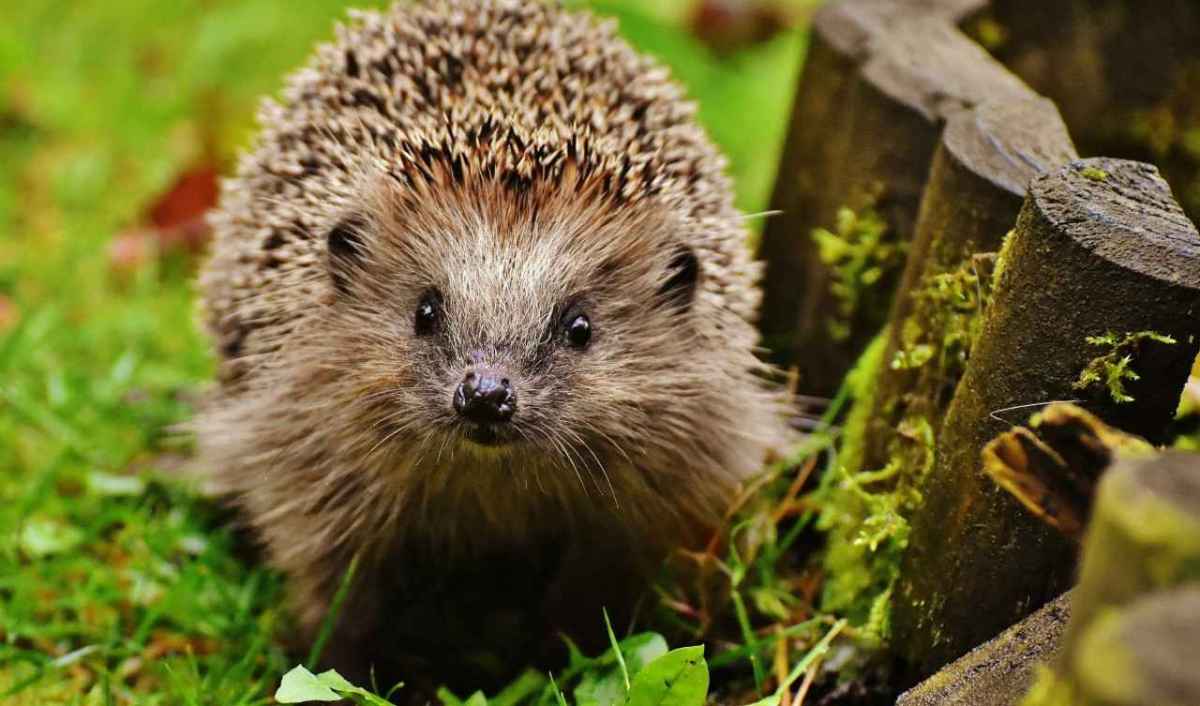
The European hedgehog (Erinaceus europaeus) is one of Switzerland's best-loved wild animals, and yet it is under threat. Pro Natura has named it Animal of the Year 2026, and since 2022 it has been listed as “near threatened” on the Red List. Today it lives mainly in gardens and parks, because the cleared agricultural landscape leaves it hardly any room.
Profile
- Family: Hedgehogs (Erinaceidae)
- Size: Body length 22 to 30 cm
- Weight: 800 to 1,500 g, heaviest before hibernation
- Spines: several thousand; when in danger it rolls into a ball
- Activity: crepuscular and nocturnal
- Diet: beetles, caterpillars, earthworms, earwigs and slugs
- Reproduction: usually one litter a year with 4 to 5 young
- Hibernation: roughly from November to March or April
- Status in Switzerland: protected, Red List “near threatened”
Spines instead of fleeing
The hedgehog relies on its nose and hearing; its eyesight is poor. When in danger it does not flee but rolls itself into a ball of spines. That helps against many enemies, but not against cars, brush cutters and robotic lawnmowers. At dusk and at night it covers long distances in search of insects and worms, and for this it needs permeable gardens without dense fences.
Hibernating in a pile of leaves
From roughly November to March or April the hedgehog hibernates in a nest of leaves and grass. Heartbeat and breathing slow dramatically, and the body lives off the fat reserves it built up in autumn. If you leave the leaves where they fall in autumn, you give it a place to overwinter. In summer, a shallow dish of water helps during heat and drought (Hedgehogs in a heatwave). Hedgehogs cannot tolerate milk.
Hedgehogs in Switzerland
Over the past ten years, hedgehog numbers in Western Europe have fallen by 16 to 33 per cent depending on the country, and by around half in Bavaria and Flanders. In the city of Zurich, the population shrank by 40 per cent in 25 years. In 2024 the International Union for Conservation of Nature (IUCN) also classed the hedgehog as “near threatened”. The causes are man-made: tidied gardens without leaf litter and hedges, sealed surfaces, roads, poison and garden machinery. More on this in the article The Hedgehog: Animal of the Year 2026.
What the research on hedgehogs shows
Hedgehogs do not reliably flee from a robotic lawnmower. The Leibniz Institute for Zoo and Wildlife Research in Berlin analysed 370 reported cases of cutting injuries over 16 months, caused mainly by robotic lawnmowers: 47 per cent of the hedgehogs found did not survive. Cologne, Leipzig and Düsseldorf have therefore banned night-time operation, while Bern and St. Gallen have rejected the same demand. More in the article Robotic lawnmowers kill hedgehogs.
Frequently asked questions about hedgehogs
What does a hedgehog eat?
Beetles, caterpillars, earthworms, earwigs and snails. Hedgehogs cannot tolerate milk; it makes them ill.
When do hedgehogs hibernate?
Roughly from November to March or April. During this time they need an undisturbed nest, for example in a pile of leaves or branches.
What should I do if I find a hedgehog during the day?
Healthy hedgehogs are active at night. A hedgehog that wanders around by day, staggers, is injured or is out in the open in the middle of winter needs help. Contact a hedgehog rescue centre or a veterinary practice.
Are robotic lawnmowers dangerous for hedgehogs?
Yes. Hedgehogs curl up instead of fleeing. Only let the robotic lawnmower run during the day, never at dusk or at night.
Are hedgehogs protected?
Yes, hedgehogs are protected in Switzerland. Anyone who torments a hedgehog breaches the Animal Welfare Act, as shown by a case from the canton of Zurich shows.
Awareness day and related animal profiles
2 February is Hedgehog Day. What IG Wild beim Wild is calling for on this day can be found in the press release for Hedgehog Day 2027.
Related animal profiles: Badger, Stone marten, Stoat and Fox. All profiles can be found in the overview of animal profiles.
What does Wild beim Wild do for hedgehogs?
We work to ensure that populations and their habitats are preserved and connected with one another. For hedgehogs, we call for a night-time ban on robotic lawnmowers in all municipalities, an end to leaf blowers and poison in public green spaces, and more courage to let your own garden go wild.