Swallows in Switzerland: barn swallow and house martin potentially threatened
The house martin is Germany's Bird of the Year 2027. In Switzerland, both the house martin and the barn swallow are considered potentially threatened, and in some villages they have disappeared entirely.
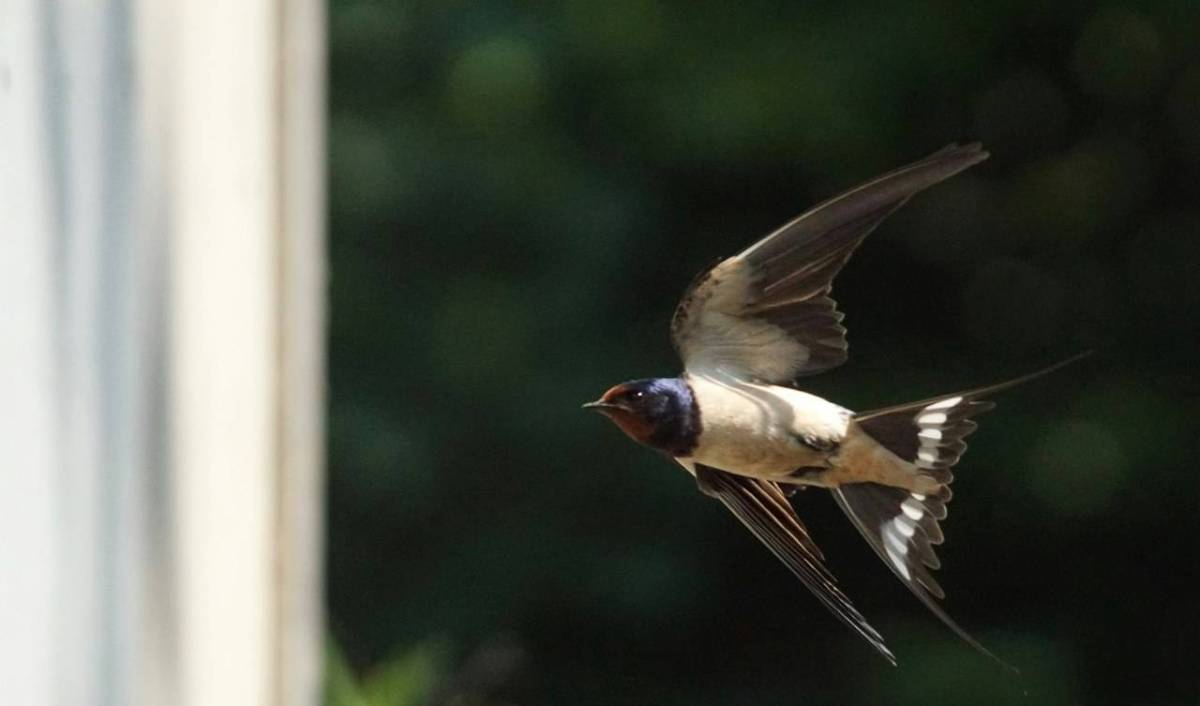
Barn swallow approaching its nest in Binningen BL. Photo: Walter Brunner / Unsplash
The house martin is Germany's Bird of the Year 2027. In the public vote run by NABU and the Bavarian Association for Bird and Nature Protection, it received 67,050 votes, with 148,506 people taking part. In Switzerland, too, it needs better protection: like the barn swallow, it is considered potentially threatened. Both lack suitable nesting sites and insects to feed on, and in some villages the swallows have disappeared altogether.
Barn swallow and house martin under pressure
Four species of swallow breed in Switzerland: the barn swallow, house martin, sand martin and crag martin. The two best known, the barn swallow and the house martin, live mainly in villages and on farms. The house martin has been classed as potentially threatened since 2010. Since the 2021 assessment, the barn swallow has been classified in the same way. Both therefore fall into the early-warning category NT: not yet threatened in the strict sense, but at increased risk of slipping into a threat category in future.
The Breeding Bird Atlas 2013 to 2016 estimated the house martin population at 70,000 to 90,000 pairs. According to the groundwork for the Swiss Bird Species Conservation Programme, numbers have been declining since the late 1980s at the latest, and the number of colonies is also falling across large parts of the country. The largest known colony in Switzerland is in Ticino, with around 300 natural nests.
Fewer nesting sites and insects
In Switzerland, the barn swallow breeds especially often in farm buildings housing livestock, where it is warm and there are plenty of flies. The Swiss Ornithological Institute in Sempach names structural change in agriculture as a major pressure: since 2000 the number of farms has fallen by an average of 1.5 per cent a year. Farm closures and unsuitable new buildings can cost nesting sites. The Institute therefore advises preserving existing nesting sites even after a farm has been given up.
The house martin builds its mud nest on the outside of buildings. Renovations, demolitions and modern, smooth façades take its nesting places away. Added to this is a lack of tolerance: because the droppings soil façades, nests are removed, even during the breeding season. That is illegal. Swallows are protected under Swiss federal hunting law, and anyone who disturbs their breeding is committing an offence.
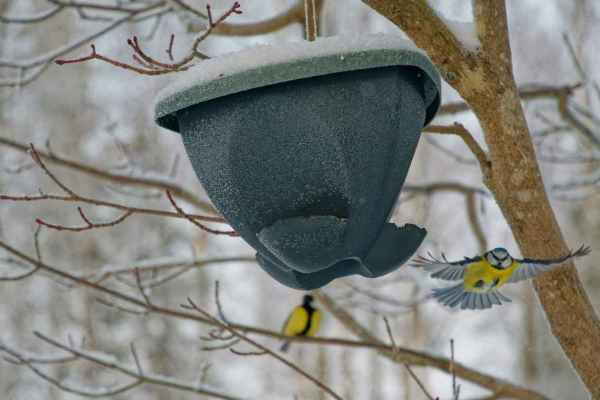
Both species depend on flying insects. Where meadows are intensively farmed, soil is sealed and pesticides are sprayed, there is not enough food for the young. A bird feeder does not help them, as the article Feeding birds correctly also shows. Background on the decline of insects can be found in Insect decline: worse than previously assumed and Migratory birds suffer from pesticides and insect decline.
What helps
Barn swallows return from Africa from the end of March, house martins from mid-April. Anyone with nests on their house can do a lot: leave nests in place, fit a droppings board beneath them and keep stables open. How artificial nests and nesting aids are fitted is described in the article Swallows need our help, with further tips in Handling building-dwelling breeding birds with care.
The Swiss Ornithological Institute in Sempach maintains an inventory of building-nesting birds. Municipalities, associations and private individuals can record and report nest sites of swallows and swifts. The inventories serve as a basis for protecting nesting places during renovations and for deploying support measures where they will achieve the most. What grows around the house is just as important: flower meadows instead of lawns and a garden free of pesticides provide the insects on which swallows live.
Protected, while other threatened bird species are shot
A look at the threat categories raises a fundamental question: how consistently does Switzerland protect bird species whose populations are under pressure? The hunting act protects swallows. Yet the same law permits recreational hunting of species classified as vulnerable, meaning they already count among the threatened species. In 2025, 1,400 woodcocks and 142 teals were killed in Switzerland, according to the Federal Hunting Statistics. In the view of IG Wild beim Wild, recreational hunting of endangered bird species cannot be justified. The analysis can be found in the Swiss Hunting Statistics 2025, the background in the dossier Red Lists Switzerland: No protection from recreational hunting.
Do you have a tip, a source or a correction for this article? Write to us.
Seen something yourself?
A driven hunt next to a hiking trail, a shot fired near houses, a trap in the forest or an injured wild animal: report it to the Recreational Hunter Radar. We check every tip-off and treat your details confidentially.
More on the subject of recreational hunting: In our dossiers on recreational hunting gather fact-checks, analyses and background reports. The scientific evidence is presented in the overview Studies on the Effects of Recreational Hunting.
The position of IG Wild beim Wild: IG Wild beim Wild rejects recreational hunting. Our model is the canton of Geneva, which has managed without recreational hunting since 1974: without hunting seasons, without hunting dogs, without driven hunts, without high seats, without the animal cruelty and crime that go hand in hand with hunting season elsewhere. What has worked there for over fifty years disproves every position paper by JagdSchweiz. An association that bases its policy on claims it refutes in its own documents is not a professional organisation, but a factory for misinformation.
Wild animals need a voice
Investigations, petitions and background on recreational hunting. As a thank-you, you will immediately receive our free guide «Recreational hunting on your doorstep: what you can do».
Support our work
With your donation you help protect animals and give their voice a hearing.
Donate now →