Forest and wildlife in St. Gallen: Government points to the lynx
69 cantonal councillors lament a situation that has spiralled out of control; the government points to the lynx, two damage reports and substitute measures that were never ordered.
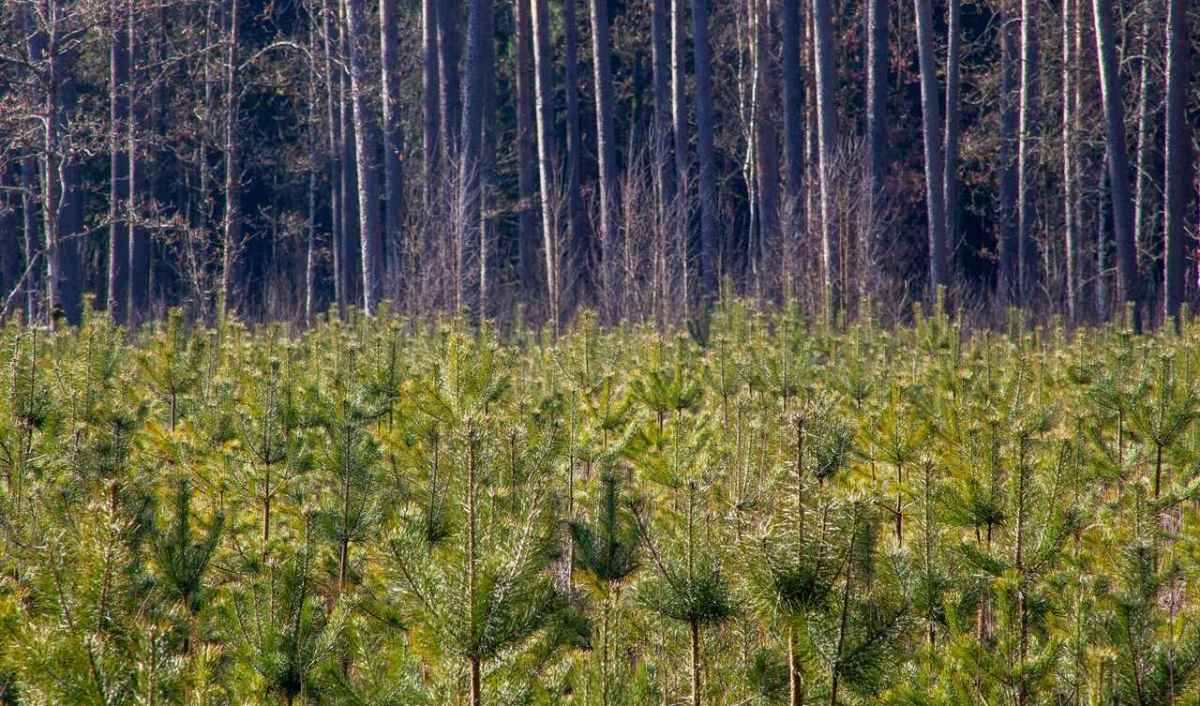
Stock image. Photo: Aleksandrs Zeltisevs / Unsplash
The Forester Speaks
69 of the 120 members of the St. Gallen cantonal parliament have signed an interpellation that speaks of a forest-wildlife situation that has «spiralled out of control» and demands a greater reduction in wildlife populations. The government's response of 3 November 2026 paints a different picture. It assesses the situation as positive overall and names the reintroduction of the lynx as the first factor behind this. The matter is on the cantonal parliament's agenda for 30 November.
What the interpellants are demanding
Submitted by the Interpellation 51.26.97 was submitted on 15 September by Walter Freund (SVP, Eichberg), Rolf Huber (FDP, Oberriet), Renaldo Vanzo (Mitte, Degersheim) and Ruedi Bösch (SP, Nesslau), with 65 further members of parliament co-signing. They write that wildlife populations have «increased significantly», particularly in the southern part of the canton, in the St. Gallen Oberland and in the upper Toggenburg. The targeted kill figures for red deer, they say, were «only partly reached, at 84 per cent» over the past five years.
The interpellants want to know whether kill figures should be based more strongly on the intensity of browsing damage in the forest, what happens when hunting associations fail to meet their ordered kills, and whether the canton will in future order substitute measures by the wildlife wardens. Finally, they ask whether the government is prepared to reduce wildlife populations to the point where the forest can regenerate naturally without protective measures.
The government assesses the situation as positive overall
The government relies on the forest–wildlife habitat assessment carried out by the cantonal forestry office. In the most recent survey, from 2021, the impact of wild animals was judged “acceptable” in seven of eleven wildlife habitats. According to a national survey from 2025, natural regeneration is not possible without protective measures on around eleven per cent of St. Gallen's forest area because of the influence of wildlife. St. Gallen therefore belongs “to the better third of cantons”.
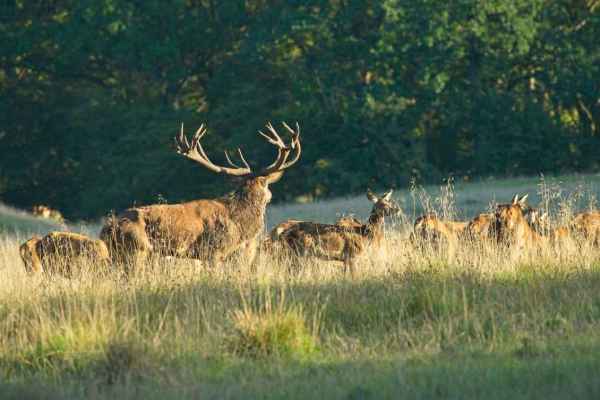
For this development, the government first names a predator: “With the reintroduction of the lynx, roe deer and chamois populations declined significantly in many areas.” In addition, major storm events had created more favourable conditions for forest regeneration. As for red deer, the government notes that the species has continued to spread and that populations have grown. Targeted hunting, it says, has corrected the previously heavily skewed sex ratio in favour of hinds and thereby slowed growth; in individual areas the canton already assumes populations are declining slightly. Why red deer hunting misses its targets despite continually raised quotas has been described by the canton itself in its report on the 6th supplement to the hunting act; we covered this in St. Gallen plans to abolish red deer management associations.
Two damage reports since 2025
One figure in the response stands out in particular. Together with those affected, the forest–wildlife habitat commission has developed a simple form for reporting wildlife damage in forests. According to the government, its introduction was widely communicated with the support of the “WaldSt.Gallen” association and the St. Gallen Farmers' Association. Since its introduction in 2025, the Office for Nature, Hunting and Fisheries (ANJF) has received “only two reports” through it. How completely this reporting channel captures actual damage is not clear from the response.
The government also stresses that the wildlife population is an important but not the only influencing factor: “Reducing wildlife populations alone therefore falls short.” Habitat quality, the natural conditions for regeneration and the connectivity of habitats are also decisive.
Substitute enforcement never ordered, no lease terminated
If kill targets are missed, the canton has, according to its reply, repeatedly extended the hunting season and ordered drive hunts. In 2025 the hunting season for red deer was extended until the end of the year, and three hunting syndicates had to carry out an additional drive hunt involving recreational hunters from outside their territory. Unfulfilled kills can also be carried over to the following year.
The canton, on the other hand, has never used the two strongest measures. A substitute action by the cantonal wildlife wardens has never been ordered, because the conditions for it had 'so far not been met simultaneously in any case'. Likewise, the early termination of a lease in cases of serious or repeated breaches, as provided for in the hunting act, has 'never been taken'. Priority is given to measures through which the hunting syndicates 'take responsibility themselves'.
To make this easier for them, the canton has relaxed the rules in recent years. The government cites the use of flushing dogs, the authorisation of silencers, and adjusted hunting seasons and protection periods. With the planned VI. supplement to the hunting act, closer cooperation with the wildlife wardens and targeted advice for the hunting syndicates are to be examined.
Commentary: The lynx delivers, while the hunting grounds get relief
The government's reply puts the interpellation's sweeping diagnosis of a crisis into perspective. In the most recent survey cited, from 2021, the impact of wildlife was judged tolerable in seven of eleven wildlife habitats, St. Gallen compares well nationally, and the new reporting form for wildlife damage has produced two reports since 2025. The government does not rule out regional deficits, for example in the Oberland or the upper Toggenburg. But it does not describe a situation that has spiralled out of control across the board, and anyone who claims otherwise must explain what they base that on.
What is remarkable is the factor the government names first: the lynx, a predator that affects roe deer and chamois populations without a kill quota, a high seat or a hunting lease. Recreational hunting, by contrast, has been granted one concession after another for years and still misses its targets for red deer in some areas. The canton's answer is longer hunting seasons and additional drive hunts, in other words even more hunting pressure. The sharpest instruments, substitute action by the wildlife wardens and the early termination of hunting leases, have so far gone unused. At the same time, five wolves of the Schilt pack were killed in the canton this year, as our wolf kill counter shows. This raises the question of what weight the government actually gives to the influence of predators in its forest-wildlife policy. How predators help the forest is shown in the article How the wolf helps the forest, and the role of the lynx in our Dossier on the lynx in Switzerland.
The government itself writes that a mere reduction of populations falls short. The debate should follow that insight: focus on habitat, quiet zones and the predators that are already at work, rather than on yet more shots from hunting grounds that fail to meet their targets even today. The same narrowing to more kills was also evident in the red deer petition in the St. Gallen cantonal parliament.
Scheduled for 30 November
The interpellation is on the agenda for the session of 30 November, the first day of the winter session running from 30 November to 2 December. Anyone living in the canton of St. Gallen can write personally to the members of the cantonal parliament before the debate. Addresses of the cantonal parliaments and a template letter are available on our page End fox hunting. What a cantonal popular initiative for professional wildlife protection in St. Gallen could look like is shown in our template text for St. Gallen.
Do you have a tip, a source or a correction for this article? Write to us.
Seen something yourself?
A driven hunt next to a hiking trail, a shot fired near houses, a trap in the forest or an injured wild animal: report it to the Recreational Hunter Radar. We check every tip-off and treat your details confidentially.
More on the subject of recreational hunting: In our dossiers on the criticism of recreational hunting gather fact-checks, analyses and background reports. What the research says about this is shown by Hunting fact-checked: the state of research.
The position of IG Wild beim Wild: IG Wild beim Wild rejects recreational hunting. Our model is the canton of Geneva, which has managed without recreational hunting since 1974: without hunting seasons, without hunting dogs, without driven hunts, without high seats, without the animal cruelty and crime that go hand in hand with hunting season elsewhere. What has worked there for over fifty years disproves every position paper by JagdSchweiz. An association that bases its policy on claims it refutes in its own documents is not a professional organisation, but a factory for misinformation.
Wild animals need a voice
Investigations, petitions and background on recreational hunting. As a thank-you, you will immediately receive our free guide «Recreational hunting on your doorstep: what you can do».
Support our work
With your donation you help protect animals and give their voice a hearing.
Donate now →