Schluchsee: euthanasia drug in the stomach of wolf GW1129m, public prosecutor investigating
The laboratory found a euthanasia drug in the stomach of the Schluchsee wolf. He presumably ingested it via a carcass whose origin remains unexplained.
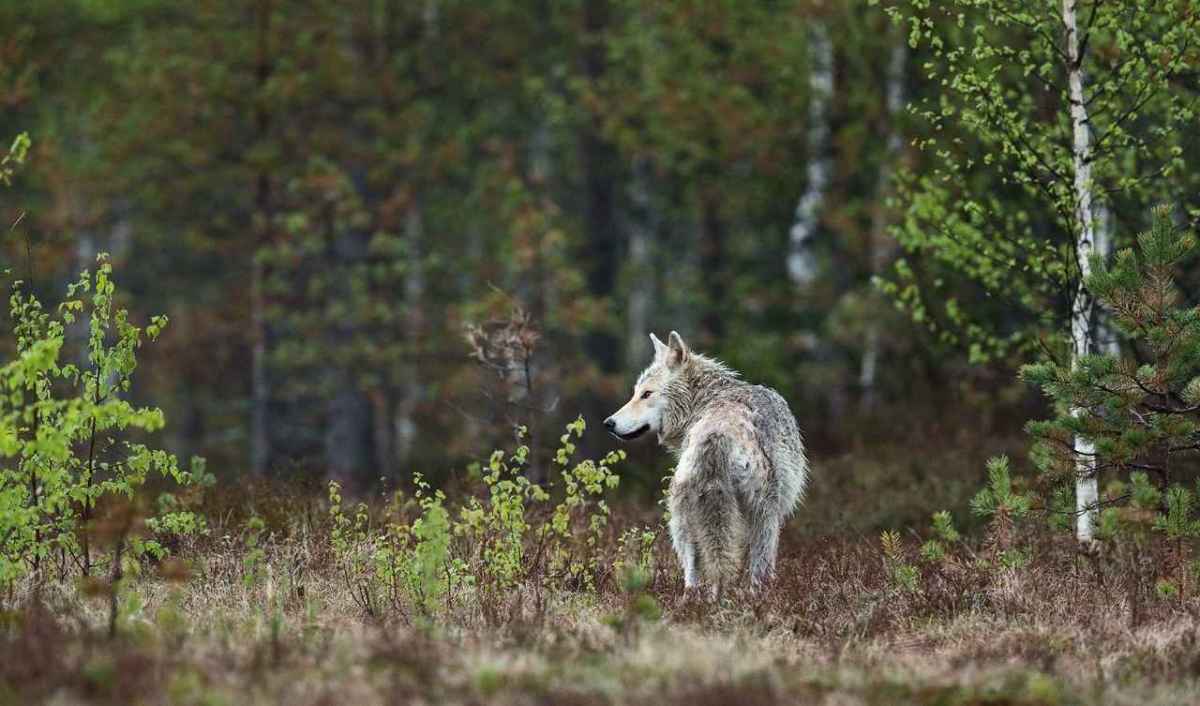
Stock photo. Photo: Hans Veth / Unsplash
Wolf Song
The euthanasia drug pentobarbital was detected in the stomach contents of the Schluchsee wolf GW1129m. Police and the public prosecutor are now investigating possible violations of the Animal Welfare Act. So far there is no evidence of deliberate poisoning.
What the investigation found
GW1129m was the territorial male in the Schluchsee area and the last known wolf of the former Schluchsee pack. On 28 September he was found seriously ill in the district of Breisgau-Hochschwarzwald near the B500 federal road. Because, according to veterinary assessment, he was no longer able to survive, he was killed.
Because he was found beside the road, a traffic accident could initially be neither confirmed nor ruled out. Further examination did not confirm it. Instead, experts found pentobarbital in the stomach contents, a drug used in veterinary medicine to euthanise livestock and pets. In addition, traces of a veterinary medicine used, among others, on poultry, cattle and sheep were found as a secondary finding. This finding had already been published in mid-November by the Ministry of Rural Affairs of Baden-Württemberg. It considers it very likely that the wolf ingested the substances via a carcass, and speaks of secondary poisoning. Where and under what circumstances this happened can no longer be established.
Investigations ex officio
What is new is the criminal proceedings: police and the public prosecutor have opened an investigation ex officio, as the German Press Agency reported on 20 November (Stuttgarter Nachrichten). According to police, there is so far no evidence of deliberate poisoning.
According to the status published at the end of September, the Stuttgarter Zeitung the loss of GW1129m reduces the number of resident adult wolves then known in Baden-Württemberg from six to five; in addition there was at least one confirmed pup. Among them is GW2672m in the northern Black Forest. A kill permit limited to 10 March 2026 applied to him, which the state did not extend. WBW has covered the case under “A trusting wolf and a large recreational area”.
Where did the active substance come from?
Carcasses containing pentobarbital residues can cause severe to fatal secondary poisoning in scavengers. This is why euthanised non-human animals must be disposed of in accordance with the regulations and protected from access by wild animals.
It remains unclear which carcass the active substances came from and how it became accessible to the wolf. In particular, it needs to be established whether regulations were breached during the disposal or burial of a euthanised non-human animal.
Comment: kills are being made easier, deaths demand thorough investigation
Since spring 2026, the wolf in Germany has been subject to federal hunting law, while remaining protected under the Habitats Directive. Even so, the federal states are opening up access for recreational hunting step by step: Brandenburg initially releases ten wolves, in the in the Emsland, entire packs are open to being killed. All the more important are thorough investigations when wolves are found seriously ill or dead.
In the case of GW1129m, it was only the examination of the stomach contents that produced the decisive finding. IG Wild beim Wild expects the authorities to report on the progress and conclusion of the investigations, even if no responsible person can be identified. Possible shortcomings in the handling of euthanised carcasses should likewise be examined. A protected wild animal that is presumably poisoned by a contaminated carcass is not a natural event. How politics and recreational hunting are hollowing out wolf protection across Europe as a whole is shown by the Wolf dossier.
Do you have a tip, a source or a correction for this article? Write to us.
Seen something yourself?
A driven hunt next to a hiking trail, a shot fired near houses, a trap in the forest or an injured wild animal: report it to the Recreational Hunter Radar. We check every tip-off and treat your details confidentially.
More on the subject of recreational hunting: In our dossiers on recreational hunting gather fact-checks, analyses and background reports. The scientific evidence is presented in the overview Studies on the Effects of Recreational Hunting.
The position of IG Wild beim Wild: IG Wild beim Wild rejects recreational hunting. Our model is the canton of Geneva, which has managed without recreational hunting since 1974: without hunting seasons, without hunting dogs, without driven hunts, without high seats, without the animal cruelty and crime that go hand in hand with hunting season elsewhere. What has worked there for over fifty years disproves every position paper by JagdSchweiz. An association that bases its policy on claims it refutes in its own documents is not a professional organisation, but a factory for misinformation.
Wild animals need a voice
Investigations, petitions and background on recreational hunting. As a thank-you, you will immediately receive our free guide «Recreational hunting on your doorstep: what you can do».
Support our work
With your donation you help protect animals and give their voice a hearing.
Donate now →