Emsland: Entire wolf packs open to being shot since 1 November
Lower Saxony has designated two intervention areas. Since 1 November, not only young wolves but also adult animals, and thus entire packs, may be shot there. The state does not say exactly where.

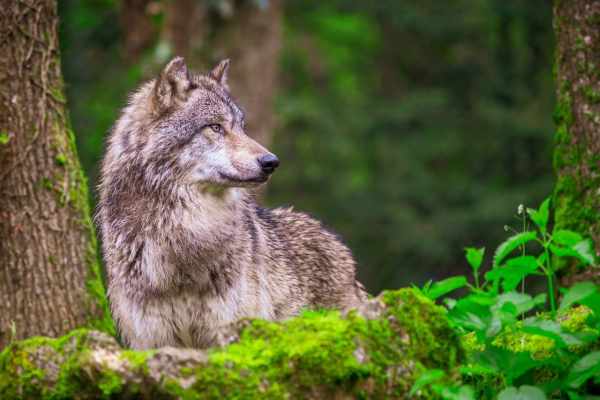
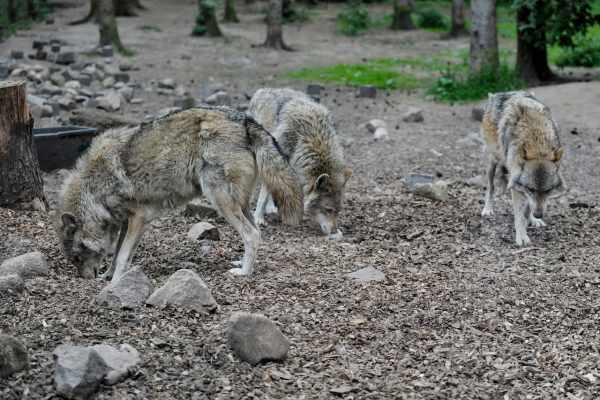
Illustrative image. Photo: Robin Strahl / Unsplash
In the Pack
In Lower Saxony, the next stage of wolf hunting came into force on 1 November. In the two intervention areas of Werlte and Dörpen, adult wolves may now also be shot until the end of February. This means entire packs can be killed there.
Two intervention areas, boundaries kept secret
The Werlte intervention area has existed since 6 August 2026 and, according to the Ministry of Agriculture covers parts of the districts of Emsland and Cloppenburg. On 28 October, Dörpen in Emsland was added, as the NDR reports. These are the only two intervention areas in Lower Saxony. The state does not publish the exact boundaries; only the affected hunting lessees are informed (NOZ).
The basis is the general order 'Cross-territory management plan for the hunting of the wolf species' of 29 June 2026, published in the Lower Saxony Ministerial Gazette No. 312. In intervention areas, young wolves may be killed from 1 July and all other wolves from 1 November until the end of February.
Animal welfare campaigners demand clarification
The Lower Saxony State Animal Welfare Association criticises the ministry for keeping the details of the Werlte area secret. According to the association, the territorial status of the wolves there was most recently listed in the state monitoring as 'unconfirmed' or 'unclear'. Whether entire packs should be opened to being shot in an area where a resident pack has not even been reliably confirmed cannot be verified from outside without open data.
Not the first kill
Wolves have been killed in Lower Saxony for some time now. Rapid-kill procedures under Section 22d of the Federal Hunting Act have been under way since spring, and since 1 July under the new management plan. According to the list published by the ministry, 22 procedures were concluded and two wolves were killed, in the districts of Cuxhaven and Heidekreis; the ministry confirmed this on 2 October. Neither of the two kills took place in the Emsland. What is new since 1 November is that adult, territorial animals are now also in the firing line in the intervention zones.
A ceiling that is not a kill quota
For the 2026/27 season, the management plan caps the number of adult territorial wolves that may be removed at 22 in the Atlantic region and 5 in the continental region. These 27 animals also include fallen game, such as wolves that die in road traffic. It is therefore not a pure kill quota but an overall limit.
The hunting seasons are set out in the Ordinance of 5 October 2026 (Nds. GVBl. No. 84), which has applied since 6 October. In Section 3(3) of the implementing ordinance to the Lower Saxony Hunting Act, it sets the hunting seasons for the wolf, deviating from Section 22d of the Federal Hunting Act. The same ordinance extends the hunting seasons for Egyptian, greylag and Canada geese beyond the previous cut-off date of 15 January; young Egyptian geese may be shot all year round (Land & Forst).
What kills achieve against livestock attacks
Whether the kills actually reduce attacks on livestock remains an open question. An analysis of 25 years of data from the north-western USA (Wielgus and Peebles, PLOS ONE 2014) found that wolves killed were associated with more, not fewer, livestock attacks the following year, as long as the kill rate stayed below around 25 per cent of the population. The study is methodologically contested, but it shows that killing is no reliable substitute for Herd protection.
From protected animal to huntable game
The development follows the wolf's inclusion in federal hunting law, which Wild beim Wild has reported on, and the new hunting act in Lower Saxony. With pack kills in intervention zones, Lower Saxony is taking a path that Switzerland has also embarked on with the regulation of entire packs. How both countries are opening the wolf up to the kill is shown in a comparison between Berlin and Bern. Further articles can be found in the section Hunting Act and under the keyword Predators.
More on the subject of recreational hunting: The scientific evidence is presented in the overview Studies on the Effects of Recreational Hunting.
The position of IG Wild beim Wild: IG Wild beim Wild rejects recreational hunting. Our model is the canton of Geneva, which has managed without recreational hunting since 1974: without hunting seasons, without hunting dogs, without driven hunts, without high seats, without the animal cruelty and crime that go hand in hand with hunting season elsewhere. What has worked there for over fifty years disproves every position paper by JagdSchweiz. An association that bases its policy on claims it refutes in its own documents is not a professional organisation, but a factory for misinformation.
Wild animals need a voice
Once a week: research, petitions and background information on recreational hunting. Free of charge and can be unsubscribed from at any time.

All articles are written by IG Wild beim Wild as well as by external co-authors. Research, structuring and editorial processes may be supported by AI-assisted tools.
Support our work
With your donation you help protect animals and give their voice a hearing.
Donate now →