Open letter to Government President Pierre Alain Schnegg on fox hunting
Seven questions for the President of the Bern cantonal government, reply deadline 2 December 2026.
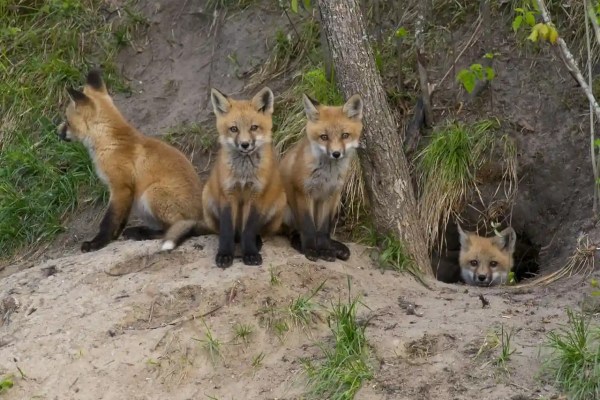
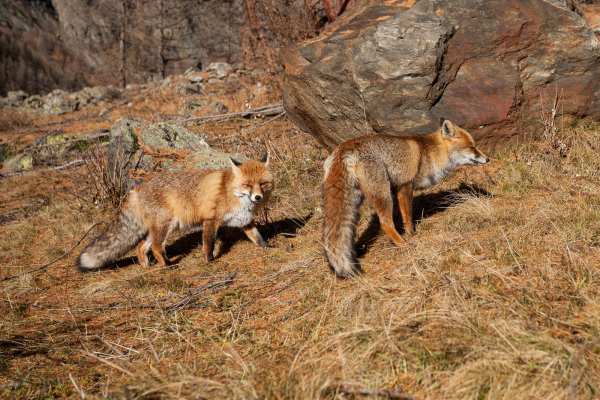
Symbolic image. Photo: Bob Brewer / Unsplash
Red Snow
Following the rejection of the petition “Examining the scientific necessity of fox hunting”, IG Wild beim Wild is sending an open letter to Pierre Alain Schnegg, President of the Bern cantonal government, who signed the reply on behalf of the Executive Council. Seven questions, a reply deadline of 2 December 2026 and the announcement that the response will be publicly documented.
In Decision 1045/2026 of 14 October 2026, the Bern Executive Council, acting on a motion from the Directorate for Economic Affairs, Energy and Environment, rejected the petition by the Lucerne lawyer Pascal Wolf (reply letter as PDF). The letter consists of two paragraphs. It refers to the reply to Motion 351-2025 by GLP Grand Council member Casimir von Arx of 6 May 2026, whose arguments apply “also to the present petition”, without answering the petition's six review mandates one by one. That motion was withdrawn in the autumn session of 2026 and replaced by the more far-reaching Motion 237-2026 «From fox hunting to fox management». What the Executive Council wrote in May, including the sentence that hunting is “effectively an end in itself”, we examined in the article “Fox hunting: Bern government does not want to examine the evidence”.
The open letter follows the same approach as our letters to Government Councillor Carmelia Maissen in Grisons, to the Glarus Landammann Markus Heer, to the Uri Department of Security, to Government Councillor Dölf Biasotto, to Cantonal Councillor Sibylle Jeker and to Aargau Landammann Stephan Attiger: factual, with concrete questions and the expectation of a verifiable response.
The following open letter was sent on 18 November 2026 to Government President Pierre Alain Schnegg, with a copy to the responsible Directorate for Economic Affairs, Energy and Environment. It is documented here verbatim; the subheadings correspond to the version sent.
Open letter to Government President Pierre Alain Schnegg
Dear Government President
We have taken note of the Executive Council's reply of 14 October 2026 (RRB 1045/2026) to Pascal Wolf concerning his petition 'Review of the scientific necessity of fox hunting'. The petition called for the scientific necessity of fox hunting in the canton of Bern to be reviewed and justified. The Executive Council rejects this by referring to its reply to Motion 351-2025 of 6 May 2026. This leaves the petition's question unanswered. As you signed the reply on behalf of the Executive Council, we ask you to comment on the following points.
1. A reference instead of a review
Motion 351-2025 called for a scientifically supervised field trial. The petition asked for something different: a justification of fox hunting as currently practised, based on six specific review tasks and the studies cited for them. The motion on which the Executive Council relies had already been withdrawn in October. The pending follow-up motion 237-2026, which has the same thrust, does not mention the letter. Did the responsible Directorate for Economic Affairs, Energy and Environment examine the petition and the studies it cites on their merits before recommending to the Executive Council that it be rejected? If so: where is this review documented? If not: why not?
2. 'In effect an end in itself'
The reply to which the Executive Council refers states that hunting of non-endangered species is 'in effect an end in itself' and does not have to fulfil an explicit regulatory mandate. Does the Executive Council still share this assessment? If fox hunting in the canton of Bern does not have to serve a regulatory purpose: what public purpose justifies killing thousands of foxes every year? And how can an end in itself be reconciled with the principle in the Animal Welfare Act that no one may unjustifiably cause an animal pain, suffering or harm (Art. 4 para. 2 TSchG)?
3. Huntable does not mean hunting is mandatory
The cantonal government justifies its rejection by arguing that the red fox is not endangered and that there is therefore no reason to restrict hunting or to examine its effects. The petition never claimed that the fox was endangered. In its response to the motion, the cantonal government itself also states that it is within the canton's remit to place the red fox under protection. The Grisons Department of Infrastructure, Energy and Mobility likewise describes a cantonal ban on general fox hunting as permissible under federal law. The hunting act permits hunting; it does not require it. Why should the very question of whether a hunt is necessary, a hunt the canton would be entitled to restrict, not warrant scrutiny?
4. New evidence since May 2026
One day after the response to the motion of 6 May 2026, the revised version of the SWILD expert report on fox hunting, commissioned by the canton of Zug, became available. The report concludes that current fox hunting cannot be expected to deliver sustainable regulation, does not improve disease control and is inferior to non-lethal measures when it comes to protecting livestock. The Zug Hunting Commission has since ceased to promote fox hunting proactively, and the cantonal government of Basel has signalled openness to a more thorough examination of abandoning it. The cantonal government's response of October does not mention the report. Was it taken into account in the assessment of the petition? If so, with what outcome? If not, why not?
5. More found dead animals than hunting bag
According to the Swiss Federal Hunting Statistics, the number of foxes killed in the canton of Bern has fallen from peak figures of around 8,000 animals in the 1990s to most recently around 2,000 to 2,500. A collapse in the population is not documented, nor are the often predicted consequences of lower kill numbers. Meanwhile, around 3,400 to 3,500 dead foxes are recorded in the canton each year as found dead animals, more than are killed by hunters (own analysis). What data does the canton collect on the fox population, on damage actually caused by foxes and on the state of health of the animals killed? The canton of Lucerne, which systematically records the state of health of foxes killed, found signs of disease in 39 of 2,217 animals examined, and none in over 98 per cent. How many of the foxes killed in the canton of Bern were examined in the last three completed hunting years, for which diseases and with what findings?
6. What happens to the dead foxes
At the end of October 2025, the "Berner Zeitung" reported that most of the roughly 3,000 foxes shot in the canton of Bern end up in the waste. The motion's authors referred to this report; the cantonal government did not address it. How many of the foxes killed are put to use, and how many are disposed of? And what do disposal, supervision and monitoring of fox hunting cost the canton each year?
7. The pending motion 237-2026
Motion 237-2026, "From fox hunting to fox management", is pending before the Grand Council. It was submitted by members from the GLP, SVP, Greens, SP and FDP. Among other things, it calls on the canton to collect and regularly publish data on the distribution of foxes and on the damage they actually cause. Which scientific evidence will the cantonal government draw on in its response to this motion, and will it make that evidence public?
The petition did not call for the fox to be given protected status. It called on the canton to justify why it has thousands of foxes killed every year. The fact that the hunt is legally permitted and does not endanger the population does not answer that question.
We ask you to provide a statement by 2 December 2026. This letter and any statement you make will be published on wildbeimwild.com.
Yours sincerely
Carl Sonnthal
IG Wild beim Wild, Acquarossa
What happens next
If the cantonal government replies within the deadline, we will publish its statement and comment on it. If no reply comes, we will record that too. The record so far is sobering: four cantonal governments have still not answered our questions on fox hunting (Four cantonal governments leave 30 questions unanswered).
In the canton of Bern, the decision will ultimately be taken by the Grand Council. It will debate motion 237-2026 in spring or summer 2027 at the earliest; before then, the cantonal government must issue its response.
Commentary: Two paragraphs for a petition that asks a simple question: why are thousands of foxes killed in the canton of Bern every year? The government does not answer it; it refers to its reply to a motion that has since been withdrawn. Yet in May it had already answered the question itself, probably without meaning to: hunting non-endangered species such as the fox is “in effect an end in itself”. Anyone who writes that and in the next breath declares a scientific review unnecessary is saying in plain terms that fox hunting needs no demonstrated benefit. For sentient beings that hunt mice and tend their young in spring, this is not wildlife policy but indifference with an official stamp.
What you can do: Write directly to the members of the Bernese Grand Council, ideally in person and in your own words, and ask them to vote in favour of Motion 237-2026. You will find a template letter and the link to the list of members at Stop Fox Hunting – Write to the Bern Grand Council. An overview of all cantons is provided by the campaign End fox hunting.
Do you have a tip, a source or a correction for this article? Write to us.
More on the subject of recreational hunting: In the dossier Alternatives to recreational hunting we show political and practical alternatives to recreational hunting. The scientific evidence is presented in the overview Studies on the Effects of Recreational Hunting.
The position of IG Wild beim Wild: IG Wild beim Wild rejects recreational hunting. Our model is the canton of Geneva, which has managed without recreational hunting since 1974: without hunting seasons, without hunting dogs, without driven hunts, without high seats, without the animal cruelty and crime that go hand in hand with hunting season elsewhere. What has worked there for over fifty years disproves every position paper by JagdSchweiz. An association that bases its policy on claims it refutes in its own documents is not a professional organisation, but a factory for misinformation.
Wild animals need a voice
Investigations, petitions and background on recreational hunting. As a thank-you, you will immediately receive our free guide «Recreational hunting on your doorstep: what you can do».
Support our work
With your donation you help protect animals and give their voice a hearing.
Donate now →