Open letter to Cantonal Councillor Carmelia Maissen on fox hunting
Eight questions to the Grisons cantonal councillor, reply deadline 1 December 2026.
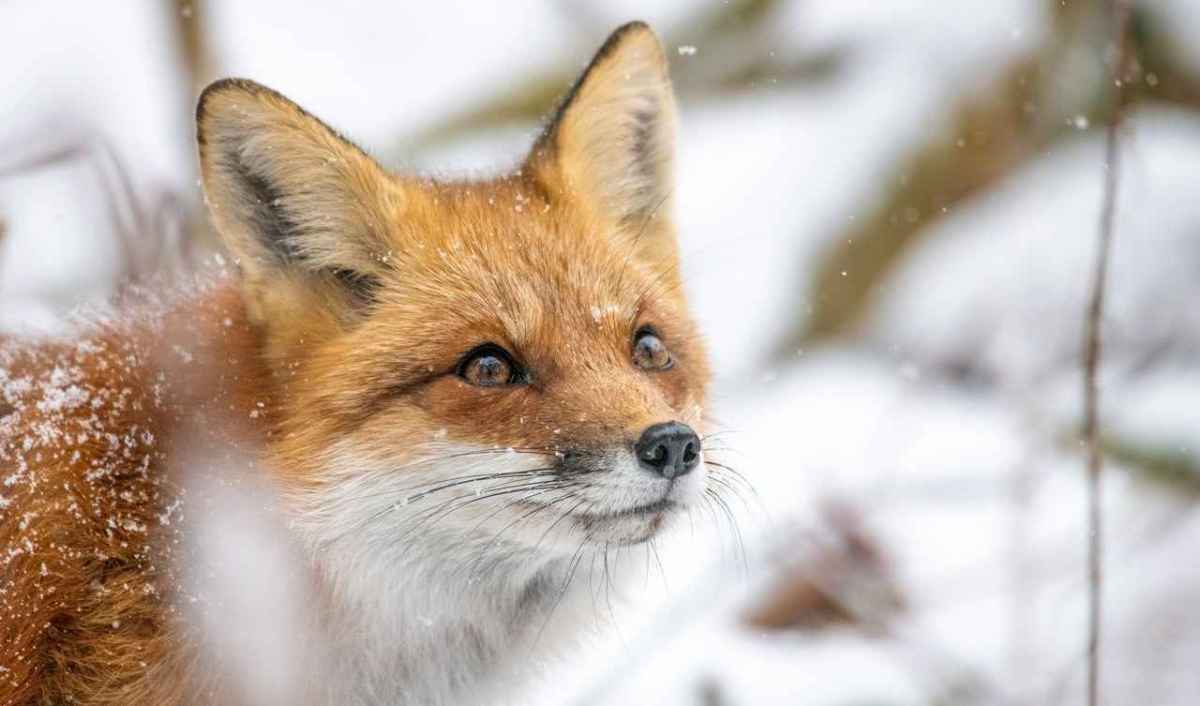
Illustrative image. Photo: Jeremy Hynes / Unsplash
Red Snow
Following the rejection of the petition «Ban on general fox hunting», IG Wild beim Wild is sending an open letter to Grisons cantonal councillor Carmelia Maissen. Eight questions, a reply deadline of 1 December 2026 and the announcement that the response will be documented publicly.
On 6 November 2026, Maissen, head of the Department of Infrastructure, Energy and Mobility, responded to the petition from the Lucerne lawyer Pascal Wolf dated 15 October 2026 (reply letter as PDF). Unlike other cantons, the department engages with the petition over six pages. It concedes that a cantonal ban would be permissible under federal law, that shooting foxes with mange does little to combat the disease, and that the petition's reasoning on protecting rare species holds true for Grisons. How strongly recreational hunting regulates the fox population «cannot be stated conclusively», it says. Nevertheless, it rejects all six requests and explicitly regards fox hunting as justifiable even «for traditional reasons».
We have set out the contradictions in the letter in the article «Stop fox hunting – write to the Grisons Grand Council», including a template letter to the members of the Grand Council. The open letter follows the same approach as our letters to the Glarus Landammann Markus Heer, to the Uri Department of Security, to Government Councillor Dölf Biasotto, to Cantonal Councillor Sibylle Jeker and to Aargau Landammann Stephan Attiger: factual, with concrete questions and the expectation of a verifiable response.
The following open letter was sent to Cantonal Councillor Carmelia Maissen on 16 November 2026. It is documented here verbatim; the subheadings correspond to the version that was sent.
Open letter to Cantonal Councillor Carmelia Maissen
Dear Councillor of State
We have taken note of your reply of 6 November 2026 to Pascal Wolf regarding his petition 'Ban on general fox hunting'. We acknowledge that your department examined the petition in detail and agreed with it on several points. This is precisely why the rejection still requires explanation: the letter confirms that the canton would be permitted to ban general fox hunting and that targeted measures against individual animals would remain possible even then. The continuation of general hunting is therefore a political decision, not an obligation under federal law. We ask you to comment on the following points.
1. An assumption instead of proof of effectiveness
Your department writes that it 'cannot be conclusively said' how strongly hunting regulates the fox population. In the very next sentence, it states that it can 'strongly be assumed' that hunting culls make a decisive contribution to unproblematic coexistence with the fox. According to its own information, Grisons has been recording the causes of fallen game and the number of observed foxes since 1991. Which of these data support the assumption that the 1,350 to 3,412 foxes killed each year measurably influence the population or conflicts? If no such analysis exists: what is the assumption based on?
2. Two standards for the same killing
For official kills, your department demands a case-specific link, justification and proportionality. It states that the authorities are barred from using such exceptions for 'blanket, area-wide population regulation'. None of these requirements applies to general fox hunting during the high hunt, the lower-game hunt and wait hunting. Why is the assumption of a benefit sufficient for the killing of over a thousand foxes a year by recreational hunters, while every single kill by the wildlife wardens must be justified? What additional benefit does general hunting bring compared with targeted interventions and non-lethal prevention?
3. What damage in residential areas?
As evidence of the need for hunting, your department cites the rise in kills to prevent wildlife damage: 10 to 40 foxes per year from 2018 to 2022, and 80 to 100 in 2023 and 2024. Wait hunting near settlements was restricted from 2021 because of a feared attraction effect on wolves. What damage did these foxes specifically cause, how much, and where? What protective measures were taken before the kills? And has the canton examined whether the increase has causes other than the restricted wait hunting, such as food sources within the settlements? How dangerous wait hunting near settlements is, is shown by Sedrun: in February 2024, a 79-year-old resident holding a hunting licence shot a leashed female dog on a residential street from his house after 11 pm because he mistook her for a fox. The owner was walking just a few metres behind. Is the canton considering extending wait hunting in settlement areas again?
4. Sick animals do not justify hunting healthy ones
Your department concedes that the 160 kills of mangy foxes by the wildlife wardens in 2025 contribute only to a very limited extent to combating the disease. At the same time, it defends general hunting on the grounds that sick foxes are also killed in the process. The petition expressly provides for the release of severely suffering animals. How many of the foxes killed by recreational hunters were sick? The canton of Lucerne, the only canton that records the state of health of foxes killed, found no signs of disease in over 98 per cent. Does the Grisons collect this data, and if not, why not?
5. It works without hunting: National Park, Ticino, Luxembourg, Great Britain
Your department dismisses the Geneva example by pointing out that the Grisons is rural and remote. The Swiss National Park in the Engadin has been free of hunting since 1914, including foxes, and lies in your canton. In over a hundred years, none of the scenarios used to justify fox hunting has occurred there. The rural neighbouring canton of Ticino also manages almost without fox hunting: according to Federal Hunting Statistics only 76 foxes were killed there in 2025, compared with 609 in 2000. Grisons killed 2,027 foxes in 2025. Luxembourg has abandoned fox hunting entirely since 2015; the infection rate with the fox tapeworm has since fallen from around 40 to under 10 per cent. In Great Britain, the number of foxes did not rise when fox hunting was largely suspended in 2001 because of foot-and-mouth disease (Baker et al. 2002, Nature). Why does Grisons require many times the Ticino kill figures, and why does your letter mention none of these examples? Did the canton draw on the experience of the National Park when examining the petition?
6. Priority for non-lethal measures: where and with what result?
Your department writes that preventive measures such as fox-proof waste management, protective fences, public information and habitat enhancement already take priority. Which of these measures have been implemented in recent years, where, with what resources and with what result? How does the canton ensure this priority when the fox may be hunted during the high hunt, the small-game hunt and wait hunting without any case-by-case assessment? Your letter speaks of a "time-limited fox hunt". In fact, in Grisons the fox may be hunted from September to the end of February, for half a year. From 20 to 31 October 2026, under Art. 84 of the Hunting Operations Ordinance, it was even open "without any time restrictions" in eight hunting districts, meaning at night too (see our Grisons hunting ticker). What is time-limited about half a year of hunting?
7. Tradition, berries and licence fees
Your letter expressly considers fox hunting justifiable "for traditional reasons". The former president of the Grisons Cantonal Licence Hunters' Association, Robert Brunold, said of small-game hunting: "Small-game hunting is not necessary, but it is legitimate", and compared it with picking berries and mushrooms. In its question-and-answer document, the Office for Hunting and Fisheries justifies small-game hunting not on grounds of regulation but of use, research data and the licence fees that finance monitoring (see our Grisons hunting ticker, entry of 4 October 2026). The municipality of Laax has also paid a bounty of 40 francs since 2019 for every fox killed on municipal territory by local recreational hunters. If regulation is not demonstrated, disease control has barely any effect, and even a former president of the Grisons recreational hunters considers small-game hunting unnecessary: what justification remains other than the leisure pursuit of a minority and the revenue from the licences? Is tradition, for the cantonal government, a sufficient reason in itself to kill over a thousand foxes every year, and how does that square with the principle of the Animal Welfare Act that animals must not be subjected to unjustified suffering?
8. “No discernible benefit”: a sentence from Lucerne
Your letter closes with the statement that placing the red fox under protection would bring “no discernible benefit, either for humans, for nature or for the fox population itself”, and would lead to “significant additional personnel and financial expenditure”. Almost word for word, the Planning, Environment and Energy Committee of the Lucerne Cantonal Council had rejected the same petition. Did your department adopt this wording, and what investigations of its own is it based on?
The benefit of a living fox is documented: a fox eats around 4,000 mice a year, and where foxes and stone martens are absent, tick nymphs are more frequently infected with Lyme disease pathogens (Hofmeester et al. 2017). Your letter does not quantify the additional expenditure. The killing of sick animals and interventions to prevent wildlife damage are already carried out by the wildlife wardens today, and according to your own letter they would remain possible even under a ban. The canton of Geneva, without recreational hunting since 1974, spends around one million francs a year on its entire wildlife management. For France, a study in “Biological Conservation” concluded that hunting species classified as “pests” costs 103 to 123 million euros a year, while the reported damage amounts to 8 to 23 million euros (Jiguet et al. 2026). What figures does your department use to substantiate the alleged additional expenditure, and what does fox hunting cost the canton today, including supervision, monitoring and the disposal of fallen game?
The petition never claimed that fox hunting endangers the population. That hunting is lawful and does not threaten the population does not answer the question of whether it is necessary.
One question remains that your letter leaves open: what measurable purpose for Graubünden justifies the general fox hunt, when the canton itself cannot demonstrate its effect, would be permitted to ban it, and targeted interventions would remain possible even without it?
We ask you for a response by 1 December 2026. This letter and any response you provide will be published on wildbeimwild.com.
Yours sincerely
Carl Sonnthal
IG Wild beim Wild, Acquarossa
What happens next
If the cantonal councillor replies within the deadline, we will publish her response and comment on it. If no reply is forthcoming, we will record that too. The record so far is sobering: four cantonal governments have still not answered our questions on fox hunting (Four cantonal governments leave 30 questions unanswered).
Graubünden has engaged with the petition more seriously than most cantons. All the more clearly, the letter shows what is left in the end when population regulation, disease control and species protection fail to hold up: tradition. What that tradition is worth is shown by the Graubünden fur market, with 8 francs per pelt.
Commentary: This response is out of touch with the times. A department concedes that it cannot demonstrate the effect of fox hunting, that mange-related kills barely help, and that a ban would be permissible, and yet it holds on to a hunt that it ultimately justifies with tradition. The letter does not say a word about the suffering of the animals: not about night-time wait hunting until the end of February, in the middle of the mating season, when some of the vixens are already pregnant, and not about wounded animals that are never found. Anyone who has more than a thousand foxes killed every year without being able to prove any benefit, and justifies it with custom, is not pursuing wildlife policy. He is administering an outdated hobby at the expense of sentient beings, without empathy and with no regard for the suffering it causes.
What you can do: In the end, it is politicians who will decide. Write directly to the members of the Grand Council, ideally in person and in your own words. You will find a template letter, the canton's figures and the link to the list of members at Stop fox hunting – write to the Grand Council of Graubünden. An overview of all cantons is provided by the campaign End fox hunting.
More on the subject of recreational hunting: In the dossier Alternatives to recreational hunting we show political and practical alternatives to recreational hunting. The scientific evidence is presented in the overview Studies on the Effects of Recreational Hunting.
The position of IG Wild beim Wild: IG Wild beim Wild rejects recreational hunting. Our model is the canton of Geneva, which has managed without recreational hunting since 1974: without hunting seasons, without hunting dogs, without driven hunts, without high seats, without the animal cruelty and crime that go hand in hand with hunting season elsewhere. What has worked there for over fifty years disproves every position paper by JagdSchweiz. An association that bases its policy on claims it refutes in its own documents is not a professional organisation, but a factory for misinformation.
Wild animals need a voice
Once a week: research, petitions and background information on recreational hunting. Free of charge and can be unsubscribed from at any time.
Support our work
With your donation you help protect animals and give their voice a hearing.
Donate now →