Fox hunting in Solothurn: No impact monitoring, a deliberate decision not to reply
Internal emails show how Government Councillor Sibylle Jeker shelved our open letter.
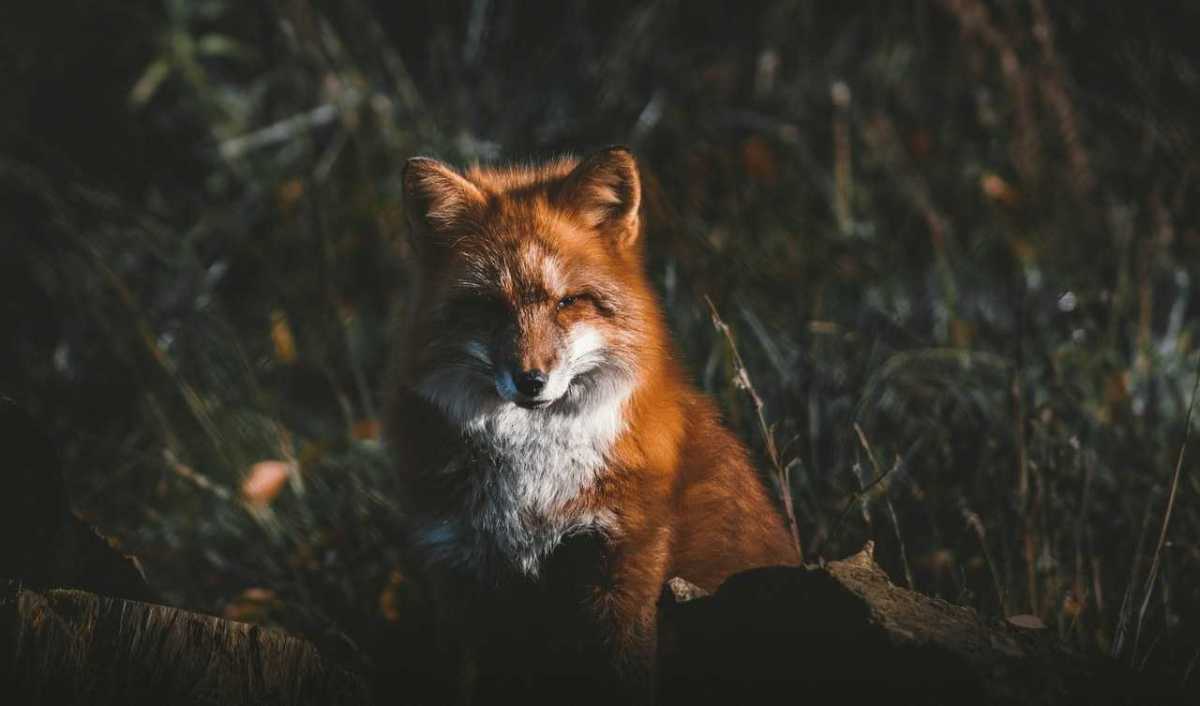
Photo: Jan Kohl / Unsplash
Moderate Your Tone
On 15 September 2026, IG Wild beim Wild put seven questions on fox hunting to Solothurn Government Councillor Sibylle Jeker. No reply ever came. Now it is clear why: the files released by the canton in response to our request for access to documents show a deliberate decision. And they show that the responsible office does not systematically record conflict cases, wildlife damage and diseases in foxes, even though the government calls the contribution of fox hunting to conflict resolution "undeniable".
The reply from the Office for Forests, Hunting and Fisheries (AWJF) dated 5 November 2026 is signed by Mathias Muggli, head of the Hunting and Fisheries division. It addresses the individual points of our request of 5 October 2026. Enclosed are an internal email thread and the hunting and fallen game statistics for 2020 to 2025 at hunting-circle (Hegering) level. We document the letter and the email thread in full: Reply from the AWJF of 5 November 2026 (PDF).
"A reply letter will be dispensed with"
The canton did not overlook our open letter to Government Councillor Jeker. On 16 September 2026, the departmental secretariat of the Department of Economic Affairs (VWD) opened a task on it in the business management system, updated by Kristina Gertsch and assigned to Corinne Bögli at the AWJF. Its title: "AWJF: Prepare draft reply from RR SJ to 'IG Wild beim Wild'". The office was thus to draft a reply for Government Councillor Sibylle Jeker (RR SJ).
None was ever sent. On 21 September 2026 at 13.11, Silvia Nietlispach, deputy head of the AWJF according to the organisation chart, wrote to Regina Steffen of the Department of Economic Affairs: «Rolf and I discussed this matter with RR SJ today. No reply letter will be sent.» Rolf is Rolf Manser, head of the AWJF. Steffen was to record the matter as closed. The message was copied to Rolf Manser, to departmental secretary Peter Studer, to Corinne Bögli, and to Mark Struch and Christine Wenger of the AWJF's hunting and fisheries units.
Barely an hour later, Regina Steffen confirmed that she had closed the matter «as decided by RR SJ». At 15.18, Silvia Nietlispach forwarded the correspondence for information to Corinne Bögli and Christine Wenger. The deadline set in our letter expired on 29 September. The decision to let it pass had been taken by the cantonal minister herself eight days earlier.
Glarus, Uri and Appenzell Outer Rhodes have likewise not yet answered our questions on fox hunting (Four cantonal governments leave 30 questions unanswered). The requests for access to documents are still pending there: Appenzell Outer Rhodes has announced that it will send the available documents by 13 November 2026, and the Glarus government referred the request to the Department of Construction and Environment on 20 October. In Solothurn, by contrast, the silence is now documented in writing as a decision.
The letter of 5 November is therefore not a reply to the open letter but to our separate request for access to documents. Even so, the documents released shed light on key points of our seven questions: conflict cases, wildlife damage and diseases are not recorded systematically. As its basis, the office cites the position paper of JagdSchweiz and a government resolution on earth hunting. It provides no cost estimate for the fox management said to be too expensive. In particular, it remains unanswered which measurable objectives regular fox hunting in the canton is meant to achieve and how its effect is assessed.
As its basis: an association paper and a resolution from 2018
We had asked for all reports, file notes and data analyses on which the rejection of Pascal Wolf's petition of 14 September 2026 is based. The authority's answer: the basis is the position paper on fox hunting by JagdSchweiz, the umbrella organisation of recreational hunters. In addition there is a 2018 government council decision on earth hunting. The authority names no reports, analyses or file notes of its own.
JagdSchweiz is not an independent expert body but an interest group. It represents recreational hunters, that is, precisely those who want to shoot foxes. The 2018 government council decision concerns earth hunting only. For the claimed benefit of fox hunting as a whole, the authority thus cites as its sole professional basis this association's paper, with no cantonal impact analysis of its own. A government that proceeds in this way has those affected assess their own hobby.
When asked which wildlife-biology literature was consulted before the rejection and what correspondence there was with JagdSchweiz or cantonal hunting organisations, the authority likewise merely refers back to this answer. No independent literature is cited. Whether there was correspondence with the recreational hunters' associations, the letter leaves open.
What to make of the JagdSchweiz paper, we have set out in detail: JagdSchweiz argues against itself and in the dossier Fox hunting without facts: How JagdSchweiz invents problems. In it, the association itself concedes that current hunting barely limits the fox population.
Damage and disease are not recorded systematically
The government had justified fox hunting with local conflict resolution, prevention of wildlife damage and control of animal diseases, and had called its contribution "undeniable". We wanted to know what this is based on: which reports from the public, damage to livestock and poultry, wildlife damage compensation, findings on mange, distemper and fox tapeworm.
The AWJF's answer is the same both times. Conflict cases and wildlife damage involving foxes are not recorded systematically. The authority also neither records nor examines diseases in foxes systematically.
Shooting goes ahead regardless. According to the hunting statistics, Solothurn recreational hunters killed 866 foxes in 2024, and a further 572 were registered as fallen game (Stop fox hunting: write to the Solothurn cantonal council). Without systematic recording, neither the extent of damage and disease nor the claimed effect of fox hunting can be verified.
Monitoring: "no political mandate"
In September, the government had written that monitoring as a basis for hunting planning was "nowhere near feasible with reasonable staffing and cost". We asked for the cost estimates and assessments on which this statement is based.
There are none. The statement may have been "insufficiently clear", the office writes. What was meant was a comprehensive, scientifically grounded fox management programme, and that would be expensive. Since there is "no political mandate" regarding the fox, "no further assessments" were carried out. The cost justification is therefore not based on any cost estimate.
The canton of Zug shows that a scientific assessment of the current situation can also be built on existing literature and existing hunting statistics. This is exactly how the expert report by SWILD there came about, without ongoing population monitoring (Stop fox hunting: Zug).
The SWILD report has been available since August
This very report was known in Solothurn. On 4 August 2026, the Conference of Hunting and Fishing Administrators (JFK) sent the SWILD report to its members. Within the AWJF it was circulated "for information". Around six weeks later, the petition was rejected. The only footnote in the reply letter referred to the position paper by JagdSchweiz. Whether and how the SWILD report was examined is left open by the office's reply. The report by wildlife researchers Claudia Kistler and Fabio Bontadina concludes that current fox hunting does not regulate the population sustainably and does not improve disease control.
Earth hunting: "of minor importance" in 2018, still permitted today
The second basis cited by the office is Government Council Resolution No. 2018/52 of 16 January 2018. It deals with a motion by the SP/Junge SP parliamentary group calling for a ban on earth hunting. The motion referred to cantonal surveys from 2000 to 2004: only 0.6 per cent of foxes shot at that time were killed in earth hunting.
In its response, the government itself stated that earth hunting was of minor and declining importance in the canton. It nevertheless rejected a ban, with a remarkable justification: hunting dogs would drive foxes out of the burrow of their own accord anyway, including during driven hunts. On 4 July 2018, the cantonal council declared the motion not significant.
A decision defending a barely used hunting method is now one of the two grounds the canton cites for its refusal. Zurich, Thurgau, Bern, Basel-Landschaft and Vaud have banned or severely restricted earth hunting. In a 2010 legal opinion commissioned by the Swiss Animal Protection STS, the Foundation for Animal Law (TIR) concluded that earth hunting meets the definition of cruelty to animals under the Animal Welfare Act on several counts. The TIR demands that the provisions paving the way for earth hunting be struck out as quickly as possible (What is earth hunting and why is it controversial?). Even JagdSchweiz wrote in 2022 that earth hunting was hardly practised any more, and in 2025 called it indispensable.
Commentary: Silence as a decision
Commentary by IG Wild beim Wild: A government that describes a recreational hunt as 'indisputably' useful must be able to say what it bases that on. The documents released provide no verifiable assessment of its effects. The department itself does not systematically record damage and diseases, has not investigated costs, and, by its own account, circulated the SWILD technical report merely for information. When we asked, no gap was admitted. A decision was taken not to reply. That decision was passed on within the department and the office and administratively closed. No objection is documented in the released email correspondence. The documents show no verifiable objective and no monitoring of the effects of fox hunting. The canton nevertheless lets the pastime continue, year after year, with hundreds of dead foxes.
The format fits the pattern. The office did not send the hunting and fallen-game statistics of the Hegeringe as a file, but as a stack of several hundred pages of paper. Of all bodies, the office responsible for forests and wild animals could have sent the data in a single email. Environmental protection begins with one's own printer.
What happens next
The office did not answer the question about its correspondence with JagdSchweiz and the cantonal hunting organisations. IG Wild beim Wild is considering applying to the Solothurn cantonal commissioner for information and data protection for a mediation procedure on this point.
What you can do: In the end, it is politicians who will decide, not the office. Write directly to the members of the Solothurn cantonal parliament, ideally in person and in your own words. You will find a template letter, figures and contact details on the page Stop fox hunting: write to the Solothurn cantonal council. An overview of all cantons is provided by the campaign End fox hunting.
More on the subject of recreational hunting: In the dossier Alternatives to recreational hunting we show political and practical alternatives to recreational hunting. What the research says about this is shown by Hunting fact-checked: the state of research.
The position of IG Wild beim Wild: IG Wild beim Wild rejects recreational hunting. Our model is the canton of Geneva, which has managed without recreational hunting since 1974: without hunting seasons, without hunting dogs, without driven hunts, without high seats, without the animal cruelty and crime that go hand in hand with hunting season elsewhere. What has worked there for over fifty years disproves every position paper by JagdSchweiz. An association that bases its policy on claims it refutes in its own documents is not a professional organisation, but a factory for misinformation.
Wild animals need a voice
Once a week: research, petitions and background information on recreational hunting. Free of charge and can be unsubscribed from at any time.

All articles are written by IG Wild beim Wild as well as by external co-authors. Research, structuring and editorial processes may be supported by AI-assisted tools.
Support our work
With your donation you help protect animals and give their voice a hearing.
Donate now →