Schwyz: wolf complaints not pursued further, says Patierno
According to Sandro Patierno, the public prosecutor has not pursued complaints concerning wolf regulation any further. Separately, the canton expects to pay around 3,900 francs in 2026 for services provided by the Verein Herdenschutzhunde Schweiz.

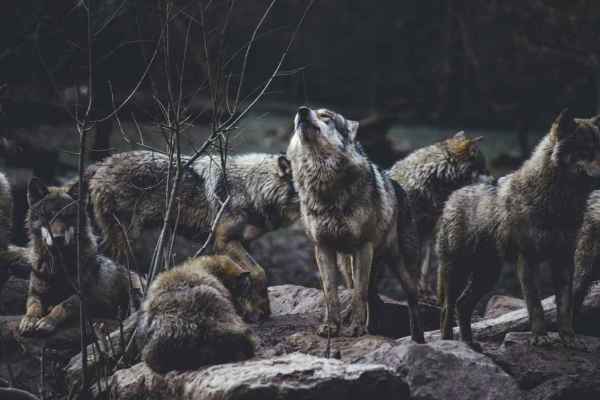
Illustrative image. Photo: Renaud Confavreux / Unsplash
«Who checks whom»
According to Landammann and environment director Sandro Patierno, the Schwyz public prosecutor has not pursued complaints concerning the regulation of the Chöpfenberg pack any further. This was reported by the «March-Anzeiger» and the «Höfner Volksblatt» in their edition of 3 November 2026, citing Patierno; the report can be read online at marchhoefe24.ch. The report does not say which complaints are affected or how the public prosecutor justifies its decision.
What is known and what is not
According to Patierno, wolf protection organisations had judged the approach to regulation to be unlawful and had filed a complaint against him and employees of his office. The office, he said, had complied 100 per cent with the requirements of federal law. Which organisations filed complaints, how many complaints there were, and whether the public prosecutor issued a decision not to proceed or discontinued proceedings all remain unclear. This account comes from the person concerned himself. The report cited contains no justification from the public prosecutor.
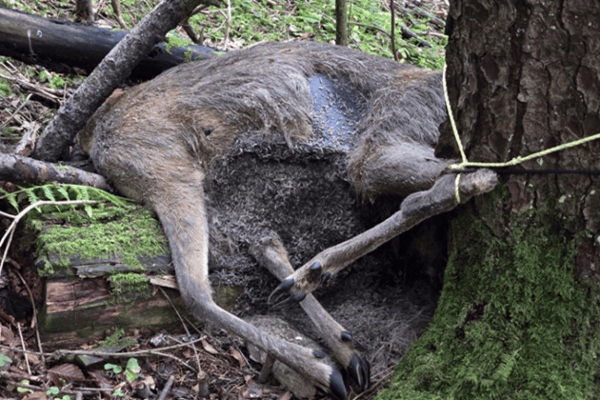
One earlier complaint is publicly known: at the end of October 2025, the association CHWOLF filed a criminal complaint against the canton because a decomposed red deer and a freshly gutted roe deer had been tied up in front of a camera trap in the core territory of the pack, within sight of a provisional hide, as toggenburg24.ch reported at the time. Whether this complaint is among those now not being pursued remains unclear.
Patierno stressed at the same time that he understood the frustration of livestock keepers. The canton was bound by federal requirements, he said, but used «the statutory room for manoeuvre on population regulation consistently». He welcomed efforts to give the cantons more leeway: «We need faster procedures and fewer bureaucratic hurdles.»
Which questions remain open
A public prosecutor examines whether a criminal offence has been committed. Whether a regulation made sense from a scientific standpoint and targeted the right wolves is a different question. As we showed in the article «Chöpfenberg pack: Schwyz kills four pups, not the proven livestock killers», according to the published DNA results, the individually attributed kills trace back to three older wolves: the pack leader M107, as well as M586 and M640 from the 2025 litter. By contrast, four pups of this year were killed. For some kills, no individual attribution was possible. The Federal Office for the Environment approved the preventive regulation on 28 July, when the canton had not yet reported a single kill for 2026.
The previous year's procedure also raises questions: in 2025, three young wolves were killed. Two survivors of the same cohort, M586 and M640, were identified in 2026 as livestock killers. How many wolves have been killed across Switzerland in the current season is shown by our Wolf kill counter Switzerland 2026/27.
CHF 3,900 for the Verein Herdenschutzhunde Schweiz
A separate report of 5 November concerned the funding of herd protection. In its response to Small Question KA 27/26 from SVP cantonal councillors Kim Pfadenhauer and Manuel Mächler, the government states that in 2026 the canton is expected to incur costs of around CHF 3,900 for services provided by the Verein Herdenschutzhunde Schweiz, as nau.ch and the «Bote der Urschweiz» report. The association supports farms with the procurement, keeping and training of livestock guardian dogs. Since mid-2025, Schwyz has been working with Uri, Lucerne, Zug, Aargau and Nidwalden in an inter-cantonal coordination on this.
The amount covers only these association services, not all expenditure on herd protection. On contributions to other measures, the canton gave figures in its response to Small Question KA 22/26: it itself contributed around CHF 106,293 in 2025 and CHF 28,948 in 2026 up to the date of the reply. In the same response, three of four recorded kill incidents on agricultural land were assessed as unprotected. We described the deficiencies in the article «Schwyz: Basic protection was missing in three out of four predation incidents».
Editorial assessment
According to Patierno, the public prosecutor did not pursue the complaints. The legal considerations behind this remain unclear from the report in question. This item says nothing about the practical effect of wolf regulation.
The documented questions remain: four pups born this year were killed, while the kills attributed to individual animals trace back to older wolves. The Federal Office for the Environment approved the regulation before the canton reported the first kill for 2026. What specific grounds justified the preventive measure, and how its effect will be assessed, cannot be seen from the publications reviewed.
At the same time, according to the response to KA 22/26, three of four recorded predation incidents on agricultural land were assessed as unprotected. This does not allow any statement about all Schwyz herds, but it shows concrete gaps in the documented cases.
When Patierno demands «fewer bureaucratic hurdles», the other side of the ledger must therefore also be put on the table: How will the identified protection deficiencies be remedied, and by what yardstick does the canton measure the success of the kills? Pointing to criminal complaints that were not pursued is no substitute for these answers. More background is provided by the dossier «Wolf in Switzerland: facts, politics and the limits of hunting».
Sources
- «March-Anzeiger» and «Höfner Volksblatt», edition of 3 November 2026, online at marchhoefe24.ch: Wolf dispute: Criminal complaint against Landammann dismissed
- nau.ch, 5 November 2026: Canton of Schwyz: Schwyz pays 3,900 francs for livestock guardian dogs
- «Bote der Urschweiz», 6 November 2026: Herd protection costs canton 3,900 francs
- toggenburg24.ch, 30 October 2025: «CHWOLF» files criminal complaint against canton of Schwyz
More on the subject of recreational hunting: In the dossier The Role and Criticism of Recreational Hunters we shed light on the training, power and self-image of recreational hunters. The scientific evidence is presented in the overview Studies on the Effects of Recreational Hunting.
The position of IG Wild beim Wild: IG Wild beim Wild rejects recreational hunting. Our model is the canton of Geneva, which has managed without recreational hunting since 1974: without hunting seasons, without hunting dogs, without driven hunts, without high seats, without the animal cruelty and crime that go hand in hand with hunting season elsewhere. What has worked there for over fifty years disproves every position paper by JagdSchweiz. An association that bases its policy on claims it refutes in its own documents is not a professional organisation, but a factory for misinformation.
Wild animals need a voice
Once a week: research, petitions and background information on recreational hunting. Free of charge and can be unsubscribed from at any time.

All articles are written by IG Wild beim Wild as well as by external co-authors. Research, structuring and editorial processes may be supported by AI-assisted tools.
Support our work
With your donation you help protect animals and give their voice a hearing.
Donate now →