Chöpfenberg pack: Schwyz kills four pups, not the proven culprits of the kills
Wolf regulation in the canton of Schwyz is complete. It hit this year's pups, not the wolves to which the canton attributes the kills by DNA. A comparison of the official announcements since 2025.
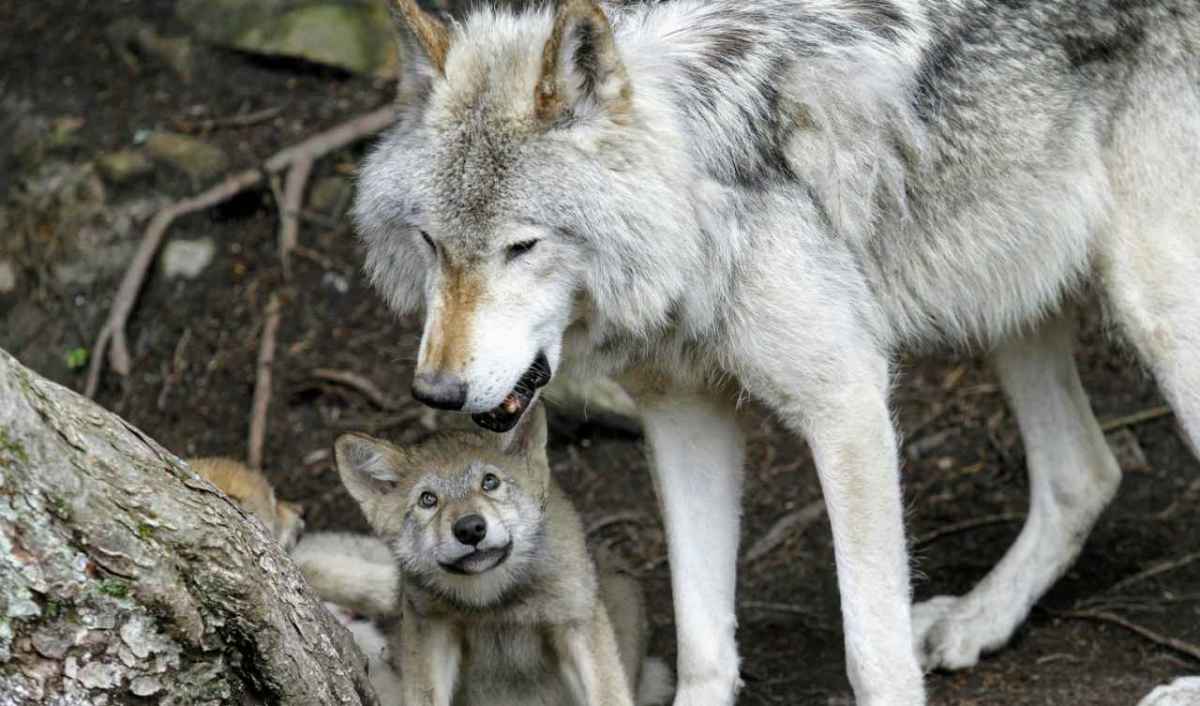
Symbolic image. Photo: M L / Unsplash
«Four Pups»
The canton of Schwyz completed its 2026 wolf regulation. According to a press release of 21 October, the cantonal wildlife wardens killed four pups of the Chöpfenberg pack, “two thirds of this year's young animals”. In the same release, the canton attributes a kill of four goats to the wolf M640, an animal from the previous year's litter. A comparison of the official announcements shows: the kills hit this year's pups. The individually identified culprits of the kills, by contrast, were older wolves.
Justification: number of pups and quota
On 20 August 2026 the canton announced that “at least six wolf pups” had been confirmed in the Chöpfenberg pack in the Wägital. “On the basis of this evidence”, Schwyz had applied to the Federal Office for the Environment (FOEN) for regulation. The FOEN approved the removal of no more than two thirds of the young animals. The canton gives as its aims adjusting the population, preserving the wolves' “natural shyness” and preventing damage as far as possible. The release cites no specific damage incident. The cantonal wildlife wardens were put in charge; according to the release, the Office for Forests and Nature may additionally call in “specially trained persons with hunting authorisation”.
The chronology is clear. As early as 29 June 2026, the Office for Forests and Nature reported three confirmed pups and announced it would examine proactive regulation. According to its overview the FOEN agreed on 28 July. Until then, the canton had not reported a single kill for 2026: the first report is dated 21 August and concerns the kill of the previous day in Pfäffikon. The canton describes the alpha male M107 as “inconspicuous until the kill incident”.
That the Confederation does not wait for damage to occur is built into the procedure. According to SRF and Keystone-SDA, the FOEN can grant a permit to regulate wolf pups “before their presence has been confirmed”. Shooting may only take place once the young animals have been verified. An approval that is possible before the animals concerned have been verified amounts to a stockpiled permit. This is hard to reconcile with what the FOEN assures the Council of Europe in writing: regulation is “la dernière mesure”, and herd protection measures must first have been implemented and milder means such as hazing attempted (What the FOEN has assured the Council of Europe in writing). In the case of the Chöpfenberg pack, the FOEN gave its approval when the canton had not yet reported a single kill for 2026. Whether and how it examined herd protection and milder means cannot be traced. The approvals are published without any reasoning.
Who caused the kills
The DNA analyses by the Laboratory for Conservation Biology at the University of Lausanne have so far attributed the kills in the canton to three wolves:
- M107, the pack's lead male: twelve sheep in Pfäffikon on 20 August 2026.
- M586, from the first litter of 2025: one goat in Albegg (Einsiedeln) on 22 August 2026. According to the canton, he has since left the pack.
- M640, also from the 2025 litter: four goats in the Wisital (Altendorf) on 20 September 2026. According to the canton, he has “not yet left” the pack.
For the kills at Haltli (Einsiedeln) and in Oberiberg, no individual attribution has so far been possible. None of the three identified wolves is among this year's pups, to which the kill order is limited. Whether M107 and M640 still live in the pack today is not stated in the announcements.
The previous year: same procedure, unclear effect
The same procedure was followed in 2025. In July 2025 the canton assumed there were five pups, in September the cantonal government ordered the removal of two thirds of them, and in November it reported three dead young wolves and the conclusion of the operation. The aim was to reduce potential damage and to preserve the wolves' wariness of humans. Two young animals of that year's cohort that demonstrably survived, M586 and M640, were identified as livestock killers in 2026. The 2025 kills therefore did not prevent two wolves of that cohort from killing livestock the following year. Whether the regulation reduced the overall number of livestock losses cannot be judged from the published information. A public assessment of its effect is missing from the communications we reviewed.
The methods, too, were contested in 2025. At the end of October 2025, according to SRF, the association CHWolf filed a criminal complaint against the canton. It accuses the authorities of having tied down a heavily decomposed red deer and a freshly gutted roe deer in the core territory of the pack, in the line of sight and fire of a makeshift high seat. Remo Bianchi of the Office for Forests and Wildlife told SRF: “Luring the animals serves an efficient and targeted regulation.” Only wild animals killed in road traffic were used, he said. How the complaint was resolved is not known.
Herd protection: gaps in the fencing, open questions
According to the reply of the Department of the Economy of 7 October to Small Question KA 22/26, five livestock kill incidents had been recorded in 2026 up to that point. Three of the four kills on agricultural land “had to be assessed as unprotected”. For the kill in Pfäffikon, the canton had already stated in August that the herd protection measures had not been fully met. We broke down the deficiencies in the article “Basic protection was missing in three of four kill incidents”. For the kill by M640 in Altendorf, the communications do not say whether the goats were protected. In Oberiberg, according to the “Bote der Urschweiz”, the canton found correct protective measures in place. No individual animal has so far been identified there.
The figures for Oberiberg also shift: on 10 September the canton reported “two dead sheep” near Rieter, while on 21 October it speaks of three sheep in Rieten. No explanation is given.
The wounded pup and the radio-collared she-wolf
In September, the organisation Wolfshirten reported a pup that had been shot and wounded but was never found (our report). The canton's final report mentions no such incident. Whether it happened as described, and whether the animal is among the four pups reported, cannot be determined from the official information.
In March 2026, the canton fitted a female from the pack with a GPS collar. The aim, it said, was to gain insights into “the movement behaviour, use of space and social behaviour of the animals”. According to Wolfshirten, the hunting administration was unable to rule out that the transmitter data would also be used to coordinate kills. There has been no public clarification from the canton on this point.
SVP cantonal councillor demands the killing of the entire pack
According to SRF on 17 October, SVP cantonal councillor Samuel Lütolf is demanding that all eight wolves of the pack be shot. The population should be regulated “as a precaution”, not only after livestock attacks.
Questions the canton must answer
- What information on herd protection and milder measures did the FOEN have before it when it gave its approval on 28 July?
- How many pups did the pack have in 2026 according to the latest knowledge, and how many are still alive?
- Were the four kills carried out exclusively by the cantonal wildlife wardens, or did recruited recreational hunters take part?
- Were there missed shots or unsuccessful follow-up searches, and were carcasses once again laid out as bait?
- Is the data from the radio-collared female being used to plan kills?
- Was the goat herd in Altendorf protected, and why were there initially two sheep reported in Oberiberg and now three?
Context
For the second time, Schwyz has killed part of the Chöpfenberg pack's offspring. The three individually identified animals responsible for the listed attacks are not among this year's pups. This points to regulation by age cohort and quota, not the targeted killing of proven culprits. Whether the measure will reduce future damage cannot be judged from the published information. What is documented, however, are gaps in basic protection. With the revised hunting ordinance, the canton is also formally involving recreational hunters in the regulation of predators, and an SVP cantonal councillor collected money for recreational hunters who shoot the wrong wolf. The environment department has announced a further report on the results for after the regulation period ends on 31 January 2027.
The four kills in Schwyz are recorded in our wolf kill counter 2026/27. The course of the first weeks is put into context by the interim report after five weeks. Background information is collated in the dossier «Wolf in Switzerland».
Sources
- Canton of Schwyz, press release of 21 October 2026: «Regulation of the Chöpfenberg pack completed»
- Canton of Schwyz, press release of 6 October 2026: «Wolves M107 and M586 responsible for kills in Pfäffikon and Einsiedeln»
- Canton of Schwyz, press release of 20 August 2026: «The Chöpfenberg pack is to be regulated»
- Canton of Schwyz, press releases of 2 September 2025 and 24 November 2025: «The Chöpfenberg wolf pack is to be regulated», «Conclusion of the wolf regulation of the Chöpfenberg pack»
- Schwyz Department of Economic Affairs, 7 October 2026: Answer to the Minor Interpellation KA 22/26
- FOEN, «Fourth preventive regulation of wolf packs: status of the cantons' applications», as of 4 October 2026
- Office for Forests and Nature, Current news on hunting and wild animals (announcements of 29 June, 21 and 31 August, 10 and 21 September 2026)
- FOEN, Rapport du gouvernement to the Standing Committee of the Bern Convention, Dossier 2023/03 (report of 31 July 2025), analysed in our article «What the FOEN assures the Council of Europe in writing»
- SRF, 30 October 2025: Criminal complaint by CHWolf against the canton of Schwyz
- Polizeinews, 15 March 2026, based on information from the canton: She-wolf from Chöpfenberg pack fitted with GPS collar
- SRF, 17 October 2026: Schwyz wolves under fire, politically too
More on the subject of recreational hunting: In our dossiers on recreational hunting gather fact-checks, analyses and background reports. The scientific evidence is presented in the overview Studies on the Effects of Recreational Hunting.
The position of IG Wild beim Wild: IG Wild beim Wild rejects recreational hunting. Our model is the canton of Geneva, which has managed without recreational hunting since 1974: without hunting seasons, without hunting dogs, without driven hunts, without high seats, without the animal cruelty and crime that go hand in hand with hunting season elsewhere. What has worked there for over fifty years disproves every position paper by JagdSchweiz. An association that bases its policy on claims it refutes in its own documents is not a professional organisation, but a factory for misinformation.
Wild animals need a voice
Once a week: research, petitions and background information on recreational hunting. Free of charge and can be unsubscribed from at any time.

All articles are written by IG Wild beim Wild as well as by external co-authors. Research, structuring and editorial processes may be supported by AI-assisted tools.
Support our work
With your donation you help protect animals and give their voice a hearing.
Donate now →