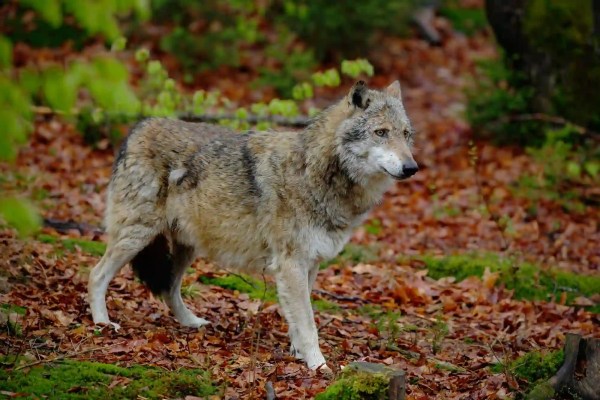
Wolves in the Jura: calm in Vaud, kills in Neuchatel
The Jougne-Suchet pack is now breeding in Neuchatel, and in the Vallée de la Brévine twelve more cattle died despite the killing of pups. Herd protection is missing from the explanation.
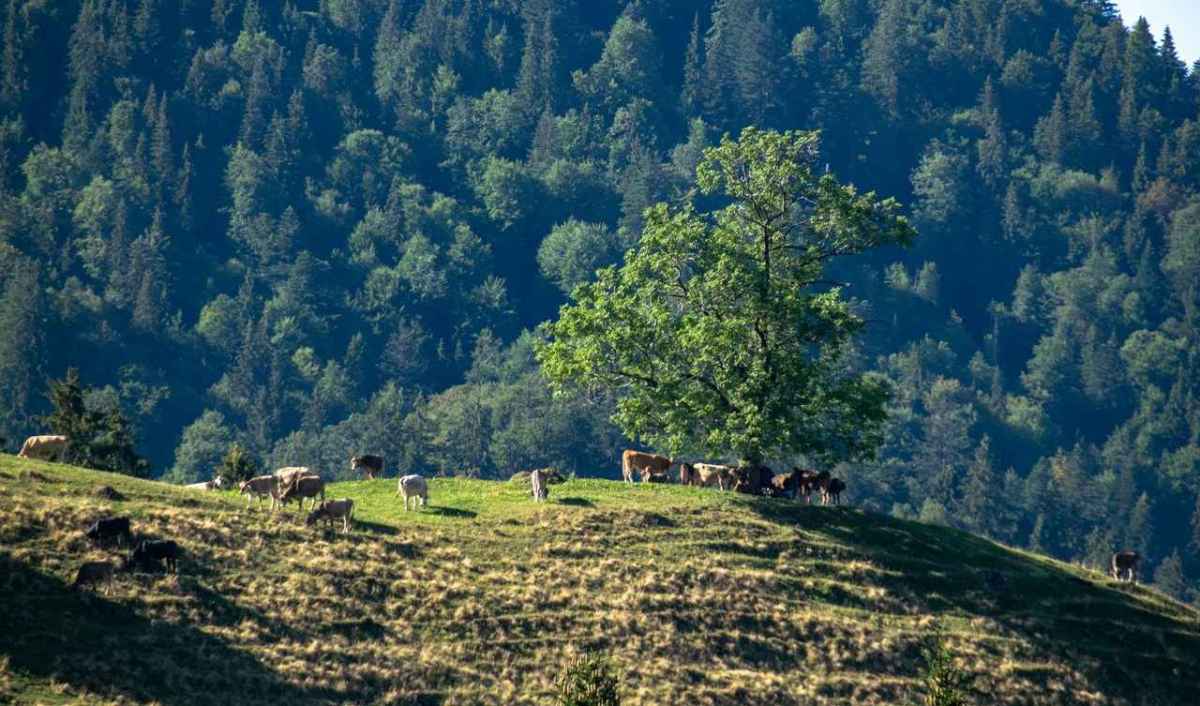
Cattle on a mountain pasture. Photo: Tim Dennert / Unsplash
“Farm Report”
In the Vaud Jura, wolves have killed markedly fewer farm animals this year. «24 heures» attributes this mainly to the kills at Mont Tendre. Wild beim Wild has already summarised the figures and statements from the article in the post Vaud plans 612 red deer kills: the largest quota is at Mont Tendre . This piece is about what is missing from the success story: where the wolves have gone, what is happening in the neighbouring canton with the same kill strategy, and what role herd protection plays.
The success story in brief
According to the «24 heures» of 9 October 2026, a total of 76 farm animals were killed, injured or reported missing by wolves in the wider Vaud Jura during the 2024 alpine season; in 2025 the figure was 63. Over the last ten months it was 16. Vaud has not submitted a regulation request to the Federal Office for the Environment (FOEN) for this season. The responsible director, Sébastien Beuchat, sees this as proof of the success of a graduated kill policy: first young animals, then problem animals, and if necessary the whole pack.
The pack at Mont Tendre around the male M351 is considered to have disappeared, as has the one at Risoud for the most part. In an official order, the canton of Neuchatel states that, on current knowledge, it can no longer be confirmed that either of them meets the criteria for a pack. How many wolves Vaud alone has killed since regulation began is documented by the wolf kill counter.
The Jougne-Suchet pack is now breeding in Neuchatel
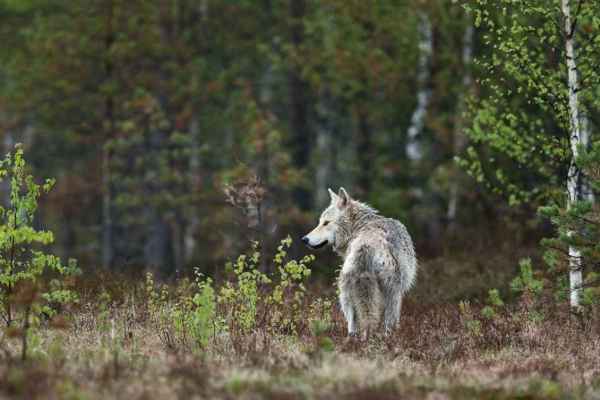
One sentence in the article weighs more heavily than the headline: according to «24 heures», the cross-border Jougne pack, with at least seven wolves, has moved into the Les Verrières area in the canton of Neuchatel. The official documents support this, even though they continue to list the pack as cross-border. In the Neuchatel kill order of 2 September 2026 it states that the Jougne-Suchet pack reproduced on Neuchatel soil in 2026. It consists of two parent animals, four young wolves from the previous year and at least three pups.
Back in June, a wolf from this pack allegedly killed two cattle in Les Verrières. The FDP cantonal MP and deputy director of the Swiss Farmers' Union Loïc Bardet accordingly says in «24 heures» that people had seen how long Neuchatel took to react in its turn. Part of the relief in the Vaud Jura could therefore be a shift across the cantonal border. How large that share is cannot be quantified from the information available. For the wolves and the herds, the border changes nothing.
Brévine: further kills despite pup culls
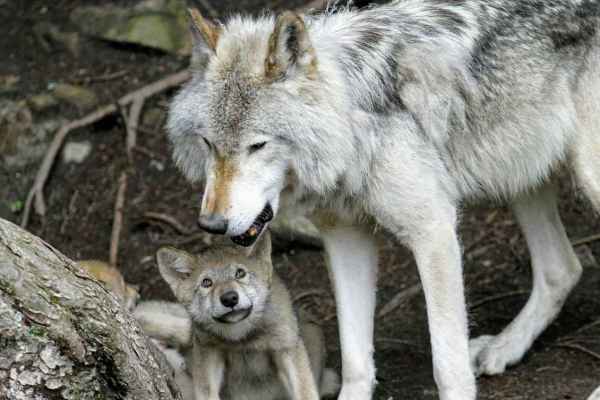
How robust the Vaud success formula is can be seen in the second Neuchatel pack in the Vallée de la Brévine. It emerged in spring 2025 with six pups. After attacks on cattle, the canton, with the approval of the FOEN, authorised the kill of two thirds of the pups in September 2025. Four of the six young wolves were killed, exactly the first step that Beuchat describes in Vaud as part of the successful graduated approach.
The kills did not stop as a result. According to the Neuchatel order, the pack killed or injured a total of 23 cattle in 2025. Between 4 July and 31 August 2026, twelve cattle again died in its territory. Genetics attributed four of these attacks to the male wolf M583, not to the young animals. Another young wolf was shot in August. Since 2 September, a new permit has been in force until the end of January 2027, this time for M583 or a further pup. The pup culls of 2025 did not prevent further kills. Whether they reduced their number cannot be derived from the information available. More on the federal practice of authorising kills before offspring have been confirmed in the article Wolf kills: federal government approves before pups are confirmed.
Herd protection does not appear in the statement
The cover image of «24 heures» shows a cow on the Sapelet alp near L’Abbaye wearing a collar with a capsule that releases wolf pheromones. The text does not mention herd protection as a possible reason for the decline. Yet the Vaud cantonal agriculture department has been providing financial support for such collars since August 2023, as the government explained in response to a question in the Grand Council. According to the canton, attacks stopped afterwards in some cases and not in others. No evaluation for 2026 is available.
In July, the same newspaper still cited other possible reasons for the quiet alpine season, such as the abundant supply of wild animals in the forests on which wolves feed. And the decline is not a Vaud peculiarity. Across Switzerland, wolf kills in the cantons with packs halved by midsummer, as Wild beim Wild documented in the article Halfway Through Alpine Summer: Wolf Kills Cut In Half. In the neighbouring French département of Doubs, the authorities recorded eleven wolf attacks in 2026 up to mid-September, compared with fifteen in each of the two previous years, according to ICI Besançon.
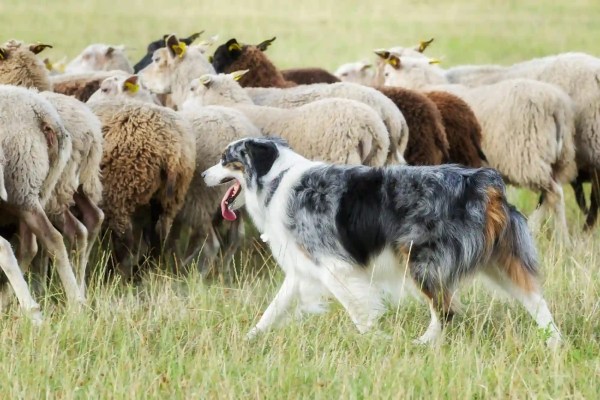
There is also a legal peculiarity. For cattle older than 14 days, the Hunting Ordinance does not require any protective measures. In its approval of the kill in La Brévine, the FOEN explicitly states that protecting older cattle cannot reasonably be expected. In an area where almost exclusively cattle are summered, a kill therefore almost automatically moves to the fore. Which measures were actually deployed on the affected pastures, and how they worked, is not apparent from the order. What works in herd protection and what fails is summarised in the dossier Herd protection in Switzerland.
What the experts actually say
The voices quoted by «24 heures» only partly support the success story. Wolf specialist Jean-Marc Landry considers it possible that the Jura has returned to the situation of 2020: pairs and lone wolves that will soon reoccupy the vacated territories. The present situation, he says, is not natural but the result of massive kills. Isabelle Germanier of Gruppe Wolf Schweiz speaks of a temporary decline and warns that interventions in stable packs are very risky, as the Chablais has shown.
Germanier also points to a methodological problem: because the killing methods followed one another so quickly, their effect can hardly be examined cleanly. This is precisely the study the canton of Vaud commissioned from KORA in February 2026, after the 2025 regulation had, according to the canton, tied up six permanent staff and around twenty auxiliary game wardens, in part at the expense of other tasks. The result is still pending. Background on KORA's role in the Vaud Jura can be found in the article wolf traps in the Vaud Jura.
In fairness, one point made by the other side is correct and deserves mention: according to «24 heures», the break-up of packs feared by wolf protection advocates, with young wolves specialising in livestock, did not occur in Vaud in 2025 and 2026. Germanier explains this by the fact that simply too few young animals survived the kills. That is no evidence of a gentle intervention, but of its severity.
Assessment: calm through emptiness
Vaud wanted to remove the pack at Mont Tendre completely and, according to Keystone-ATS, killed nine wolves there by January. M351 remained untraceable. Fewer wolves mean fewer kills of livestock; that is no surprise, just arithmetic. It is not a strategy for coexistence. The gap will fill: the neighbouring packs Jougne-Suchet, Haute Valserine and Brévine all reproduced in 2026, according to the Neuchâtel authorities. And the neighbouring valley shows that the same sequence of pup kills and announcements does not end the livestock losses when no protection is required for older cattle.
Instead of celebrating the decline as proof that the kills work, the canton would have to disclose what it has actually achieved with CHF 1.4 million, all measures combined, according to «24 heures», and what share herd protection contributed. Germanier asks the right question: what goal do the kills pursue, and which losses are considered acceptable? As long as nobody answers it, the wolf in the Jura remains what she warns of: a political weapon.
Sources
- «24 heures»: «Après des tirs record, le loup s’est fait discret sur les alpages vaudois», Erwan Le Bec, 9 October 2026 (paywalled)
- Canton of Neuchâtel, DDTE: Order to regulate the Vallée de la Brévine pack with the consent of the FOEN, 2 September 2026
- Canton of Vaud: Press release on the KORA mandate on the effectiveness of the kills, 3 February 2026
- Grand Council of Vaud: Response of the Council of State to the inquiry by Alberto Mocchi on pheromone collars (23_HQU_118)
- Keystone-ATS via La Télé: «Vaud veut abattre trois louveteaux de la meute Jougne-Suchet», January 2026
- ICI Besançon: «Vers une diminution des attaques de loups dans le Doubs?», September 2026
More on the subject of recreational hunting: In our dossiers on recreational hunting gather fact-checks, analyses and background reports. The scientific evidence is presented in the overview Studies on the Effects of Recreational Hunting.
The position of IG Wild beim Wild: IG Wild beim Wild rejects recreational hunting. Our model is the canton of Geneva, which has managed without recreational hunting since 1974: without hunting seasons, without hunting dogs, without driven hunts, without high seats, without the animal cruelty and crime that go hand in hand with hunting season elsewhere. What has worked there for over fifty years disproves every position paper by JagdSchweiz. An association that bases its policy on claims it refutes in its own documents is not a professional organisation, but a factory for misinformation.
Wild animals need a voice
Once a week: research, petitions and background information on recreational hunting. Free of charge and can be unsubscribed from at any time.

All articles are written by IG Wild beim Wild as well as by external co-authors. Research, structuring and editorial processes may be supported by AI-assisted tools.
Support our work
With your donation you help protect animals and give their voice a hearing.
Donate now →