Vaud plans 612 red deer kills: the largest quota is at Mont Tendre
The canton says it also takes predator density into account when planning kill quotas. It does not say what role the apparently vanished wolf pack at Mont Tendre plays in this.
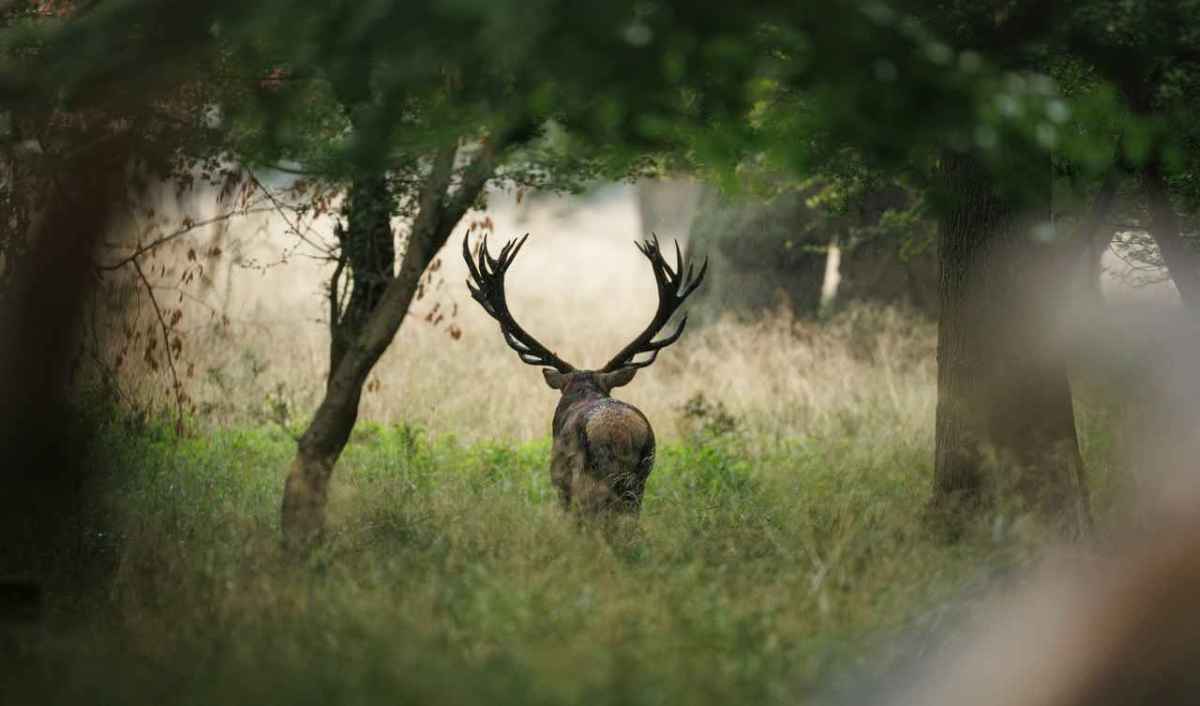
Stock image: red deer in the forest. Photo: heino eisner / Unsplash
«The Salt Lick»
The canton of Vaud intends to have 612 red deer killed this autumn. In 2024 and 2025, the kill quota provided for around 500 each year, which represents an increase of around 20 per cent. This was stated by Frédéric Hofmann, head of the Hunting, Fisheries and Species section of the Directorate General for the Environment (DGE), to Keystone-ATS on 9 October 2026. The report appeared, among other places, on Watson.
On the same day, «24 heures» reported that the wolf pack at Mont Tendre appeared to have disappeared following several kill campaigns. Reading both reports side by side, one location stands out: Mont Tendre is home to the canton's largest regional red deer quota.
The canton's figures
Of the 612 planned kills, according to the DGE, 297 fall on the Alps and 307 on the Jura, plus eight red deer for individual hunting. The largest quotas concern:
- Mont Tendre (Jura): 187 red deer
- Pays-d'Enhaut (Alps): 180 red deer
- La Dôle (Jura): 78 red deer, where the target was lowered
The increase is justified by damage to forests and agriculture. The red deer, once extinct in Vaud and back since the 1980s, is said to benefit from, among other things, less severe winters. In 2019, according to the canton, the balance between forest and wildlife had not been achieved in almost half of Vaud's forests, and a cantonal strategy is meant to establish it by 2030. At the southern foot of the Jura, red deer eat rapeseed in late winter; crop losses on individual parcels can reach «supérieures à 50 %» ("more than 50%"), says Hofmann.
For the purposes of planning, the canton states that it draws on counts in key sectors, kill results, the intensity of the damage, and «la densité des effectifs de grands prédateurs», i.e. the density of predators.
What «24 heures» reports about Mont Tendre
Wild beim Wild has been following the measures against the pack at Mont Tendre since the kill of the first wolf pups and the wolf traps in the Vaud Jura. According to «24 heures» of 9 October 2026, the pack «semble avoir disparu», meaning the pack around the male wolf M351 appears to have disappeared. Sébastien Beuchat, director of the Direction des ressources et du patrimoine naturel, describes the earlier situation as follows: a single pack, the one at Mont Tendre, was responsible for 80 percent of the attacks in the Vaud Jura.
The newspaper gives the following figures for killed, injured and missing livestock in the wider Jura region: 49 at the end of the 2023 alpine season, 76 in 2024, 63 in 2025 and 16 in the last ten months. The time periods are not delineated identically and are therefore only partially comparable.
The newspaper further reports: on Vaud territory, the canton now counts only one pack, the one at Marchairuz with at least five wolves. For this season, Vaud has not submitted a request for a regulatory cull to the Federal Office for the Environment. The cantonal wolf policy cost 1.4 million francs, including all measures combined.
The canton interprets this development as a result of the culls. Experts are more cautious. Wolf specialist Jean-Marc Landry tells «24 heures»: «La situation actuelle n’a rien de naturel», i.e. it is the result of massive culls. Isabelle Germanier from Gruppe Wolf Schweiz notes that regulating a problematic pack does lead to a reduction in attacks, «mais c’est temporaire».
The open question at Mont Tendre
According to its own statements, the canton also takes the density of predators into account when planning its culls. This raises a concrete question at Mont Tendre: what role does the apparently vanished wolf pack play in determining the red deer quota? The available reports do not answer this. As justification, the canton cites browsing damage, damage to crops and milder winters.
Wolves can influence the populations and spatial behaviour of red deer. However, the extent to which this relieves pressure on forest regeneration depends on local conditions. A study from northern Poland (Wójcicki and Borowski, «Scientific Reports», 2023) found a spatially different browsing pattern in territories with wolf packs: young beech trees were browsed less often, whereas pines were browsed more heavily, and the assumption of generally lower browsing was only partially confirmed. Wild beim Wild has covered further studies in the article No forest without the wolf: What predators mean for Switzerland.
Precisely because the effect is location-dependent, it would be the canton's task to disclose how it weighs the presence or absence of predators in its planning. The same question arises at federal level, where the National Council justifies wolf kills with forest damage. On this, see the article More wolves, more forest damage? Parliament is mistaking the culprit.
Regulation as a state mandate, not always a welcome label
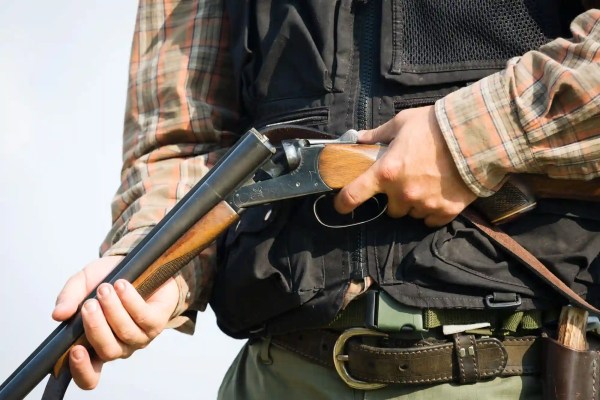
The canton increasingly understands hunting as an instrument of population regulation. According to Hofmann, however, the roughly 700 recreational hunters in Vaud do not always appreciate being referred to as regulators or partners of the state, even though their role in wildlife management has become "primordial". This reveals a field of tension between recreational pursuit and public wildlife management.
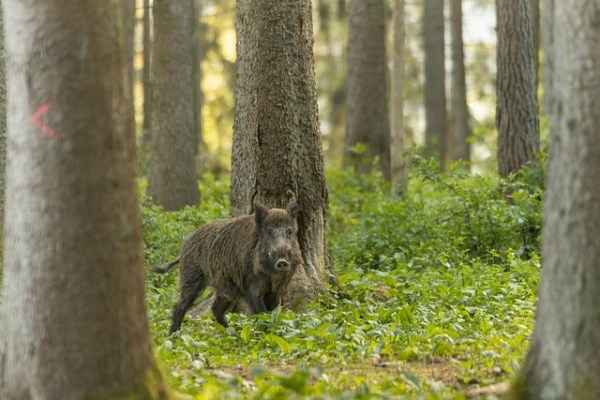
In the case of wild boar, the wildlife wardens already supplement recreational hunting to a considerable extent. Last year, recreational hunters killed 938 wild boars, with no overall quota; in addition, the DGE's Police faune-nature carried out around 400 kills. A management plan for 2026 to 2032 permits regulatory kills even in several nature reserves, with upper limits of up to 60 wild boars in individual protected sectors. Hofmann acknowledges that wild boars are learning to evade the strategies of recreational hunters. Background on this can be found in the dossier The wild boar in Switzerland.
Briefly noted from the Keystone-ATS report: The chamois, whose populations in Vaud are tending to decrease, has a kill quota of 237 animals. Lead-containing ammunition has been banned since 1 August, with exceptions. Due to high demand, restaurants regularly import game meat, including from Eastern Europe.
Neuchatel: stable populations despite wolf and lynx
Also on 9 October 2026, the president of the cantonal recreational hunters' federation in Neuchatel, Gilles Walder, spoke to Radio RTN. Since 1 October, around 160 licences for roe deer hunting have been issued. Each person is allowed to kill two roe deer, totalling around 300 animals by 9 November. On the increasing presence of wolf and lynx, Walder says the number of animals in the forests remains stable, « selon les chiffres, les populations augmentent même légèrement ».
Walder's statement shows that the presence of wolf and lynx does not necessarily go hand in hand with declining wildlife populations. He explicitly describes his explanation that females might have more young as a supposition. The report therefore does not allow any particular compensation mechanism, nor any general statement about the effect of predators, to be deduced.
Conclusion
Vaud is planning more red deer kills and, according to its own statements, is also taking into account the density of predators. The largest regional quota applies at Mont Tendre. What significance the apparently vanished wolf pack has for this planning remains unclear. In Neuchatel, the president of the recreational hunters' federation reports stable to slightly increasing wildlife populations despite the presence of wolf and lynx.
A wildlife policy that aims to protect the forest should, of all things, explain comprehensibly how it factors the ecological role of predators into its decisions. Further background is provided in the dossier Forest-wildlife conflict: the recreational hunting lobby's browsing-damage narrative.
Sources
- Keystone-ATS via Watson: «Mauvaise nouvelle pour les cerfs dans le canton de Vaud», 9 October 2026
- «24 heures»: «Après des tirs record, le loup s'est fait discret sur les alpages vaudois», Erwan Le Bec, 9 October 2026 (paywalled)
- Radio RTN: «La saison de la chasse sous le signe de la stabilité», 9 October 2026
- Wójcicki, A. / Borowski, Z.: «The presence of wolves leads to spatial differentiation in deer browsing pressure on forest regeneration», Scientific Reports, 2023
More on the subject of recreational hunting: In the dossier The Role and Criticism of Recreational Hunters we shed light on the training, power and self-image of recreational hunters. The scientific evidence is presented in the overview Studies on the Effects of Recreational Hunting.
The position of IG Wild beim Wild: IG Wild beim Wild rejects recreational hunting. Our model is the canton of Geneva, which has managed without recreational hunting since 1974: without hunting seasons, without hunting dogs, without driven hunts, without high seats, without the animal cruelty and crime that go hand in hand with hunting season elsewhere. What has worked there for over fifty years disproves every position paper by JagdSchweiz. An association that bases its policy on claims it refutes in its own documents is not a professional organisation, but a factory for misinformation.
Wild animals need a voice
Once a week: research, petitions and background information on recreational hunting. Free of charge and can be unsubscribed from at any time.

All articles are written by IG Wild beim Wild as well as by external co-authors. Research, structuring and editorial processes may be supported by AI-assisted tools.
Support our work
With your donation you help protect animals and give their voice a hearing.
Donate now →