Fatal shot during recreational hunting: Vaud resident convicted
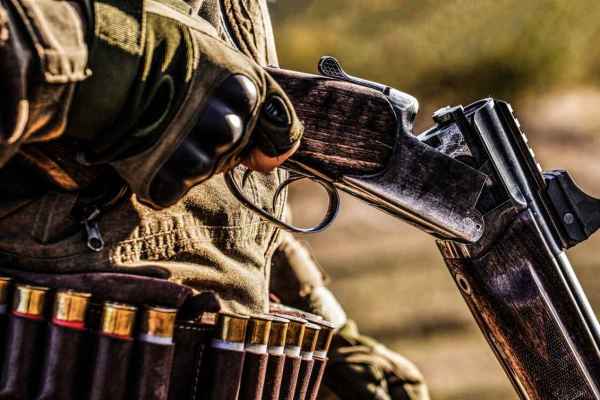
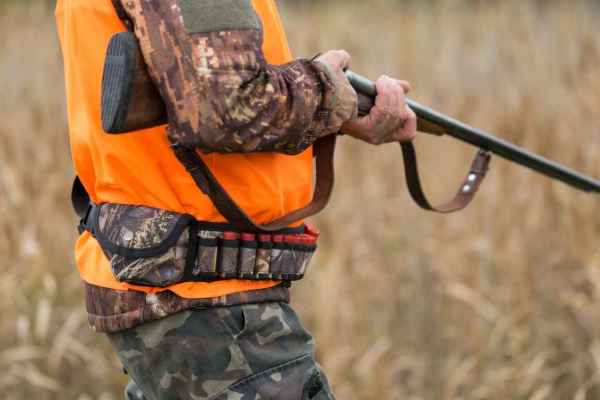
An over-80-year-old recreational hunter has been sentenced by the court in Yverdon to ten months' suspended imprisonment for negligent homicide, after shooting dead a companion during a recreational wild boar hunt in Gros-de-Vaud in November 2024.

«Confession from the high seat»
The eighty-year-old was out on a recreational wild boar hunt together with six other people.
When the game hid on a scrub-covered rise, he climbed up to the top. In order to flush the wild boars out and keep them away from his dog, he fired two shots towards the ground.
However, one of the shots did not stay lodged in the earth. The projectile fatally struck a companion who was positioned below the rise, hitting him in the head. Help came too late for the man.
The verdict and the Swiss legal situation
The court in Yverdon found the recreational hunter guilty of negligent homicide, punishable under Article 117 of the Swiss Criminal Code, and imposed a suspended sentence of ten months' imprisonment. Suspended means: the sentence will only be enforced if the convicted person commits a further offence during the probationary period.
The canton of Vaud practises licence hunting. Unlike territorial hunting, which applies in certain German-speaking cantons, here anyone holding a cantonal licence may hunt across the entire cantonal territory, without being bound to a fixed hunting ground or permanent conservation responsibility. The governing frameworks are the federal hunting act (JSG), the cantonal hunting legislation, and the animal welfare act (TSchG).
Not a tragic isolated case, but a pattern
The recreational hunting lobby likes to portray such cases as an unavoidable residual risk of a responsible leisure activity. The figures tell a different story. Since recording began by the Advisory Service for Accident Prevention in 2000, over 100 people have died in connection with recreational hunting in Switzerland. Purely statistically, a hunting accident occurs every 29 hours, and someone dies as a result roughly every three and a half months.
Analyses of accident insurance data for the years 2016 to 2020 count around 300 recognised accidents with annual costs of approximately 3.6 million francs. What matters is what this statistic does not capture: it only covers employed persons with mandatory accident insurance. Retired recreational hunters are entirely absent, even though they make up a large share of the armed individuals out in the field. The shooter convicted in this case was himself over 80 years old — a profile that does not appear in the official figures at all. Just how large this unrecorded number really is can be seen in our dossier on hunting accidents in Switzerland as well as the statistics on fatal hunting accidents.
The Geneva model shows that things can be done differently
The canton of Geneva abolished recreational hunting back in 1974. There, the regulation of wildlife populations is carried out by trained, salaried state game wardens. Fatal shooting accidents among recreational hunters, such as the one that has now occurred in Gros-de-Vaud, are simply impossible under this system, because there is no longer a large group of armed recreational shooters roaming the countryside. In the canton of Vaud, a corresponding proposal failed in 1977. The Geneva model is therefore not a non-transferable special case, but proof — tried and tested for over fifty years — that professional wildlife management can function without any residual mortal risk to people.
As long as tens of thousands of armed recreational hunters continue shooting in a densely used landscape, the next fatality remains not a question of whether, but of when.
Further dossiers
- How many hunting accidents happen in Switzerland?
- statistics on fatal hunting accidents
- Hunting victims in Europe: dead, injured, and a continent without statistics
- Hunting accidents and crimes committed by recreational hunters
More on the subject of recreational hunting: In the dossier Poaching and hunting crime in Switzerland we document cases, legal questions and recurring patterns. The scientific evidence is presented in the overview Studies on the Effects of Recreational Hunting.
The position of IG Wild beim Wild: IG Wild beim Wild rejects recreational hunting. Our model is the canton of Geneva, which has managed without recreational hunting since 1974: without hunting seasons, without hunting dogs, without driven hunts, without high seats, without the animal cruelty and crime that go hand in hand with hunting season elsewhere. What has worked there for over fifty years disproves every position paper by JagdSchweiz. An association that bases its policy on claims it refutes in its own documents is not a professional organisation, but a factory for misinformation.

All articles are written by IG Wild beim Wild as well as by external co-authors. Research, structuring and editorial processes may be supported by AI-assisted tools.
Support our work
With your donation you help protect animals and give their voice a hearing.
Donate now →