Wolf kills in Vaud: basic protection was missing in Mézery
Two suspected wolf attacks within a week: in Mézery, the fence did not meet herd protection requirements according to a media report, while near Vuissens the cause and the protection measures are still unclear.

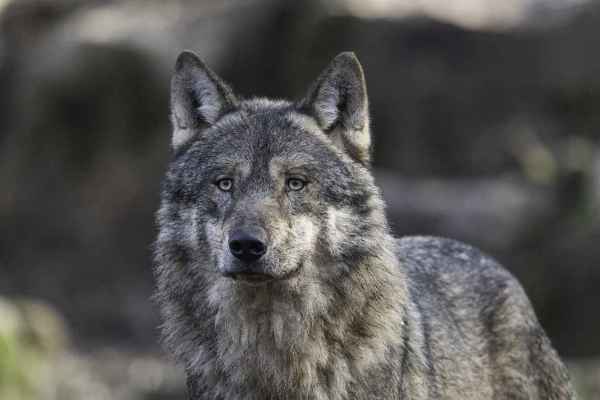
Symbolic image. Photo: Regös Környei / Unsplash
No Fence, No Shepherd
In the night to Sunday, ten of sixteen sheep were killed in a field near Vuissens. The keeper lives in Vuissens (FR), but the field lies on Vaud territory. He is convinced that wolves killed the animals; according to RTS, the authorities are still having this analysed. A week earlier, a wolf had killed ewes just a few kilometres away in Mézery-près-Donneloye. In this first case, it is known that the fence did not meet herd protection requirements.
Mézery: two strands
The attack took place in the night of 18 October in an enclosure next to a farm. At least three ewes died. According to 24 heures, a fourth was seriously injured; according to La Télé's account, a fourth animal ran into a wall while fleeing and died. Where the wolf came from is unclear, and DNA samples are being analysed.
According to La Télé, the enclosure was secured with two electrified strands, whereas four were required. This fence therefore did not meet herd protection requirements. As a result, La Télé reports, the keeper receives no compensation per animal killed, but a flat payment of 600 francs for the effort involved. The dead sheep appear in the damage statistics but are not counted towards any application for regulation. This crediting of damage is distinct from the preventive regulation of wolf packs, which the federal government can authorise even without prior kills. According to 24 heures, the veterinarian called in considers the presence of the wolf incompatible with Switzerland.
Vuissens: cause and protection unclear
In the case of the attack at Vuissens, it has so far been neither confirmed that wolves killed the sheep nor made known how the pasture was secured. Whether the animals were adequately protected and what legal consequences may follow remains open.
Rare on the Central Plateau
For the region, the two cases are exceptional. Before Mézery, according to 24 heures, there had been only three attacks this year on the Vaud Central Plateau, with three sheep killed. Across Switzerland, according to RTS, 43 packs with roughly 350 wolves live. How the population has developed is shown in the overview “How many wolves are there in Switzerland?”. On the situation in the Vaud Jura, where livestock kills fell markedly in 2026, Wild beim Wild reported in “Wolf in the Jura: calm in Vaud, kills in Neuchatel”.
The Broye knows this debate
The Broye was already the scene of a wolf debate in 2023. A petition at the time demanded that the wolf be “eliminated” from the region. The Fribourg State Council rejected it and stated in its response that livestock damage has been declining since protective measures were introduced and that the wolf feeds mainly on wild animals. Wild beim Wild reported in “Wolf opponents suffer shipwreck”. Around the turn of 2023/24, a wolf was also poached in the Vaud Broye, and the canton filed a criminal complaint (“Wolf poaching in the canton of Vaud: first investigations”).
Putting it in context: the fence first
The documented shortcoming in Mézery lies in herd protection. Before demands for wolf kills are derived from the incident, the question that belongs on the table is therefore why the fence did not meet the requirements. At Vuissens, the investigations must first establish what happened and how the flock was protected.
A compliant strand fence does not only protect the sheep. With the petition “Pasture nets must not be death traps for wild animals”, the IG Wild beim Wild demands that strand fences be used instead of pasture nets wherever possible: at least four strands, at least 90 centimetres high, with the lowest strand no more than 20 centimetres above the ground. Such a fence keeps the wolf out and lets small animals pass, whereas roe deer, foxes and hedgehogs repeatedly become fatally entangled in the mesh of pasture nets. Herd protection subsidies should therefore be tied to a professional and wildlife-friendly design. Anyone wishing to turn directly to their cantonal parliament will find a template text for animal-welfare-compliant fencing and pasture net requirements.
The pattern is not new. In the canton of Schwyz, basic protection was missing in three out of four recorded predation incidents on agricultural land. At the same time, a preventive kill permit for young wolves of the Chöpfenberg pack, issued beforehand, was in force there. The federal government assures the Council of Europe that herd protection comes before any regulation; how far practice departs from this has been analysed by Wild beim Wild in “15 Assurances to the Council of Europe”. What works and what fails when it comes to protecting non-human animals is summarised in the dossier “Herd Protection in Switzerland”.
More on the subject of recreational hunting: In our dossiers on recreational hunting gather fact-checks, analyses and background reports. The scientific evidence is presented in the overview Studies on the Effects of Recreational Hunting.
The position of IG Wild beim Wild: IG Wild beim Wild rejects recreational hunting. Our model is the canton of Geneva, which has managed without recreational hunting since 1974: without hunting seasons, without hunting dogs, without driven hunts, without high seats, without the animal cruelty and crime that go hand in hand with hunting season elsewhere. What has worked there for over fifty years disproves every position paper by JagdSchweiz. An association that bases its policy on claims it refutes in its own documents is not a professional organisation, but a factory for misinformation.
Wild animals need a voice
Once a week: research, petitions and background information on recreational hunting. Free of charge and can be unsubscribed from at any time.

All articles are written by IG Wild beim Wild as well as by external co-authors. Research, structuring and editorial processes may be supported by AI-assisted tools.
Support our work
With your donation you help protect animals and give their voice a hearing.
Donate now →