Vaud: 16 council members question fox hunting
Green politician Alberto Mocchi wants the cantonal government to explain why hundreds of foxes are killed in the canton and what it makes of the studies that deny fox hunting any benefit.
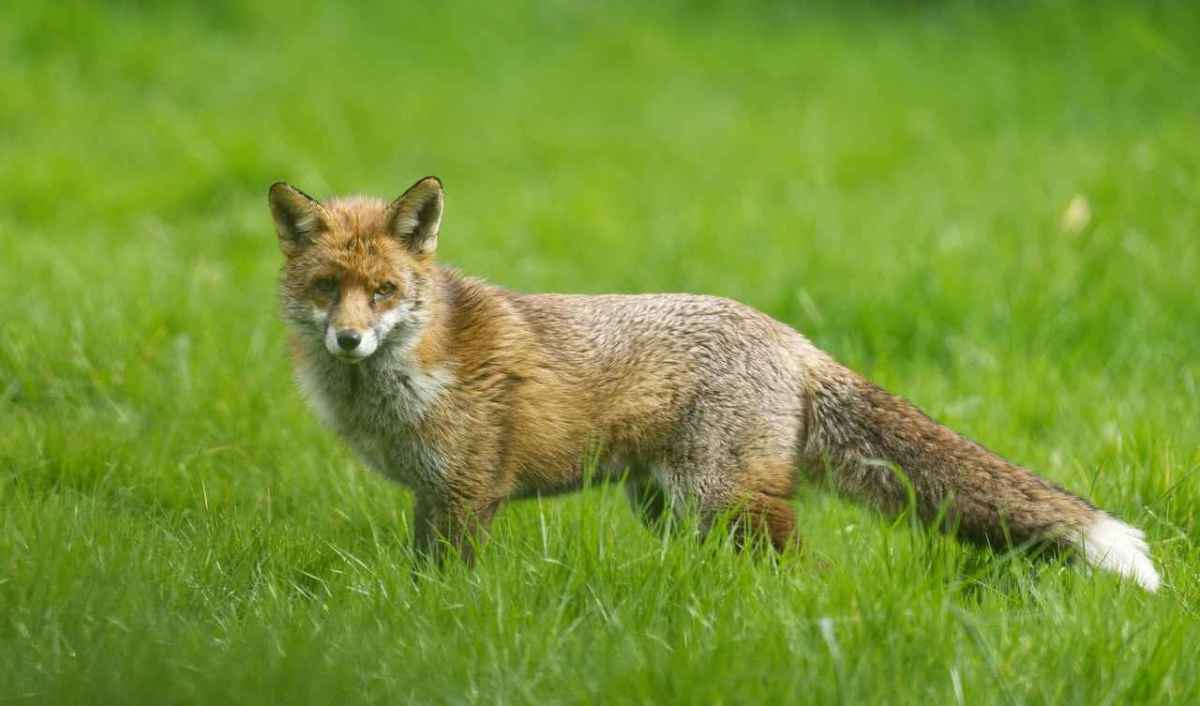
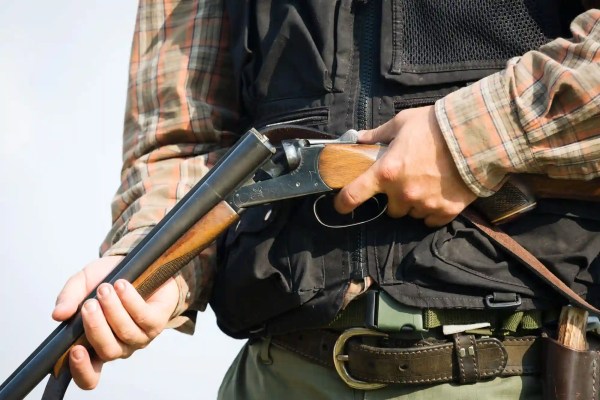
Photo: Bob Brewer / Unsplash
An Old Promise Echoes in the Forest
Since Tuesday, a motion has been before the Vaud Grand Council that asks a simple question: is fox regulation needed at all? It was submitted by Green politician Alberto Mocchi on 10 November 2026 as Interpellation 26_INT_157. It was co-signed by 15 other council members from the Greens, the Social Democrats and the Green Liberals.
Under the title «Renards : une régulation vraiment nécessaire ?», Mocchi notes that the fox is heavily regulated in the canton: according to the interpellation, several hundred foxes are killed in recreational hunting or in official regulation kills. This is usually justified by the assumption that populations would otherwise grow sharply and cause disease and damage to agriculture.
Mocchi points to studies from Switzerland and other European countries. They suggest that fox populations can stabilise themselves through the resources available. Heavy hunting pressure could also disrupt social structures and trigger increased dispersal movements. He also recalls the fox's value as a mouse hunter: by some estimates, a single fox eats up to 5,000 field mice, voles and other small rodents a year. In the neighbouring French department of Doubs, 250 farmers have therefore joined forces to have the fox removed from the list of so-called pests.
Five questions for the cantonal government
Specifically, the interpellation asks the Vaud cantonal government:
- How does it assess the population, development and health of foxes in the canton?
- What role does it attribute to the fox in keeping mice and other small rodents in check?
- For what main reasons have regulation kills been ordered in recent years?
- What alternatives does he use, or intend to use, in order to reach for the rifle less often?
- How does he assess the studies showing that culling is not necessary to prevent an increase in fox numbers, and can even have the opposite of the intended effect?
Mocchi waived an oral justification in the Council, so the motion goes directly to the government. The Department of Youth, Environment and Security (DJES), headed by Green State Councillor Vassilis Venizelos, is responsible. In the case of interpellations, the Vaud State Council usually replies within three months of the referral. The State Council also already has before it a petition from the jurist Pascal Wolf, who has put fox hunting in numerous cantons under scrutiny.
The scientific foundations are available
The scientific question behind question 5 has long since been studied in Switzerland. In 2026 the canton of Zug had the scientific foundations of fox hunting reviewed by the SWILD research unit. The expert report concluded that fox hunting does not lower populations sustainably and does not contain disease, because hunted populations compensate for their losses with more offspring and immigration. Zug drew the consequence and no longer actively promotes fox hunting (Canton of Zug: Authorities Curb Fox Hunting After Study). Based on the same report, the Executive Council of Basel-Stadt signalled at the end of June that it was open to examining in depth a renunciation of regular fox hunting (Basel-Stadt examines exit from fox hunting).
The canton of Vaud does not have to look far for a practical test. Right next door, Geneva has done without recreational hunting since 1974, without the fox having got out of hand there (Geneva: no recreational hunting since 1974). Luxembourg banned fox hunting in 2015 without populations or infection with the fox tapeworm having increased. And in a field study near Nancy, tapeworm infection in foxes rose precisely where hunting was most intensive (Comte et al. 2017). An overview of the state of research is provided on the page Hunting Fact Check.
Assessment: What the reply must show
The parliamentary initiative is deliberately worded with restraint. It explicitly acknowledges the work of recreational hunters and wildlife wardens and speaks of developing the instruments together. That may be tactically wise when seeking majorities in the council. On the substance, however, the question in the title has already been answered: routine fox hunting for population and disease control is not necessary, and it fails to achieve the aims used to justify it. Targeted official measures against individual foxes that cause considerable damage remain unaffected. Federal law already permits them (Art. 12 para. 2 JSG).
Question 5 is therefore the decisive one. Other cantonal governments have so far answered questions on fox hunting with template text from the recreational hunting lobby, or not at all (Fox hunting: Four cantonal governments leave 30 questions unanswered, Fox hunting in Solothurn: no monitoring of effectiveness). In Vaud, the department concerned is headed by a Green environment minister. If his answer merely repeats the familiar justifications without engaging with the Zug report and the Geneva example, it would be a sorry showing. No new, years-long study is needed for this. The Council of State does not have to start from scratch, but should evaluate the existing evidence and set out transparently what follows from it for Vaud.
What you can do
Whether the interpellation leads to more, such as a motion to end fox hunting, will be decided by the 150 members of the Vaud Grand Council. Anyone who wants to campaign for an end to fox hunting can write to them directly. In the experience of IG Wild beim Wild, a personal email has more effect than a signature. You will find a template letter in French and the contact details on the page Stop fox hunting: write to the Grand Council of Vaud. Background on the campaign can be found in the article "End fox hunting": Science, cantons, and what you can do.
More on the subject of recreational hunting: In the dossier Alternatives to recreational hunting we show political and practical alternatives to recreational hunting. What the research says about this is shown by Hunting fact-checked: the state of research.
The position of IG Wild beim Wild: IG Wild beim Wild rejects recreational hunting. Our model is the canton of Geneva, which has managed without recreational hunting since 1974: without hunting seasons, without hunting dogs, without driven hunts, without high seats, without the animal cruelty and crime that go hand in hand with hunting season elsewhere. What has worked there for over fifty years disproves every position paper by JagdSchweiz. An association that bases its policy on claims it refutes in its own documents is not a professional organisation, but a factory for misinformation.
Wild animals need a voice
Once a week: research, petitions and background information on recreational hunting. Free of charge and can be unsubscribed from at any time.

All articles are written by IG Wild beim Wild as well as by external co-authors. Research, structuring and editorial processes may be supported by AI-assisted tools.
Support our work
With your donation you help protect animals and give their voice a hearing.
Donate now →